
On 27 May 1946 the French High Commissioner created by decree a government for the Montagnard people of southern Indochina, over a territory with defined borders. Within four years the same lands had been handed to a Vietnamese king without our being asked, and within nine they had been absorbed by force into a republic. All three documents still exist, and all three still matter to the legal argument.
The three documents
| Date | Instrument | Effect |
|---|---|---|
| 27 May 1946 | Decree of High Commissioner Admiral Georges Thierry d'Argenlieu | Creates the Pays Montagnard du Sud-Indochinois (PMSI) as an autonomous territory of five provinces within French Indochina |
| 15 April 1950 | Dụ số 6 — Decree No. 6 of Bao Dai, Chief of State | Incorporates the PMSI into the Domain of the Crown; the highlands become the Crown Domain of the Southern Highlander Country, held by Bao Dai personally |
| 21 May 1951 | Special statute issued by Bao Dai | Guarantees the highland populations free evolution in accordance with their own traditions and customs |
1946: what we were given
The 1946 decree created, inside the French Indochinese federation, an autonomous territory for us with a French delegate exercising direct authority and a defined border: the 17th parallel to the north, the Annamite chain to the east, Cochinchina to the south, Laos and Cambodia to the west. Its five provinces were Darlac, Đồng Nai Thượng, Kontum, Lang Biang and Pleiku. The capital was Da Lat from 1946 to 1948, and Ban Mê Thuột from 1948.
Our people received it with joy and considerable expectation. The belief in the villages was that the French were going to build our country and teach us to run it.
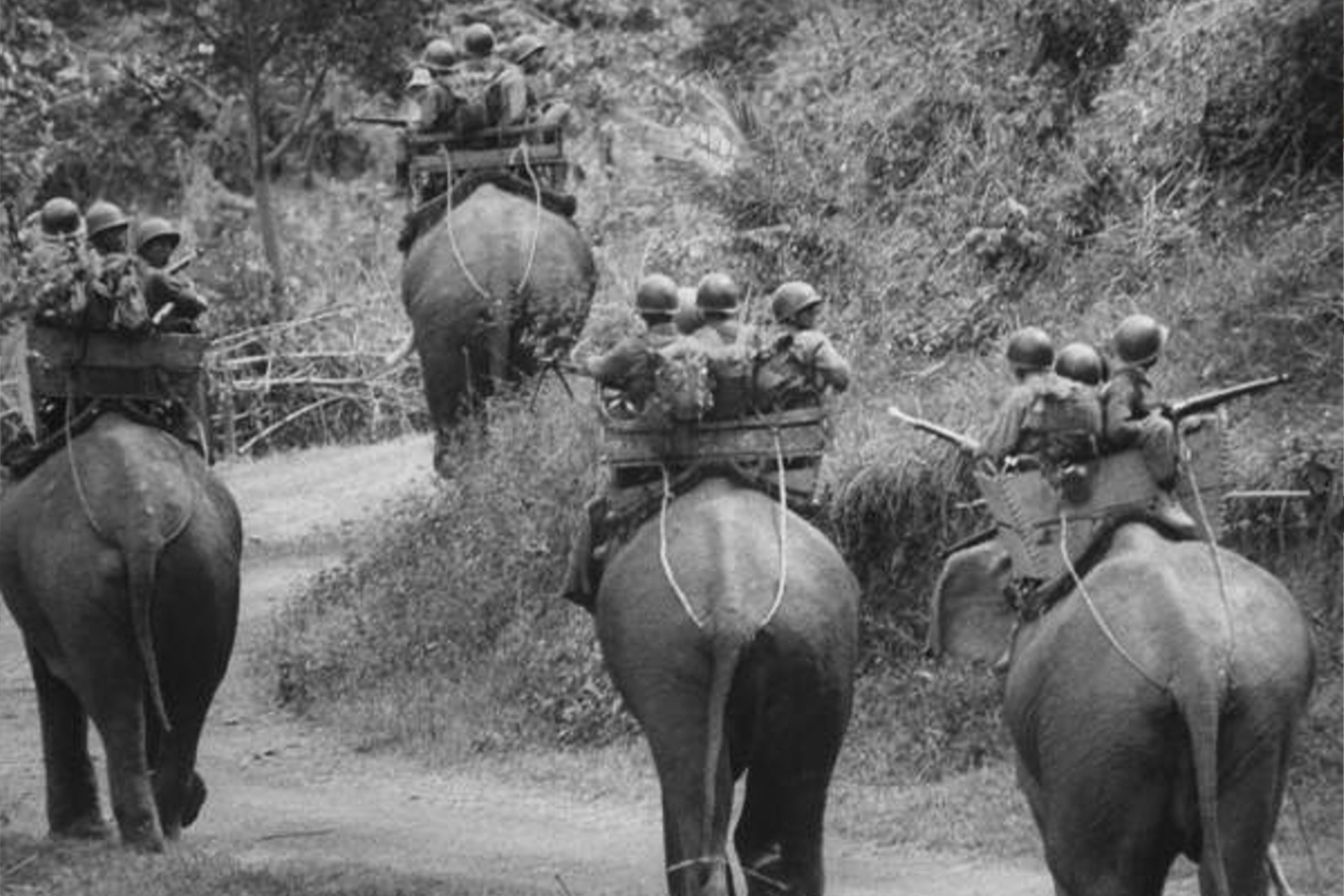
That is not what happened. What followed was recruitment. Dega men were taken into the French army to defend colonial interests across Southeast Asia, and thousands of our young men died in the French war — against the Viet Minh, and in Laos and Cambodia. France lost that war. We have never understood why, in losing it, France left the guarantee it had written unenforced and the people it had organised into a nation exposed to the state that had every reason to resent them.
1950–51: what was done with it
In April 1950 Bao Dai, who had been installed as Chief of State of the French-sponsored State of Vietnam, issued Decree No. 6 folding the PMSI into his personal Crown Domain. The distinction between the Crown Domain and the ordinary territory of the Vietnamese state was not decorative — it was the mechanism by which the highlands could be attached to Vietnam without being administratively merged into it, and it is the hinge of the modern legal argument. We were not consulted before the transfer, and under French authority we were in no position to refuse.
The statute Bao Dai issued the following year is, for our purposes, the most useful sentence a Vietnamese head of state has ever written. Its first article provides that the non-Vietnamese populations living in the territories called the Montagnard country of the South receive by the ordinance a special statute intended to guarantee their free evolution in accordance with their own traditions and customs, while remaining within the framework of the Vietnamese state.
Why a statute we did not ask for is worth having
Because of what it concedes. To grant a people a special statute guaranteeing free evolution according to its own traditions is to concede three things at once: that the people is distinct, that its traditions are its own, and that its continuation in them is a matter of right rather than tolerance. Every subsequent Vietnamese government has denied all three. They were conceded in 1951 by a Vietnamese head of state in a document he wrote himself, in a territory he had just been given. We did not draft it and we were not asked. It is still evidence.
1955: what was done to it
In 1955 Ngo Dinh Diem displaced Bao Dai by referendum and proclaimed the Republic of Vietnam. The Crown Domain went with the Crown. The highlands were merged into the Republic, the special statute was set aside, the customary courts were wound up, our languages were barred from the schools, and from 1956 the land development centres began moving Vietnamese settlers onto highland land. No government objected, in a decade when a good many governments were paying close attention to Vietnam.
Three years later the men educated in Sabatier's school wrote to the French, the Americans and the United Nations, and BAJARAKA began.
Sources
- Pays Montagnard du Sud-Indochinois — the 27 May 1946 decree, the five provinces, the capitals, and Dụ số 6 of 15 April 1950
- Gerald C. Hickey, Sons of the Mountains (Yale, 1982) — the 1946–1955 sequence
- Oscar Salemink, The Ethnography of Vietnam's Central Highlanders (2003)
- Montagnard Foundation, Inc., historical summaries (archive held by DCHO) — the text of the 21 May 1951 statute as our archive holds it
Compiled September 2026. We hold the 1951 statute only in translation, at second hand. A scan of the original, or an archive reference for it, would materially strengthen the case built on it — if you have either, please write.