
Knowledgebase
Viewing articles tagged 'mondulkiri'
Viewing articles tagged 'mondulkiri'
11 articles
Mondulkiri, 1992: the end of the armed struggle
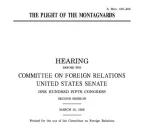
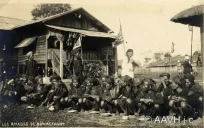
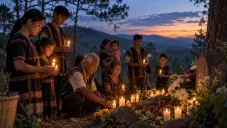
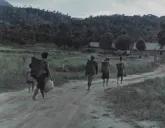
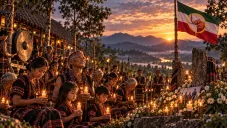
In September 1992 two journalists walked into the forest of Mondulkiri, in eastern Cambodia, and found 407 FULRO guerrillas and their families living in five villages with six churches, still fighting a war that had ended seventeen years before. Nobody had told them that their president had been killed in 1975. On October 10 they handed 194 weap...
FULRO, 1964–1992
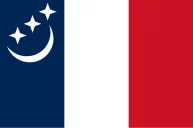
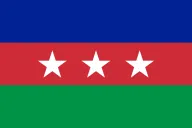
On the night of September 19, 1964, the strike forces of four American-trained camps in Darlac and Quang Duc rose against their Vietnamese officers and marched on Buon Ma Thuot, and a movement announced itself: the United Front for the Struggle of the Oppressed Races, FULRO. It was made by the men of BAJARAKA, released from Diem’s prisons seven...
A map of the highlands
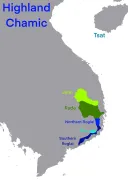
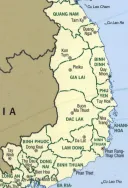
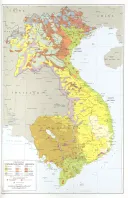
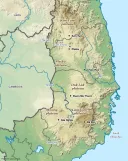
Our country is the high plateau between the Annamite mountains and the Mekong, in what Vietnam now calls the Central Highlands and across the borders in Cambodia and Laos. This page gives the map, and then the country behind it: the mountains and the red basalt plateaus, the rivers that run east to the sea and west to the Mekong, the rains, wher...
The Cambodian camps, 2001–2005
The border between Vietnam and Cambodia runs through the middle of one people. The Mnong of Dak Nong are the Bunong of Mondulkiri; the Jarai of Gia Lai are one of the largest peoples of Ratanakiri. When the crackdown came after February 2001, our people walked east to west across a line that meant nothing to them, into villages where the languag...
The men of FULRO
FULRO is usually told as the story of one man. It was never only his. This is a register of the others we can name — the Cham officer who invented the word for what we were supposed to be, the two men called Adrong whom the record keeps confusing, the interpreter who funded a liberation front out of an American payroll, the commander who walked...
Y Bham Enuol: president of FULRO, 1964 to 1968
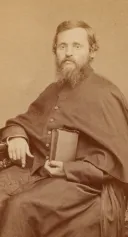
He was president of FULRO for four years and three months, and in that time he fought two battles and held perhaps forty meetings. The record of those four years is not mainly a record of fighting. It is a record of letters carried across a border by couriers, of delegations kept waiting in Buon Ma Thuot, of demands that got smaller every year,...
Y Bham Enuol: Phnom Penh, the captivity and the death
At the end of 1968, days before he was to sign a settlement with Saigon, FULRO men and Cambodian officers took his headquarters and moved him to Phnom Penh. He was held there for six years, still called president by the fighters in the forest and still signing papers for them. On April 20, 1975 he walked out of the French Embassy at the head of...
Kin across the border: Ratanakiri and Mondulkiri
The border between Vietnam and Cambodia runs through the middle of our country. On the other side of it, in the Cambodian provinces of Ratanakiri and Mondulkiri, live Jarai, Bunong and other highland peoples who are our kin by language, by marriage and by history. It is where FULRO’s last fighters came out in 1992, where our refugees ran in 2001...
N’Trang Lơng and the Mnong resistance
For twenty-one years, from the burning of a French post in May 1912 to the arrival of the army’s road in 1933, the Mnong of the Plateau des Herbes, the grass hills where Cambodia, Cochinchina and Annam met, held the French out of their country. Their leader was Pa Trang Loeung, whom the Vietnamese write N’Trang Lơng: a koragn, a village mediator...
Re-education and the forest, 1975–1992
After April 1975 our leaders went to prison without trial, our soldiers went to the camps or to the forest, and our pastors went to both. The men who reached Cambodia fought on for seventeen years on corn and poisoned potatoes, waiting for orders from a president who had already been dead for most of that time. The men who came home from the cam...
The Mnong (Bunong)
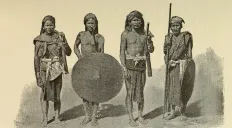
The Mnong hold the southern half of the plateau — Dak Nong, the Lak basin below Buon Ma Thuot, and Mondulkiri across the Cambodian line, where they call themselves Bunong and are the largest of Cambodia’s recognized indigenous peoples. They are the people of N’Trang Lơng, who kept the French out of his country for twenty-three years; of the elep...
Powered by WBAMS