






Knowledgebase
Viewing articles tagged 'land'
Viewing articles tagged 'land'
15 articles
Pushed off, 1954–57
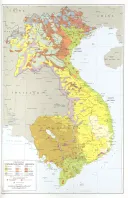
In 1953 there were about six thousand Vietnamese in our highlands outside Da Lat. By the end of 1956 more than 140,000 Vietnamese refugees from the north had been settled on our land. By 1963 Vietnamese were more than 40 percent of the people of the seven highland provinces. This is how it was done: the French left, the Republic of Vietnam aboli...
How many Dega there are
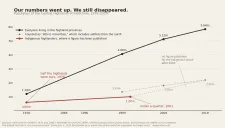
There are more of us than there have ever been, and we have never been so small a part of our own country. The state’s own census counted about 768,000 people in the thirteen highland peoples in 1979 and about 2,125,000 in 2019 — almost a trebling in forty years. Over the same span the population of the four highland provinces went from 1.2 mill...
Reports and documents
The human rights record of our people since 1975 is written mainly in reports: by Human Rights Watch and Amnesty International, by the United Nations, by governments, and by our own organizations. This page lists the ones we rely on, in order, with what each contains and where to find it. Most are free to read, and many are in our own library.
The land, and what was planted on it
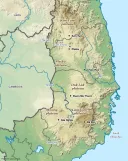
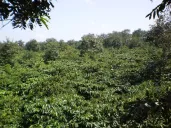
Vietnam went from a marginal coffee producer to the second largest in the world in about fifteen years, on the red basalt of the Central Highlands. The story of how that happened and the story of what happened to us are the same story told from two ends. Forest cover in our highlands fell from 42.8 percent in 1990 to 19 percent in 2020, and most...
Frequently asked
The questions we are actually asked, including the hostile ones, which we would rather answer than leave to be answered for us.
February 2001: the highlands stand up
On Friday, February 2, 2001, eight hundred people from four communes walked out of their villages at four in the morning and reached Pleiku at half past eight. By mid-morning there were thousands of them outside the provincial hall. The next day the same thing happened at Buon Ma Thuot, and over the following twelve days at Ea H’leo, at Ayun Pa,...
Dega women, and a record written about men
Among the Rhade, the Jarai, the Mnong, the Koho and the Raglai, the house, the land, the livestock and the heirloom jars pass through women. Yet almost every source this library is built from is about men, because soldiers, prisoners and petitioners are who got written down. This page sets out what the record can establish about what our women h...
Bauxite: the plateau as a mine
Under the coffee is the ore. Most of Vietnam’s bauxite lies under the Central Highlands, in the red laterite of Dak Nong and Lam Dong. In 2007 the government planned twenty-five mines and seven alumina plants there. Two plants were built, at Tan Rai and Nhan Co, and in 2026 the state and its partners were planning to double them and to add more....
Sabatier, the oath of 1926 and the Rhade law code
On New Year’s Day 1926 the French résident of Darlac stood in front of the assembled chiefs at Buon Ma Thuot and told them, among other things, that the peoples around us who had let strangers into their country had lost their law and were themselves lost. Ten times he told them to touch the bracelet. Six months later he was quietly relieved of...
Land law and customary land
In Vietnam nobody owns land. The land belongs to the entire people, the State represents the people, and what a family holds is a right to use, written on a certificate with red covers. That arrangement did not have to be aimed at us to take our country from us. A registry that records the field a family is cropping this season, in one household...
The great migration: New Economic Zones and settlers
In 1921 there were twenty Vietnamese living in Darlac. By 1997 there were a million and a half people in the province that replaced it, and we were one in five of them. No war, epidemic or famine did that. It was done by migration: first planned by the state, family by family into New Economic Zones, and then, when coffee made the highlands rich...
Forests, logging and the sacred groves
The highlands were forest country, and the forest was ours: farmland in rotation, hunting ground, the place of the spirits and of the dead. After 1975 the forest became state property, managed by state forest enterprises and cleared for settlers and coffee, until less than a fifth of the region was under trees. What remains is being handed back...
The Mnong (Bunong)
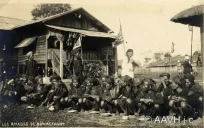
The Mnong hold the southern half of the plateau — Dak Nong, the Lak basin below Buon Ma Thuot, and Mondulkiri across the Cambodian line, where they call themselves Bunong and are the largest of Cambodia’s recognized indigenous peoples. They are the people of N’Trang Lơng, who kept the French out of his country for twenty-three years; of the elep...
Customary law and the village court
Our law was not a book. It was verse, held in the memory of men who could stand up in a village and recite the clause that settled the case. It priced a human life in gongs measured against a man’s own forearm, made failing to help the unfortunate an offense, and devoted more of itself to the wrongs a chief can commit than to theft. The French w...
Food and the highland kitchen
Our food begins with upland rice grown in the forest clearing, and most of what else we eat grows beside it, is raised for the spirits, or is taken from the forest and the rivers. The written record of our kitchens is thin and mostly the work of outsiders; this page sets out what it says, people by people, and where it stops.
Powered by WBAMS