



Knowledgebase
Knowledgebase
Knowledgebase
How can we help today?
9 categories · 139 articles
Categories
Browse by topic
Before
The highlands before the wars: who came, what they wanted, and the country we were promised.
Exile
Leaving the highlands: Thailand, Mondulkiri, North Carolina, and the people still waiting.
Reading and research
Books, reports, archives, films and language resources: where to read further, and where the evidence is kept.
Records and how to use us
The timeline, the names, the prisoners, and how to bring something to us safely.
The case in law
What we ask for, what Vietnam has undertaken, and where the two do not meet.
The Dega people
Who we are, how many, which tribes, and the country we come from.
Under the Socialist Republic
1975 to today: the land, the church, the protests and the trials.
War and resistance
1954 to 1975: partition, assimilation, BAJARAKA, FULRO, and the men who led them.
Y Bham Enuol
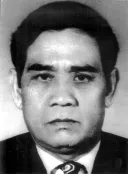
The man who led BAJARAKA and FULRO: his life, his own words, the seventeen years of petitions, the captivity, and how...
Most Popular Articles
What other people read most
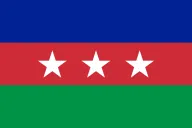
FULRO, 1964–1992
On the night of September 19, 1964, the strike forces of four American-trained camps in Darlac and Quang Duc rose against their Vietnamese officers and marched on Buon Ma Thuot, and a movement announced itself: the United Front for the Struggle of the Oppressed Races, FULRO. It was made by the men of BAJARAKA, released from Diem’s prisons seven...
BAJARAKA, 1958
BAJARAKA is four peoples in one word: BAhnar, JArai, RAde, KAho. It was the movement in which our educated men, most of them teachers, clerks, soldiers and policemen of the new Republic of Vietnam, asked for our country back with letters, a petition and a march. They wrote to President Diem, to the American, French and British ambassadors and to...
Mike Force, SOG and the special operations war
From 1964 the Americans stopped asking our men to guard their own villages and started asking them to go wherever the war was worst. They went: in the Mobile Strike Forces, the Mike Forces, that were flown in to camps under siege, and in the reconnaissance teams and raiding companies of MACV-SOG that crossed into Laos and Cambodia. The Americans...
Dak Son, December 5, 1967
On the night of December 5, 1967, Viet Cong troops with flamethrowers burned a Stieng settlement called Dak Son in Phuoc Long province. That much is not in dispute and never has been. What is in dispute, though almost nobody says so, is the number: the 252 dead that everyone quotes was published by an American magazine four days after the CIA’s...
Who are the Dega
We are the indigenous peoples of the Central Highlands of Indochina: some thirty peoples, two unrelated language families, one plateau, and a single shared experience of what has been done to it. Almost every name the outside world knows us by was given to us by somebody else, and each one carries an argument about who we are and who has the rig...
How many Dega there are
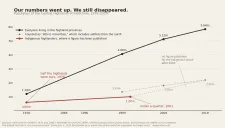
There are more of us than there have ever been, and we have never been so small a part of our own country. The state’s own census counted about 768,000 people in the thirteen highland peoples in 1979 and about 2,125,000 in 2019 — almost a trebling in forty years. Over the same span the population of the four highland provinces went from 1.2 mill...
Powered by WBAMS