
Hundreds of thousands of Dega were killed in wars fought across our land by armies that were not ours. What has happened since those wars ended is harder to count, and is the reason we use the word genocide. This page sets out the figures we have, where each comes from, and why we think the legal term applies.
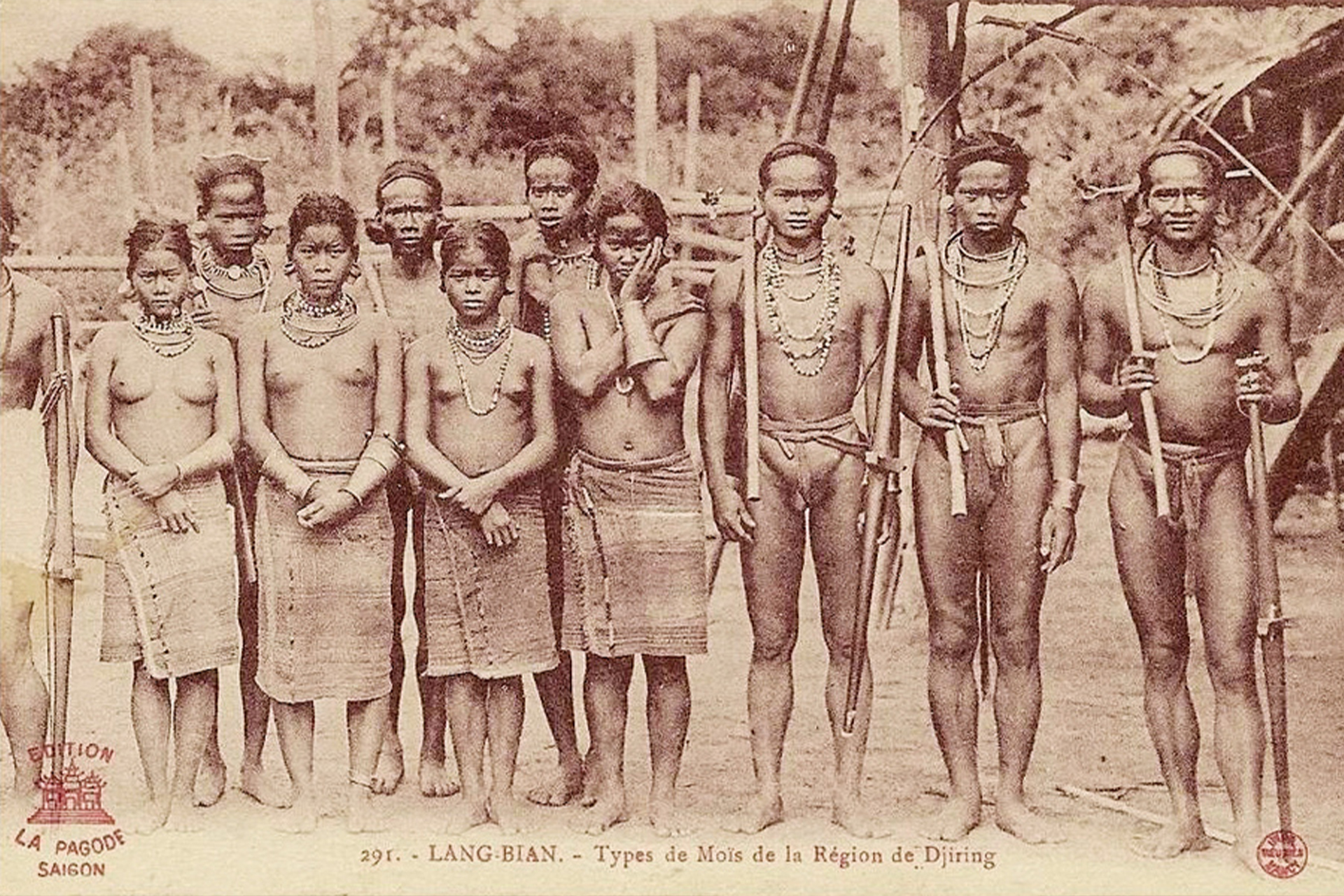
Killed in the wars
| Measure | Figure | Source |
|---|---|---|
| Dega killed, Second Indochina War | over 200,000 | Gerald C. Hickey |
| Estimated highland population at the time | about 1 million | Gerald C. Hickey |
| Villages destroyed or abandoned | 85 per cent | Gerald C. Hickey |
One person in five. There is no comparable ratio for any other population of that war, and it was not an accident of geography alone. Our men were conscripted by the French and by the Viet Minh in the first war, and recruited by every party to the second. Our villages stood on the plateau both sides had decided the war would be settled on, and the strategic hamlet programmes, the free-fire zones, the defoliation and the bombing all fell there. We did not start either war and had no stake in the question either was fought over.
Killed after the wars
The victory of 1975 was followed by executions, imprisonment, re-education camps and forced labour, directed at former soldiers, civil servants, students, pastors and village leaders on the ground that we had been the eyes and ears of the Americans. No systematic count of the dead of that period exists, because the people who could make one were inside it. This is the largest hole in our record and we say so plainly.
Dying in custody, since 2001
For the modern period there are figures, because outside organisations have been able to collect them.
| Measure | Figure | Period | Source |
|---|---|---|---|
| Montagnards sentenced to prison | more than 350 | 2001–2011 | Human Rights Watch, 2011 |
| In prison or awaiting trial | at least 250 | as at 2011 | Human Rights Watch, 2011 |
| Arrested while trying to reach Cambodia | at least 65 | 2001–2011 | Human Rights Watch, 2011 |
| Deaths in prisons, jails or police custody | at least 25 | since 2001 | Human Rights Watch, 2011 |
The charges are almost always the same three articles of the Penal Code: undermining national solidarity (article 87), disrupting security (article 89), and fleeing abroad to oppose the People's Administration (article 91). None of the three requires an act of violence to be proved.
Two deaths with names on them
Y Ben Hdok, aged 29, of Dak Lak. Arrested on 28 April 2008 for taking part in a protest and held incommunicado. On 1 May 2008 police told his family he had hanged himself. His family, who saw the body, said his head was broken, his ribs were broken, his leg was broken and his teeth had been knocked out.
Y Bủm Byă, died in custody on 8 March 2024, after detention following the Cu Kuin attack of June 2023 and, according to accounts gathered by human rights organisations, after torture. The case is covered in Cu Kuin, 2023.
Sixteen years apart, the same province, the same sequence: detention without access, a death, an official explanation, and a family describing a body that does not match it.
The slower kind
Not all of it is killing. In 1976 the Ministry of Culture announced that it would be necessary to eradicate all outmoded customs. The resettlement programme moved villages off long-rotation land onto plots that could not feed them. Health services in highland districts were allowed to decay and in practice closed to Dega families. Our languages were barred from the schools and our children shut out of higher education. Forest cover across the Central Highlands fell from 42.8 per cent in 1990 to 19 per cent in 2020, taking with it the fallow, the hunting and the forest products that had made a village's year balance.
None of that produces a body with a date on it. All of it shortens lives, and all of it was policy.
Why we say genocide
The word is not chosen for effect. The Convention on the Prevention and Punishment of the Crime of Genocide defines the crime as acts committed with intent to destroy, in whole or in part, a national, ethnical, racial or religious group as such. Among the listed acts are causing serious bodily or mental harm to members of the group, and deliberately inflicting on the group conditions of life calculated to bring about its physical destruction in whole or in part.
Vietnam ratified that Convention on 9 June 1981. Michael D. Benge, a former prisoner of war and adviser to the Republic of Vietnam's Ministry for Ethnic Minorities, has testified in those terms about what has been done in the highlands.
The element the argument turns on is intent, and intent is what makes the case hard and also what makes it arguable. A government that announces the eradication of a people's customs, bans a people's form of worship by name, resettles a people off its land as a programme, and imprisons those who object under an article about national solidarity has produced a documentary record about its own intentions. Whether that record meets the Convention's standard is a question for a tribunal, and we would like it put to one. What Vietnam has signed sets out the instruments.
Sources
- Human Rights Watch, Montagnard Christians in Vietnam: A Case Study in Religious Repression (March 2011) — the 350 / 250 / 65 / 25 figures, the Penal Code articles, and the Y Ben Hdok case
- Gerald C. Hickey, Free in the Forest (Yale, 1982) — wartime casualty and village figures
- Coffee Watch, Robusta's Reckoning, reported July 2026 — forest cover 42.8 per cent (1990) to 19 per cent (2020)
- Convention on the Prevention and Punishment of the Crime of Genocide (1948); Vietnam ratified 9 June 1981
Compiled September 2026. The 1975–1990 period is the gap. If you or your family can give an account of a re-education camp, a disappearance or a death from that period, read reporting safely first, then tell us.