
There are two bodies of international law available to a people in our position. One protects minorities. The other protects indigenous peoples, and it is far stronger: it deals in land, consent and institutions rather than in tolerance. Which one applies to the Dega turns on a single contested word, and that is why the word is fought over so hard.
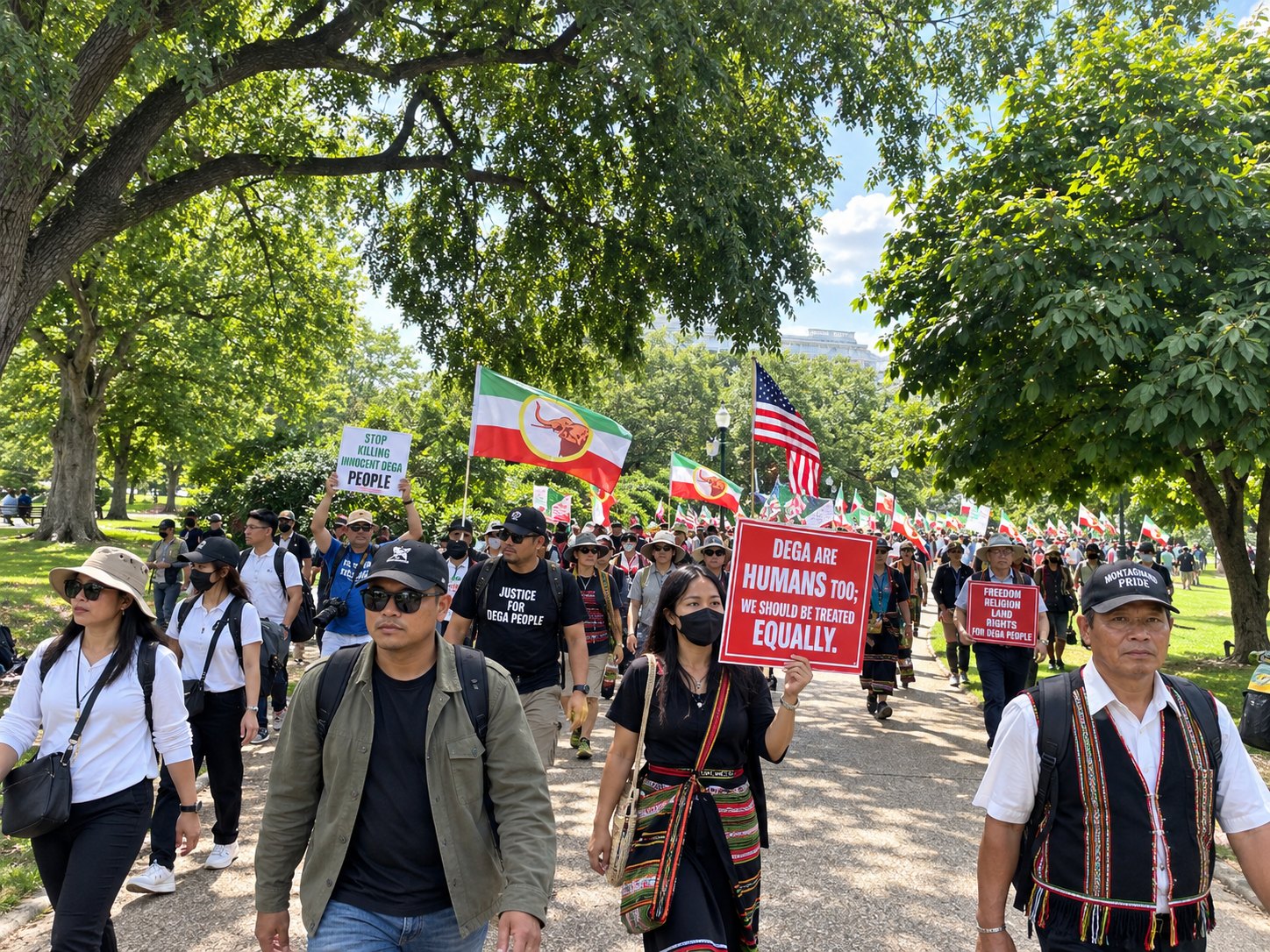
The two frameworks, side by side
| Minority rights | Indigenous peoples' rights | |
|---|---|---|
| Principal instrument | ICCPR Article 27; the 1992 Declaration on the Rights of Persons Belonging to Minorities | UNDRIP (2007); ILO Convention 169 (1989) |
| Who holds the right | Persons belonging to a minority — individuals | The people, collectively, as a people |
| Land | Not addressed as such | Rights to the lands, territories and resources traditionally owned, occupied or used |
| Consent | Not addressed | Free, prior and informed consent before relocation, and before projects affecting the land |
| Institutions | The right to enjoy culture, practise religion and use a language | The right to maintain and develop distinct political, legal, economic, social and cultural institutions |
| Self-determination | Not conferred | Affirmed, exercised through autonomy and self-government in internal and local affairs |
| Redress | Not addressed | Redress, including restitution or just compensation, for lands taken without consent |
What UNDRIP actually says
The Declaration was adopted by the General Assembly on 13 September 2007. Four of its provisions bear directly on the Central Highlands.
- Self-determination — indigenous peoples have the right of self-determination, and by virtue of it freely determine their political status and pursue their economic, social and cultural development; exercised, in the Declaration's own framing, through autonomy and self-government in internal and local affairs.
- Land and resources — the right to the lands, territories and resources traditionally owned, occupied or otherwise used or acquired, and the right to own, use, develop and control them.
- No forcible removal — indigenous peoples shall not be forcibly removed from their lands or territories; no relocation without free, prior and informed consent, and without agreement on just compensation and, where possible, the option of return.
- Redress — the right to redress, which may include restitution or just and fair compensation, for lands confiscated, taken, occupied, used or damaged without free, prior and informed consent.
Read those four next to the land article and what happened after 1975. Every element is engaged: removal without consent, land certified to others, no compensation, no return.
What UNDRIP is, and is not
It is a declaration of the General Assembly, not a treaty. It creates no new obligation that a state can be sued on, and Vietnam has not signed anything by voting for it.
That is a real limitation and we do not overstate it. But a declaration adopted by the General Assembly is the settled statement of what the international community holds the law to be, it is applied by treaty bodies when they interpret binding instruments such as ICERD and the two Covenants, and it is the standard against which states are examined in the Universal Periodic Review. It is not enforceable and it is not nothing.
ILO Convention 169 is the binding instrument in this field, and Vietnam has not ratified it. Few Asian states have. That absence is itself part of the picture.
Vietnam's position
Vietnam's consistent position is that it has fifty-three ethnic minorities and no indigenous peoples; that all its peoples arrived or settled at various times and none holds a prior claim; and that the highland peoples are therefore fully protected by the framework on the left-hand side of the table above and have no business with the right-hand side.
Notice what that position costs the state: nothing. It breaches no treaty. It requires no argument about what happened in the highlands. It simply removes the applicable law by classification, and it does so in every forum where the question could otherwise be put.
The test the word is supposed to meet
International practice has deliberately avoided a hard definition, but the working criteria are consistent: self-identification as indigenous; historical continuity with pre-colonial or pre-settler societies; a distinct territorial connection; distinct social, economic, political and cultural institutions; a non-dominant position in the wider society; and a determination to maintain ancestral lands and identity.
Self-identification is the first criterion and is generally treated as fundamental. On every one of the six the Dega case is straightforward — which is why Vietnam does not contest the criteria. It contests the category.
The machinery that exists
- The Permanent Forum on Indigenous Issues — an advisory body to the UN Economic and Social Council, meeting annually, open to indigenous organisations.
- The Expert Mechanism on the Rights of Indigenous Peoples — advises the Human Rights Council and produces thematic studies.
- The Special Rapporteur on the rights of indigenous peoples — receives communications about individual situations and can request a country visit.
- The treaty bodies — CERD in particular has an early warning and urgent action procedure, and put questions about confiscation of indigenous land in the highlands directly to Vietnam in November 2023.
- The special procedures — twelve of whom issued a joint statement on the Central Highlands on 28 August 2024.
None of these can compel Vietnam to do anything. What all of them can do is put a question on the record and require an answer, and answers become evidence. That is the whole of our method and we do not pretend it is fast.
Why this page sits next to an article about names
Because they are the same argument. Who are the Dega looks like a page about vocabulary — Mọi, Montagnard, người Thượng, Dega. It is not. Each of those words is a position on which of the two columns above applies to us, and the difference between the columns is the difference between asking a state to be tolerant and holding a right to the ground under our feet.
Sources
- United Nations Declaration on the Rights of Indigenous Peoples, A/RES/61/295, adopted 13 September 2007 — in particular articles 3, 8, 10, 26 and 28
- ILO Convention No. 169 concerning Indigenous and Tribal Peoples in Independent Countries (1989)
- International Covenant on Civil and Political Rights, article 27; Declaration on the Rights of Persons Belonging to National or Ethnic, Religious and Linguistic Minorities (1992)
- OHCHR, CERD dialogue with Viet Nam, November 2023
- International Work Group for Indigenous Affairs, Vietnam country page — on Vietnam's position that it has no indigenous peoples
Compiled September 2026. This page states the law as we understand it and is not legal advice. If you are a lawyer and we have got something wrong, we would very much like to hear from you.