
We are the indigenous people of the Central Highlands of Vietnam — some thirty tribes, two unrelated language families, one homeland, and a single shared experience of what has been done to it. Almost every name we are known by in the outside world was given to us by somebody else. Dega is the one we gave ourselves.
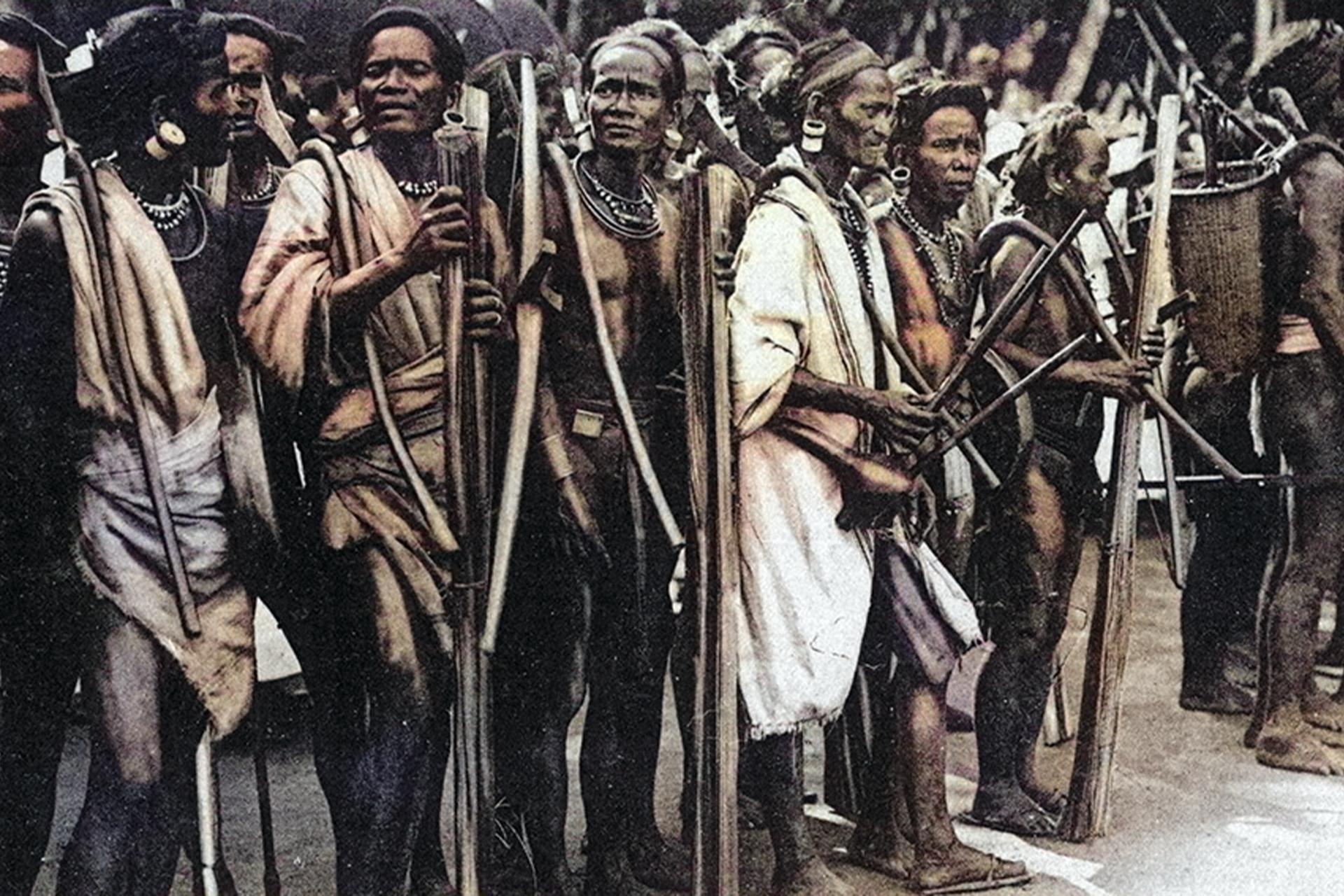
The short answer
The Dega are the original inhabitants of the plateau country that runs down the spine of southern Vietnam, between the Annamite range and the Cambodian and Lao borders — today the provinces of Kon Tum, Gia Lai, Dak Lak, Dak Nong and Lam Dong. We were there before the Vietnamese state reached the coast below us, before the French drew the borders of Indochina, and before either of the two Vietnams existed. Archaeologically and linguistically our presence in the highlands long predates the arrival of any of the powers that have since governed us.
We are not one people in the way a nation-state understands the word. We are a federation of peoples — Jarai, Rhade, Bahnar, Koho, Mnong, Sedang, Ma, Stieng, Raglai, Chu Ru, Brau, Ro Mam and others — speaking languages from two different families, with different marriage rules, different house forms and different histories of contact. What makes us one is not descent from a common ancestor. It is a common relationship to the same country, and a common history of being displaced from it.
The names, and who gave them
The question of what to call us is not a footnote. Each name carries an argument about who we are and who has the right to say so.
Mọi — the old Vietnamese term, usually translated "savage". It is not a neutral word and never was. It classified the people of the highlands as outside civilisation, and it licensed everything that followed from that classification.
Montagnard — French for "mountain person" or "highlander". Adopted by the French administration in the nineteenth and twentieth centuries and inherited by the Americans in the 1960s, which is why it is the word most used in English. It is descriptive and not hostile, but it is a colonial administrative category: it tells you where we live, in the language of the people who came to govern us.
Người Thượng — "highland people", the polite modern Vietnamese term, and dân tộc thiểu số, "ethnic minority", the official one. Both are improvements on Mọi. Neither concedes indigeneity: a minority is a fraction of a nation, and that is precisely the claim in dispute.
Dega (also written Degar) — ours. It is usually glossed as "sons of the mountains" or "children of the highlands", and it came into general political use in the twentieth century as the highland peoples began to organise across tribal lines. It is the only one of these names that assumes we get to name ourselves.
This library uses Dega throughout, and Montagnard where we are quoting or pointing to a source that uses it — which is most of the human rights literature, most of the American military record, and most of the resettlement paperwork that brought our families to North Carolina.
Two language families, one country
The clearest evidence that we are a federation rather than a single people is linguistic. Our languages divide between two families that are not related to each other at any reachable depth.
The Jarai, Rhade, Raglai and Chu Ru speak Chamic languages — a branch of Malayo-Polynesian, and therefore Austronesian, the family that runs from Madagascar through Indonesia and the Philippines to Polynesia. Our nearest linguistic relatives are the Cham of the coastal plain, and beyond them the Malay world. The Bahnar, Sedang, Mnong, Koho, Ma, Stieng and Brau speak Bahnaric languages, a branch of Mon-Khmer within the Austroasiatic family — related to Khmer, and at a greater distance to Vietnamese itself.
Two families in one plateau, intermarried, trading, sharing rituals and gong music and house forms for centuries. That is what a homeland looks like when it has been continuously inhabited for a very long time by people who were not trying to become a single nation.
What makes the claim an indigenous claim
Vietnam's position is that we are one of fifty-four ethnic groups in a multi-ethnic country, entitled to the protections the state extends to minorities and to nothing more. Our position is that we are an indigenous people with a distinct territory, a prior and continuing relationship with that territory, our own institutions of law and governance, and a history of dispossession that meets the ordinary international meaning of the term.
The distinction is not academic. A minority asks a state for fair treatment. An indigenous people has, under instruments Vietnam has itself voted for, rights that exist independently of the state's generosity: to its lands and resources, to its own institutions, to free prior and informed consent before those lands are taken, and to self-determination. Which word applies decides what can be asked for. That is why the word is fought over, and it is why the fight over the word looks, from outside, disproportionate to what it is about.
What we are not saying
We are not saying the Dega are the only people with a claim to live in the Central Highlands, or that the Vietnamese families who have farmed there for three generations should be moved. Most of them were sent there by a state programme and had no more choice about it than we did. The dispute is with the policy and with the state that ran it, not with the neighbours it produced.
Where to go next
- The tribes and their languages — who is who, and how the two families divide
- How many Dega there are — and why the figures disagree by a factor of six
- The country itself — the plateaus, the rivers, the borders
- Names and words — the full glossary, including the terms you will meet in court documents and news reports
Sources
- Gerald C. Hickey, Sons of the Mountains: Ethnohistory of the Vietnamese Central Highlands to 1954 (Yale University Press, 1982) — the standard historical ethnography
- Oscar Salemink, The Ethnography of Vietnam's Central Highlanders: A Historical Contextualization 1850–1990 (University of Hawai'i Press / RoutledgeCurzon, 2003) — on how each administration produced the category it then governed
- Minority Rights Group, Highlanders in Vietnam
- Encyclopaedia Britannica, Montagnard
Compiled September 2026. If your family uses a tribal name or spelling this page does not carry, write to us — the list is not closed.