Knowledgebase
Viewing articles tagged 'cambodia'
Viewing articles tagged 'cambodia'
20 articles
How many Dega there are
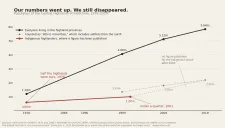
There are more of us than there have ever been, and we have never been so small a part of our own country. The state’s own census counted about 768,000 people in the thirteen highland peoples in 1979 and about 2,125,000 in 2019 — almost a trebling in forty years. Over the same span the population of the four highland provinces went from 1.2 mill...
FULRO, 1964–1992
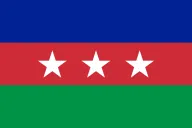
On the night of September 19, 1964, the strike forces of four American-trained camps in Darlac and Quang Duc rose against their Vietnamese officers and marched on Buon Ma Thuot, and a movement announced itself: the United Front for the Struggle of the Oppressed Races, FULRO. It was made by the men of BAJARAKA, released from Diem’s prisons seven...
The Cambodian camps, 2001–2005
The border between Vietnam and Cambodia runs through the middle of one people. The Mnong of Dak Nong are the Bunong of Mondulkiri; the Jarai of Gia Lai are one of the largest peoples of Ratanakiri. When the crackdown came after February 2001, our people walked east to west across a line that meant nothing to them, into villages where the languag...
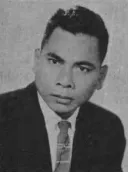
Y Bham Enuol: president of FULRO, 1964 to 1968
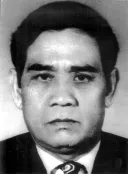
He was president of FULRO for four years and three months, and in that time he fought two battles and held perhaps forty meetings. The record of those four years is not mainly a record of fighting. It is a record of letters carried across a border by couriers, of delegations kept waiting in Buon Ma Thuot, of demands that got smaller every year,...
Asylum today: Cambodia, Thailand, and the reach of the state
For twenty-five years the way out of the highlands has been west, on foot into Cambodia, and then onward to Bangkok. Both doors have been closing. Cambodia shut its border sites in 2002, sent back hundreds of people and has recognized almost none since. In Thailand our people live as illegal migrants with a UN card that Thai law does not recogni...
Easter Week 2004
On the Saturday and Sunday of Easter 2004, people came out of their villages in thirty-nine communes across seventeen districts of Gia Lai, Dak Lak and Dak Nong. They came on farm tractors with trailers behind them, packed with food for five days, because they meant to stay. They were asking for four things: their land, the right to worship, the...
The Kings of Fire and Water
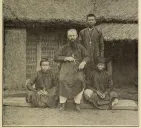
The legend said they lived alone in seven towers on seven mountains, moved from one to the next each year, never saw a human face, and reigned seven years. A French officer went to find out, and in February 1891 he found the Master of Fire lying on a bamboo couch smoking a long copper pipe, among people who paid him no great deference. He carrie...
Kin across the border: Ratanakiri and Mondulkiri
The border between Vietnam and Cambodia runs through the middle of our country. On the other side of it, in the Cambodian provinces of Ratanakiri and Mondulkiri, live Jarai, Bunong and other highland peoples who are our kin by language, by marriage and by history. It is where FULRO’s last fighters came out in 1992, where our refugees ran in 2001...
The dams: Yali Falls and the rivers
The Se San and the Srepok run west out of our highlands into Cambodia and the Mekong. From 1993 they were dammed. At Yali Falls alone 6,782 people were moved, three in five of them Jarai, Rongao and Bahnar, into standard houses with no kitchen, onto land that was promised and never arrived. Downstream, in Ratanakiri, people drowned in releases f...
The slave raids
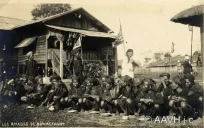
At Stung Treng in the last century of the trade a person from our highlands sold for three or four bars of silver. The Lao word for us, Kha, means servant or slave. The Frenchman who wrote both of those things down in 1898 added a third sentence about us that we reproduce here because of what it shows about the men who came to abolish the traffi...
The years between, 2005–2022
Between the Easter protests of 2004 and the attacks at Cư Kuin in 2023 there were no mass demonstrations in the highlands, and the world mostly stopped looking. The pressure did not stop; it changed shape. Instead of breaking up crowds, the authorities went village by village: meetings at which families were made to renounce their church, arrest...
N’Trang Lơng and the Mnong resistance
For twenty-one years, from the burning of a French post in May 1912 to the arrival of the army’s road in 1933, the Mnong of the Plateau des Herbes, the grass hills where Cambodia, Cochinchina and Annam met, held the French out of their country. Their leader was Pa Trang Loeung, whom the Vietnamese write N’Trang Lơng: a koragn, a village mediator...
The Trail and the poison
Two things came through the highlands during the American war that had nothing to do with us and fell on us anyway. One was the Ho Chi Minh Trail, the web of roads and paths that carried North Vietnam’s war into the South along our western edge. The other was the herbicide the United States sprayed to strip the forest from the Trail and the crop...
Rubber
Coffee is the crop people associate with the highlands, and we write about it on Land taken for coffee. Rubber is the older story and the wider one. It came with the French, it was worked by people who died in great numbers doing it, and in our own time it has taken highland land on both sides of the border: from our villages in Gia Lai and Dak...
Beyond North Carolina: Canada and other countries
Most of us who were resettled went to the United States, and a smaller number to Canada. But the second country to take us was not Canada. It was Finland, in May 2005, a month before the first flight to Vancouver, and about seventy-five of our people went there. Nobody has written a word about them in twenty-one years. That is the shape of every...
Forests, logging and the sacred groves
The highlands were forest country, and the forest was ours: farmland in rotation, hunting ground, the place of the spirits and of the dead. After 1975 the forest became state property, managed by state forest enterprises and cleared for settlers and coffee, until less than a fifth of the region was under trees. What remains is being handed back...
The Jarai
The Jarai are the largest of our peoples and the largest Chamic-speaking people on the mainland — larger than the Rhade, and far larger than the Cham themselves. Their country is the Pleiku plateau and the valleys falling away from it into the Ayun and the Ba, and it does not stop at the border: a fifth of Ratanakiri province in Cambodia is Jara...
The Mnong (Bunong)
The Mnong hold the southern half of the plateau — Dak Nong, the Lak basin below Buon Ma Thuot, and Mondulkiri across the Cambodian line, where they call themselves Bunong and are the largest of Cambodia’s recognized indigenous peoples. They are the people of N’Trang Lơng, who kept the French out of his country for twenty-three years; of the elep...
The Stieng (Xtiêng)
The Stieng live at the southwestern edge of the highlands, where the plateau falls toward the plains north of Saigon: in what was Phuoc Long and Binh Long, then Song Be, then Binh Phuoc, and across the border in Kratie and Mondulkiri. They were the first of our peoples a European lived among and wrote about, in 1859, and among the last the Frenc...
Lower Sesan 2: the dam downstream
The Se San and the Srepok carry the water of our highlands into Cambodia, where the same peoples live on both banks. In 2017 the gates closed on Lower Sesan 2, a dam just below the rivers’ meeting in Stung Treng. It flooded some 30,000 hectares and displaced nearly 5,000 people, most of them Bunong, Brao, Lao, Jarai and their neighbors; more tha...
Powered by WBAMS