









Knowledgebase
Viewing articles tagged 'bajaraka'
Viewing articles tagged 'bajaraka'
12 articles
BAJARAKA, 1958
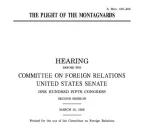
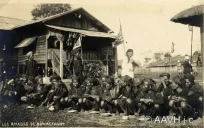
BAJARAKA is four peoples in one word: BAhnar, JArai, RAde, KAho. It was the movement in which our educated men, most of them teachers, clerks, soldiers and policemen of the new Republic of Vietnam, asked for our country back with letters, a petition and a march. They wrote to President Diem, to the American, French and British ambassadors and to...
Names and words
Reading about the Dega means reading four vocabularies at once, ours, the French, the Americans’ and the Vietnamese state’s, and they do not agree. Each outside name was given by someone at a particular moment for a particular purpose, and each still carries the purpose. This glossary gives the words you will meet in the records on this site: wh...
Y Bham Enuol: the early years and BAJARAKA
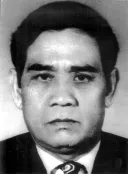
He was born in 1913 in the village beside the mission at Ban Me Thuot, went through three schools the French and the missionaries had built, and became an agricultural official in the provinces he would later petition about. In 1958 he put his name to letters asking President Diem, three foreign embassies and the United Nations to look at what w...
Y Bham Enuol: the prison years, 1958 to 1964
He was arrested in the autumn of 1958 for writing letters, and he was not free again until February 1964. The sources disagree about the sentence, the prisons and even the number of years — four, five, six or seven, depending on who is counting. What they agree on is that the Republic of Vietnam jailed the man who had asked it for schools, kept...
The men of FULRO
FULRO is usually told as the story of one man. It was never only his. This is a register of the others we can name — the Cham officer who invented the word for what we were supposed to be, the two men called Adrong whom the record keeps confusing, the interpreter who funded a liberation front out of an American payroll, the commander who walked...
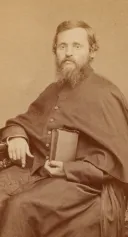
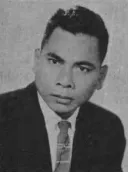
Y Bham Enuol
A Rhade official from Buon Ale-A who led both of our movements, spent more than five years in the prisons of the government he was petitioning, put our own name for ourselves into the official record, was held under guard by his own allies for the last six years of his life, and walked out of the French Embassy in Phnom Penh on April 20, 1975, i...
Y Bham Enuol: president of FULRO, 1964 to 1968
He was president of FULRO for four years and three months, and in that time he fought two battles and held perhaps forty meetings. The record of those four years is not mainly a record of fighting. It is a record of letters carried across a border by couriers, of delegations kept waiting in Buon Ma Thuot, of demands that got smaller every year,...
Paul Nưr and Nay Luett: the ministry years
Two men who tried the other route. Both were BAJARAKA founders, both went to prison for it under Diem, and both then took office inside the government that had jailed them — one as a province administrator who became the first highlander in a Saigon cabinet, one as the minister who held that ministry to the last week of the Republic. Both died i...
Kok Ksor
A Jarai from Bon Broai who joined BAJARAKA at fourteen, went over the border at seventeen, came home from a war by way of a Khmer Republic training course in Virginia, and spent the second half of his life in a small city in South Carolina making our case in rooms where states have to listen. For thirty years Kok Ksor was the Dega most foreign g...
The Dega flags
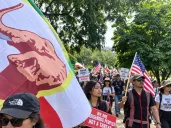
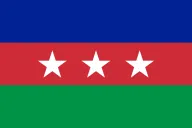
There is no single Dega flag. There have been at least eight, each made by a movement or an organization at a particular moment, and each carrying the history of the people who made it. Before any of them was sewn, a flag of our own was already a political demand: our leaders asked for one in 1955, in 1964, four times in 1965, in 1966 and in 196...
The Bahnar
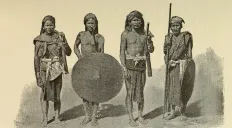
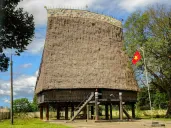
The Bahnar are the people of Kon Tum and eastern Gia Lai, with a wing that spills over the Annamite crest into the hills of Bình Định. They are the counterweight to the Rhade and the Jarai in any honest account of who we are: they speak a Mon-Khmer language, not an Austronesian one; they count descent through both parents rather than through wom...
Customary law and the village court
Our law was not a book. It was verse, held in the memory of men who could stand up in a village and recite the clause that settled the case. It priced a human life in gongs measured against a man’s own forearm, made failing to help the unfortunate an offense, and devoted more of itself to the wrongs a chief can commit than to theft. The French w...
Powered by WBAMS