




















Knowledgebase
Viewing articles tagged 'ban me thuot'
Viewing articles tagged 'ban me thuot'
12 articles
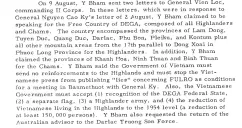
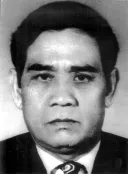
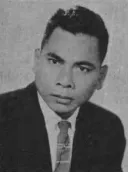
Y Bham Enuol: the early years and BAJARAKA
He was born in 1913 in the village beside the mission at Ban Me Thuot, went through three schools the French and the missionaries had built, and became an agricultural official in the provinces he would later petition about. In 1958 he put his name to letters asking President Diem, three foreign embassies and the United Nations to look at what w...
The French arrive, 1876–1929
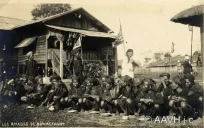
We let the French in. Most of our villages received them, between 1891 and 1899, as men who had come alone, who promised protection against the Lao and Siamese raiders from the west, and who had just taken the coast from the power that had taken it from us. The reasoning was not naive, and for a while it held. What we got over the next thirty ye...
Y Bham Enuol: the prison years, 1958 to 1964
He was arrested in the autumn of 1958 for writing letters, and he was not free again until February 1964. The sources disagree about the sentence, the prisons and even the number of years — four, five, six or seven, depending on who is counting. What they agree on is that the Republic of Vietnam jailed the man who had asked it for schools, kept...
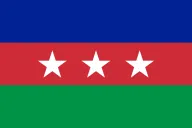
Y Bham Enuol: president of FULRO, 1964 to 1968
He was president of FULRO for four years and three months, and in that time he fought two battles and held perhaps forty meetings. The record of those four years is not mainly a record of fighting. It is a record of letters carried across a border by couriers, of delegations kept waiting in Buon Ma Thuot, of demands that got smaller every year,...
1975, and what came after
The Republic of Vietnam began to lose the war in our country, at Buon Ma Thuot on March 10, 1975, and it lost the highlands in two weeks. For our people the spring of 1975 was not an ending. Our minister asked the Americans for protection and was refused. Two thousand of our people waited on a beach at Nha Trang for a ship that never came. Our l...
Sabatier, the oath of 1926 and the Rhade law code
On New Year’s Day 1926 the French résident of Darlac stood in front of the assembled chiefs at Buon Ma Thuot and told them, among other things, that the peoples around us who had let strangers into their country had lost their law and were themselves lost. Ten times he told them to touch the bracelet. Six months later he was quietly relieved of...
The Franco-Rhade school and the Collège Sabatier
Thirty boys from the villages around Buon Ma Thuot were put into a French school in 1915. Attendance was not voluntary; within a few years some of them walked home, and the paramount chief who defended them was accused of inciting disobedience. Out of that school came a written Rhade language, a class of clerks and teachers, and, a generation la...
The missions and the doctors
In May 1972, with Kontum under siege, the American doctor who ran the highland hospital there put half of it on helicopters and flew out. Before she went she handed the hospital over to Sister Gabriel, her most experienced Montagnard nurse. Earlier in the fighting, more than thirty of our staff and patients had lain on top of her in a human blan...
Four highland towns
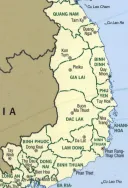
The four towns of the highlands that the world knows, Buon Ma Thuot, Pleiku, Kon Tum and Da Lat, all carry highland names, and all grew up on highland land as posts of someone else’s government: a Rhade chief’s village made a French residence, a Jarai village made a militia post, a Bahnar village made a mission and then a province, and a pine-co...
Tet 1968 in the highlands
The American field force that held the highlands wrote its own verdict on Tet four pages after it counted the dead: “Heaviest attacks were launched initially” at “the highlands population centers of Kontum and Ban Me Thuot.” The first and hardest blows of the 1968 offensive in the whole of II Corps fell on two of our market towns. Then the same...
Highland women in the war, 1954–1975
In 1966 the United States Army published a handbook that told its own personnel, in one identical line repeated for nineteen of our peoples, to stay away from our women. The same book recorded that in Darlac six or seven of every ten of our babies died before their first birthday, and that Rhade law puts the land in the women’s keeping. A year l...
The highland Catholic Church under the Socialist Republic
On March 27, 1975, in a town that had fallen eleven days earlier, the French bishop of Kon Tum consecrated a Vietnamese successor so that the diocese would not be left headless when he was expelled. Within eighteen months the minor seminary, the major seminary and the school that had trained highland catechists since 1908 were all shut, and the...
Powered by WBAMS