
For more than two thousand years before the nineteenth century the Dega governed themselves in the highlands. We farmed, hunted, traded, judged our own disputes and worshipped as we chose. Three neighbouring monarchies dealt with our ritual authorities as with a power worth propitiating. That is the baseline against which everything since should be measured.
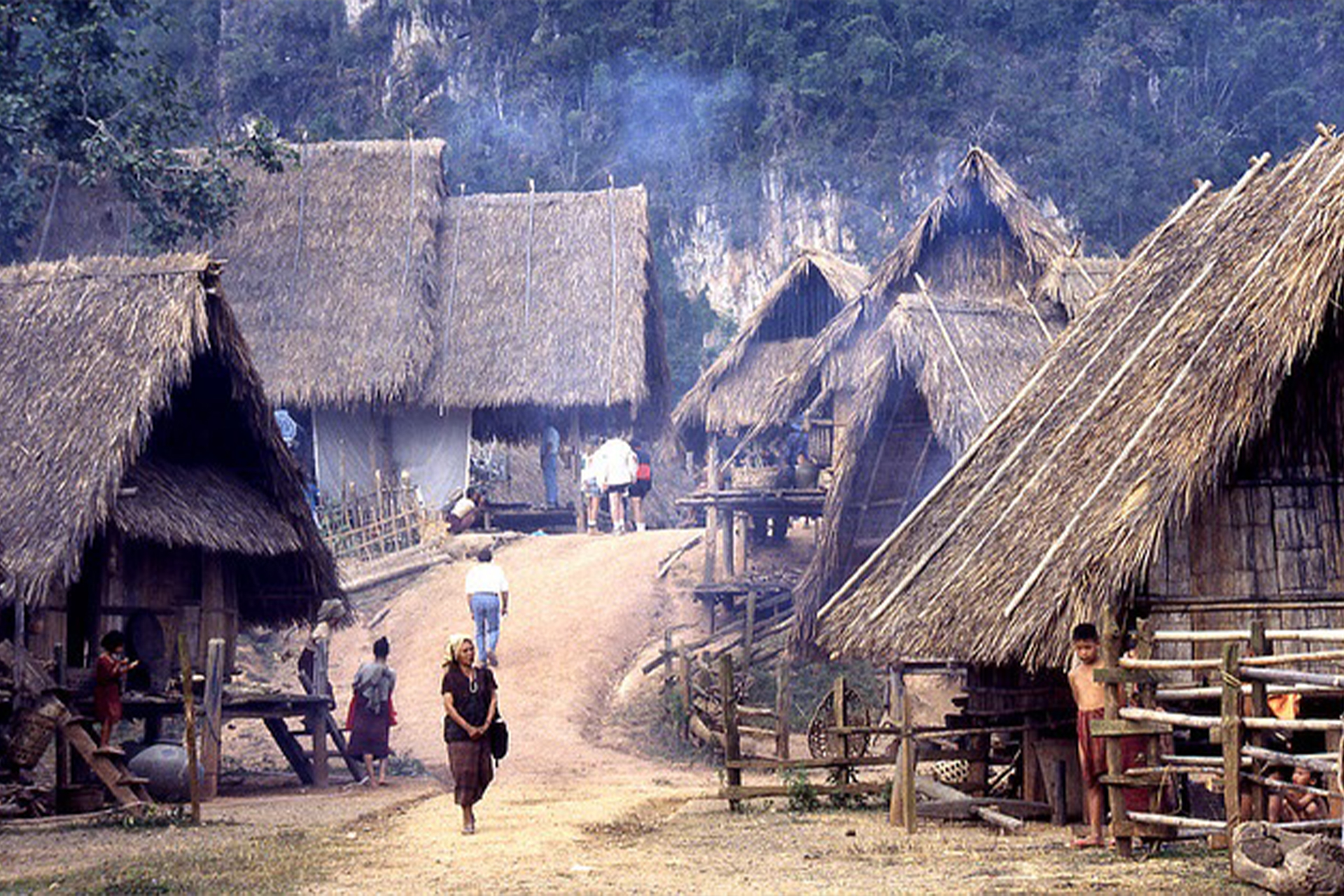
What free meant
It did not mean empty, and it did not mean simple. The highlands held villages, cleared fields, iron forges, salt and slave routes, buffalo herds, courts and a body of law recited from memory. Each people had its own territory and its own procedure for settling a quarrel. Land was held by the village and worked by the families in it — a system of property, simply not the one a colonial registrar would later recognise. Leaders were known by name to everyone they led and answerable to them.
What it meant concretely is that no outside power collected our taxes, conscripted our sons, decided what language our children were taught in, or told us which powers we could hold sacred. For two thousand years those decisions were ours. When we ask for self-determination we are asking for something we had and lost, not something we have never tried.
The Kings of Fire and Water
The clearest surviving evidence that the pre-colonial highlands were a recognised power, not a blank on a map, is the pair of Jarai ritual offices the outside world called the King of Fire and the King of Water — Pơtao Apui and Pơtao Ia — seated in the Ayun and Ba river valleys, in what are now Ayun Pa district in Gia Lai and the country toward Ea Súp in Dak Lak.
They were not monarchs and held no territory in the European sense. They were masters of fire, water and wind, keepers of a sacred sabre held to have come from the sky; the Fire King was understood to command heat and drought, the Water King to call rain. What matters historically is who took that seriously. The Cambodian court sent sacrificial offerings every three years, seeking peace and good harvests. The Nguyen court at Hue received tribute missions from them and recorded the two chiefdoms in its annals as Hỏa Xá and Thủy Xá, the Fire and Water polities. Both traced descent from the Cham.
Three neighbouring states, with nothing in common but a border with us, all concluded that the highlands contained an authority it was prudent to deal with. That is a diplomatic relationship, and it is older than any claim now made over us.
Why nobody came up
Our neighbours on the coast knew we were there. The Cham reached the coast around Danang in the ninth century and did not push into the plateau. The Vietnamese destroyed the Cham capital in 1471 and, over the next two centuries, pushed the survivors south toward Bien Hoa and into Cambodia — and still did not come up.
The reasons were practical. The plateau was defensible, its approaches narrow, and malaria killed lowlanders who stayed in the forest. Above all it held nothing the coastal kingdoms needed badly enough to pay for. We should be honest about this: we were left alone in part because we were not yet worth taking. The moment the highlands became worth taking — for rubber, for coffee, for strategic depth in somebody else's war, for room to resettle a population — being left alone ended very fast.
Not isolated, though
Independence is not the same as isolation, and the picture of the highlands as a sealed forest is a colonial invention that later served everyone who wanted to describe us as primitive. Our rivers run both ways: the Se San and Srepok west into the Mekong, the Ba east to the sea, the Dong Nai south toward Saigon. Highland iron, forest products, wax, resin and elephants went down those routes and salt, cloth, bronze gongs and porcelain jars came up them. The gong sets that are the centre of our ceremonial life were not made in the highlands. They were bought.
A people with a long-distance trade in prestige goods, tributary relations with three courts, and a body of law elaborate enough to be written down in the 1920s at the length of a code is not a people waiting to be discovered.
The first to come up
The first outsiders to enter the interior with any intention of staying were missionaries. In 1850 the French priest Charles-Émile Bouillevaux, travelling on the Mekong, reported on a respected King of Fire among the Jarai — the first European account of the institution. From 1851 Catholic missionaries dispatched from the coast established themselves among the Bahnar in the country around Kon Tum, and from that mission came the first grammar and dictionary of a highland language, the first schooling, the first clinics and the first maps of the interior.
They came to convert, not to govern, and at that stage the difference was real. But converting requires knowing, and knowing produces documents: who lives where, how many, under whose authority, by which path. Those documents were later extremely useful to people with other intentions. This is not an accusation against the missionaries, several of whom spent their lives in our villages and are remembered by name in Bahnar families today. It is a statement about what information does once it exists.
What we cannot date
Almost everything in this page before 1850 rests either on outside chronicles — Cham inscriptions, Vietnamese court annals, Cambodian records — or on our own oral tradition. The two do not always agree, and neither produces the kind of date a footnote likes. Where this library gives a year before 1800 it is giving the year the outside record gives, and a reader should treat it as the date of a written mention rather than the date of an event.
Sources
- Gerald C. Hickey, Sons of the Mountains: Ethnohistory of the Vietnamese Central Highlands to 1954 (Yale University Press, 1982)
- Oscar Salemink, The Ethnography of Vietnam's Central Highlanders, 1850–1990 (2003)
- Thủy Xá and Hỏa Xá — Bouillevaux's 1850 report, the Cambodian triennial offerings, the Nguyen tribute relationship
- Montagnard Foundation, Inc., historical summaries (archive held by DCHO)
Compiled September 2026. Oral accounts of the Fire and Water Kings, and of the trade routes, are exactly what this page most needs. If your family holds one, we would like to record it.