






Knowledgebase
Viewing articles tagged 'pleiku'
Viewing articles tagged 'pleiku'
10 articles
BAJARAKA, 1958
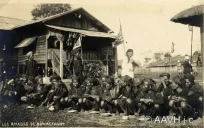
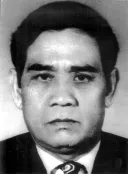
BAJARAKA is four peoples in one word: BAhnar, JArai, RAde, KAho. It was the movement in which our educated men, most of them teachers, clerks, soldiers and policemen of the new Republic of Vietnam, asked for our country back with letters, a petition and a march. They wrote to President Diem, to the American, French and British ambassadors and to...
Before history: the stone and bronze ages of the plateau
Seven thousand years ago people were living in the lava caves at Krong No, burying their dead in a flexed position, cooking at hearths and wearing ornaments made from sea-snail shells carried a hundred kilometers from the coast. That is the best-dated thing we have. Out at the edges the claims get bigger and the ground gets softer: stone tools a...
A map of the highlands
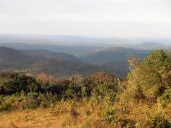
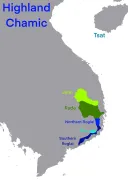
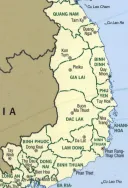
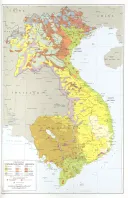
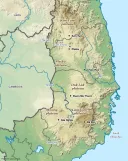
Our country is the high plateau between the Annamite mountains and the Mekong, in what Vietnam now calls the Central Highlands and across the borders in Cambodia and Laos. This page gives the map, and then the country behind it: the mountains and the red basalt plateaus, the rivers that run east to the sea and west to the Mekong, the rains, wher...
February 2001: the highlands stand up
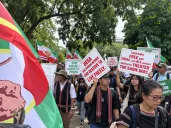
On Friday, February 2, 2001, eight hundred people from four communes walked out of their villages at four in the morning and reached Pleiku at half past eight. By mid-morning there were thousands of them outside the provincial hall. The next day the same thing happened at Buon Ma Thuot, and over the following twelve days at Ea H’leo, at Ayun Pa,...
Easter Week 2004
On the Saturday and Sunday of Easter 2004, people came out of their villages in thirty-nine communes across seventeen districts of Gia Lai, Dak Lak and Dak Nong. They came on farm tractors with trailers behind them, packed with food for five days, because they meant to stay. They were asking for four things: their land, the right to worship, the...
Moved by force: hamlets, camps and relocation, 1957–1972
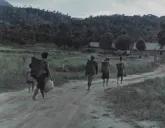
For fifteen years, from 1957 into the 1970s, governments moved our villages. Saigon moved them to make room for Vietnamese settlers, then to empty the country the Viet Cong held. The American army lifted them out by helicopter so that it could fight where they had lived. A South Vietnamese general moved them again at harvest, on a few hours’ not...
Four highland towns
The four towns of the highlands that the world knows, Buon Ma Thuot, Pleiku, Kon Tum and Da Lat, all carry highland names, and all grew up on highland land as posts of someone else’s government: a Rhade chief’s village made a French residence, a Jarai village made a militia post, a Bahnar village made a mission and then a province, and a pine-co...
Tet 1968 in the highlands
The American field force that held the highlands wrote its own verdict on Tet four pages after it counted the dead: “Heaviest attacks were launched initially” at “the highlands population centers of Kontum and Ban Me Thuot.” The first and hardest blows of the 1968 offensive in the whole of II Corps fell on two of our market towns. Then the same...
Highland refugees of the war years
In the autumn of 1970 a South Vietnamese corps commander ordered the province chiefs of the highlands to empty every one of our hamlets that had been graded C or D. Families were given a few hours’ notice, in the harvest season, and told to leave the gongs and the jars behind. At Plei De Groi, 2,500 people were moved in; by the following October...
The Jarai
The Jarai are the largest of our peoples and the largest Chamic-speaking people on the mainland — larger than the Rhade, and far larger than the Cham themselves. Their country is the Pleiku plateau and the valleys falling away from it into the Ayun and the Ba, and it does not stop at the border: a fifth of Ratanakiri province in Cambodia is Jara...
Powered by WBAMS