








Knowledgebase
Viewing articles tagged 'north carolina'
Viewing articles tagged 'north carolina'
10 articles
How many Dega there are
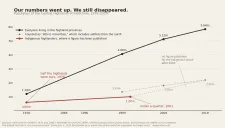
There are more of us than there have ever been, and we have never been so small a part of our own country. The state’s own census counted about 768,000 people in the thirteen highland peoples in 1979 and about 2,125,000 in 2019 — almost a trebling in forty years. Over the same span the population of the four highland provinces went from 1.2 mill...
Mondulkiri, 1992: the end of the armed struggle
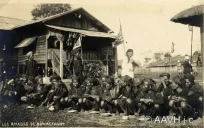
In September 1992 two journalists walked into the forest of Mondulkiri, in eastern Cambodia, and found 407 FULRO guerrillas and their families living in five villages with six churches, still fighting a war that had ended seventeen years before. Nobody had told them that their president had been killed in 1975. On October 10 they handed 194 weap...
North Carolina
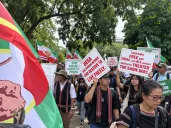
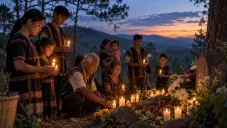
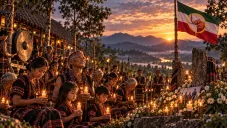
The largest community of our people outside Vietnam is in North Carolina, in Greensboro, Charlotte, Raleigh and New Bern. It is there because the American soldiers we fought beside came home to Fort Bragg and would not let the subject drop, and because when the survivors of the resistance walked out of the forest in 1985 and 1992 those soldiers...
The Cambodian camps, 2001–2005
The border between Vietnam and Cambodia runs through the middle of one people. The Mnong of Dak Nong are the Bunong of Mondulkiri; the Jarai of Gia Lai are one of the largest peoples of Ratanakiri. When the crackdown came after February 2001, our people walked east to west across a line that meant nothing to them, into villages where the languag...
Our organizations
A directory of the organizations that Dega people in exile have founded, and of the groups that work closely with us: what each is, where it is, when it began, and what has happened to it since. We list them so that readers know who is who. Listing an organization here is not an endorsement of everything it says, and none of them speaks for us.
Weaving and dress
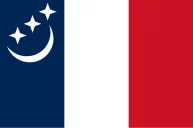
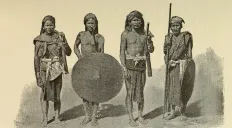
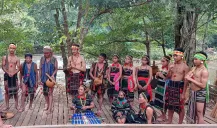
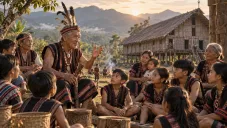
Before there was a flag, there was cloth. A Rhade skirt, a Jarai loincloth, a Maa blanket or a Bahnar skirt hung with seeds told anyone who knew how to read it which people the wearer belonged to. The cloth was woven by women on a loom tied to their own bodies, from cotton they grew and dyed themselves. In North Carolina it still is.
The 2002 resettlement: from the Cambodian camps to North Carolina
In the summer of 2002 about nine hundred of our people were flown from a disused factory in Phnom Penh to airports in North Carolina, fifty at a time, three or four times a week, on ordinary commercial flights. Most had been in the forest or in a camp for a year. Three quarters of them were men, and most of those men had left a wife and children...
Our veterans in America
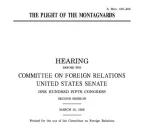
Sixty-one thousand of our men fought beside the Americans between 1961 and 1975, by the count the United States Senate itself uses. The United States brought some of the survivors to North Carolina in 1986 and 1992 because of that service, and has twice passed resolutions honoring it. It has never counted one of them as a veteran. This page sets...
The Rhade (Êđê)
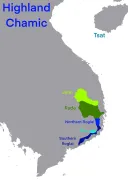
The Rhade are the people of the Darlac plateau, the red basalt shelf around Buon Ma Thuot where the Krong Ana, the female river, joins the Krong No, the male river, and becomes the Srepok. They speak a Chamic language, cousin to Cham and more distantly to Malay. They count descent through women: a house belongs to its women, land belongs to a wo...
Growing up Dega: birth, naming and coming of age
A Dega child was born beside the hearth in some of our peoples and in the forest in others, named by the ancestors, given a false name to hide it from the spirits, and raised with a freedom that outsiders remarked on in every village they visited but one. This page sets out what the older written sources record about growing up in the highlands,...
Powered by WBAMS