




























Knowledgebase
Viewing articles tagged 'bahnar'
Viewing articles tagged 'bahnar'
13 articles
The tribes and their languages
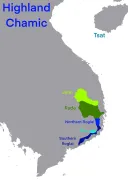
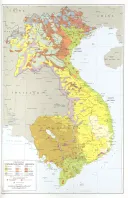
Around thirty peoples, in two language families that are not related to one another. The Chamic-speaking peoples, Jarai, Rhade, Raglai, Chu Ru and Haroi, are Austronesian, cousins of the Cham of the coast and, further out, of Malay and Indonesian. Most of the rest speak Bahnaric languages of the Austroasiatic family, related to Khmer; the Bru, K...
Language resources
Our languages are the part of our inheritance most at risk and the easiest to lose without noticing. This page lists what exists to learn, teach and study them: the codes that libraries and software use to find them, how endangered each one is, the dictionaries and grammars that can be downloaded free today, the recordings of our elders’ speech...
The Kon Tum mission, 1851
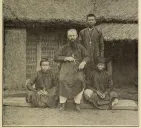
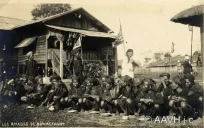
In the last weeks of 1850 a French priest of twenty-five, guided in by a Vietnamese deacon, reached the Bahnar villages of the Kon Tum basin. The mission that followed produced the first written form of any of our languages, the first dictionary, the first school, and the first outside description of who lived in the highlands and where. It is t...
The "Kingdom of the Sedang," 1888
On June 3, 1888, at the village of Kon Gung on the Poko north of Kon Tum, the chiefs of several Sedang villages signed a constitution that made a Frenchman their king. The Kingdom of the Sedang lasted about two years, issued stamps, medals and a flag, and is usually told as a comic episode in the life of an adventurer. It is worth telling from o...
Gongs and epics
Much of what the Dega know was never written down. It was played on gongs and sung through the night. In 2005 UNESCO recognized the gong culture of the Central Highlands as a masterpiece of the world’s intangible heritage, and in 2008 put it on the Representative List. This page is about what that heritage is, about the stone instrument at Ndut...
The tomb house and the abandonment of the grave
Among the Jarai a person is not finished dying at the funeral. The marriage is not dissolved, the widow is still a wife, and adultery against a dead husband is still adultery. The grave is visited every day and offered to every month, for as long as it takes — and how long it takes is not set by custom. It is set by what the family can afford. O...
Weaving and dress
Before there was a flag, there was cloth. A Rhade skirt, a Jarai loincloth, a Maa blanket or a Bahnar skirt hung with seeds told anyone who knew how to read it which people the wearer belonged to. The cloth was woven by women on a loom tied to their own bodies, from cotton they grew and dyed themselves. In North Carolina it still is.
Ha Mon: the Catholic movement the state calls an “evil way”
In a village on the Krong Poko, in the last years before the water came, a Bahnar woman named Y Gyin said that the Mother of God had appeared to her and had told her people to gather, to pray, and not to let themselves be moved. Within four years the reservoir was over the ground she named. Within eleven the state had run public denunciation mee...
The highland Catholic Church under the Socialist Republic
On March 27, 1975, in a town that had fallen eleven days earlier, the French bishop of Kon Tum consecrated a Vietnamese successor so that the diocese would not be left headless when he was expelled. Within eighteen months the minor seminary, the major seminary and the school that had trained highland catechists since 1908 were all shut, and the...
The Bahnar
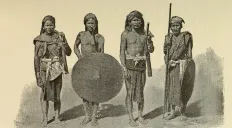
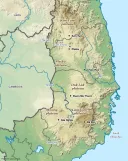
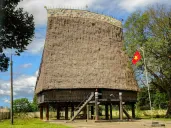
The Bahnar are the people of Kon Tum and eastern Gia Lai, with a wing that spills over the Annamite crest into the hills of Bình Định. They are the counterweight to the Rhade and the Jarai in any honest account of who we are: they speak a Mon-Khmer language, not an Austronesian one; they count descent through both parents rather than through wom...
Jars, rice wine and the buffalo feast
A jar has a soul. The Êđê call it mngắt cheh, and if a jar stands empty for a while someone will put a handful of rice and an egg inside to feed it. A jar is also money: among the Êđê Bih a tang pôk jar was worth a buffalo and a tuk navi jar was worth an elephant. And a jar is law — when a man was killed, the killer set one jar at the feet of th...
Writing our languages
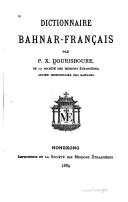
Our languages were spoken for thousands of years before any of them was written. Between the middle of the nineteenth century and the 1970s, French missionaries, a French administrator and his teachers, American missionaries and linguists, and our own people put them into the Latin alphabet, one language at a time, each for its own reasons and e...
The bracelet
A ring of brass or copper on the wrist is one of the oldest bonds among our peoples. It settles an engagement and ends one; it pays the midwife and the broker; it is heated in coals and dropped into a jar of blood and rice beer so that men who should be enemies can drink and be bound. In 1964, on the morning of a mutiny, a Rhade shaman put three...
Powered by WBAMS