
















Knowledgebase
Viewing articles tagged 'sedang'
Viewing articles tagged 'sedang'
8 articles
The tribes and their languages
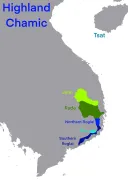
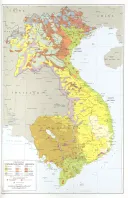
Around thirty peoples, in two language families that are not related to one another. The Chamic-speaking peoples, Jarai, Rhade, Raglai, Chu Ru and Haroi, are Austronesian, cousins of the Cham of the coast and, further out, of Malay and Indonesian. Most of the rest speak Bahnaric languages of the Austroasiatic family, related to Khmer; the Bru, K...
Language resources
Our languages are the part of our inheritance most at risk and the easiest to lose without noticing. This page lists what exists to learn, teach and study them: the codes that libraries and software use to find them, how endangered each one is, the dictionaries and grammars that can be downloaded free today, the recordings of our elders’ speech...
The Kon Tum mission, 1851
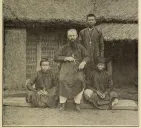
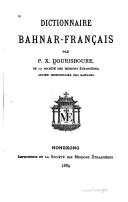
In the last weeks of 1850 a French priest of twenty-five, guided in by a Vietnamese deacon, reached the Bahnar villages of the Kon Tum basin. The mission that followed produced the first written form of any of our languages, the first dictionary, the first school, and the first outside description of who lived in the highlands and where. It is t...
The "Kingdom of the Sedang," 1888
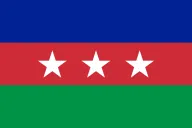
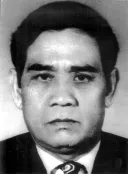
On June 3, 1888, at the village of Kon Gung on the Poko north of Kon Tum, the chiefs of several Sedang villages signed a constitution that made a Frenchman their king. The Kingdom of the Sedang lasted about two years, issued stamps, medals and a flag, and is usually told as a comic episode in the life of an adventurer. It is worth telling from o...
The slave raids
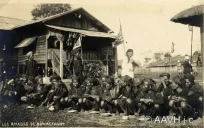
At Stung Treng in the last century of the trade a person from our highlands sold for three or four bars of silver. The Lao word for us, Kha, means servant or slave. The Frenchman who wrote both of those things down in 1898 added a third sentence about us that we reproduce here because of what it shows about the men who came to abolish the traffi...
Ha Mon: the Catholic movement the state calls an “evil way”
In a village on the Krong Poko, in the last years before the water came, a Bahnar woman named Y Gyin said that the Mother of God had appeared to her and had told her people to gather, to pray, and not to let themselves be moved. Within four years the reservoir was over the ground she named. Within eleven the state had run public denunciation mee...
The highland Catholic Church under the Socialist Republic
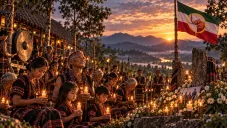
On March 27, 1975, in a town that had fallen eleven days earlier, the French bishop of Kon Tum consecrated a Vietnamese successor so that the diocese would not be left headless when he was expelled. Within eighteen months the minor seminary, the major seminary and the school that had trained highland catechists since 1908 were all shut, and the...
The Sedang (Xơ Đăng)
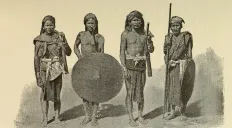
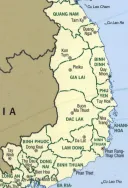
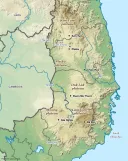
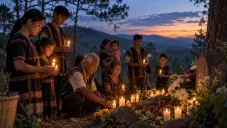
The Sedang hold the high northern end of the plateau — the ridges above Kon Tum, the country of Dak To and Tu Mo Rong, and the shoulders of Ngoc Linh, the highest mountain in the southern Annamites. They are the people who smelted iron and sold lances and sabers to buy salt; whose language has one of the largest vowel systems ever described in a...
Powered by WBAMS