








Knowledgebase
Viewing articles tagged 'dak lak'
Viewing articles tagged 'dak lak'
12 articles
The land, and what was planted on it
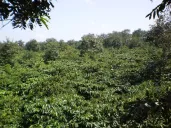
Vietnam went from a marginal coffee producer to the second largest in the world in about fifteen years, on the red basalt of the Central Highlands. The story of how that happened and the story of what happened to us are the same story told from two ends. Forest cover in our highlands fell from 42.8 percent in 1990 to 19 percent in 2020, and most...
The French arrive, 1876–1929
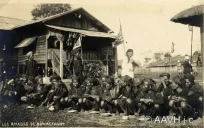
We let the French in. Most of our villages received them, between 1891 and 1899, as men who had come alone, who promised protection against the Lao and Siamese raiders from the west, and who had just taken the coast from the power that had taken it from us. The reasoning was not naive, and for a while it held. What we got over the next thirty ye...
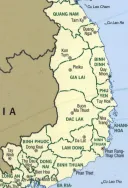
A map of the highlands
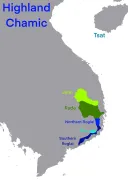
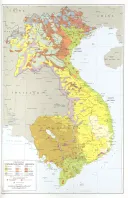
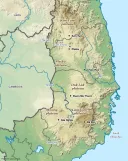
Our country is the high plateau between the Annamite mountains and the Mekong, in what Vietnam now calls the Central Highlands and across the borders in Cambodia and Laos. This page gives the map, and then the country behind it: the mountains and the red basalt plateaus, the rivers that run east to the sea and west to the Mekong, the rains, wher...
February 2001: the highlands stand up
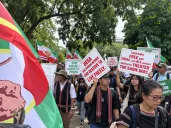
On Friday, February 2, 2001, eight hundred people from four communes walked out of their villages at four in the morning and reached Pleiku at half past eight. By mid-morning there were thousands of them outside the provincial hall. The next day the same thing happened at Buon Ma Thuot, and over the following twelve days at Ea H’leo, at Ayun Pa,...
Easter Week 2004
On the Saturday and Sunday of Easter 2004, people came out of their villages in thirty-nine communes across seventeen districts of Gia Lai, Dak Lak and Dak Nong. They came on farm tractors with trailers behind them, packed with food for five days, because they meant to stay. They were asking for four things: their land, the right to worship, the...
The prisoner records: what they are and how to search them
Our records hold 337 Dega by name, men and one woman imprisoned for their faith, their land or their people in five provinces, arrested between 2001 and 2006. This page explains what the records are, where they came from, what they show, how they compare with the lists kept by others, what the gaps mean, and how to search them for somebody, incl...
Prisoners of conscience: Dak Lak
Sixty-six Dega from Dak Lak province, recorded by name as imprisoned for their faith, their land or their people, arrested between 2001 and 2004. Almost every one of them carries a sentence and a prison in the record, and almost every prison is the same one: Ha Nam, in the north. It is a record, not an argument. Every line is a person somebody i...
Land law and customary land
In Vietnam nobody owns land. The land belongs to the entire people, the State represents the people, and what a family holds is a right to use, written on a certificate with red covers. That arrangement did not have to be aimed at us to take our country from us. A registry that records the field a family is cropping this season, in one household...
Stateless in our own country
Thousands of highland families in Vietnam have no identity papers. Without them a child cannot enroll in school, a couple cannot register a marriage, a family cannot transfer its land, or see a doctor on public insurance, and no one can lawfully leave the country. These are people born in the highlands to parents born there, with no other nation...
The elephants of Bản Đôn
For more than a century the village of Ban Don, on the Srepok west of Buon Ma Thuot, was known across mainland Southeast Asia for one thing: the men there caught wild elephants and tamed them. The hunters were Mnong, Lao, Jarai and Rhade, and the most famous of them was given a title by the King of Siam. The hunting ended in the 1990s. In 1980 D...
The great migration: New Economic Zones and settlers
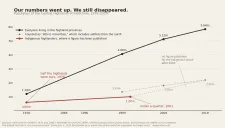
In 1921 there were twenty Vietnamese living in Darlac. By 1997 there were a million and a half people in the province that replaced it, and we were one in five of them. No war, epidemic or famine did that. It was done by migration: first planned by the state, family by family into New Economic Zones, and then, when coffee made the highlands rich...
The Rhade (Êđê)
The Rhade are the people of the Darlac plateau, the red basalt shelf around Buon Ma Thuot where the Krong Ana, the female river, joins the Krong No, the male river, and becomes the Srepok. They speak a Chamic language, cousin to Cham and more distantly to Malay. They count descent through women: a house belongs to its women, land belongs to a wo...
Powered by WBAMS