














Knowledgebase
Viewing articles tagged 'jarai'
Viewing articles tagged 'jarai'
14 articles
The tribes and their languages
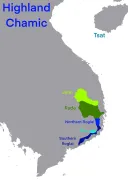
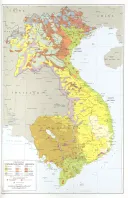
Around thirty peoples, in two language families that are not related to one another. The Chamic-speaking peoples, Jarai, Rhade, Raglai, Chu Ru and Haroi, are Austronesian, cousins of the Cham of the coast and, further out, of Malay and Indonesian. Most of the rest speak Bahnaric languages of the Austroasiatic family, related to Khmer; the Bru, K...
Language resources
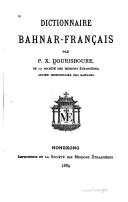
Our languages are the part of our inheritance most at risk and the easiest to lose without noticing. This page lists what exists to learn, teach and study them: the codes that libraries and software use to find them, how endangered each one is, the dictionaries and grammars that can be downloaded free today, the recordings of our elders’ speech...
The Kings of Fire and Water
The legend said they lived alone in seven towers on seven mountains, moved from one to the next each year, never saw a human face, and reigned seven years. A French officer went to find out, and in February 1891 he found the Master of Fire lying on a bamboo couch smoking a long copper pipe, among people who paid him no great deference. He carrie...
The tomb house and the abandonment of the grave
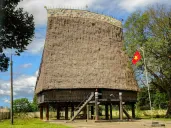
Among the Jarai a person is not finished dying at the funeral. The marriage is not dissolved, the widow is still a wife, and adultery against a dead husband is still adultery. The grave is visited every day and offered to every month, for as long as it takes — and how long it takes is not set by custom. It is set by what the family can afford. O...
Kin across the border: Ratanakiri and Mondulkiri
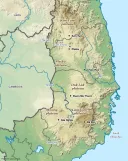
The border between Vietnam and Cambodia runs through the middle of our country. On the other side of it, in the Cambodian provinces of Ratanakiri and Mondulkiri, live Jarai, Bunong and other highland peoples who are our kin by language, by marriage and by history. It is where FULRO’s last fighters came out in 1992, where our refugees ran in 2001...
Kok Ksor
A Jarai from Bon Broai who joined BAJARAKA at fourteen, went over the border at seventeen, came home from a war by way of a Khmer Republic training course in Virginia, and spent the second half of his life in a small city in South Carolina making our case in rooms where states have to listen. For thirty years Kok Ksor was the Dega most foreign g...
Weaving and dress
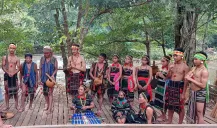
Before there was a flag, there was cloth. A Rhade skirt, a Jarai loincloth, a Maa blanket or a Bahnar skirt hung with seeds told anyone who knew how to read it which people the wearer belonged to. The cloth was woven by women on a loom tied to their own bodies, from cotton they grew and dyed themselves. In North Carolina it still is.
Roads, taxes and forced labor, 1899–1945
In 1899 the tribute our villages had paid every three years in wax, horn and ivory was abolished and replaced by a tax in cash, on people who did not use cash. Three years later came the days: ten a year of unpaid work on the roads, rising to fifteen, and eight to ten more spent walking to the worksite and back. A man who could not find the mone...
The highland Catholic Church under the Socialist Republic
On March 27, 1975, in a town that had fallen eleven days earlier, the French bishop of Kon Tum consecrated a Vietnamese successor so that the diocese would not be left headless when he was expelled. Within eighteen months the minor seminary, the major seminary and the school that had trained highland catechists since 1908 were all shut, and the...
The Jarai
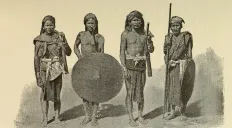
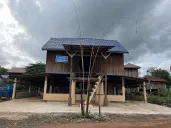
The Jarai are the largest of our peoples and the largest Chamic-speaking people on the mainland — larger than the Rhade, and far larger than the Cham themselves. Their country is the Pleiku plateau and the valleys falling away from it into the Ayun and the Ba, and it does not stop at the border: a fifth of Ratanakiri province in Cambodia is Jara...
Jars, rice wine and the buffalo feast
A jar has a soul. The Êđê call it mngắt cheh, and if a jar stands empty for a while someone will put a handful of rice and an egg inside to feed it. A jar is also money: among the Êđê Bih a tang pôk jar was worth a buffalo and a tuk navi jar was worth an elephant. And a jar is law — when a man was killed, the killer set one jar at the feet of th...
Lower Sesan 2: the dam downstream
The Se San and the Srepok carry the water of our highlands into Cambodia, where the same peoples live on both banks. In 2017 the gates closed on Lower Sesan 2, a dam just below the rivers’ meeting in Stung Treng. It flooded some 30,000 hectares and displaced nearly 5,000 people, most of them Bunong, Brao, Lao, Jarai and their neighbors; more tha...
Writing our languages
Our languages were spoken for thousands of years before any of them was written. Between the middle of the nineteenth century and the 1970s, French missionaries, a French administrator and his teachers, American missionaries and linguists, and our own people put them into the Latin alphabet, one language at a time, each for its own reasons and e...
The bracelet
A ring of brass or copper on the wrist is one of the oldest bonds among our peoples. It settles an engagement and ends one; it pays the midwife and the broker; it is heated in coals and dropped into a jar of blood and rice beer so that men who should be enemies can drink and be bound. In 1964, on the morning of a mutiny, a Rhade shaman put three...
Powered by WBAMS