









Knowledgebase
Viewing articles tagged '1975'
Viewing articles tagged '1975'
13 articles
FULRO, 1964–1992
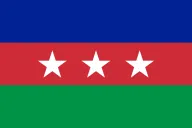
On the night of September 19, 1964, the strike forces of four American-trained camps in Darlac and Quang Duc rose against their Vietnamese officers and marched on Buon Ma Thuot, and a movement announced itself: the United Front for the Struggle of the Oppressed Races, FULRO. It was made by the men of BAJARAKA, released from Diem’s prisons seven...
The men of FULRO
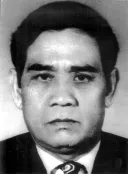
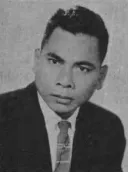
FULRO is usually told as the story of one man. It was never only his. This is a register of the others we can name — the Cham officer who invented the word for what we were supposed to be, the two men called Adrong whom the record keeps confusing, the interpreter who funded a liberation front out of an American payroll, the commander who walked...
Y Bham Enuol
A Rhade official from Buon Ale-A who led both of our movements, spent more than five years in the prisons of the government he was petitioning, put our own name for ourselves into the official record, was held under guard by his own allies for the last six years of his life, and walked out of the French Embassy in Phnom Penh on April 20, 1975, i...
Y Bham Enuol: Phnom Penh, the captivity and the death
At the end of 1968, days before he was to sign a settlement with Saigon, FULRO men and Cambodian officers took his headquarters and moved him to Phnom Penh. He was held there for six years, still called president by the fighters in the forest and still signing papers for them. On April 20, 1975 he walked out of the French Embassy at the head of...
1975, and what came after
The Republic of Vietnam began to lose the war in our country, at Buon Ma Thuot on March 10, 1975, and it lost the highlands in two weeks. For our people the spring of 1975 was not an ending. Our minister asked the Americans for protection and was refused. Two thousand of our people waited on a beach at Nha Trang for a ship that never came. Our l...
Paul Nưr and Nay Luett: the ministry years
Two men who tried the other route. Both were BAJARAKA founders, both went to prison for it under Diem, and both then took office inside the government that had jailed them — one as a province administrator who became the first highlander in a Saigon cabinet, one as the minister who held that ministry to the last week of the Republic. Both died i...
The camps and the prisons, 1975 to today
Since 1975 our people have been held in two generations of camps and prisons. The first held the men of the old order: our ministers and officials, the soldiers who had served with the Americans, and our pastors, taken without trial after the war. The second has held the people of the churches and the land protests since 2001, tried in groups an...
Highlanders on the other side
Not all of our people fought beside the Americans. Some went with the Viet Minh against the French, took the boat north in 1954, and came back down the trail as cadres of the National Liberation Front. A Rhade leader of BAJARAKA became a vice-president of the Front. Across the border, a Jarai boy from Ratanakiri became Pol Pot’s bodyguard, while...
Four highland towns
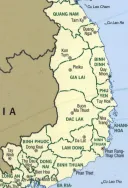
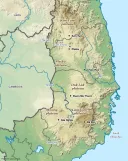
The four towns of the highlands that the world knows, Buon Ma Thuot, Pleiku, Kon Tum and Da Lat, all carry highland names, and all grew up on highland land as posts of someone else’s government: a Rhade chief’s village made a French residence, a Jarai village made a militia post, a Bahnar village made a mission and then a province, and a pine-co...
The great migration: New Economic Zones and settlers
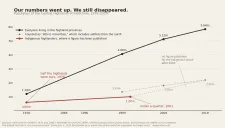
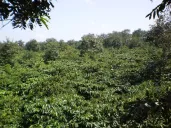
In 1921 there were twenty Vietnamese living in Darlac. By 1997 there were a million and a half people in the province that replaced it, and we were one in five of them. No war, epidemic or famine did that. It was done by migration: first planned by the state, family by family into New Economic Zones, and then, when coffee made the highlands rich...
Highland refugees of the war years
In the autumn of 1970 a South Vietnamese corps commander ordered the province chiefs of the highlands to empty every one of our hamlets that had been graded C or D. Families were given a few hours’ notice, in the harvest season, and told to leave the gongs and the jars behind. At Plei De Groi, 2,500 people were moved in; by the following October...
The highland Catholic Church under the Socialist Republic
On March 27, 1975, in a town that had fallen eleven days earlier, the French bishop of Kon Tum consecrated a Vietnamese successor so that the diocese would not be left headless when he was expelled. Within eighteen months the minor seminary, the major seminary and the school that had trained highland catechists since 1908 were all shut, and the...
Re-education and the forest, 1975–1992
After April 1975 our leaders went to prison without trial, our soldiers went to the camps or to the forest, and our pastors went to both. The men who reached Cambodia fought on for seventeen years on corn and poisoned potatoes, waiting for orders from a president who had already been dead for most of that time. The men who came home from the cam...
Powered by WBAMS