

















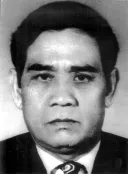

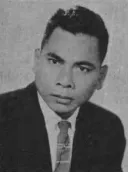
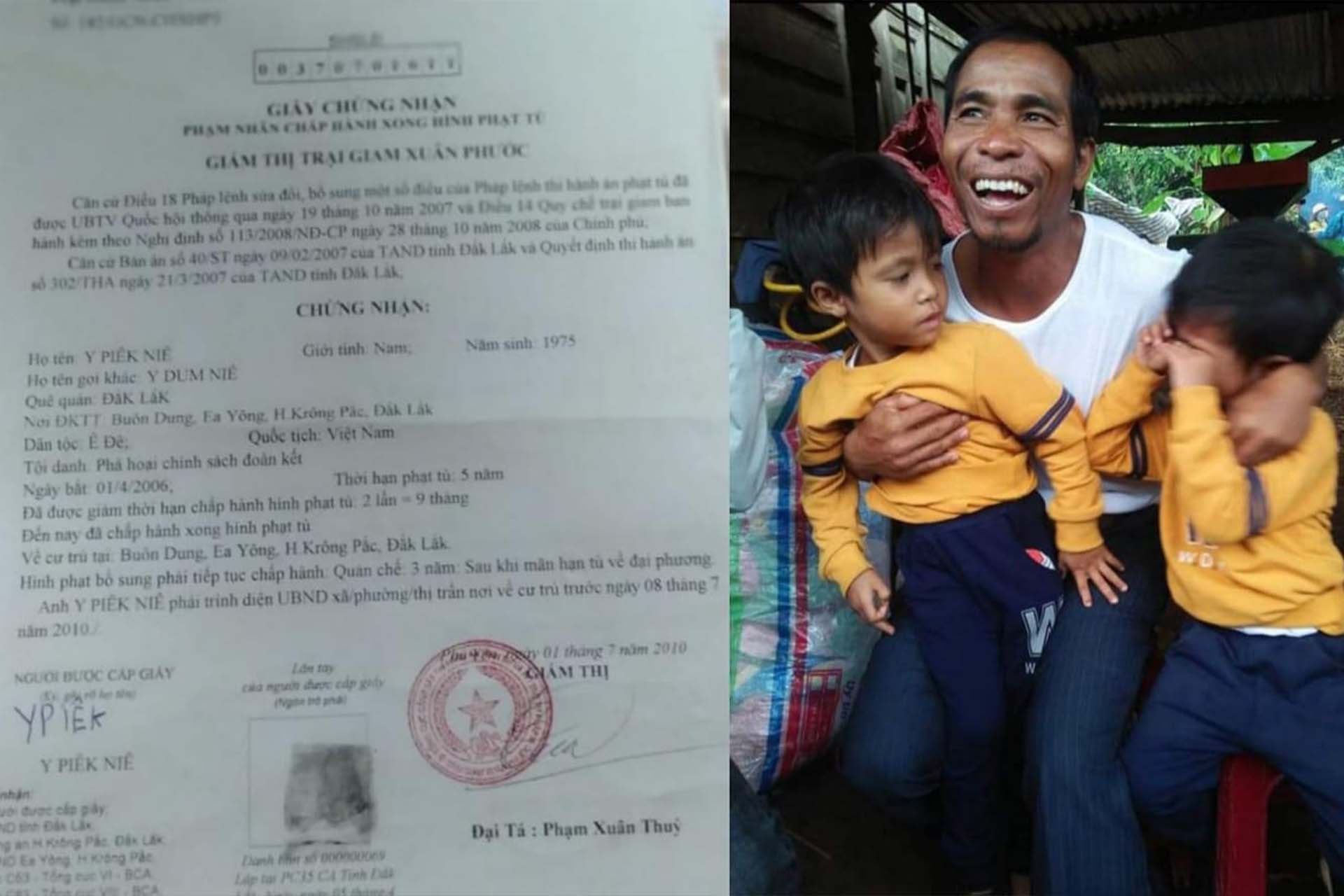
Before he signed his release papers the police held a party for him, with food and bottles of soda. His family says the soda was poisoned. He went home, married, had three children, and began to fail in 2019.
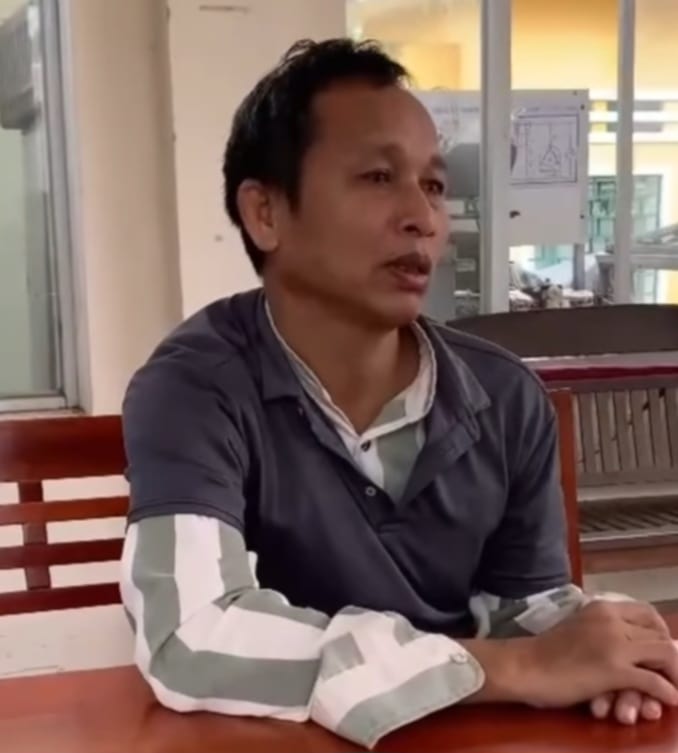
Name Y-Piek Nie
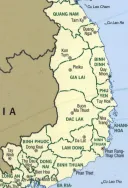
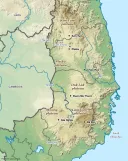
Born 1975, Buon Jung village, Ea Ayong commune, Krong Pac district, Dak Lak province
Imprisoned January 14, 2006, Xuan Phuc camp
Released January 7, 2010
Died September 16, 2021
The years inside
Y-Piek Nie was born in 1975 in Buon Jung village, in Ea Ayong commune, Krong Pac district, Dak Lak province. He was arrested on January 14, 2006, and sent to the prison at Xuan Phuc camp.
After five years the police accused him of violating article 87 of Vietnamese law, and charged him with discrimination on religious and political grounds. He was tortured with electric shocks. When officers took him to the investigators he was beaten and hung up, which left him in severe pain.
The day he was let out
The government released him on January 7, 2010. Before he signed the paperwork, the police held a party: they cooked food, and they gave him sodas to drink. His family says the sodas were poisoned. Then they let him go home.
We have no money, nothing to take care of ourselves with.
The eleven years after
He felt nothing at the time. He went home, married a woman from Buon Mbriu village in Ea Kar district, and they had three children together.
In 2019 he began to lose his strength, tired every day. Knowing he would not last much longer, he asked his wife to take him to his sister’s house; he said he would die there and that they would see to his funeral. She did as he asked. About a day after he arrived, he began to bleed from his mouth and his nose. He died on September 16, 2021, and was buried on September 19.
He had a hard life and a poor family. He came and went with empty hands.
What we are reporting, and what we are not
The arrest, the imprisonment, the torture, the release and the dates of his illness and death are as his family gave them to us. That the sodas at the release party were poisoned, and that this is what killed him eleven years later, is his family’s conclusion. No autopsy was performed that we know of, and no medical finding has ever been given to them. We record it as what his family believe, and as one of a pattern of accounts our community has brought us about men released from Vietnamese prisons.
Why it matters
A release can look like mercy on paper. What our families describe is a sentence that goes home with the man and finishes the job years later, long after the prison has closed its file on him. We cannot prove what was in those bottles. We can record that a healthy man walked out in 2010, that his family was told to celebrate it, and that he bled to death in his sister’s house in 2021.
If this happened in your family
If someone in your family fell ill after release from a Vietnamese prison, please contact the Dega Central Highlands Organization. Accounts gathered together carry further than one on its own.