
















It began in one Rhade village six kilometers from Buon Ma Thuot, in October 1961, with an American volunteer who spoke our language, a Special Forces medic, and three weeks of argument with the elders. Within a year two hundred villages were armed. Within two years Saigon had taken the guns back from men who had been told they could keep them. Over the next nine years the program moved our men out of their own villages and into camps along the border, and at the end of 1970 it handed them to the army of the government that had disarmed them. By one count sixty-one thousand of our men fought beside the Americans. This is the story of what we were told, and what was done.
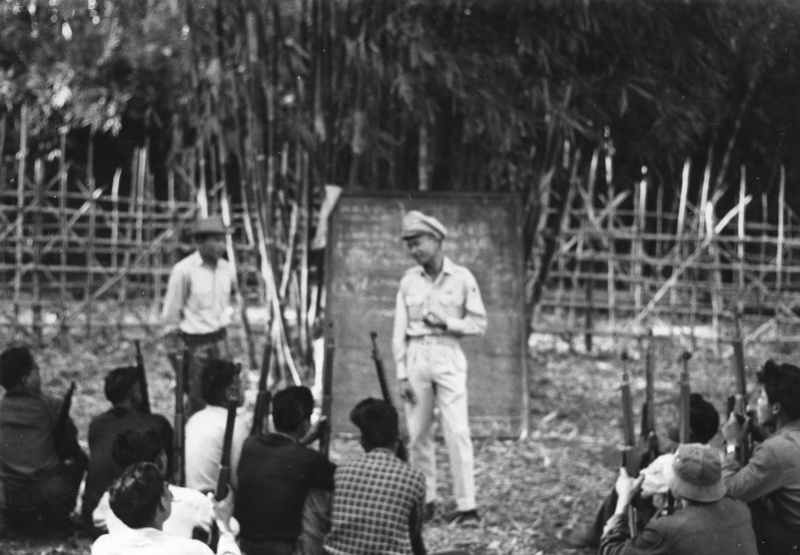

A chief warns an American
The first voice of our people in the American record of this war is a Rhade village chief whose name nobody wrote down.
In the spring of 1961 a young American named David Nuttle was working in the villages around Buon Ma Thuot for International Voluntary Services, a private aid organization. He spoke Rhade. The CIA’s own history of the program, written by the Agency about itself, says that his command of the language and his evident commitment to the villagers’ welfare made them willing to tell him what they thought of the government in Saigon and of the Viet Cong. One chief told him the Viet Cong were hard at work among his people.
In late April 1961 the CIA officer Gilbert Layton debriefed Nuttle, and the idea that became the whole program was born in that conversation. What the Agency wanted was plain in its own papers. Layton thought a thousand dollars would buy seeds for the villages and an experimental crop station, and would reach young Rhade men who could be recruited for intelligence. On May 25, 1961, the CIA station chief, William Colby, wrote to his colleagues that better treatment of the Montagnards would help military recruiting among them and might make it possible to organize village militias.
Colby named the obstacles in the same memorandum, and one of them is a sentence we reproduce because nobody else ever said it so plainly. The government in Saigon, he wrote, was determined to push Vietnamese settlement into our highlands, a policy
“bearing strong resemblance to America’s handling of its Indian population.”
That is the CIA’s chief of station in Saigon, in 1961, comparing what was being done to our land with what the United States had done to the Native nations of North America. He also warned that the Palace might read any American interest in the Rhade as encouragement of our autonomy. It did, and it never stopped reading it that way.
Colby took the plan to Ngô Đình Nhu, the president’s brother, who agreed. And then comes a sentence from the Agency’s own history that matters for everything that followed:
“No Vietnamese were involved in the first negotiations with the Montagnards themselves.”
The program was agreed between Americans and Rhade. Saigon came in afterward, and from the start its Special Forces commander, Colonel Lê Quang Tung, saw his men’s role at Buon Enao as preventing American support for Rhade claims to autonomy.
The other program of 1961
There was a second highland program that year, and it did not start in Washington. It started at Huế, in the office the Diệm government ran for the Montagnards. A Vietnamese captain in that office wrote a report that the CIA’s historian calls an extraordinary indictment of Vietnamese treatment of our people, and proposed training highland men as “Mountain Scouts.” The first 350 trainees arrived at a camp near Huế in December 1961, built with ten thousand dollars of CIA money.
The rule for choosing them tells you the whole relationship. The recruits were to be picked by the Vietnamese district chief, not by the elders as our custom required, because the authorities feared an independent Montagnard force. About 2,700 Mountain Scouts had been trained by the end of 1962.
Buon Enao: three weeks of argument
Buon Enao was a Rhade village of about four hundred people, six kilometers from Buon Ma Thuot.
Two institutions give two different reasons for choosing it, and we give both. The CIA’s history says it seemed prudent to start somewhere that was not immediately threatened by the Viet Cong. The Army’s later account says the Rhade were chosen because they were the most experienced of the highland peoples, because many of the men had served in the French army, and because Darlac was a major Viet Cong danger zone. The two cannot both be the reason, and the one written closest to the decision is the CIA’s.
In the early fall of 1961 Nuttle and a Special Forces medic, Paul Campbell, toured the Rhade villages of Darlac as far as seventy kilometers out. They introduced themselves as “Doctor Paul” and “Mr. Dave.” Campbell held sick call; Nuttle sat with the elders. The villagers told them openly that they compared them with the French and the Vietnamese, whose purposes they saw as entirely exploitative.
The village chief was Y Ju. Nuttle himself names him, writing in 2026 that his friend Y Ju volunteered Buon Enao to start the program. We do not have his clan name, and we would like it.
What the elders asked
In October 1961 the two Americans went to Buon Enao every day for three weeks. Campbell reported that the elders took every proposal as something sneaky and went into long conferences on everything said until they were satisfied. What they were asked for was a perimeter fence and a dispensary. The CIA’s history preserves the exchange, and it is the nearest thing we have to minutes of the meeting that began the whole American war in our country:
| The elders said | The Americans answered |
|---|---|
| A fence will cause trouble with the army | We will get a letter from the province chief |
| A fence will bring a Viet Cong attack | We will arm you |
| We do not know how to shoot | We will teach you |
| We have no bamboo for a fence | We will go into the forest and cut it |
| The fence will take our crops and fruit trees | We will replace them |
The Army’s version adds what the villagers said about their own situation: they supported the Viet Cong out of fear, because the government could not protect them; the government’s promises had not been kept, and aid went to the Vietnamese settlements; and they opposed the land development schemes that took tribal land. And it records something the program was built on top of. Since the late 1950s the government had been confiscating our weapons as punishment for Viet Cong activity, down to the crossbows and spears. In 1961 the Americans were re-arming a people Saigon had disarmed.
At the end of October the chief committed his village to both the dispensary and the fence.
Building it
Work began in early November: fifty men of Buon Enao and 125 from the villages around it, at thirty-five piasters a day, about fifty cents. Campbell later described getting the materials by stealing sand from a Vietnamese landowner’s riverbed and cutting bamboo at night that Vietnamese had cut by day.
And Rhade custom governed the work, which the CIA recorded with some bewilderment. The rules were so particular that a Rhade with a Western education had to be hired to explain them. A monkey follows a man who does something foolish, and building a fence seemed foolish, so a “monkey patrol” had to clear the forest before construction could go on. While the new houses went up,
“a ‘crow patrol’ kept watch to prevent any crows from perching on an unfinished dwelling, for if they did, it would have to be abandoned.”
The Americans built what they came to build, but they built it inside our rules.
The fence and the dispensary were finished in early December. By then the villagers, armed with their own weapons, had publicly pledged that no Viet Cong would enter Buon Enao. Layton raced another claimant for a shipment of carbines and got there first, and fifty weapons went to the first volunteers. An American Special Forces team arrived on December 12, 1961, and training began on the 15th. (The team was half of Detachment A-35; the sources disagree about how many men it had, and Captain Ronald Shackleton’s better-known A-113 did not arrive until February 1962.)
The CIA station chief chose a name meant to hide what it was: Citizens’ Irregular Defense Groups. It is the name the war remembers, slightly changed.
The first year
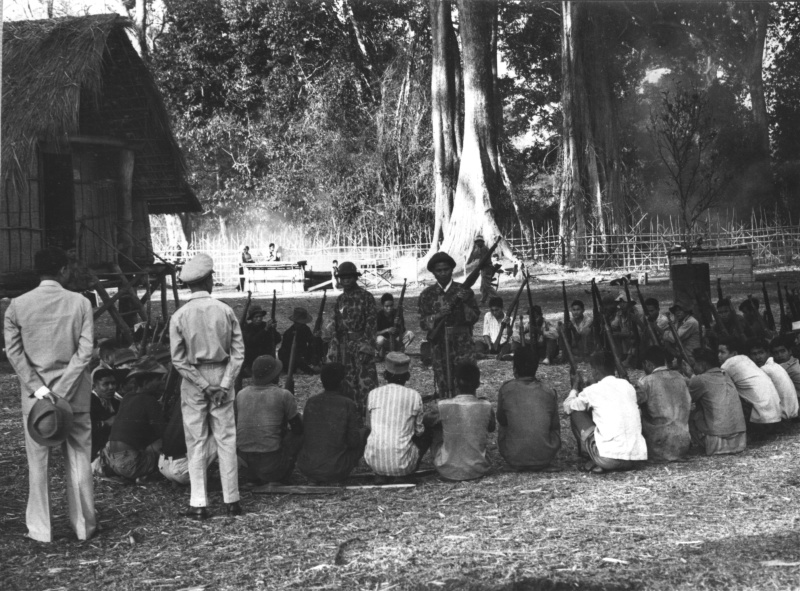

How a village joined, in the Army’s account: the chief affirmed that everyone would take part and gave the program enough volunteers; the chiefs named any Viet Cong agents they knew of; the recruits vouched for the men beside them. Five or six agents were exposed in each village and handed over. The first trainers were Rhade. Rhade cadres, trained by the Vietnamese Special Forces, taught the recruits, with the Americans advising. We do not have a single one of their names.
The first fight was not glorious and the Agency’s historian did not pretend it was. An early ambush party froze when a lone Viet Cong walked into its field of fire. An American shot him, the Rhade rushed up and riddled the body, and the incident became what the CIA calls “the stuff of instant Rhade legend, the first victory over the ferocious enemy.”
Medicine came with the guns. By July 1962, eighty-eight villages in the Buon Enao area had their own medics, and the program treated almost five thousand patients that month. People began bringing their sick to the dispensary, the CIA wrote, even before their own healers had given up hope. Old army uniforms were scavenged from salvage dumps and cut down, and Rhade women learned to run the sewing machines. Apart from the strike force’s pay, the Agency admits, the program put almost no money into our villages.
Two small scenes survive in the same pages, and both show our law and custom working inside an American program. A Rhade man was dragged down the village street by his neighbors on the way to be beaten to death; he had Viet Cong connections, but his offense in Rhade eyes was that he had beaten another man’s wife to death, and the American team, under its rules, pretended not to see. And a young woman of a leading Rhade family chose a Special Forces sergeant for her husband, as a Rhade woman may; he received small gifts whose meaning he missed until the bride and her party came to claim him, and the Americans transferred him. See Customary law.
Buon Trap, July 24, 1962
The defenders of Buon Trap had come back from training at Buon Enao two weeks earlier. There were eighty-six of them.
They were attacked in the early morning of July 24, 1962. Men from three neighboring villages came in to help, and together they fought until the ammunition ran low. Then, with a rear guard covering them, they pulled out of the village. The next day they came back with a section of the Buon Enao strike force and took it back. The Viet Cong spent two days harassing them and then attacked again with one or two companies; by then a company of Vietnamese marines had arrived, and the attackers broke off after ten minutes.
What pleased the Americans most, their historian wrote, was seeing villages not only defending themselves but sending their men to help neighbors under attack. That is not a technique the Americans taught us. It is what villages that share a country do. None of the eighty-six has a name in the record.
Two hundred villages
| When | What was counted | Who counted |
|---|---|---|
| June 1962 | About twenty base camps; Sedang, Jarai, Bahnar, Koho and Cham taking part | CIA history |
| July 1962 | About 650 men in the Buon Enao strike force, supporting 3,600 unpaid village defenders | CIA history |
| August 1962 | More than 200 villages over about 4,000 square kilometers | US Army |
| October 1962 | About 200 Rhade villages, about 60,000 people, 10,600 village defenders and 1,500 strikers | A 2022 history drawing on the Army’s figures |
| November 1962 | Twenty-four American teams; about 23,000 men armed in twelve provinces | CIA history |
| End of 1962 | 6,000 strike force, 19,000 village defenders and hamlet militia, and 2,700 Mountain Scouts | US Army |
It spread beyond the Rhade within months — to the Jarai and the Mnong, and by the CIA’s own account to the Sedang, Jarai and Bahnar of Kontum and Pleiku by July 1962.
An American officer at one of the camps wrote down what the arrangement looked like from inside: unless an American was present when the Vietnamese camp commander gave an order to the Montagnard commander, the order would not be obeyed. He saw Saigon’s dilemma too. If it won, it would face another armed and trained people.
“The first highland tribe”
The US Army’s own handbook of 1966, written by a university research office under Army contract, says twice that the Sedang were the first highland people trained and equipped by the United States:
“The first highland tribe to receive U.S. military training and equipment, the Sedang were also the first tribe to actively resist the Viet Cong.”
Its own dates settle the question against it. Thirty pages later the same book says:
“Early in 1962 the Sedang began receiving U.S. assistance; by the middle of that year, they had been formed into a Montagnard Self-Defense Corps comprising two battalions of armed tribesmen.”
The Rhade of Buon Enao had American carbines and American trainers in December 1961. On the handbook’s own dates, the Rhade came first.
The most likely explanation is our inference and we label it so: the handbook’s authors could see only what was acknowledged. Buon Enao was a covert CIA program run under an aid agency’s cover until the Army took it over. A Sedang force raised with the Army in Kon Tum in 1962 would have been the first acknowledged American training of a highland people. The two claims count different things. The Sedang force of fifty-seven armed villages appears in no other source we have found, and Sedang elders from Dak To, Tan Canh and Dak Pek are the people who could tell us about it. See The Sedang.
Taking back the guns
In July 1962 a conference chaired by the American Secretary of Defense decided to move the program from the CIA to the Army. They called it Operation Switchback. Nuttle briefed two generals at the Pentagon on what it would do to Buon Enao, and the CIA’s director had second thoughts, but the transfer went ahead. The Army took over training in November 1962 and command of the camps on February 1, 1963.
The CIA knew what Saigon feared, and wrote that Saigon’s fears of Rhade autonomy moves were “not totally chimerical,” since several such moves by the Rhade had already been “spotted and defused.” To reassure the Vietnamese, the Americans agreed to disarm many of the Rhade defenders in the villages around Buon Enao.
The Army’s official history tells what happened next, and it is the clearest written record of a promise made to our people in the field:
“Concern in Saigon about the large number of weapons distributed to the Rhade resulted, in December 1962, in a government order to reduce the number of weapons by 4,000. … The order to do so appeared to them to be inconsistent with what they had been told, namely, that the weapons given them were for the defense of their villages and families.”
The villages around Buon Enao were handed to the province and folded into Nhu’s Strategic Hamlet Program. See Strategic hamlets and relocation.
April 1963
In April 1963 six hundred and four of the nine hundred strikers were transferred. The province chief moved them from Buon Enao to Buon Ma Thuot for indoctrination and left the villages undefended. A CIA officer who went to Buon Enao at the end of the month found what his history calls a destructively hasty reorganization. The Vietnamese camp commander and his American case officer had proposed explaining the new pay and command arrangements through a properly briefed tribal leadership; they were ignored. The Rhade strike force leaders had been replaced, in the camp commander’s own words, by “haughty, cocky Vietnamese, who ‘intend to ride hard on the Rhade.’”
“An American sergeant serving his second tour with the tribesmen said he could no longer look the Rhade in the face; he felt that their American patrons had ‘stabbed them in the back.’”
Our letter
And then our own people wrote. The CIA’s history records it in a single paragraph:
“An anguished letter from Rhade leaders to Dave Nuttle testified to their distress, partly at GVN hostility to them and the program, and partly at the reduction of the material benefits previously accorded by the Americans. Eight hundred Strike Force troops had been disarmed, after what they understood to be American promises of permanent custody of their weapons, and pay reduced for both Strike Force and hamlet militia personnel.”
The same paragraph adds that the American team on the spot had authored none of this, might not have been able to prevent it, “but had also apparently not tried.”
That letter is a Dega document. It was written by Rhade leaders to the one American they trusted, in the spring of 1963, about a promise broken. It sits somewhere in the CIA’s files or in Nuttle’s own papers, and nobody has published it. We want it. The Army’s history adds, in its own words, that the disillusionment that followed the turnover of Buon Enao “may have contributed to the Montagnard uprising which took place in late September 1964.”
The border camps
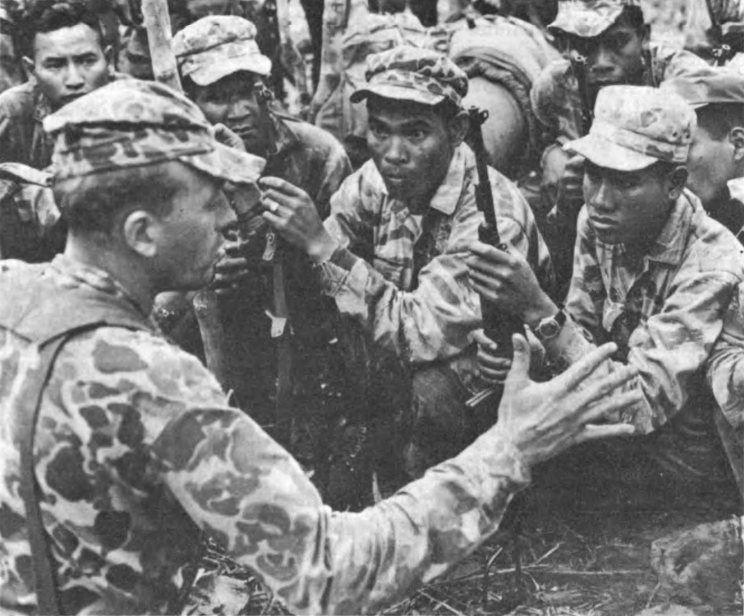

Under the CIA the program had been built around a village defending itself. Under the Army it moved to the border. Men were hired for pay and carried, with their families, to camps on the Cambodian and Lao frontier to watch the infiltration routes; a ceiling of 20,000 strikers was set for July 1964. In January 1965 the Special Forces redefined their mission as offensive: to become hunters. The villages had asked for a fence and a dispensary. What they got, over four years, was a standing army of their young men posted far from home.
The Army’s own table of October 1964 shows which of our peoples were in which camp. We give it in its spellings:
| Camp | Peoples in the strike force, October 1964 |
|---|---|
| Buon Brieng | Rhade |
| Buon Mi Ga | Mnong |
| Ban Don | Rhade, Mnong, Jarai, Thai |
| Bu Prang | Rhade, Mnong |
| Dak Pek | Sedang, Jarai, Halang, Vietnamese, Nung |
| Dak To | Sedang, “Nongao,” Bahnar |
| Polei Krong | “Rongao,” Jarai, Bahnar |
| Plei Mrong | Jarai, Bahnar, Rhade |
| Plei Me | Jarai, Nung |
| Duc Co | Jarai, Nung |
| Plei Djereng | Jarai, Bahnar |
| Plei Do Lim | Jarai, Bahnar, Nung |
| Buon Beng (Cheo Reo) | Jarai, Bahnar, “Drung” |
| Phey Srunh | Koho, Maa, Chil |
| Khe Sanh | Bru |
| Bu Dop, Bu Chia Map | Stieng |
“Rongao” is the Rengao. What the Army meant by “Nongao” and “Drung” we are not certain, and we would welcome a veteran’s correction.
How many
| Date | American Special Forces | Strike force |
|---|---|---|
| October 1964 | 951 | 19,000 |
| December 1964 | 1,227 | 20,400 |
| December 1965 | 1,828 | 30,400 |
| April 1966 | 2,318 | 34,300 |
| July 1967 | 2,657 | 34,350, plus 5,700 in the Mobile Strike Forces |
That is the Army’s count, and the Army itself calls it approximate; it counts all the peoples in the program, not only ours. For the Dega alone there are four figures, and we set them beside each other. The Senate resolution of October 2023: about 61,000 of a population of about a million, 43,000 in the village defense groups and 18,000 more “reportedly” in the strike forces. A former American aid officer, Michael Benge: about 30,000 at the height. Our own history, written by Rong Nay: more than 40,000. The Army’s peak for the whole program, all peoples: 42,000.
Pay, rice and families
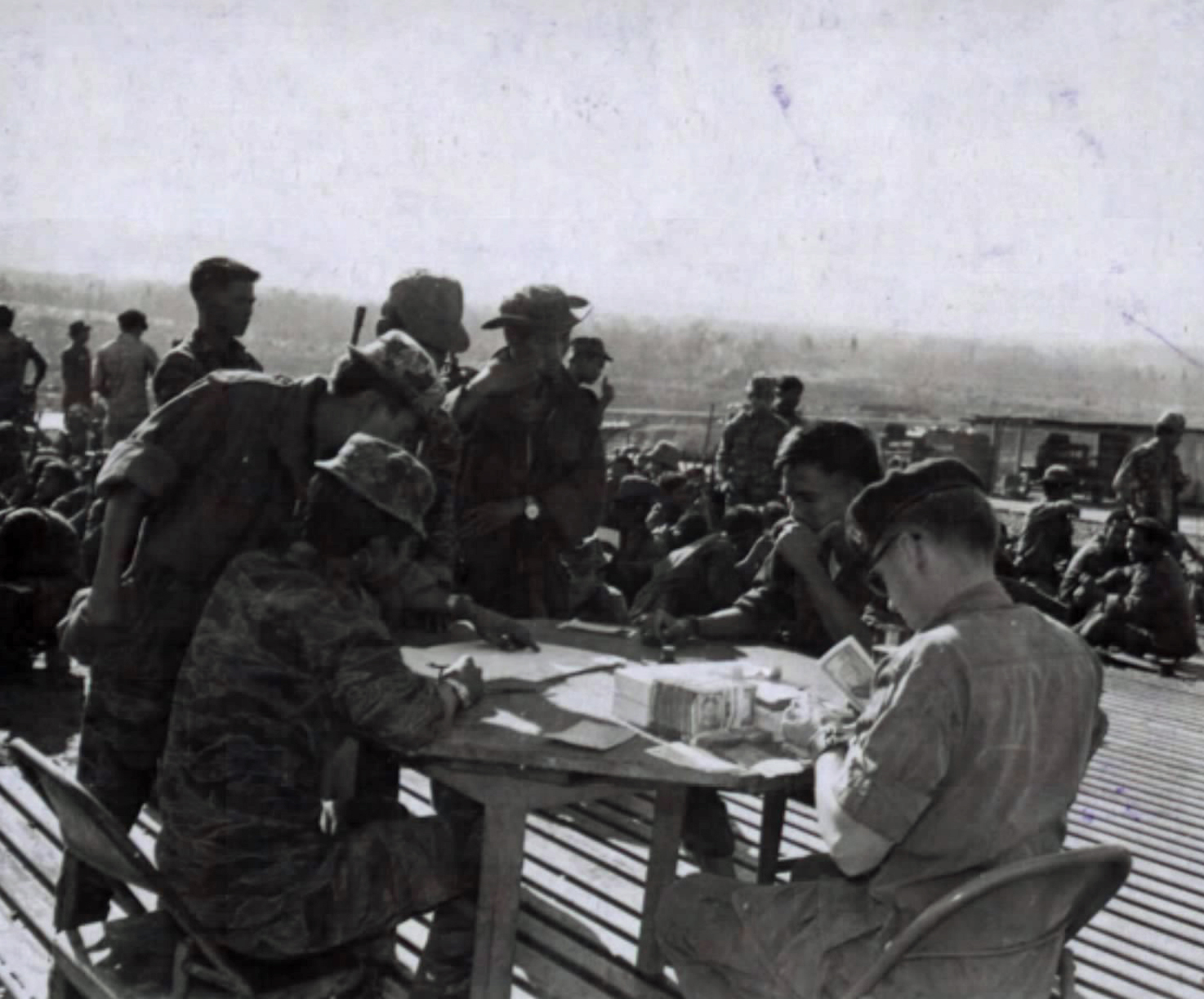

At Buon Enao in 1961 a laborer earned thirty-five piasters a day. Village defenders were not paid at all except during training. Strike force men were paid on the South Vietnamese army’s scale. After the turnover of 1963 the pay of the strikers and the militia was cut. At Buon Brieng in 1964 a striker earned five hundred to a thousand piasters a month, and his ration in camp was a cup of uncooked rice and a can of fish a day; on patrol, two of each. Corrupt Vietnamese commanders who pocketed the pay were one of the grievances behind the September rising.
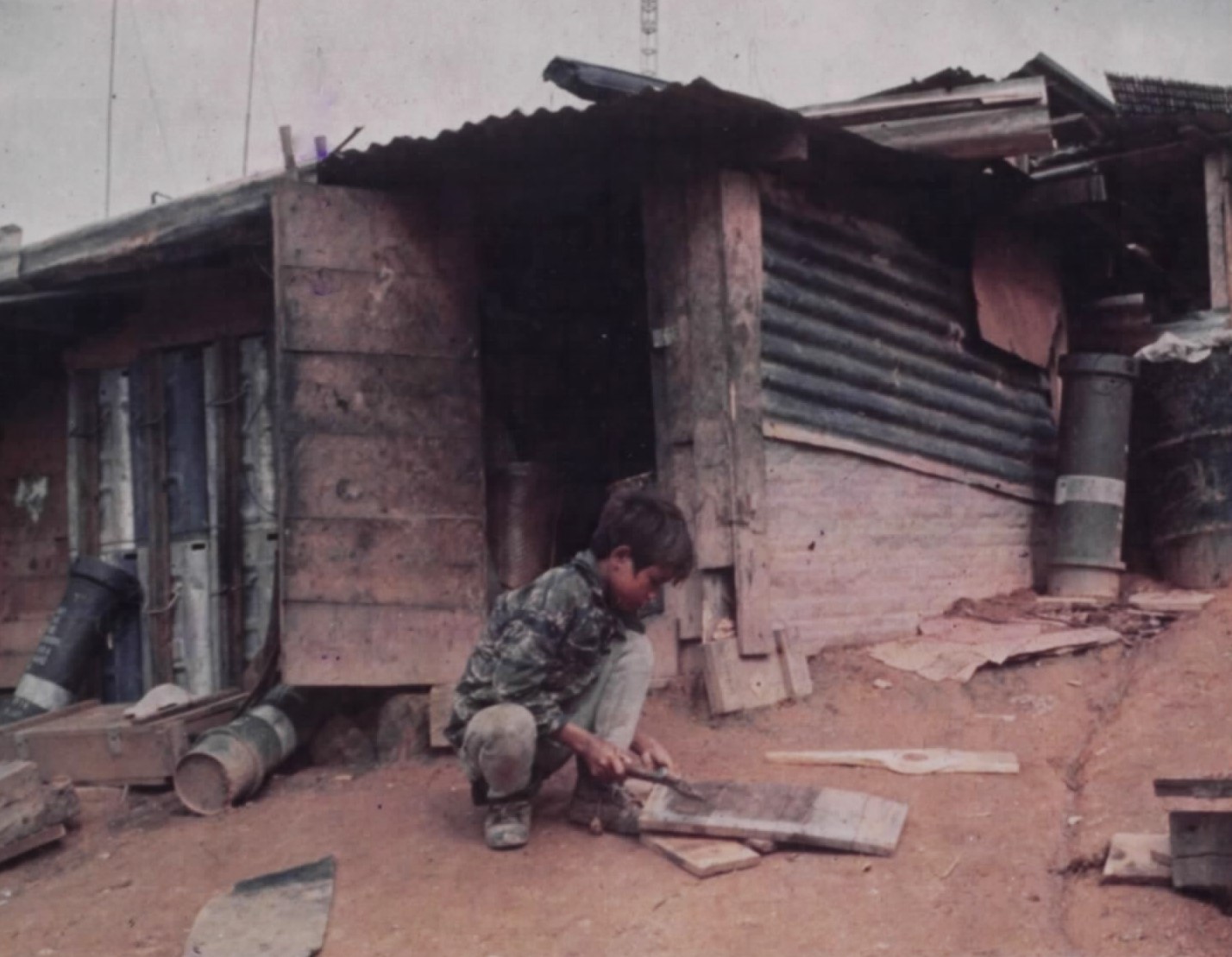

The families came with the men. Buon Brieng in mid-1964 had over five thousand of our people in and around the camp, refugees among them, around about 750 strikers. The camps were villages with a wire around them and a war outside.
Between our men and the Americans who served with them there grew a real bond, and it had a ceremony: the copper bracelet, given with rice wine and a sacrifice. The Army’s history calls it a token of Montagnard respect. See The bracelet. The Americans called our men “Yards.” We have not found a single recorded statement by a Dega veteran about what he thought of that word, and we are not going to guess. It is a question to put to our veterans in North Carolina while they are here to answer it.
September 1964, in the camps
On the night of September 19–20, 1964, the strike forces of five camps rose: Buon Mi Ga, Buon Sar Pa, Bu Prang, Ban Don and Buon Brieng. The story of the rising and of FULRO belongs to FULRO and The men of FULRO. What belongs here is how it looked inside the camps, and who was there.
The commander who acted. Our own history, written by Rong Nay, names him: Y Tlur Eban, an interpreter at the Special Forces camps of Buon Sar Pa and Buon Mi Ga, ordered to command and to use force “in a symbolic effort to wake up the government of Vietnam and the Americans” to the suffering and the demands of our people. The American Army’s account names the Buon Sar Pa interpreter “Y Clur” and puts him among the “hot-heads.” They are almost certainly the same man, spelled once by his own people and once by the people he had disarmed. To the American officer he was a hot-head. To our historian he was the commander carrying out an order.
The commander who held back. Y Jhon Nie commanded the battalion at Buon Brieng. He refused to join, held a battalion formation, and stayed. He was then taken with the American captain, Vernon Gillespie, to the rising’s command post at the village of Buon M’Bre near Buon Ma Thuot, and there, the next morning, the reconciliation was sealed in our way: jars of rice wine, a buffalo, a pig and chickens sacrificed, a shaman daubing their bare feet with the buffalo’s blood and putting identical copper bracelets on the wrists of Y Jhon, Gillespie and the Vietnamese commander. Y Jhon later broke down, believing he had been cursed.
Also named in the American record: Y Mot, the Buon Sar Pa commander, and Y Wat, whom the Americans called the leader of the hard-line faction. Vietnamese Special Forces men and militia were killed in the camps; the counts run from about forty-five to seventy, and the Army’s own history does not settle them. American advisers talked the rising down, and it was over by September 28.
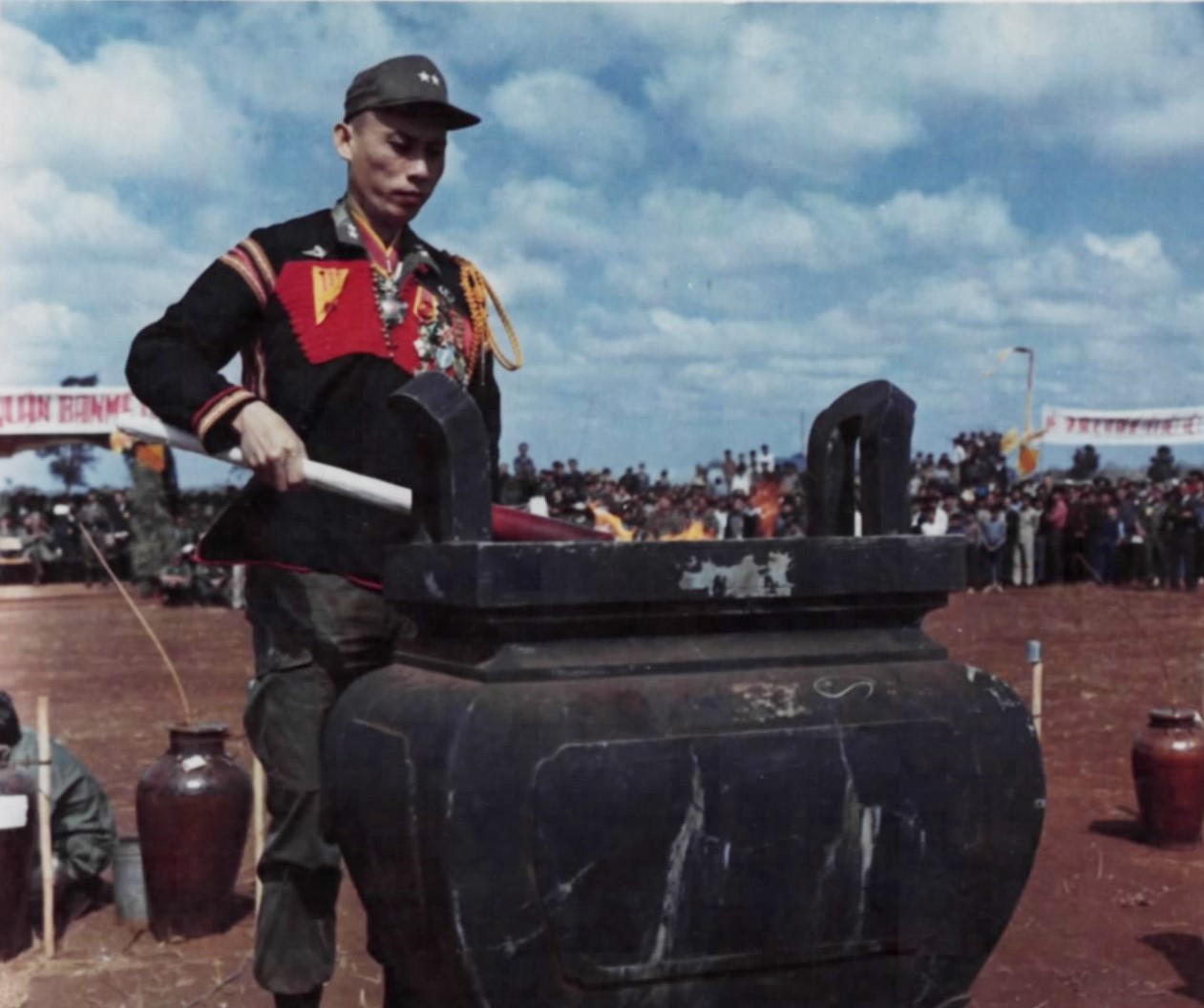

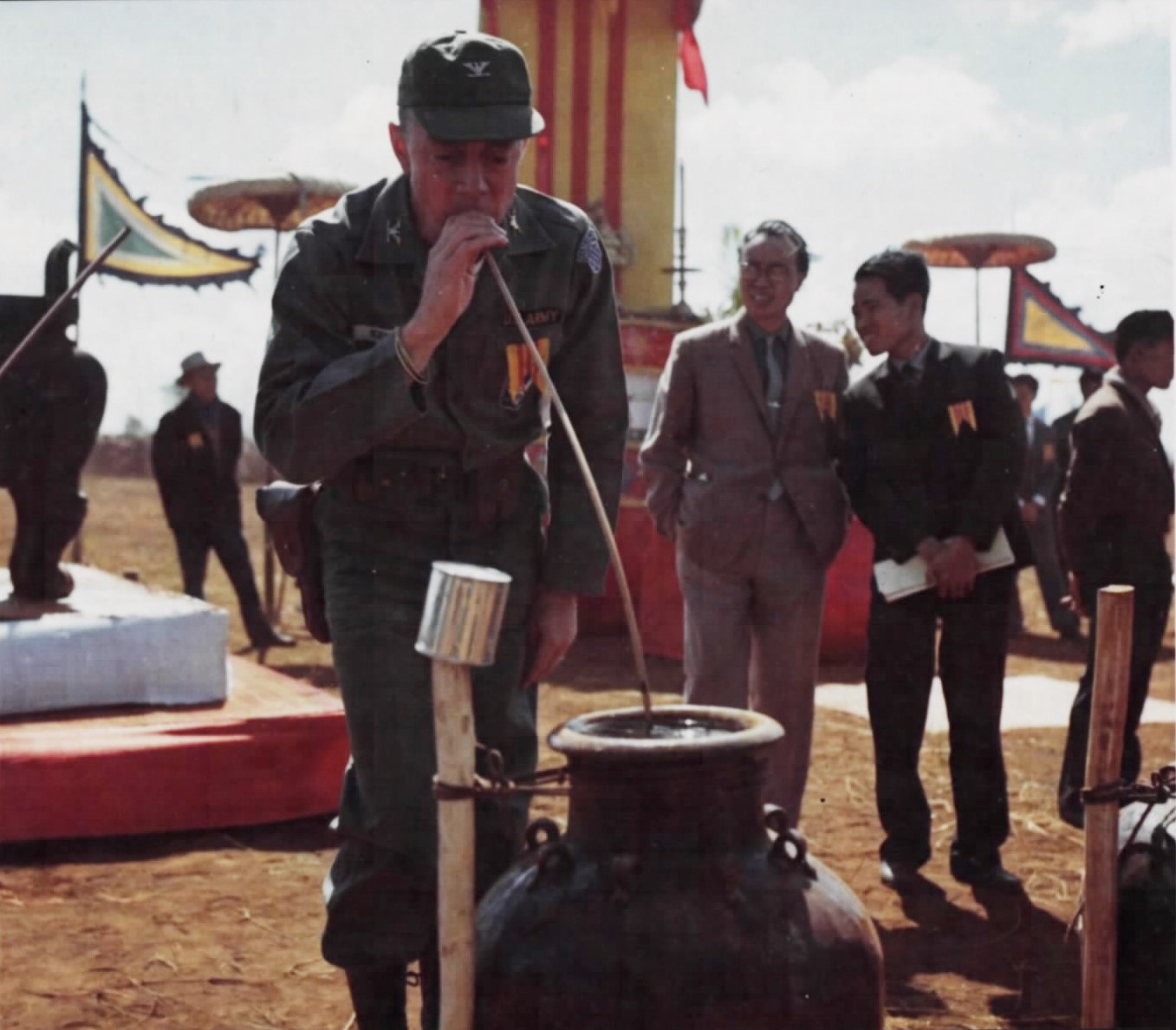
The loyalty rites. On January 17, 1965, at Buon Ma Thuot, the militias of the Montagnard hamlets were gathered in a ceremony to pledge loyalty to the government. The II Corps commander lit a fire on a ceremonial altar to signify, in the Army’s words, that the prayer offered by the Montagnard elder had been approved, and his American adviser drank from the jar. American army photographers recorded it. Four months after the rising, our people’s own rites were being used to seal their submission.

The five camps of the rising — Buon Sar Pa, Ban Don, Bu Prang, Buon Mi Ga and Buon Brieng — were all shut down within a year, the Army’s special operations historian records.
Tet 1968
When the Front and the North Vietnamese attacked the towns at Tet in January 1968, our strike forces were in the streets of Buon Ma Thuot, Kon Tum and Pleiku. The Army’s official history lists the towns “successfully defended by the CIDG” — among them Kontum, Pleiku, Ban Me Thuot and Dalat — and says their training had not been for street fighting, but that their performance
“demonstrated conclusively that the CIDG soldier was the combat equal of any soldier in Vietnam.”
That is the United States Army’s verdict on our men, in its own history. See Tet 1968 in the highlands and Battles on our land.
Becoming Rangers
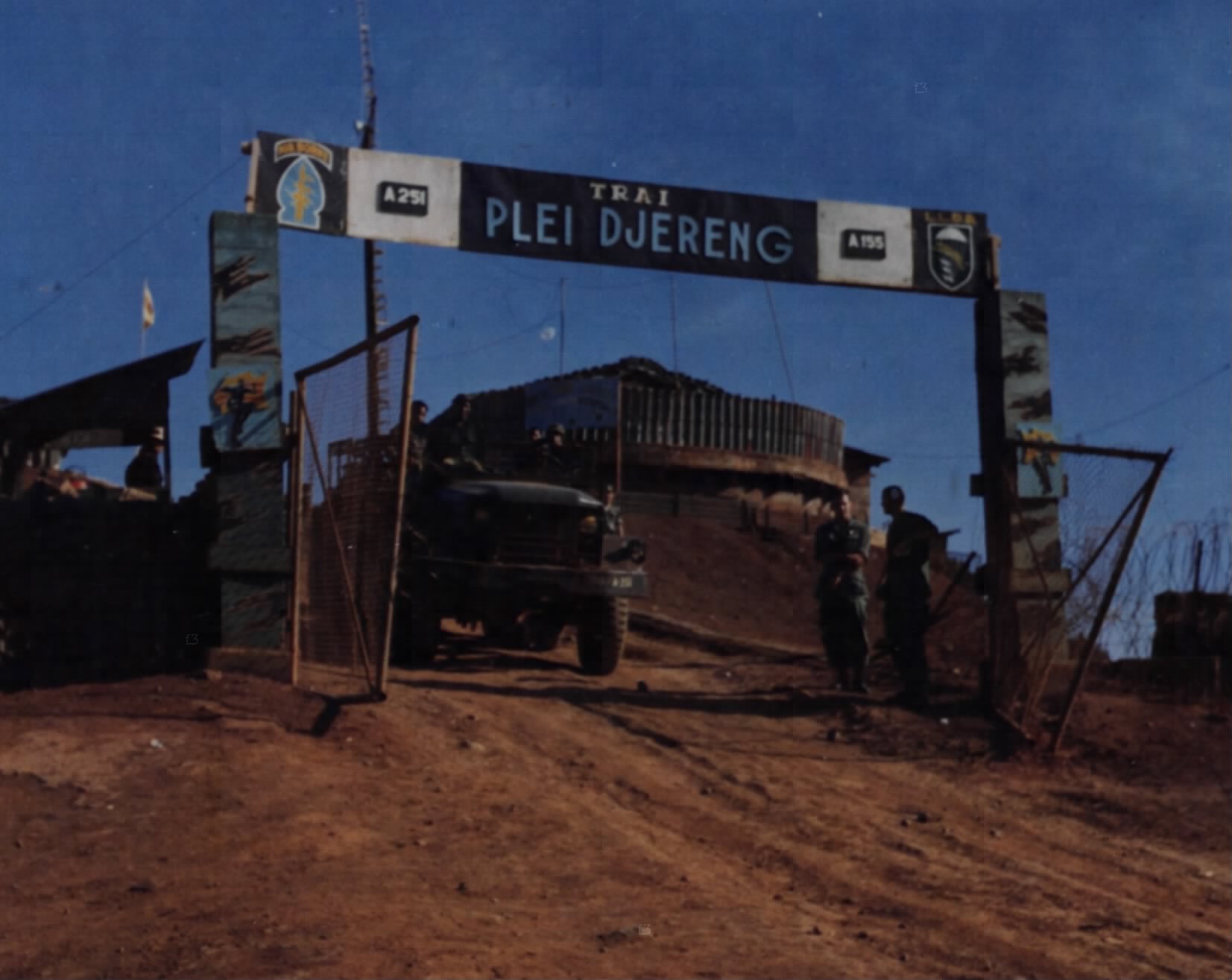

Between August and December 1970 every remaining camp was converted into a battalion of the South Vietnamese Army’s Ranger Command. The American part of the program ended on December 31, 1970. Of 17,057 places, 14,534 strikers became Rangers. The Army’s history records what the Republic gave them in return, and the sentence should be read slowly:
“For their allegiance, as expressed by their willingness to join the Vietnam Army units, the government provided legal birth and marriage certificates as well as medical benefits and disability pay for injuries received in military action. This was the first time that the minority groups, and particularly the Montagnards, were given full status as citizens of the Republic of Vietnam.”
Men who had fought for nine years were given papers proving they were citizens of the state that had disarmed them — on the condition that they join its army. The same chapter says nothing about who refused, who deserted, who went home, or what happened to the families living in the camps. That silence is in the source and we report it as silence.
In the II Corps highlands the flags changed camp by camp:
| Camp | Converted | Became | Men |
|---|---|---|---|
| Polei Kleng | August 31, 1970 | 62nd Ranger Battalion | 403 |
| Plei Mrong | August 31, 1970 | 63rd | 443 |
| Tieu Atar | September 30, 1970 | 71st | 414 |
| Trang Phuc | September 30, 1970 | 72nd | 399 |
| Plei Djereng | October 31, 1970 | 80th | 479 |
| Duc Co | October 31, 1970 | 81st | 457 |
| Plei Me | October 31, 1970 | 82nd | 464 |
| Dak Pek | November 30, 1970 | 88th | 298 |
| Bu Prang | November 30, 1970 | 89th | 377 |
| Dak Seang | November 30, 1970 | 90th | 431 |
| Ben Het | December 31, 1970 | 95th | 430 |
| Duc Lap | December 31, 1970 | 96th | 400 |
About five thousand of our men in those twelve camps alone. Eighteen months later the 71st, the battalion made from Tieu Atar, was at Ben Het when the North Vietnamese tanks came, and its men took their own officers hostage to get home to their families. That is told at Battles on our land.
What we were promised
The guns. This one is on paper, in two American histories. The Army wrote that the Rhade had been told the weapons were for the defense of their villages and families. The CIA wrote that eight hundred men were disarmed after what they understood to be American promises of permanent custody of their weapons.
Our country. Our own history says it directly: the Montagnard leaders were told, and most believed, that the United States would help our people regain our autonomous state. Kok Ksor, who carried messages for the Americans from 1960, said the same thing all his life: that they had promised to help us at the end of the war. We have found no written American promise of autonomy. What the written record shows is the opposite intention: a station chief worried in 1961 that Saigon would think Americans were encouraging our autonomy, and a station that “spotted and defused” Rhade moves toward it. Both things are true. Our leaders were told one thing in the field, and the government that sent the men who told them wrote down another. See Kok Ksor.
April 4, 1975. With Buon Ma Thuot fallen and the highlands abandoned, our minister, Nay Luett, met the American deputy ambassador George Jacobson and two other Americans at his ministry in Saigon. There are two accounts of that meeting and they agree on the date, the place and the people. Michael Benge, an American aid officer who knew all of them, says it was heavily implied that our people should go to the forest and resist, and that if Saigon was attacked they and their families would be evacuated. Our own history says Nay Luett asked for protection for the Montagnard leaders and people, because he knew what was coming; that he proposed a force of fifty thousand of our men, with American support, to defend the highlands; and that the Americans and the Saigon government refused. No support came, and no evacuation. Nay Luett spent nine years in prison and died at home two months after he came out. See Paul Nur and Nay Luett and 1975.
What it cost
No one counted our dead village by village, and the figures that exist are a million apart. We print them side by side, with their tellers.
| Teller | Dead | Driven out |
|---|---|---|
| Gerald Hickey, the American anthropologist, as reported by Human Rights Watch in 2002 | at least 200,000 | more than 85 percent of the population forced from their villages |
| Michael Benge, former American aid officer, 2010 | 200,000 to 220,000, including about half the adult men | about 85 percent of the villages in ruins or abandoned |
| Rong Nay, before the US Senate, March 10, 1998, and in our own history | more than a million | 85 percent of the villages destroyed or abandoned |
Hickey did his highland research between 1964 and 1973 under contract to RAND, paid for by the Defense Department’s research agency, and he said so in his own preface. He was also the American who told the people paying him most plainly what was being done to us. We have not seen the page where he gives his figures; Human Rights Watch did not cite one. The difference between “85 percent of the people” and “85 percent of the villages” is a difference between two tellers, and we keep both. See How we died.
The names on the record
The American records of this program name Americans down to their middle initials. They name very few of us. These are the ones we have found.
| Name | What the record says |
|---|---|
| Y Ju | Chief of Buon Enao; volunteered his village in October 1961 |
| The elders of Buon Enao | Argued for three weeks before they agreed. Unnamed |
| The Rhade trainers of 1962 | Trained the first strikers. Unnamed |
| The eighty-six of Buon Trap | Defended their village on July 24, 1962. Unnamed |
| The Rhade leaders who wrote to Nuttle | Spring 1963, about the guns and the pay. Unnamed |
| Y Thih Eban | A BAJARAKA man, freed in 1962, a translator at the Buon Enao camp, who tried to bring Y Bih Aleo in from the Front. See Highlanders on the other side |
| Y Kdruin Mlo (“Philippe Drouin”) | Rhade interpreter at Buon Beng in 1963–64; warned the American commander of the plans for the rising |
| Kpa Doh | Jarai, chief interpreter at Buon Beng; later of the Mike Force. See Mike Force and SOG |
| Y Tlur Eban (“Y Clur”) | Interpreter at Buon Sar Pa and Buon Mi Ga; commanded in the camps in September 1964 |
| Y Jhon Nie | Battalion commander at Buon Brieng; refused to join the rising; took the bracelet at Buon M’Bre |
| Y Mot | Commander at Buon Sar Pa, 1964 |
| Y Wat | Named by the Americans as a leader of the hard-line faction, 1964 |
| Nay Luett | Minister for the Development of Ethnic Minorities; asked for protection on April 4, 1975 |
What we do not know
Y Ju’s full name, and what became of him after 1963 and after 1975. Families from Buon Enao, which is now inside the Buon Ma Thuot area, will know.
The names of the elders who argued in October 1961, and whether the pledge of December 1961 was made in our way, with a sacrifice and an oath.
The text of the 1963 letter from the Rhade leaders to Nuttle, and who signed it.
What our men thought of being called “Yards.”
What happened to the men who would not become Rangers in 1970, and to the families in the camps.
The Sedang force of 1962, with its fifty-seven armed villages.
Almost all of this is in the memories of our veterans and their families. If you served, or your father did, please record it. See How to record an elder and Veterans in America.
See also: Mike Force and SOG, FULRO, Strategic hamlets and relocation, Highlanders on the other side, Battles on our land.
Sources
- Thomas L. Ahern Jr., CIA and Rural Pacification in South Vietnam (CIA History Staff, Center for the Study of Intelligence, 2001; declassified), at the Internet Archive — the Agency’s own history of the program it began. The chief who warned Nuttle, Colby’s memorandum, the three weeks of argument, the crow and monkey patrols, the first fight, Buon Trap, the disarming, the April 1963 visit, and the letter from the Rhade leaders. Every quotation from it on this page was checked against its full text
- Col. Francis J. Kelly, U.S. Army Special Forces 1961–1971, Vietnam Studies (Department of the Army, 1973), at the Internet Archive — the Army’s official history of its own program: the 4,000 weapons and what the Rhade had been told, the camp and ethnic tables, the growth figures, the Tet verdict, and the conversion to Rangers with its sentence about citizenship. Quotations checked against its full text
- Department of the Army, Minority Groups in the Republic of Vietnam, DA Pam 550-105 (1966), at the Internet Archive, pp. 741 and 773 — the Sedang claims, written by a university office under Army contract
- Robert W. Jones Jr., “A Team Effort: The Montagnard Uprising of September 1964,” Veritas 3:2 (US Army Special Operations Command History Office, 2007), and Eugene G. Piasecki, “Civilian Irregular Defense Group: The First Years,” Veritas 5:4 (2009) — Buon Brieng, Y Jhon Nie, Y Mot, Y Wat, Y Clur, the bracelet at Buon M’Bre, the pay and rations of 1964. An army history office writing about its own soldiers
- Rong Nay, “Summary of Montagnard History” — our own history, written by the second in command of the forest resistance after 1975: Y Tlur Eban, what our leaders were told, the meeting of April 4, 1975, and the dead
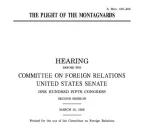
- US Senate, Committee on Foreign Relations, The Plight of the Montagnards, March 10, 1998 — the testimony of Rong Nay and Y Hin Nie
- S. Res. 395, 118th Congress, introduced October 4, 2023 — the figures of 61,000, 43,000 and 18,000
- Michael D. Benge, “The History of the Involvement of the Montagnards” (2010) — a former aid officer and prisoner of the Viet Cong writing as an advocate: the April 4, 1975 meeting and his figures for the dead
- Human Rights Watch, Repression of Montagnards (2002) — Hickey’s figures as Human Rights Watch reported them
- Gerald C. Hickey, Free in the Forest: Ethnohistory of the Vietnamese Central Highlands, 1954–1976 (Yale University Press, 1982) — the standard account, from research done under RAND contract for the Defense Department, and not read in full for this page
- David Nuttle, “Project Aids” (2026) — the naming of Y Ju
Compiled September 2026. Every quotation on this page from the CIA’s and the Army’s histories was checked word for word against the scanned text of those books; passages we could only see in summary are told in our own words and not quoted. Where the sources disagree — why Buon Enao was chosen, who arrived first, how many men the program had, how many died in 1964, what was said on April 4, 1975 — every version is given. No Vietnamese government or state media source is used. If you served in the CIDG, or your family did, and can correct a name, a camp or a date here, we want it.