





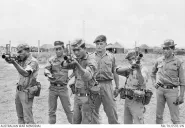

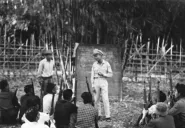
A reading list for anyone who wants to understand the Dega properly, our own young people above all: the books and articles we trust, what each is good for, and where it can be read. Many are free online, and the older ones are in our own library.
How to use this list
Almost everything written about us was written by outsiders: soldiers, missionaries, administrators, anthropologists, each with their own reasons. That does not make it wrong, but every book should be read asking who wrote it and why. Oscar Salemink’s book, below, is the best guide to doing that. Free to read means the full text is online at no cost, often in our own library; Borrow free means it can be borrowed for free from the Internet Archive with an account. Where neither appears, the book has to be bought or found in a library. We have not listed anything published by the Vietnamese state or its press.
Where to start
- Gerald C. Hickey, Sons of the Mountains and Free in the Forest: the history.
- Georges Condominas, We Have Eaten the Forest: what village life was.
- William H. Chickering, A War of Their Own: FULRO.
- Human Rights Watch, Repression of Montagnards: what happened after.
- Oscar Salemink, The Ethnography of Vietnam’s Central Highlanders: how to read all the others.
History and politics
- William H. Chickering, A War of Their Own: FULRO — The Other National Liberation Front, Vietnam 1955–75 (Casemate, Havertown PA, 2025). ISBN 978-1-63624-560-7. — review in SOF News
The first full history of FULRO in English, from the rising of September 1964 to the fall of Phnom Penh in April 1975. The author commanded a Mike Force battalion of FULRO men during the war, became a doctor, and spent some sixteen years on the research, much of it interviewing surviving veterans across the world. He is good on the men, and on something few others have noticed: malaria kept the highlands ours until quinine let outsiders settle them. Reviewed in Asian Affairs (July 2025) and in the Army War College’s Parameters Bookshelf (July 2026), which praises the interviews but notes how little archival research lies behind it, and that it missed the documents on FULRO at Texas Tech. - Po Dharma, Du FLM au FULRO: une lutte des minorités du sud indochinois, 1955–1975 (Les Indes Savantes, Paris, 2006). ISBN 2-84654-117-5. — catalog
A political and military history of the highland and Cham movements, written from FULRO’s own archives, by a Cham scholar who joined FULRO in Cambodia in 1968, went to France to study in 1972, and later worked for the École française d’Extrême-Orient. He died in Toulouse in 2019. In French. - Gerald C. Hickey, Sons of the Mountains: Ethnohistory of the Vietnamese Central Highlands to 1954 (Yale University Press, 1982). ISBN 0-300-02453-3. — WorldCat
The standard history of the highland peoples from their origins to the end of French rule, and of how a common highland identity took shape. If you read one book, read this and its companion. - Gerald C. Hickey, Free in the Forest: Ethnohistory of the Vietnamese Central Highlands, 1954–1976 (Yale University Press, 1982). ISBN 0-300-02437-1.
The companion volume: Diem, BAJARAKA, FULRO, the American war and the first year after 1975. Human Rights Watch cites it for the history in its 2002 report. - Gerald C. Hickey, Shattered World: Adaptation and Survival among Vietnam’s Highland Peoples during the Vietnam War (University of Pennsylvania Press, 1993). ISBN 0-8122-1417-X.
What the war did to highland communities, from Hickey’s field notes and the testimony of highlanders he knew. - Gerald C. Hickey, Window on a War: An Anthropologist in the Vietnam Conflict (Texas Tech University Press, 2002). ISBN 978-0-89672-490-7. — Internet Archive Borrow free
Hickey’s memoir of his years in Vietnam, including his advocacy for highlanders with American and South Vietnamese officials. - Gerald C. Hickey, Kingdom in the Morning Mist: Mayréna in the Highlands of Vietnam (University of Pennsylvania Press, 1988). — Internet Archive Borrow free
The “Kingdom of the Sedang” of 1888. See our article. - Oscar Salemink, The Ethnography of Vietnam’s Central Highlanders: A Historical Contextualization, 1850–1990 (University of Hawai‘i Press and RoutledgeCurzon, 2003). ISBN 0-8248-2579-9. — publisher
A critical history of how missionaries, French administrators, the American military and the Vietnamese state each produced “knowledge” about us for their own purposes. Essential for reading every other book on this list with open eyes. His dissertation, the book’s first form, is in our library. - J. P. Harris, Vietnam’s High Ground: Armed Struggle for the Central Highlands, 1954–1965 (University Press of Kansas, 2016). ISBN 978-0-7006-2283-2.
A military historian’s account of the war for the highlands from the French departure to the American buildup, opening with the highlands before 1954. - Andrew Hardy, Red Hills: Migrants and the State in the Highlands of Vietnam (NIAS Press and Curzon, 2003; University of Hawai‘i Press in the United States).
How several million people from the northern deltas moved into the uplands in the twentieth century, under the French and then the socialist state: the demographic change behind the land disputes of today. - Mathieu Guérin, Andrew Hardy, Nguyễn Văn Chính and Stan Tan Boon Hwee, Des montagnards aux minorités ethniques: Quelle intégration nationale pour les habitants des hautes terres du Viêt Nam et du Cambodge? (L’Harmattan and IRASEC, 2003). — OpenEdition
Four essays on how the French, the Republic of Vietnam and the socialist state each tried to integrate the highlanders of Vietnam and Cambodia. In French. - Mathieu Guérin, Paysans de la forêt à l’époque coloniale: la pacification des aborigènes des hautes terres du Cambodge, 1863–1940 (AHSR, Caen, 2008).
The French conquest of the Bunong (Mnong) and their neighbors on the Cambodian side, village by village. In French. His thesis on the Vietnamese side is in our library. - Eric T. Jennings, Imperial Heights: Dalat and the Making and Unmaking of French Indochina (University of California Press, 2011).
How the French built a hill station on the Lang Biang plateau, and what it meant for the Lat and Koho who lived there. The chapters on 1940–75 are the ones for us. - Stan B-H. Tan, “‘Swiddens, Resettlements, Sedentarizations, and Villages’: State Formation among the Central Highlanders of Vietnam under the First Republic, 1955–1961,” Journal of Vietnamese Studies 1:1–2 (2006), pp. 210–252.
An archival study of Diem’s plan to resettle and remake the highland villages: the background to BAJARAKA. - William B. Noseworthy, “Lowland Participation in the Irredentist ‘Highlands Liberation Movement’ in Vietnam, 1955–1975,” ASEAS 6:1 (2013), pp. 7–28. — PDF Free to read
How FULRO grew out of a Cham, Khmer and highland coalition built around Les Kosem, read through his biography and FULRO’s own documents. - Catherine Scheer, “Subaltern soldiers: Overshadowed Bunong highlanders in the Khmer Republic’s army, 1970–75,” Journal of Southeast Asian Studies 53:1–2 (2022), pp. 123–152.
Bunong men from Mondulkiri who went to Phnom Penh and enlisted in the Khmer Republic’s army, told from the stories their families tell. - Daniel Ford, Cowboy: The Interpreter Who Became a Soldier, a Warlord, and One More Casualty of Our War in Vietnam (2018). — author’s page
The life of Y Kdrowin Mlo, known as Philippe Drouin (1936–68), an interpreter for the Americans who became “Colonel Drouin,” commander of a force of his own, and was killed by FULRO. One of very few books about a single Dega person. - Nate Thayer, reports in the Phnom Penh Post, September 12 and 25, 1992, and a cover story in the Far Eastern Economic Review. — Phnom Penh Post Free to read
The reporting that told the world FULRO was still in the forest. See Mondulkiri, 1992. - Jonathan Padwe, Disturbed Forests, Fragmented Memories: Jarai and Other Lives in the Cambodian Highlands (University of Washington Press, 2020).
A Jarai village in Ratanakiri, a few kilometers from the border, through the American bombing, the Khmer Rouge and after. - Ian G. Baird, Rise of the Brao: Ethnic Minorities in Northeastern Cambodia during Vietnamese Occupation (University of Wisconsin Press, 2020).
The Brao of northeastern Cambodia under the Vietnamese occupation of the 1980s.
Early accounts
The oldest books about our country, by the first missionaries and explorers. They are out of copyright and we keep them ourselves. Read them for what they record and for what they assume; several use the slur moï for us in their titles.
- C.-E. Bouillevaux, Voyage dans l’Indo-Chine, 1848–1856 (Paris, 1858). — in our library Free to read
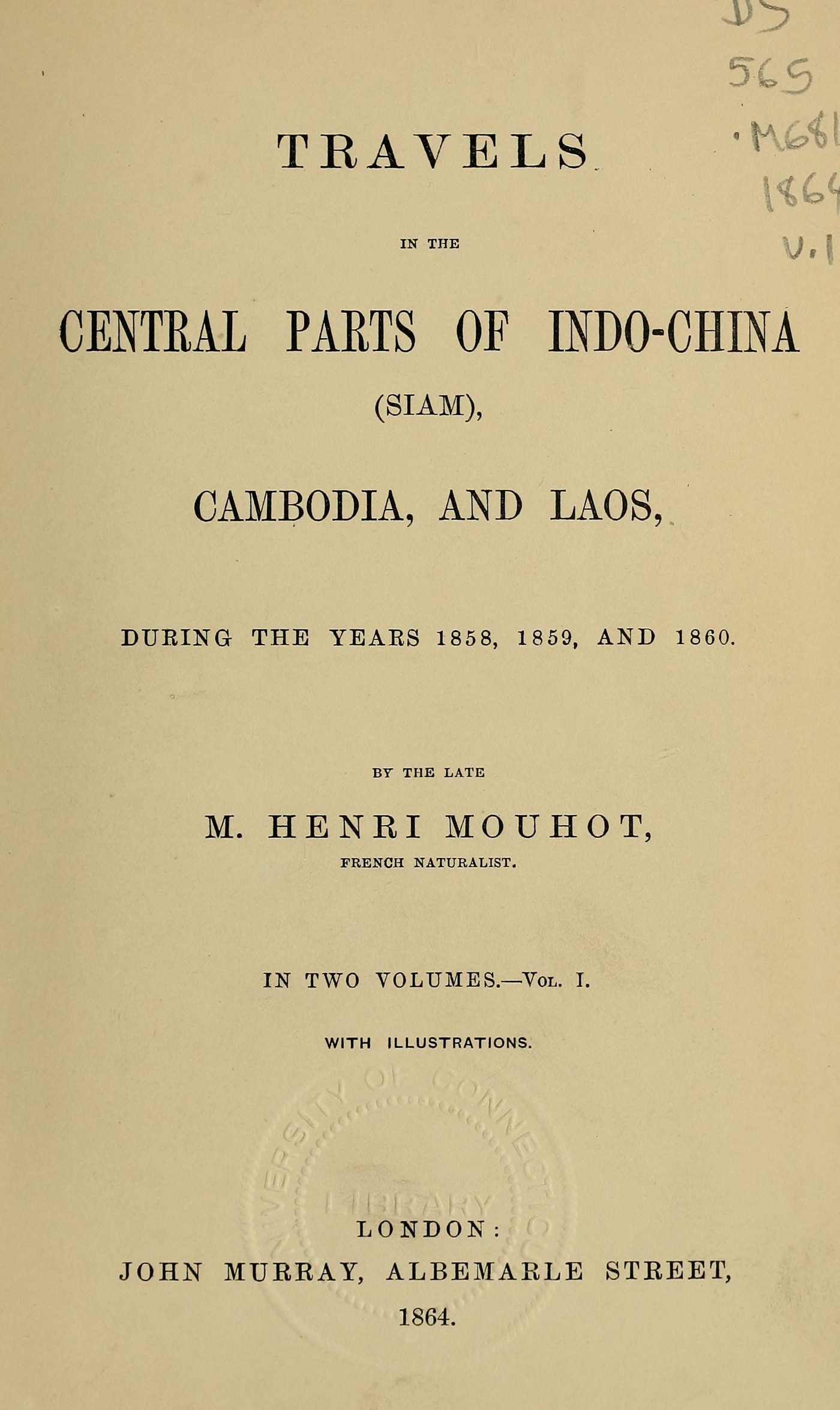
A French missionary’s journeys; in 1851 he was among the Mnong and Stieng of northeastern Cambodia, and the same year he reached Angkor. In French. - Henri Mouhot, Travels in the Central Parts of Indo-China (Siam), Cambodia, and Laos (London, 1864), two volumes. — in our library Free to read
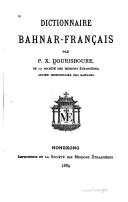
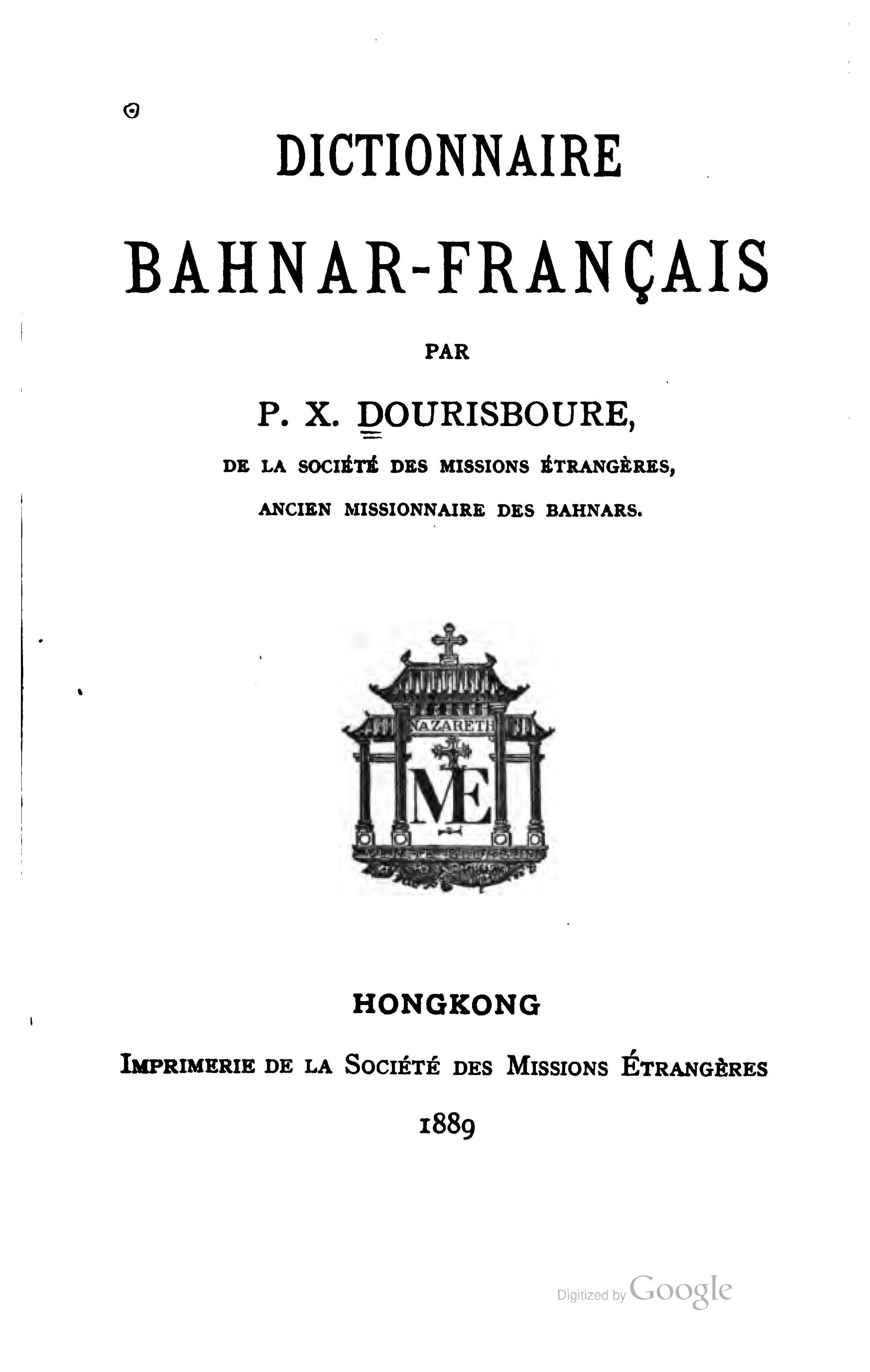
The naturalist who lived among the Stieng in 1859, the first European to live among any of our peoples. The second volume is in our library too. - P. X. Dourisboure, Dictionnaire bahnar-français (Hong Kong, 1889). — in our library Free to read
The first dictionary of any of our languages. His history of the mission, Les Sauvages Ba-hnars (1873), was translated and adapted as Vietnam: Mission on the Grand Plateaus (Maryknoll, 1967), which can be borrowed from the Internet Archive. - Mission Pavie, Indo-Chine 1879–1895, Géographie et voyages, volumes II and III with the atlas. — in our library Free to read
Captain Cupet’s journeys through the Rhade, Jarai and Bahnar country in 1891, with engravings we use throughout this library. Volume II is in our library and the atlas in our library. - P. de Barthélemy, Au pays Moï (Paris, 1904). — in our library Free to read
A French traveler’s account of the southern highlands at the turn of the century, with illustrations. - Henri Maître, Les Régions moï du Sud Indo-Chinois (Plon, 1909) and Les Jungles Moï (Émile Larose, Paris, 1912). — Gallica Free to read
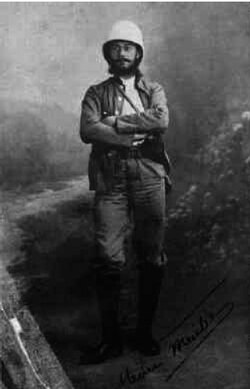
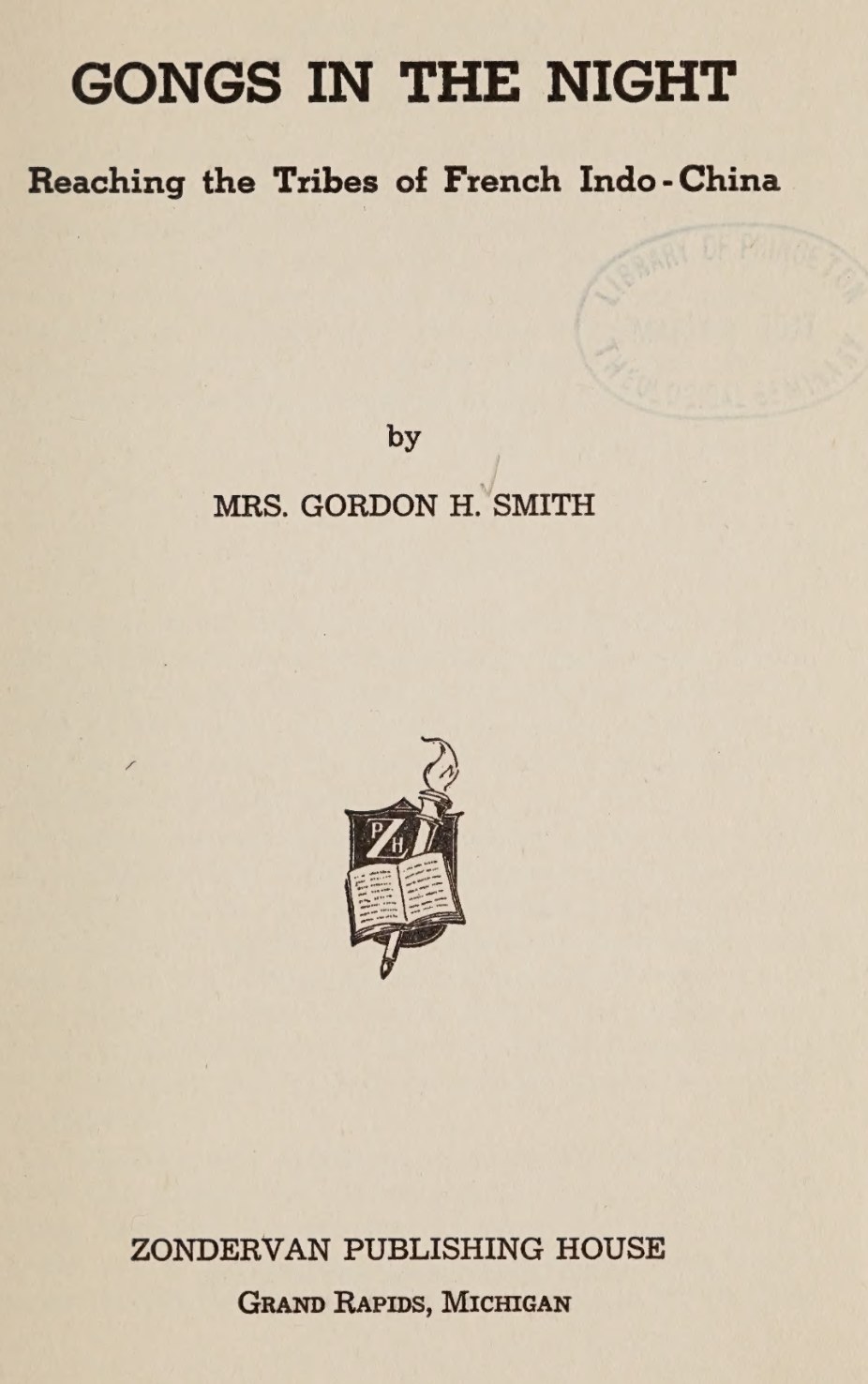
A colonial explorer’s surveys of the Mnong and Stieng country, the second two years before he was killed there. - Laura Irene Smith, Gongs in the Night (1943). — in our library Free to read
The Christian and Missionary Alliance’s account of its first years in the highlands: the background to our Protestant churches.
Our peoples: ethnography, law and belief
For the epics, the gongs and the language dictionaries, see also Gongs and epics and Language resources.
- Georges Condominas, We Have Eaten the Forest: The Story of a Montagnard Village in the Central Highlands of Vietnam (Hill and Wang, 1977; French original Nous avons mangé la forêt de la Pierre-Génie Gôo, Mercure de France, 1957). — Internet Archive Borrow free
A year in the Mnong Gar village of Sar Luk in 1948–49: the swidden, the rites, the debts, the quarrels. Among the most-read ethnographies of any Southeast Asian people. His second book on Sar Luk, L’exotique est quotidien (Plon, 1965), tells what the village became. His lithophone articles are in our library. - Anne de Hauteclocque-Howe, Les Rhadés: une société de droit maternel (Éditions du CNRS, 1985; the publisher’s catalog gives 1987). — publisher
The major study of Rhade matrilineal kinship, household and customary law, with a preface by Condominas. Out of print. In French. - Jacques Dournes, Pötao: une théorie du pouvoir chez les Indochinois Jörai (Flammarion, 1977). — Gallica
Jarai ideas of power, and the Masters of Fire and Water. See our article. Gallica lists it, but as a book still in copyright it is probably not free to read there. In French. - Jacques Dournes, Forêt, femme, folie: une traversée de l’imaginaire Jörai (Aubier Montaigne, 1978). — Internet Archive Borrow free
The Jarai imagination: the forest, women, madness and the dead. In French. - Dam Bo [Jacques Dournes], Les populations montagnardes du Sud-Indochinois (Pémsiens), special issue 49–50 of France-Asie (Lyon, 1950). — catalog
An early survey of the southern highland peoples by the missionary-ethnologist who later wrote under his own name. - Jacques Dournes, God Loves the Pagans (Herder and Herder, 1966). — Internet Archive Borrow free
A missionary’s reflections on the Koho and Jarai, and his critique of missionaries who tried to make highlanders into Europeans. - Frank M. LeBar, Gerald C. Hickey and John K. Musgrave, Ethnic Groups of Mainland Southeast Asia (HRAF Press, 1964). — Internet Archive Borrow free
The standard reference handbook, with entries on the Rhade, Jarai, Bahnar, Sedang, Koho, Mnong, Stieng, Hre and others. - Albert-Marie Maurice, Les Mnong des hauts-plateaux (L’Harmattan, 1993, two volumes) and Croyances et pratiques religieuses des Montagnards du Centre-Vietnam (L’Harmattan, 2002).
Colonial-era fieldwork on Mnong life and belief, published half a century late. In French. - Jean Boulbet, Pays des Maa’, domaine des génies: Nggar Maa’, Nggar Yaang (École française d’Extrême-Orient, 1967).
The Maa’ of the upper Dong Nai and their land. He also wrote Dialogue lyrique des Cau Maa’ (1972) and Paysans de la forêt (1975). In French. - Pamela D. McElwee, Forests Are Gold: Trees, People, and Environmental Rule in Vietnam (University of Washington Press, 2016). — author
How forest policy has been used to govern upland minorities: state forest enterprises, resettlement, and who gets to call a forest theirs. - Peter Pels and Oscar Salemink (eds), Colonial Subjects: Essays on the Practical History of Anthropology (University of Michigan Press, 1999), including Salemink, “Ethnography as Martial Art: Ethnicizing Vietnam’s Montagnards, 1930–1954.” — Internet Archive Borrow free
How colonial soldiers and ethnographers invented the categories we are still sorted into. - Christine Hemmet, Montagnards des pays d’Indochine (1995). — Internet Archive Borrow free
An introduction to the highland peoples of Indochina. In French. - Lê Đình Chi, Người Thượng miền nam Việt Nam / Ethnic Minorities in South Vietnam (Văn Mới, Gardena, California, 2006). — Internet Archive Borrow free
A survey of the southern highland peoples in Vietnamese and English, published in the diaspora.

The war years
- Col. Francis J. Kelly, U.S. Army Special Forces, 1961–1971, Vietnam Studies (Department of the Army, 1973). — Internet Archive Free to read
The official history of the CIDG and Mike Force programs, which were built on Dega soldiers. Also in our library. - Thomas L. Ahern Jr., CIA and Rural Pacification in South Vietnam (CIA Center for the Study of Intelligence, 2001; declassified). — Internet Archive Free to read
The CIA’s own history of its village programs, classified secret when written; published in 2009 as Vietnam Declassified. It has a chapter on the Buon Enao experiment of 1961, where the Rhade elders weighed every American proposal in long councils before they agreed. In our library. - Joann L. Schrock et al., Minority Groups in the Republic of Vietnam, Department of the Army Pamphlet 550-105 (1966). — Internet Archive Free to read
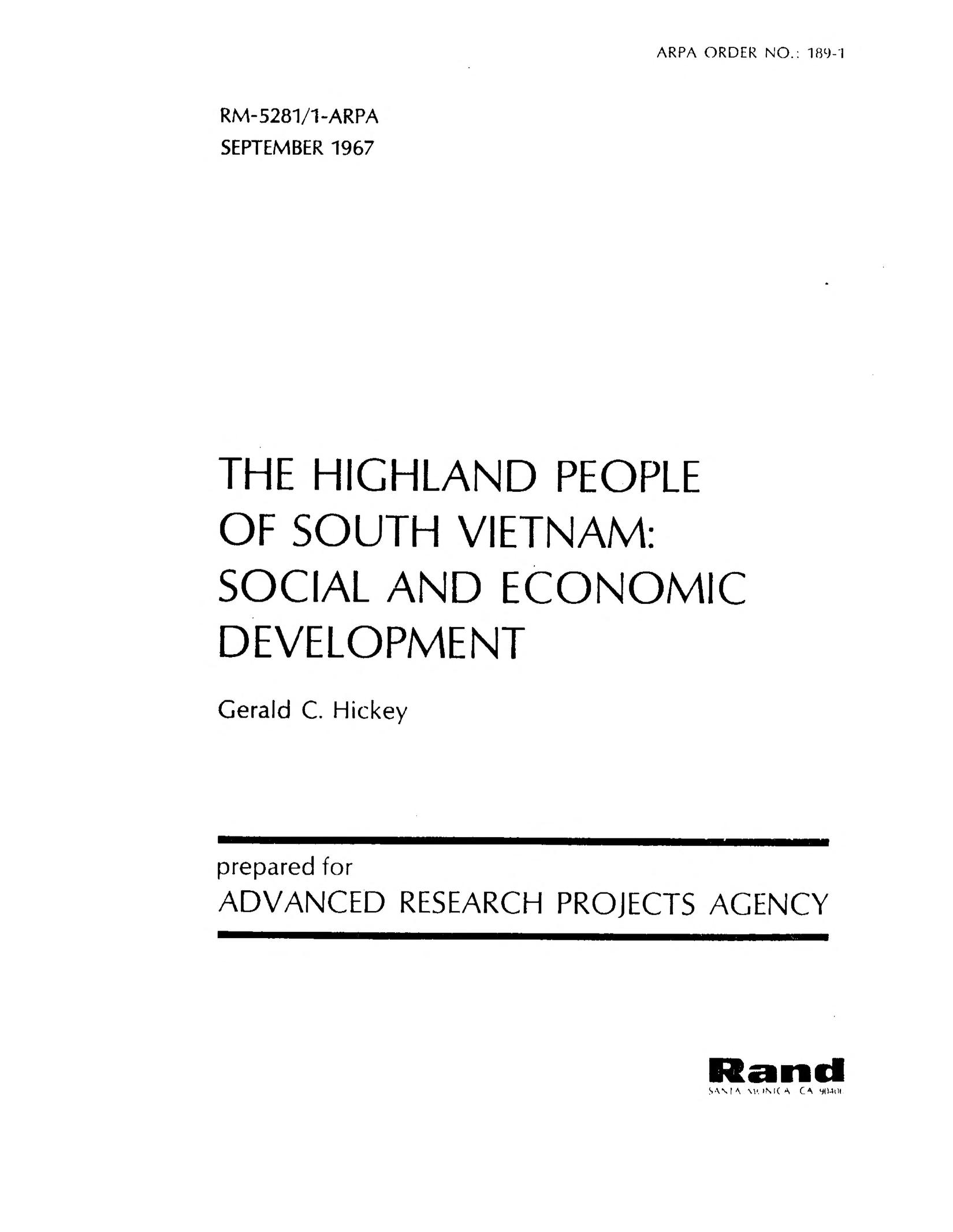
The US Army’s 1,163-page ethnographic handbook, with a chapter on each highland people and the line drawings we use across this library. Much used and much criticized; a period document in its own right. In our library. - Gerald C. Hickey, RAND research memoranda: The Major Ethnic Groups of the South Vietnamese Highlands (RM-4041, 1964) and The Highland People of South Vietnam: Social and Economic Development (RM-5281/1, 1967). — RAND Free to read
Hickey’s reports for the US government, setting out highland grievances in the 1960s. Both are in our library, as our library and our library. - Robert L. Mole, The Montagnards of South Vietnam: A Study of Nine Tribes (Charles E. Tuttle, 1970). — Internet Archive Borrow free
A US Navy chaplain’s survey of the religion and customs of nine peoples, written for American personnel. - Barry Petersen with John Cribbin, Tiger Men: A Young Australian Soldier among the Rhade Montagnards of Vietnam (White Orchid Press, Bangkok, 1994).
The Australian officer who worked for the CIA among the Rhade in 1963–65 and led the Truong Son Force. His official report is at the Australian War Memorial; see Archives and collections. - John L. Plaster, SOG: The Secret Wars of America’s Commandos in Vietnam (Simon & Schuster, 1997).
The standard account of MACV-SOG, whose ground teams were largely Montagnard. - Jim Morris, War Story (Sycamore Island Books, Boulder, 1979). — Internet Archive Borrow free
A Special Forces officer’s memoir of serving with highland strike forces; Morris remained an advocate for the Montagnards for the rest of his life. - Robin Moore, The Green Berets (Crown, 1965).
The bestseller, thinly fictionalized, that shaped how Americans imagined the Montagnard alliance. - Paul L. Seitz, Men of Dignity: The Montagnards of South Vietnam (J. Jackson, Cambridge, 1975), from Des hommes debout (C. Simonnet, Paris, 1975).
By the Catholic bishop of Kon Tum, a portrait of highlanders caught in the war. - Homer E. Dowdy, The Bamboo Cross: Christian Witness in the Jungles of Viet Nam (Harper & Row, 1964). — Internet Archive Borrow free
The Protestant mission among the highland peoples: background to our churches. - James and Marti Hefley, No Time for Tombstones (1974) and Prisoners of Hope (1976). — Internet Archive Borrow free
The missionaries killed and captured at Ban Me Thuot in 1968, and those held prisoner afterward. See The missions and the doctors. - Hilary Smith, Lighting Candles: Hospital Memories of Vietnam’s Montagnards (Northlight Studio Press, Barre, Vermont, 1988).
A nurse’s memoir of the Minh Quy hospital in Kon Tum, where she went to work in 1971. - Faris R. Kirkland, “Cultural Dynamics of Civic Action in the Central Highlands of Vietnam, 1967–1968,” Armed Forces & Society 26:4 (2000), pp. 547–560.
A scholarly assessment of the 4th Infantry Division’s civic action in the villages of Pleiku.
After 1975, exile and North Carolina
- Thomas Pearson, Missions and Conversions: Creating the Montagnard-Dega Refugee Community (Palgrave Macmillan, 2009). ISBN 978-0-230-61536-6. — publisher
The main scholarly book on the Dega community in North Carolina: the missions, conversion, the forest years, resettlement and identity. - Raleigh Bailey, Montagnards: Their History and Culture, Culture Profile (Center for Applied Linguistics, 2002). — Internet Archive Free to read
A short guide written for resettlement agencies; the State Library of North Carolina’s history for schools is taken from it. In our library. - Lauren E. Raper, “Blest be the Ties that Bind”: The 1986 Montagnard Resettlement to Greensboro, NC (MA thesis, North Carolina State University, 2009). — PDF Free to read
The 1986 arrivals, in detail. - Joe P. Dunn, “Kok Ksor and the Struggle for Cultural Survival, Human Rights, and Religious Freedom for the Montagnards of the Central Highlands,” Athens Journal of History 10:1 (2024), pp. 9–26. — PDF Free to read
A life of Kok Ksor (1944–2019), from BAJARAKA to the Montagnard Foundation. - Jacques Dournes, Minorities of Central Vietnam: Autochthonous Indochinese Peoples (Minority Rights Group, 1980). — Internet Archive Borrow free
A short human-rights overview written five years after the war. - Human Rights Watch, Repression of Montagnards: Conflicts over Land and Religion in Vietnam’s Central Highlands (2002). — HRW Free to read
Book-length, and still the best single account of the 2001 protests and their background. The other reports are listed in Reports and documents.
For young readers, and novels
- Marylois Dunn, The Man in the Box: A Story from Vietnam (McGraw-Hill, 1968). — Internet Archive Borrow free
A novel for young readers: a highland boy frees an American prisoner from a bamboo cage and leads him to safety. - Jonathan Rubin, The Barking Deer (G. Braziller, 1974). — Internet Archive Borrow free
A novel set among the Montagnards during the war.
Books by Dega authors
This is the thinnest part of the list, and it says something about who has had the chance to publish. We could not confirm a single published memoir by a Dega leader. The Montagnard Foundation published a history and a human rights report of its own in Spartanburg in 2001. Y-Bham Buon-ya is co-author, with James A. Tharp, of A Rhade-English Dictionary with English-Rhade Finderlist (Pacific Linguistics, 1980); see Language resources. The rest of what our people have written is in theses, testimony and our own records. See also Theses and academic studies.
Where the sources disagree. Chickering’s reviewers put his Mike Force command in 1966, 1967 or 1968, so we give no year. Les Rhadés is dated 1985 in some records and 1987 in the publisher’s, with the same ISBN. Condominas’s Nous avons mangé la forêt is usually dated 1957, sometimes 1954. We have not seen the title or date of Thayer’s Far Eastern Economic Review story, or the imprint of No Time for Tombstones, and we do not know whether Cowboy was Rhade.
Compiled September 2026. If you or someone in your family has written about our history — a memoir, a thesis, a dictionary, a collection of songs — please tell us, and we will add it.