










In the last weeks of 1850 a French priest of twenty-five, guided in by a Vietnamese deacon, reached the Bahnar villages of the Kon Tum basin. The mission that followed produced the first written form of any of our languages, the first dictionary, the first school, and the first outside description of who lived in the highlands and where. It is the beginning of the written record of the Dega, and it was compiled by people who called us savages in the title of the book. This page tells who came, what they made, what it cost, and how to hold it.
Who came, and how
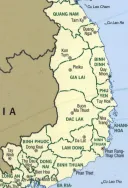
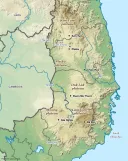
Étienne-Théodore Cuénot, the bishop on the coast of central Vietnam, decided in the 1840s to plant a mission among the peoples of the highlands between the sea and the Mekong. It took years and several attempts. The passes were watched, the Nguyễn court was persecuting Catholics and forbade the highlands to foreigners, and the men who tried were turned back. In 1848 the bishop sent a Vietnamese deacon, Nguyễn Do, born in 1823 in the Catholic parish of Đồng Hâu in Bình Định, to find a way in. He went up as a trader, made a friend of a highland chief remembered as Kiêm, and under that man’s protection brought the first priests through in 1850. He was ordained a priest himself in 1852. Our history books, when they mention the mission at all, name the Frenchmen. The man who opened the road was Vietnamese, and the man who let him pass was one of us.
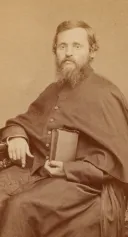
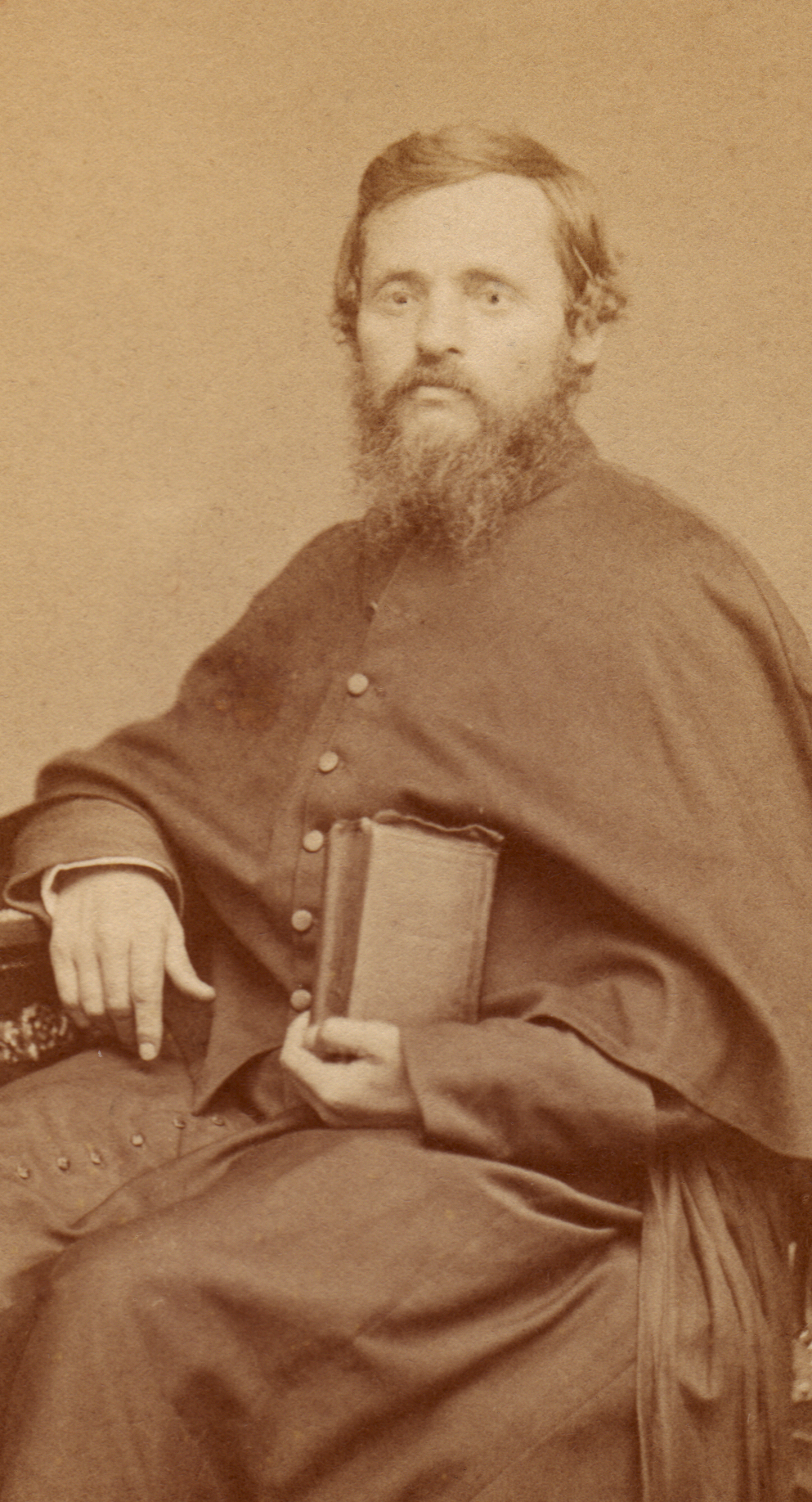
The priests were Jean-Pierre Combes, Joseph Fontaine and Pierre Dourisboure, of the Missions Étrangères de Paris. Combes and Fontaine went up first, with the deacon Do, to the Bahnar. Dourisboure, born at Briscous in the French Basque country on September 19, 1825 and ordained in June 1849, had reached Vietnam only that year. The Missions’ own record says that “le P. Dourisboure partit le 11 novembre 1850, à la nuit tombante”, set out at nightfall on November 11, 1850, and after five weeks on the road found Combes and Fontaine among the Bahnar. “À la fin de 1850, il était à Kon-trang dans la tribu des Se-dang.” In 1851 the bishop set up four mission stations, for the Bahnar of Jơlơng, the Bahnar of Rơngao, the Sedang and the Jarai, with Combes as their superior.
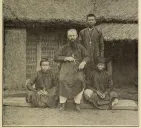
What followed was not a quick success. It was fever, hunger and suspicion. Dourisboure, “moins affaibli que ses compagnons,” less weakened than the others, went exploring with Combes and obtained a small piece of ground at Kon Kơ Xâm, which became the principal Bahnar station. “Le 16 octobre 1853, il baptisa ses deux premiers catéchumènes, Ngui et Pat”: three years in the country for two converts. Fontaine went at the beginning of 1853 to settle among the Jarai, at the village the record calls Po-ley-chu, and was later sent on to the Mnong. Combes, who had written the first small catechism and the morning and evening prayers in Bahnar, died at Kon Kơ Xâm on September 14, 1857, aged thirty-two, having baptized thirty-four adults. Dourisboure took over. When he was recalled to the coast in 1885, after thirty-five years, to run the seminary, the whole highland mission still counted about a thousand Christians.
What the mission made
The lasting product was not the congregations. It was the writing.
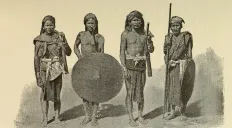
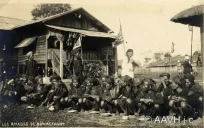
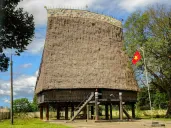
- Les Sauvages Bahnars (Paris, 1870; enlarged 1873), written during Dourisboure’s leave in France: the first extended outside description of a highland people, their villages, their communal house, their law and their spirits. It went through four editions and is still the book every history of the highlands begins from.
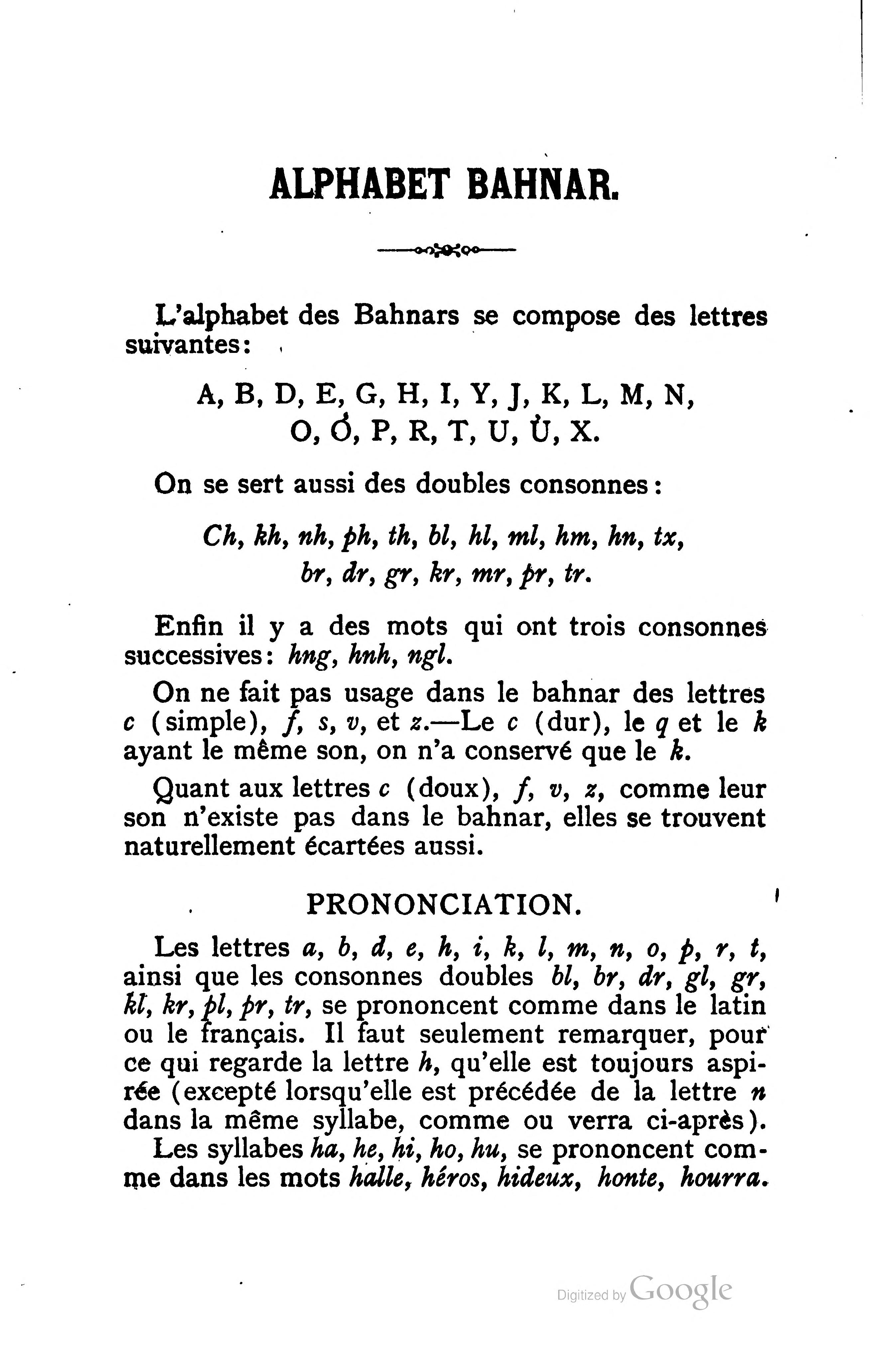
- A Bahnar alphabet in the Latin script, with a catechism and prayers (1888): the first written form of any of our languages.
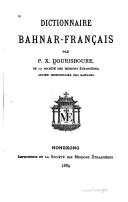
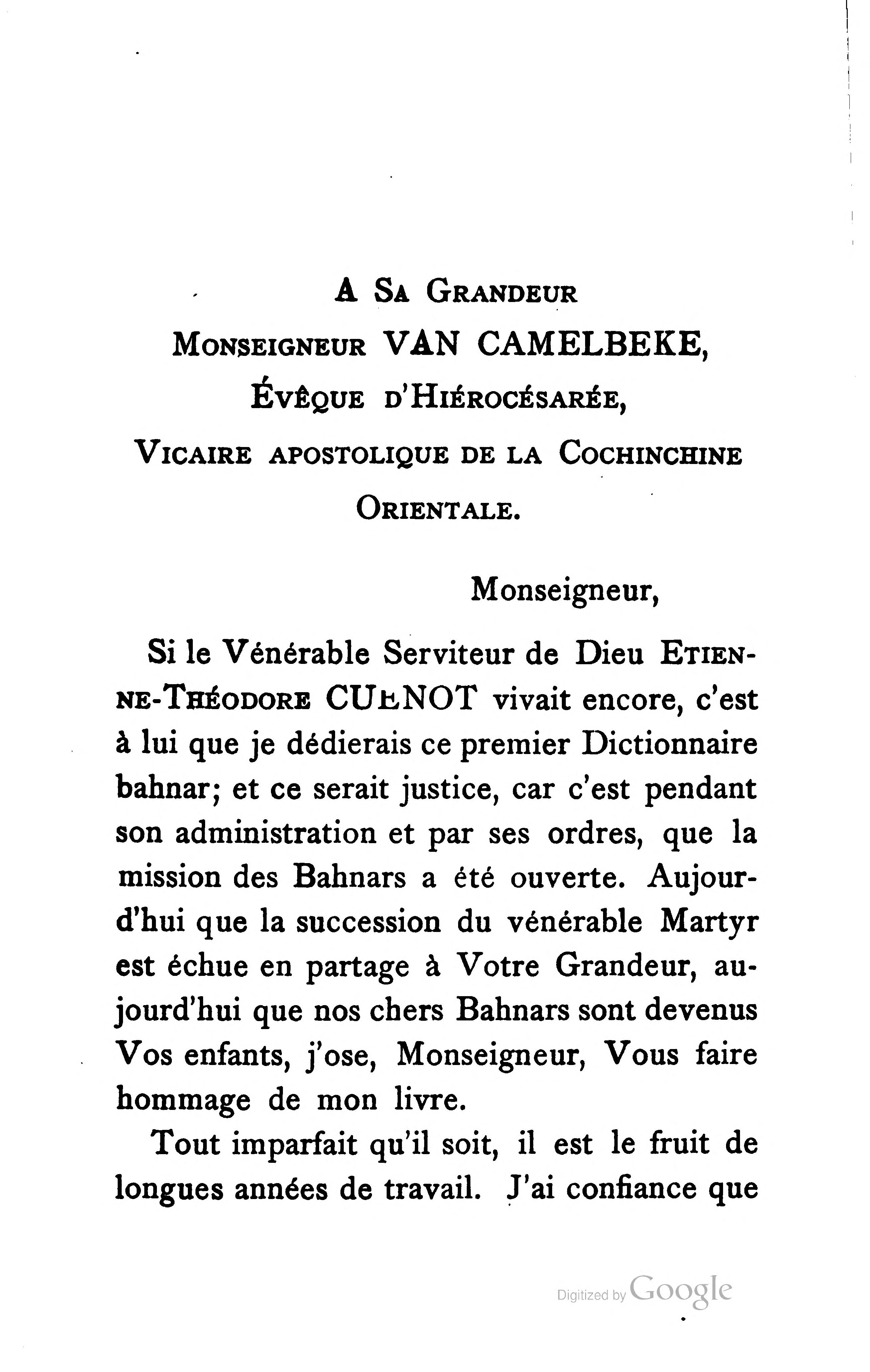
- The Dictionnaire bahnar-français (Hong Kong, 1889), 363 pages of dictionary after 45 of grammar and alphabet, finished at the missions’ house at Nazareth near Hong Kong and dedicated on March 25, 1889. Its author called it “le fruit de longues années de travail” and said that if Cuénot were alive it was to him he would have dedicated it, “car c’est pendant son administration et par ses ordres, que la mission des Bahnars a été ouverte.” It is in our library.
Bahnar therefore has a documentary record reaching back further than any other highland language, and it exists because a French priest spent his health writing it down. Rhade would not be codified for another thirty-five years, by an administrator rather than a missionary and for different reasons; see Sabatier and the Rhade code and Writing our languages. The mission went on producing: the Paris archives list a Sedang dictionary, a Rhade dictionary, a French–Jarai dictionary, a Bahnar–French–English–Vietnamese dictionary, and a manuscript history of the mission, all by later fathers.
What the mission also made
.jpg)
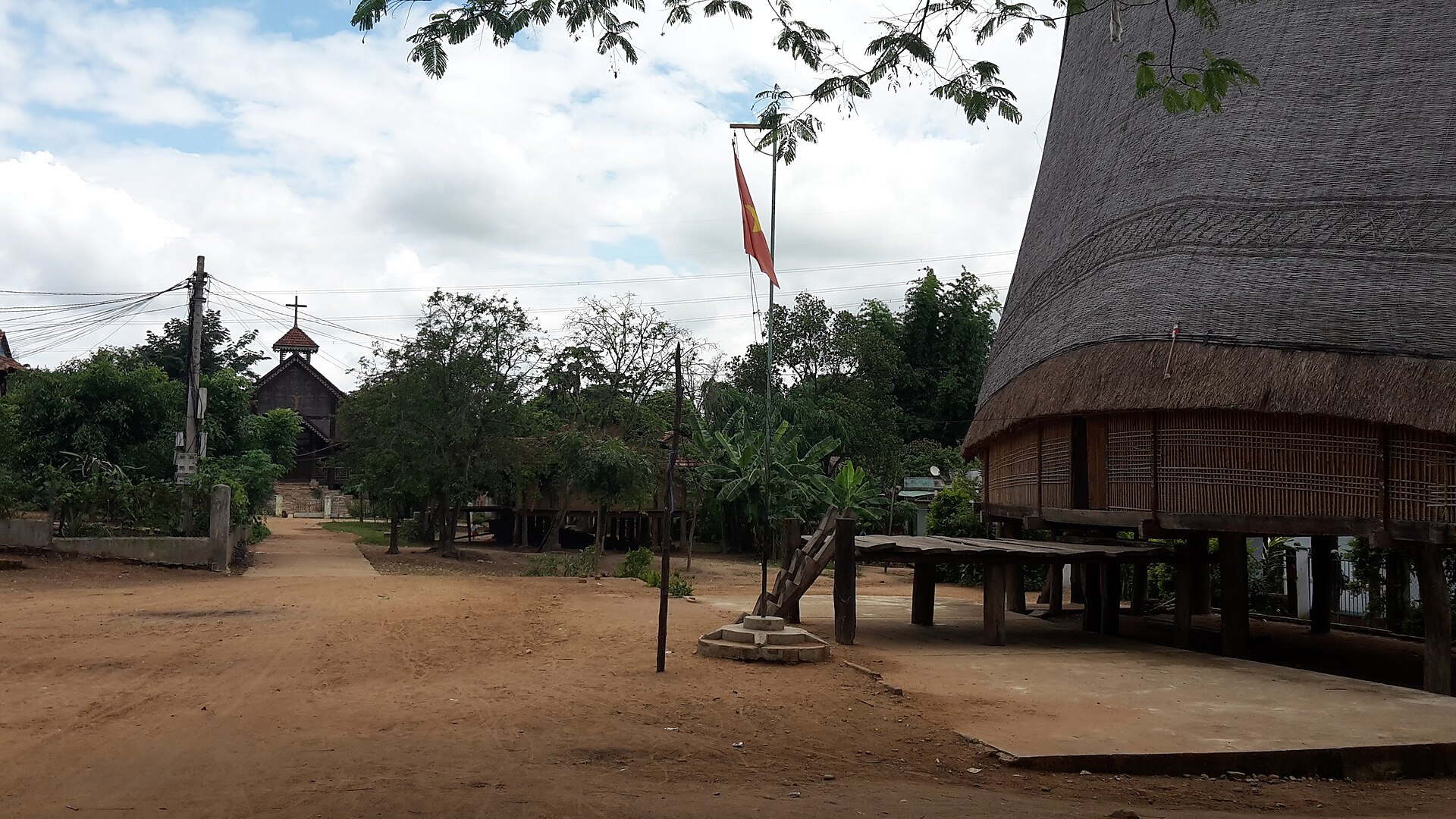
From the 1860s Dourisboure changed method. Instead of converting individuals inside existing villages, where the spirits, the elders and the customary law remained in charge, the mission founded villages that were Christian from the first house. The Missions’ record is explicit that the mission was built “grâce surtout à la création de villages exclusivement composés de chrétiens,” above all by creating villages made up exclusively of Christians, and that the first of them, set in the middle of a forest, was Jơ Ri Krong, in 1866.
It is worth being clear about what that does. A village in the highlands is not a residential arrangement. It is the unit that holds the land, settles disputes, and keeps the obligations to the ancestors and the spirits of the ground; see Customary law. Founding a new village on a religious criterion takes people out of that unit and reconstitutes them on a different principle. It is the most effective missionary technique there is, and it is also, structurally, the same operation that the resettlement programs of 1956 and 1976 later performed for other reasons. We do not draw a moral equivalence between a priest founding a village of willing converts and a state moving a population by decree. We draw attention to the mechanism, because it is the same mechanism, and the highlands have now had it applied to them by missionaries, by a colonial administration, by two Vietnamese states and by a hydropower company.
Kon Tum

The station at Kon Tum, a Bahnar village whose name means the village by the lake, became the center. Jules Vialleton, who came to it in 1875 and led the mission from 1885 until his death there in 1909, saw it through a smallpox epidemic in 1893 that killed 168 people in the village and a fire in 1897 that burned the church and his house. The French administration followed the mission up the road, and the sequence described on The first outsiders, missionaries, then explorers, then agents, then soldiers, ran its course over about forty years. The mission did not intend to be the first step of it. Its maps, word lists and village surveys were the first step of it anyway.
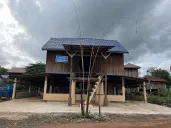
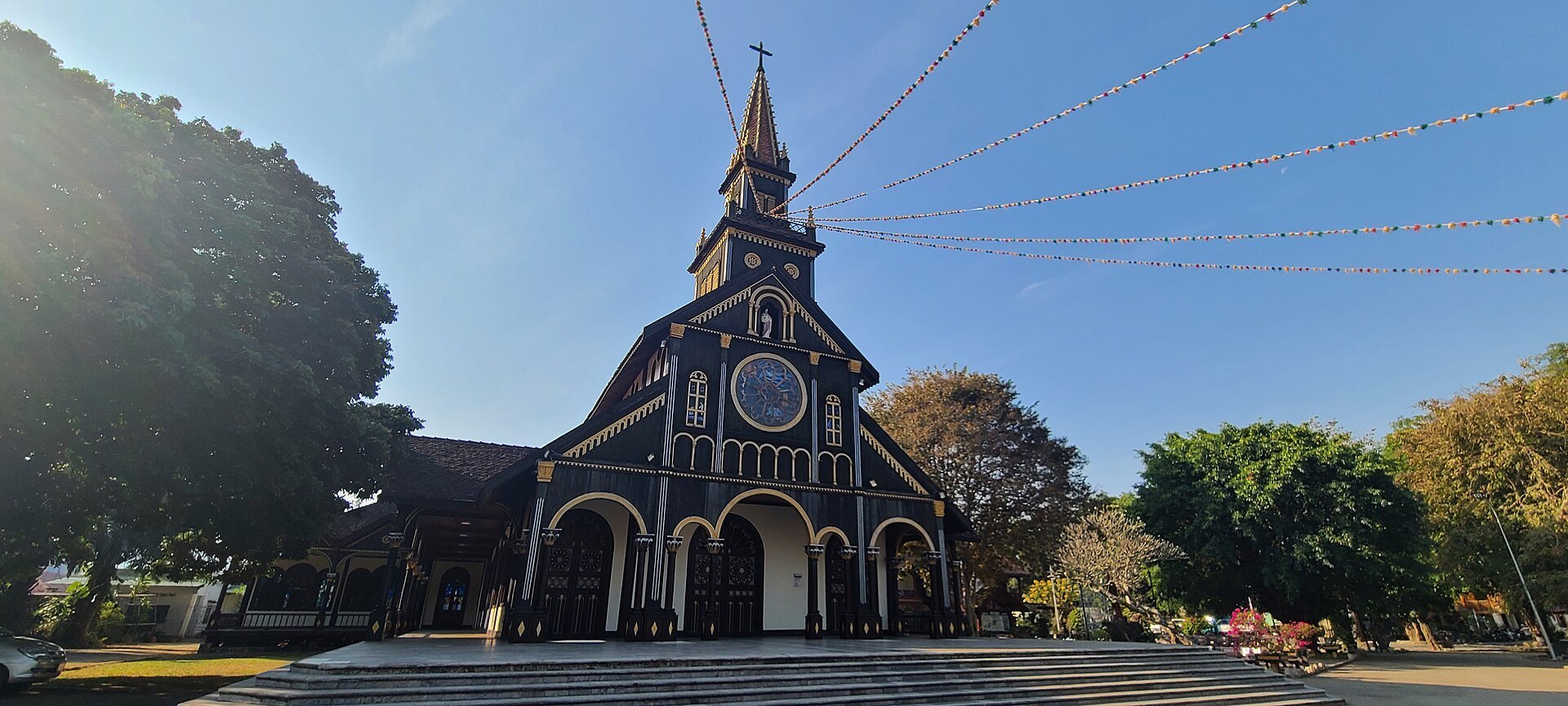
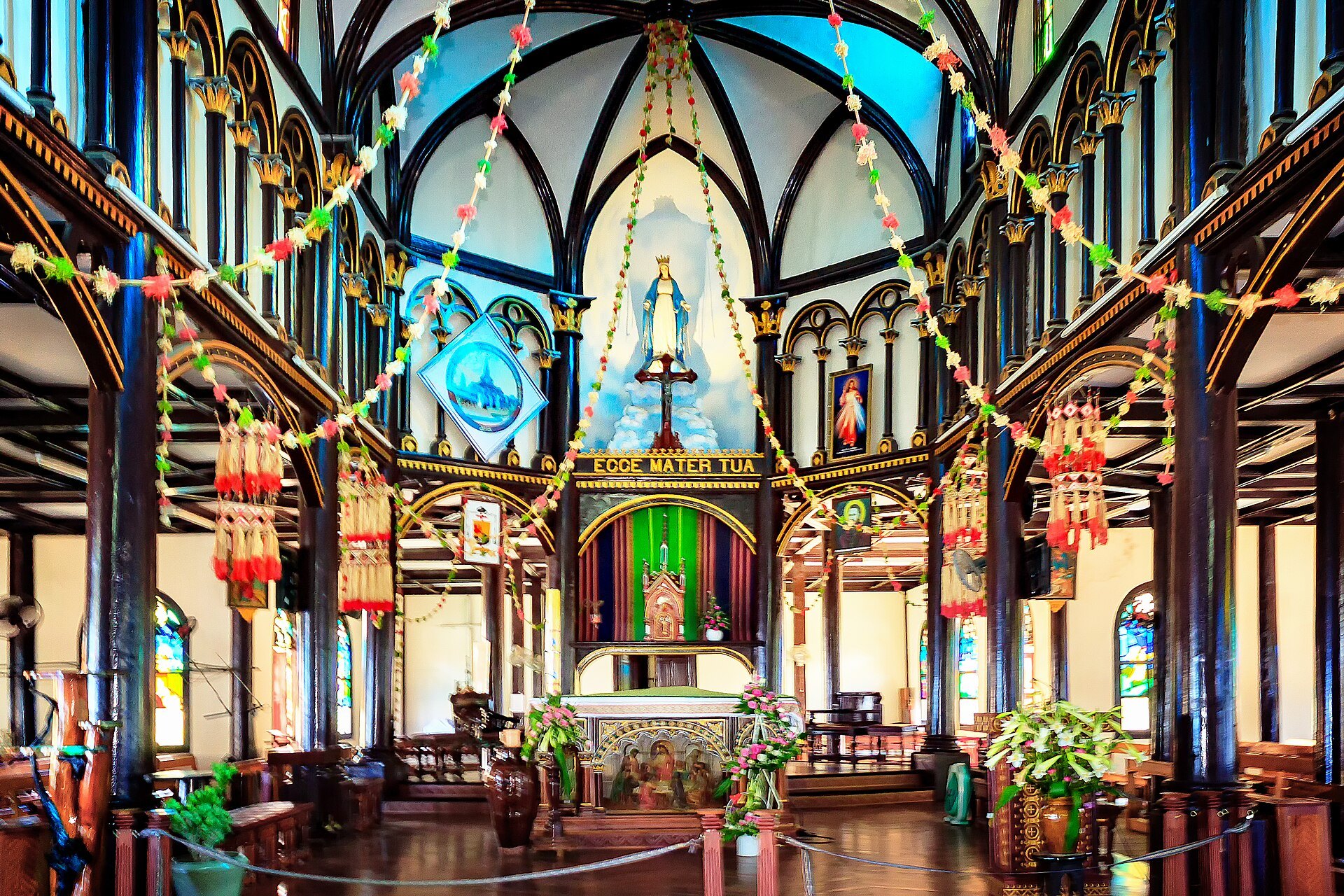
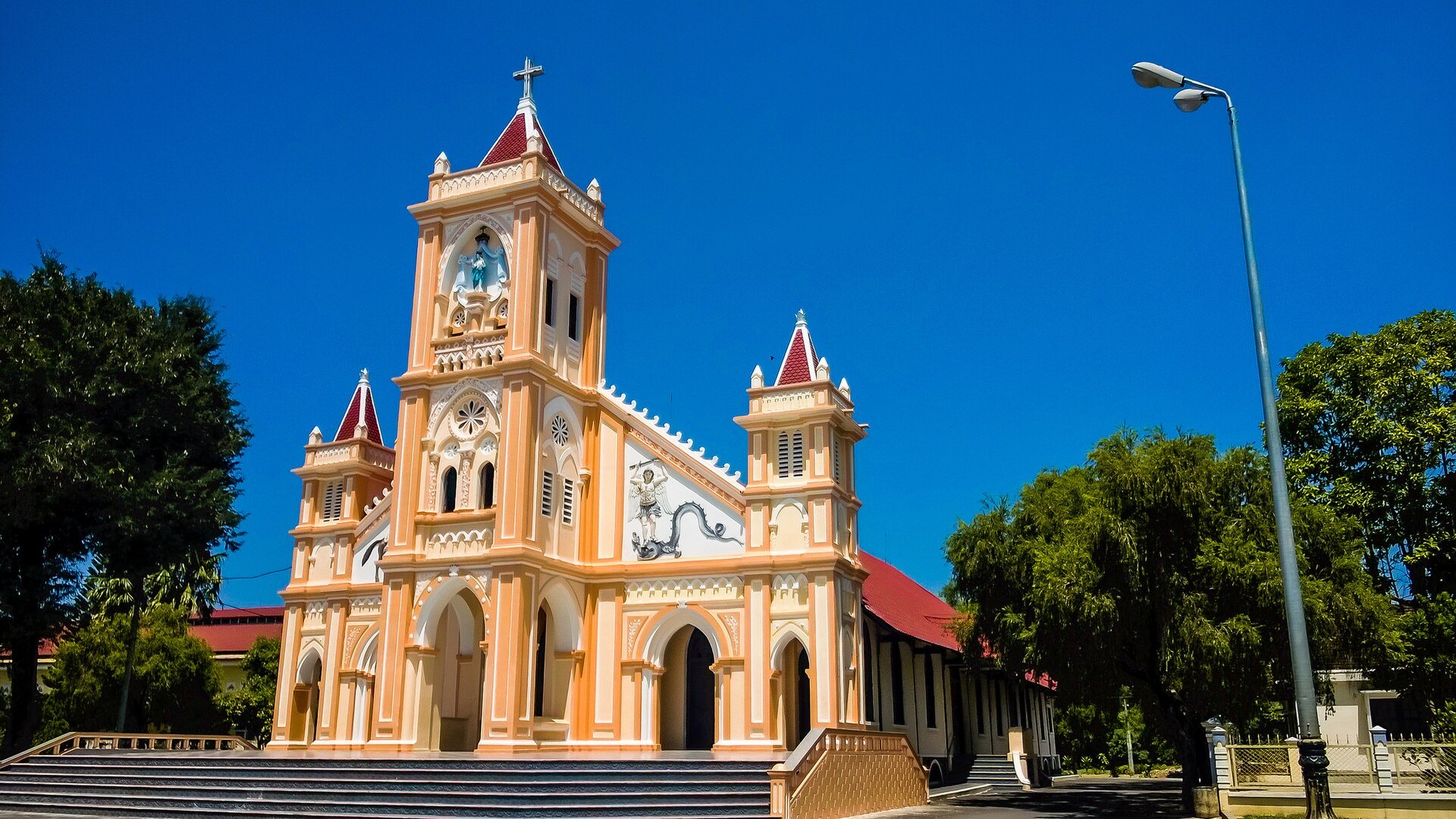
Between April 7, 1913 and January 6, 1918 Father Joseph Décrouille built the church that still stands: hardwood columns and beams joined without nails, walls of packed earth and straw, the whole raised on pillars in the manner of a Bahnar house, by carpenters brought from Bình Định, Quảng Nam and Quảng Ngãi. On January 18, 1932 Rome made the highland mission a vicariate apostolic of its own, separate from Quy Nhơn, with 24,525 Catholics, 29 priests and 160 highland catechists; in 1932 the first three Bahnar priests were ordained, and Martial Jannin, who had worked in the highlands since 1890, was named its first bishop in January 1933. He built the seminary between 1934 and 1938, the great French building that still stands beside the cathedral. The vicariate became a diocese in 1960; in 1967 Dak Lak and the south were cut off to form the diocese of Ban Mê Thuột. In 1975 the seminary’s training “had to stop because of the times,” in the diocese’s careful phrase, and, in the words of a Catholic directory, “many Church facilities were confiscated or closed by the government, Church activities were limited, local ethnic villages had no resident priests.” What was done to the Catholic highlands after 1975 is on The highland Catholic Church under the Socialist Republic.

The numbers today are the measure of what began at Kon Kơ Xâm. In 2023 the diocese of Kon Tum, which now covers only Gia Lai and Kon Tum provinces, counted 396,040 Catholics, of whom 287,206 were highlanders and 108,834 Kinh: 143 parishes, some 220 priests, and 3,475 catechists, most of them ours. Nearly one person in five in the two provinces is Catholic. That is the church the state deals with when it deals with Kon Tum, and it is overwhelmingly a Bahnar, Sedang, Jarai and Rơngao church.

How to hold this
Dourisboure spent thirty-five years in our villages, from twenty-five to sixty, and died at Marseille on September 8, 1890, a few days after landing in France for the last time. Bahnar families remember the mission priests by name. A great many of us are Catholic today because of what began in 1850, and the Catholic highlands have been persecuted since 1975 alongside the Protestant ones. He also titled his book The Bahnar Savages, and meant it descriptively; and his own Society’s biography still calls the mission “la mission des sauvages.” Both of those things are true, and a library that could hold only one of them would be less useful than one that holds both.
Where the mission’s records are
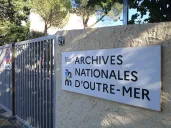
The archives of the Missions Étrangères de Paris, now kept by the Institut de recherche France-Asie in Paris, hold the Kon Tum mission’s papers as series 17C-KT, Kontum (Mission Bahnar): the Paris files from 1850, the mission’s own archive deposited in 1964, and a second deposit made in 1975 as the mission closed, running to the districts and parishes. Among the personal papers are the manuscript dictionaries listed above and Father Bober’s history of the mission. The Paris procure’s correspondence with Kon Tum runs from 1962 to 1987 and with Ban Mê Thuột from 1968 to 1976. The customary law the Kon Tum courts applied between 1908 and 1939 was published by Paul Guilleminet as the Coutumier de la tribu Bahnar, des Sedang et des Jarai de la province de Kontum (1952), two volumes, still in print. See Archives and collections and Language resources.
See also: The Bahnar, The Sedang, The Kingdom of the Sedang, Welcomed outsiders.
Sources
- Institut de recherche France-Asie (Missions Étrangères de Paris), biographical notices of Pierre Dourisboure, Jean-Pierre Combes, Joseph Fontaine, Jules Vialleton and Martial Jannin — the dates and the French quotations
- IRFA, inventory of series 17C Vietnam (2023) — the Kon Tum series 17C-KT
- Pierre Dourisboure, Dictionnaire bahnar-français (Hong Kong: Imprimerie de la Société des Missions Étrangères, 1889), DCHO library and Internet Archive; Les Sauvages Bahnars (Cochinchine orientale): souvenirs d’un missionnaire (Paris, 1870; 4th ed. 1904); in English as Dourisboure and Christian Simonnet, Vietnam: Mission on the Grand Plateaus (Maryknoll, 1967)
- Diocese of Kon Tum, history of the diocese, and Bishop Aloisiô Nguyễn Hùng Vị, “Nguyễn Do với Tây Nguyên” (Diocese of Ban Mê Thuột) — the deacon Do, the four stations of 1851, the seminary and the figures for 2023
- Union of Catholic Asian News, directory entry for Kon Tum — the 1932 figures and the years after 1975; GCatholic — dates of erection and the bishops
- Solo in Vietnam, the wooden church — construction dates, builder and materials
- Paul Guilleminet, Coutumier de la tribu Bahnar, des Sedang et des Jarai de la province de Kontum (École française d’Extrême-Orient, 1952)
Compiled September 2026. The Kon Tum mission archives in Paris are the richest unexplored source for the nineteenth-century highlands, and we have read almost none of them. If you read French and want to help, this is the most useful thing anyone could take on.