















Knowledgebase
Before
The highlands before the wars: who came, what they wanted, and the country we were promised.
Articles
14 articles
Before 1800: free in the highlands
For longer than anyone has written history on this coast, the people of the highlands governed themselves. We cleared our own fields, forged our own iron, judged our own quarrels by a law recited from memory, traded down the rivers for salt and gongs, and made war and peace with one another without asking leave of any king. Three kingdoms on our...
Before history: the stone and bronze ages of the plateau
Seven thousand years ago people were living in the lava caves at Krong No, burying their dead in a flexed position, cooking at hearths and wearing ornaments made from sea-snail shells carried a hundred kilometers from the coast. That is the best-dated thing we have. Out at the edges the claims get bigger and the ground gets softer: stone tools a...
The first outsiders: Cham, Annam and the missions
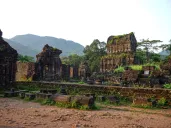
Three powers came to the edge of the highlands before the French, and each left something with us. The Cham held the coast for a thousand years, traded up our rivers, built one tower in our forest, and when their kingdom died gave their crowns into our keeping. The Vietnamese destroyed the Cham, inherited the shore, set up markets at the foot of...
The French arrive, 1876–1929
We let the French in. Most of our villages received them, between 1891 and 1899, as men who had come alone, who promised protection against the Lao and Siamese raiders from the west, and who had just taken the coast from the power that had taken it from us. The reasoning was not naive, and for a while it held. What we got over the next thirty ye...
A country of our own, 1946
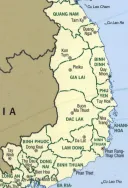
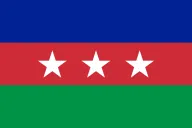
Between 1946 and 1955 our country existed on paper. A French ordinance of May 27, 1946 took five highland provinces out of Annam and made them a territory of their own, with its seat at Buon Ma Thuot. In 1950 Bảo Đại took the territory as his personal Crown Domain, and in 1951 he signed a special statute for it: our chiefs and our courts kept, o...
The Kon Tum mission, 1851
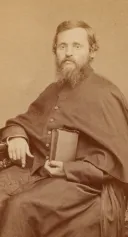
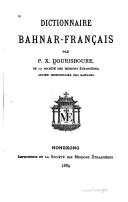
In the last weeks of 1850 a French priest of twenty-five, guided in by a Vietnamese deacon, reached the Bahnar villages of the Kon Tum basin. The mission that followed produced the first written form of any of our languages, the first dictionary, the first school, and the first outside description of who lived in the highlands and where. It is t...
The "Kingdom of the Sedang," 1888
On June 3, 1888, at the village of Kon Gung on the Poko north of Kon Tum, the chiefs of several Sedang villages signed a constitution that made a Frenchman their king. The Kingdom of the Sedang lasted about two years, issued stamps, medals and a flag, and is usually told as a comic episode in the life of an adventurer. It is worth telling from o...
The Kings of Fire and Water
The legend said they lived alone in seven towers on seven mountains, moved from one to the next each year, never saw a human face, and reigned seven years. A French officer went to find out, and in February 1891 he found the Master of Fire lying on a bamboo couch smoking a long copper pipe, among people who paid him no great deference. He carrie...
Sabatier, the oath of 1926 and the Rhade law code
On New Year’s Day 1926 the French résident of Darlac stood in front of the assembled chiefs at Buon Ma Thuot and told them, among other things, that the peoples around us who had let strangers into their country had lost their law and were themselves lost. Ten times he told them to touch the bracelet. Six months later he was quietly relieved of...
The Franco-Rhade school and the Collège Sabatier
Thirty boys from the villages around Buon Ma Thuot were put into a French school in 1915. Attendance was not voluntary; within a few years some of them walked home, and the paramount chief who defended them was accused of inciting disobedience. Out of that school came a written Rhade language, a class of clerks and teachers, and, a generation la...
The slave raids
At Stung Treng in the last century of the trade a person from our highlands sold for three or four bars of silver. The Lao word for us, Kha, means servant or slave. The Frenchman who wrote both of those things down in 1898 added a third sentence about us that we reproduce here because of what it shows about the men who came to abolish the traffi...
N’Trang Lơng and the Mnong resistance
For twenty-one years, from the burning of a French post in May 1912 to the arrival of the army’s road in 1933, the Mnong of the Plateau des Herbes, the grass hills where Cambodia, Cochinchina and Annam met, held the French out of their country. Their leader was Pa Trang Loeung, whom the Vietnamese write N’Trang Lơng: a koragn, a village mediator...
The first war in the highlands, 1946–1954
Between 1946 and 1954 France and the Viet Minh fought over our country, and both made our people the same offer: a country of our own, in return for soldiers. France gave the offer a name, a flag and two ordinances, and raised thirteen battalions of our men. The Viet Minh raised units of their own among us and promised autonomy. Our men fought o...
Roads, taxes and forced labor, 1899–1945
In 1899 the tribute our villages had paid every three years in wax, horn and ivory was abolished and replaced by a tax in cash, on people who did not use cash. Three years later came the days: ten a year of unpaid work on the roads, rising to fifteen, and eight to ten more spent walking to the worksite and back. A man who could not find the mone...
Powered by WBAMS