

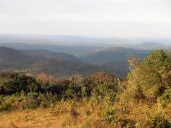
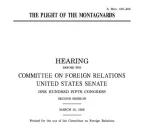
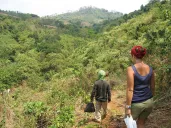


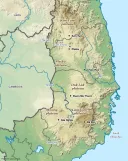
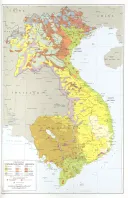
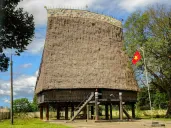
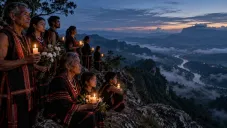
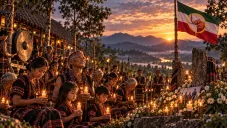
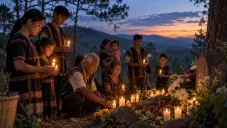
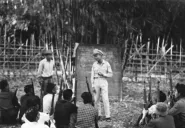
In September 1992 two journalists walked into the forest of Mondulkiri, in eastern Cambodia, and found 407 FULRO guerrillas and their families living in five villages with six churches, still fighting a war that had ended seventeen years before. Nobody had told them that their president had been killed in 1975. On October 10 they handed 194 weapons and their flag to United Nations peacekeepers, and our armed struggle ended after twenty-eight years. Most of them were in North Carolina by Christmas.
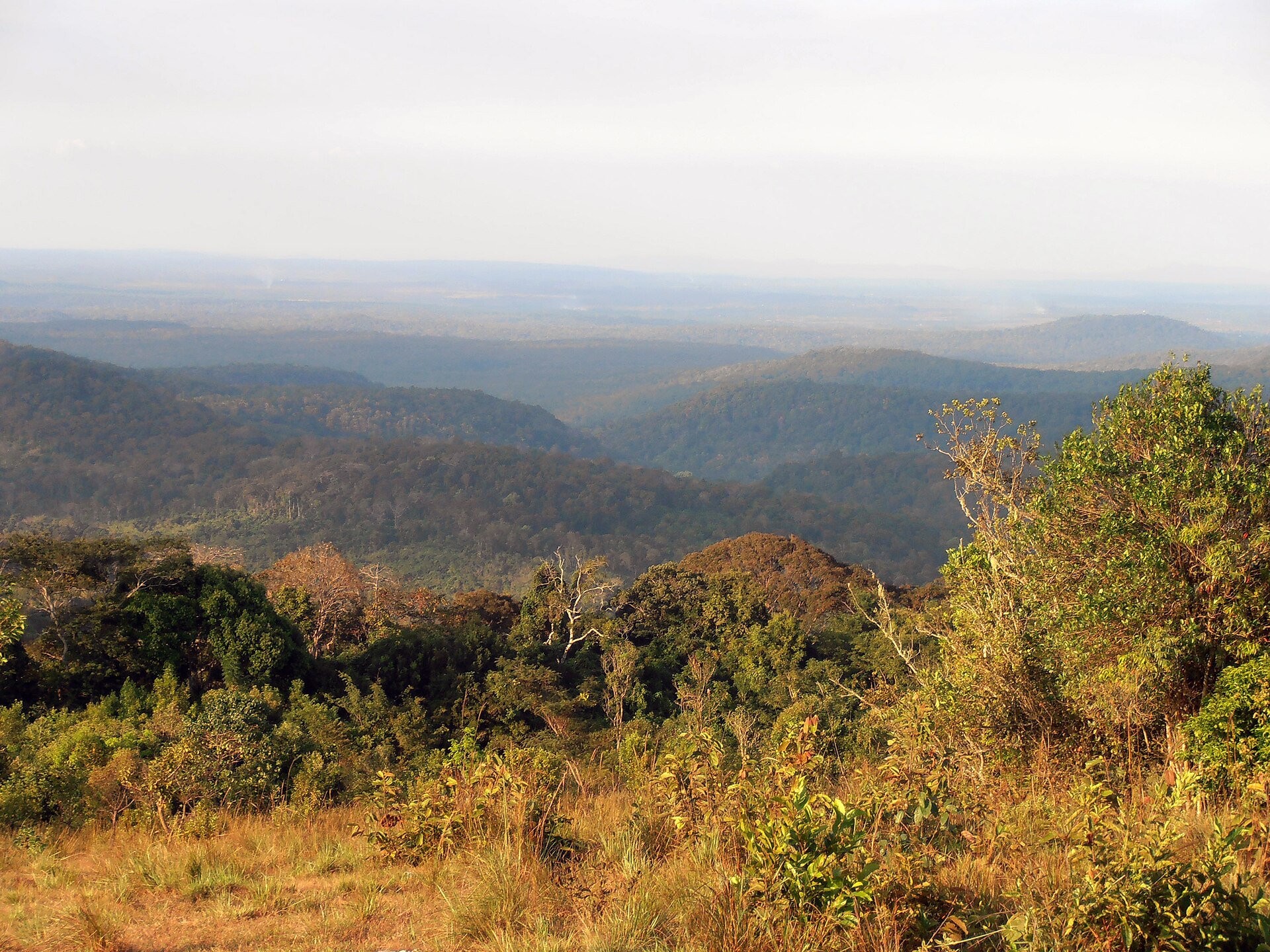

Seventeen years in the forest
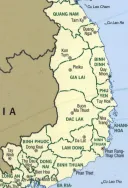
When Saigon fell on April 30, 1975, FULRO did not stop. Part of the movement went into the forest along the Cambodian border and kept fighting: against the Socialist Republic of Vietnam, through the Khmer Rouge years, through the Vietnamese occupation of Cambodia from 1979, and through the civil war that followed it.
By 1977 its main outside backer was the Khmer Rouge, which supplied it with arms and provisions. By 1979, the survivors later told the journalist Nate Thayer, the movement had lost more than eight thousand killed or captured, and that year it left its bases in the highlands for the forest on the Cambodian side of the border. By 1986 the Khmer Rouge had stopped supplying it, and after that the movement was being ground down in a forest it could not leave.
Nobody was coming. The Americans had gone. Cambodia changed hands again and again. To the outside world the Vietnam War was over and these men did not exist. They stayed anyway, for the length of a childhood and more, and children were born in those camps who had never seen a town. The years in the forest are on Re-education and the forest, 1975–1992.
What they did not know
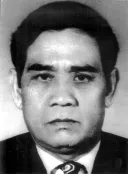
They were fighting under the authority of Y Bham Enuol. He had walked out of the French Embassy in Phnom Penh into the hands of the Khmer Rouge on April 20, 1975, with about a hundred and fifty of our people, and none of them was seen again. The men in Mondulkiri did not learn it until 1992. Seventeen years of a command reporting to a man who had been dead since the first month of it: that is the condition of our people in the late twentieth century in one sentence. Cut off, fighting on, and not told. His death is on Y Bham Enuol: Phnom Penh, the captivity and the death.
1986: the first group out
In the mid-1980s FULRO broke with the Khmer Rouge leadership, and a group of its people walked west across Cambodia to the Thai border. In 1986 the US State Department approved 209 of them from the Site II camp in Thailand for resettlement: 159 men, 17 women and 33 children. About a hundred Rhade went to Greensboro, fifty to seventy Jarai to Raleigh, and the rest to Charlotte. They were the first Montagnard community in North Carolina, and American Special Forces veterans campaigned for them and met them when they came; see North Carolina.
The rest stayed in the forest. As late as 1990 a six-man FULRO patrol went back into Vietnam; four were killed in an ambush, and the two survivors reached a United Nations unit only in May 1993.
1992: found
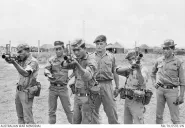
By 1992 the United Nations Transitional Authority in Cambodia, UNTAC, was running the country ahead of elections. In January the Khmer Rouge had expelled what was left of FULRO into the remotest part of Mondulkiri. In late August a Reuters correspondent, Mark Dodd, heard from an Australian UN signals officer that there were armed highlanders in the forest near the Vietnamese border. Nate Thayer and Michael Hayes flew in, landed about twenty-five kilometers from the border, and walked in.
What they found, Thayer reported in the Phnom Penh Post on September 12, 1992, was 407 guerrillas and their families in five villages. Each village had an evangelical church, and there was a Catholic church in the main camp. Two weeks later he described the churches: pews made of logs, a rough cross behind the altar, services every evening for two hours and prayers every morning, worshippers kneeling on large green leaves on the damp forest floor, and nearly forty people sharing a single Bible at Mass.
He wrote down what they said.
- Colonel Y Peng Ayun, their commander, on why they would not give up their rifles: “If we give up our weapons, they will take us back to Vietnam or the Vietnamese will come get us.”
- Lieutenant Colonel Y Hinnie: “The communists will not let us pray.”
- Pastor Bdasu Kbong, fifty-two, from Da Lat: “Here, we worship no matter what.”
They asked the journalists to help them find their president. The answer came in a message from Pierre K’briuh, a former FULRO leader living in the United States, which the Post printed: “President Y-Bham Enuol and his entourage were executed by the Khmer Rouge in 1975.” Human Rights Watch was later told by a FULRO veteran in North Carolina that learning of his death was a major reason the men decided to lay down their arms. K’briuh urged them to ask the United Nations for asylum.
October 10, 1992
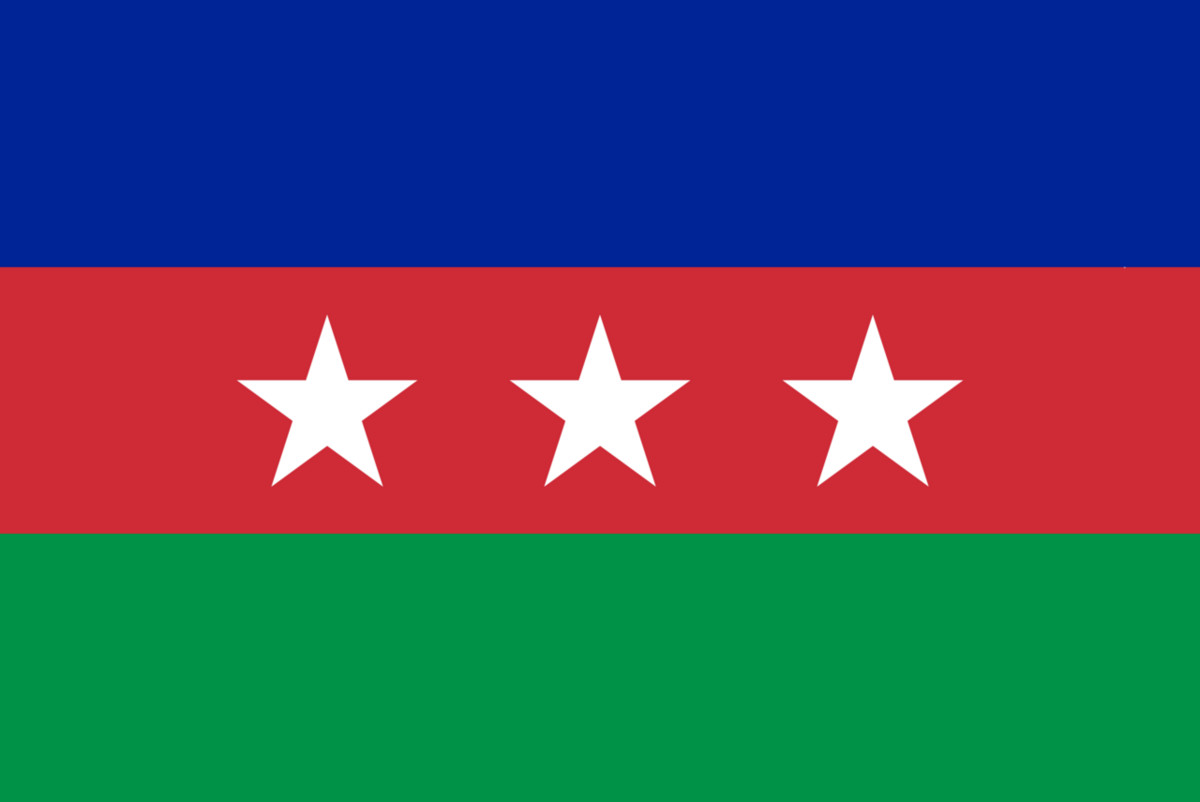

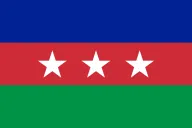
On October 10, 1992, at their camp about eight miles from the Vietnamese border, the last FULRO fighters and their families handed 194 weapons, most of them AK-47 rifles, and 2,557 rounds of ammunition to Uruguayan peacekeepers. A Uruguayan colonel accepted the FULRO flag. The Washington Post reported what Colonel Y Peng Ayun said:
“I stop fighting the Vietnamese communist government in Hanoi.”
They were flown to a transit center near Phnom Penh, and in November and December 1992 they were resettled in North Carolina, in Raleigh, Greensboro and Charlotte, at short notice and with very little preparation. The movement that rose in the camps of Darlac on the night of September 19, 1964 had lasted twenty-eight years and three weeks.
How many there were
Every source gives a slightly different number, and we list them rather than choose. Thayer counted 407 in September. The Washington Post reported 398 at the surrender. The State Library of North Carolina’s history gives 402 resettled, and lists 269 men, 24 women and 80 children, which adds up to 373. A 2024 study of Kok Ksor gives 417. The differences are probably people who arrived, left or were born between the counts; none of them changes what happened.
What it settled, and what it did not
Since 1992 there has been no Dega armed movement. The aims stated in 1964 have never been withdrawn, but the means have: everything since has been political, legal and documentary. That is a deliberate and permanent choice; see What the Dega ask for.
It did not settle the question that produced the movement. Eight years after the surrender, in February 2001, thousands of unarmed people walked out of their villages into the provincial towns to ask for their land and their churches, and were answered with army tanks in Buon Ma Thuot and prison sentences of up to thirteen years; see February 2001: the highlands stand up. Mondulkiri ended the war. It did not end the dispute, and the dispute was never the war’s product; the war was the dispute’s.
The awkward part
Those men fought at times alongside the Khmer Rouge, and took weapons from the regime that had murdered their president and was, in those years, killing Cambodians on a scale the world had not yet counted. We do not present that as heroic and we do not hide it. Men in a forest with no state, no ally and no news took what was offered, from whoever offered it, to go on existing. A library meant to be used as evidence has to be able to say that plainly, or nothing else it says can be trusted.
What we do not know
The names of the 407, of the dead of the forest years, and of the four killed in the 1990 ambush.
What the children born in the camps remember, and what their parents told them.
If that is your family, in North Carolina or anywhere else, please write to us. Read how to record an elder first.
See also: FULRO, 1964–1992, The men of FULRO, Kin across the border: Ratanakiri and Mondulkiri, North Carolina.
Sources
- Nate Thayer, with Michael Hayes, “Montagnard Army Seeks U.N. Help”, Phnom Penh Post, September 12, 1992 — the discovery, the 407, Y Peng Ayun and K’briuh’s message
- Nate Thayer, “Lighting the darkness: FULRO’s jungle Christians”, September 25, 1992 — the churches, Y Hinnie and Pastor Bdasu Kbong
- “Montagnards End Fight Against Hanoi,” Washington Post, October 11, 1992 — the surrender, the weapons and the ammunition
- “The Last ‘Lost’ Patrol,” Phnom Penh Post, July 2, 1993
- Michael Hayes, “FULRO: a war of their own in Cambodia,” Asia Times, April 9, 2025 — how the group was found
- Human Rights Watch, Repression of Montagnards (2002), chapter III — the effect of the news of Y Bham Enuol’s death
- ANCHOR: A North Carolina History, “The Montagnards” — the 1992 arrivals
- Lauren E. Raper, “Blest be the Ties that Bind”: The 1986 Montagnard Resettlement to Greensboro, NC (MA thesis, North Carolina State University, 2009) — the 1986 figures
- “FULRO insurgency” and “United Front for the Liberation of Oppressed Races,” Wikipedia — the outline of the forest years
Compiled September 2026. The quotations from the Phnom Penh Post and the Washington Post were checked against the articles.