















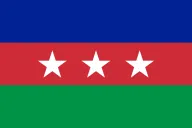


For longer than anyone has written history on this coast, the people of the highlands governed themselves. We cleared our own fields, forged our own iron, judged our own quarrels by a law recited from memory, traded down the rivers for salt and gongs, and made war and peace with one another without asking leave of any king. Three kingdoms on our borders, Champa, Cambodia and Annam, knew we were there and sent gifts up the rivers to our ritual masters rather than soldiers. This page sets out what the written record and the ground itself say about that long time, and it is honest about what the record does not say. It is the baseline: everything that has happened to us since 1850 is measured against it.
The ground
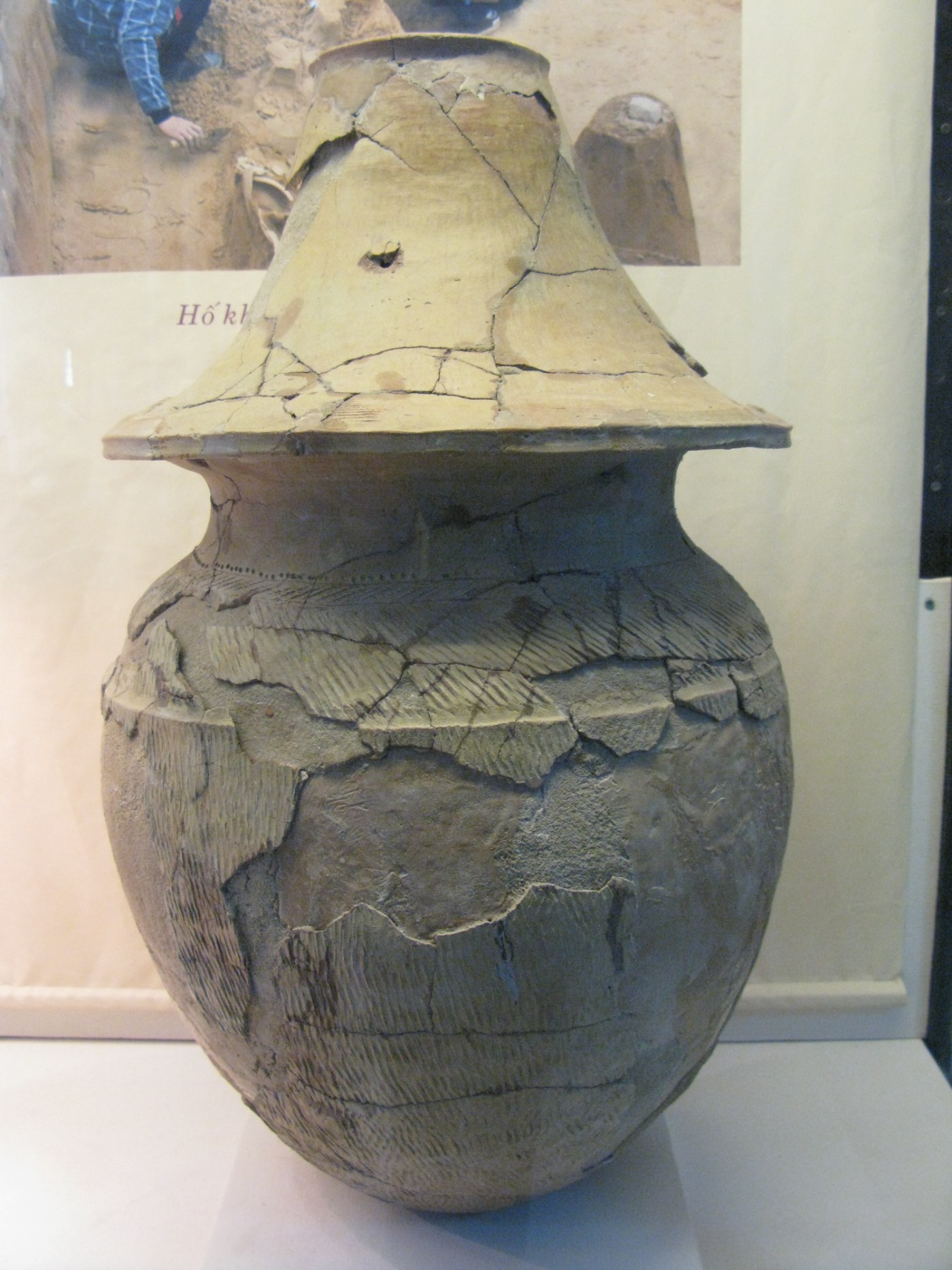
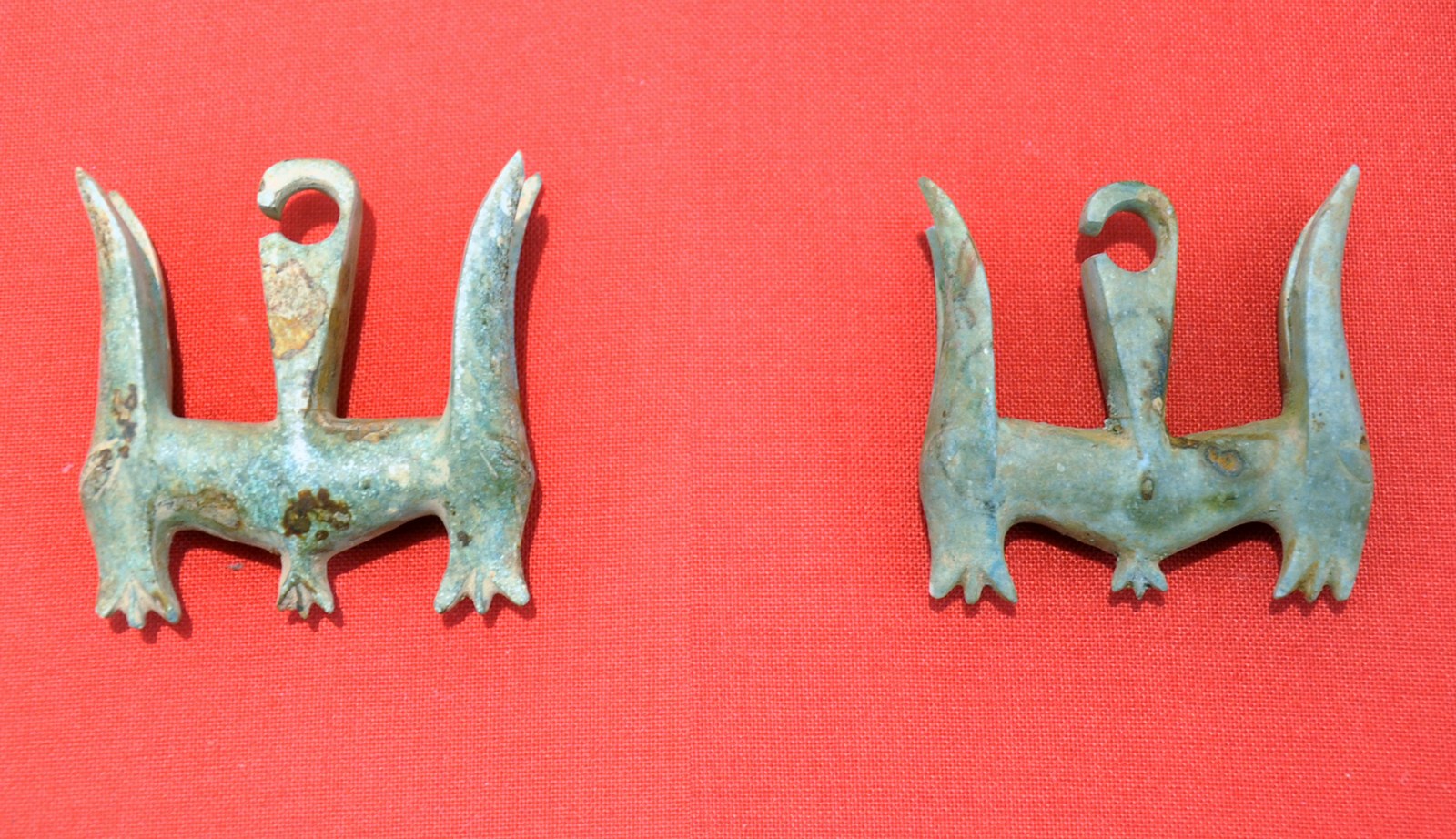
The oldest things we know about the highlands were dug out of them. At Lung Leng in Kon Tum province, on the Poko above its junction with the Se San, an excavation of fifteen thousand square meters in 1999 and 2001 found two hundred and five jar burials, some of them from the Neolithic, and a settlement whose radiocarbon dates run from about 3,500 to 2,000 years ago. The archaeologists who dug it, reading the dates, suggested that the custom of burying the dead in jars began here in the highlands and moved down to the coast, rather than the other way round. On the coast it became the Sa Huynh culture, which flourished for five or six centuries before the birth of Christ and for two after it: a people who burned their dead, put the ashes in tall lidded jars, and wore ear ornaments of nephrite and glass in the shape of two-headed animals that have been found from the Philippines to Thailand. Sa Huynh jar-burial sites have been found, in the words of the archaeologist who has studied the ornaments longest, “from the coastal plains to the inland highlands,” and the trade beads of the coast turn up far up the rivers into the mountains. Whoever these people were, they were not sealed off from the sea, and the sea was not sealed off from them.


The most famous object ever found in our country was found by accident. On February 2, 1949, coolies cutting a new stretch of road near Ndut Lieng Krak, a Mnong Gar village on the Krong Kno, the southern branch of the Srepok, turned up eleven long blades of chipped stone, from sixty-five centimeters to a meter long, the largest worked stones of the Stone Age ever found in Indochina. The Mnong Gar of the village did not know them as anything but stones; the elder Baap Can, asked why they rang when struck, said that they had been iron long ago and had turned to stone. They went to the Musée de l’Homme in Paris, and there a musicologist, André Schaeffner, laid ten of them out and found that they were tuned: a lithophone, a stone xylophone, chipped to a scale by hands that left no other trace. Nobody can date it; it was found in a road cutting without stratigraphy, and the only radiocarbon date for any Vietnamese lithophone comes from another one found later at Khanh Son, where wood beside the stones was dated to about 3,200 years ago. A third set was found in the Maa country in 1958 by a man planting rice, whose dibble rang on a rock. Georges Condominas, who lived in the village of Sar Luk near by and wrote the finding up, recorded the Ndut Lieng Krak stones being played in 1953; the instrument is now at the musée du quai Branly, and the recording is in the sound archive of the French national research council. It is, by some measures, the oldest musical instrument in the world, and it is ours (see Before history and Instruments beyond the gongs).
Where our languages came from
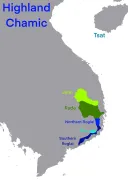
The peoples of the highlands speak languages of two families, and the difference is the oldest fact about us. The Bahnar, Sedang, Mnong, Stieng, Maa, Koho, Jeh, Halang, Hre, Bru and the rest speak Mon-Khmer languages, cousins of Khmer and of Vietnamese itself; they have been in these mountains longer than anyone can say. The Jarai, Rhade, Churu and Raglai speak Chamic languages, cousins of Cham and, further back, of Malay: an Austronesian family whose speakers, the linguists now agree, left western Borneo in the last centuries before Christ and sailed to this coast, where they became the Cham. How their languages came to be spoken on the plateau is argued two ways. One view is that Chamic speakers moved up from the coast into the hills, some perhaps as early as the tenth century and many more after the Vietnamese took the Cham capital in 1471, to keep out of reach of the new power; the Rhade and Jarai, on this view, are “peoples of Champa” who went inland to stay themselves. The other view, argued by the linguist Gérard Diffloth, is that speakers of Old Cham came up into a highland “at the time entirely occupied by Mon-Khmer speakers,” took political control, and in the end made the people they ruled change their language, so that the ancestors of the Rhade and Jarai were Mon-Khmer highlanders who learned Cham. Both views agree on two things that matter to us: that Chamic and Mon-Khmer speakers have lived side by side on the plateau for a thousand years, and that the Jarai and Rhade, in the words of the most recent survey, “may have been part of Cham political and economic networks, but were probably not under direct Cham control.” The Rhade and Jarai languages keep an old distinction between voiced and unvoiced consonants that coastal Cham lost, which is a linguist’s way of saying that the plateau went its own way.

Champa on the coast, a tower in the forest
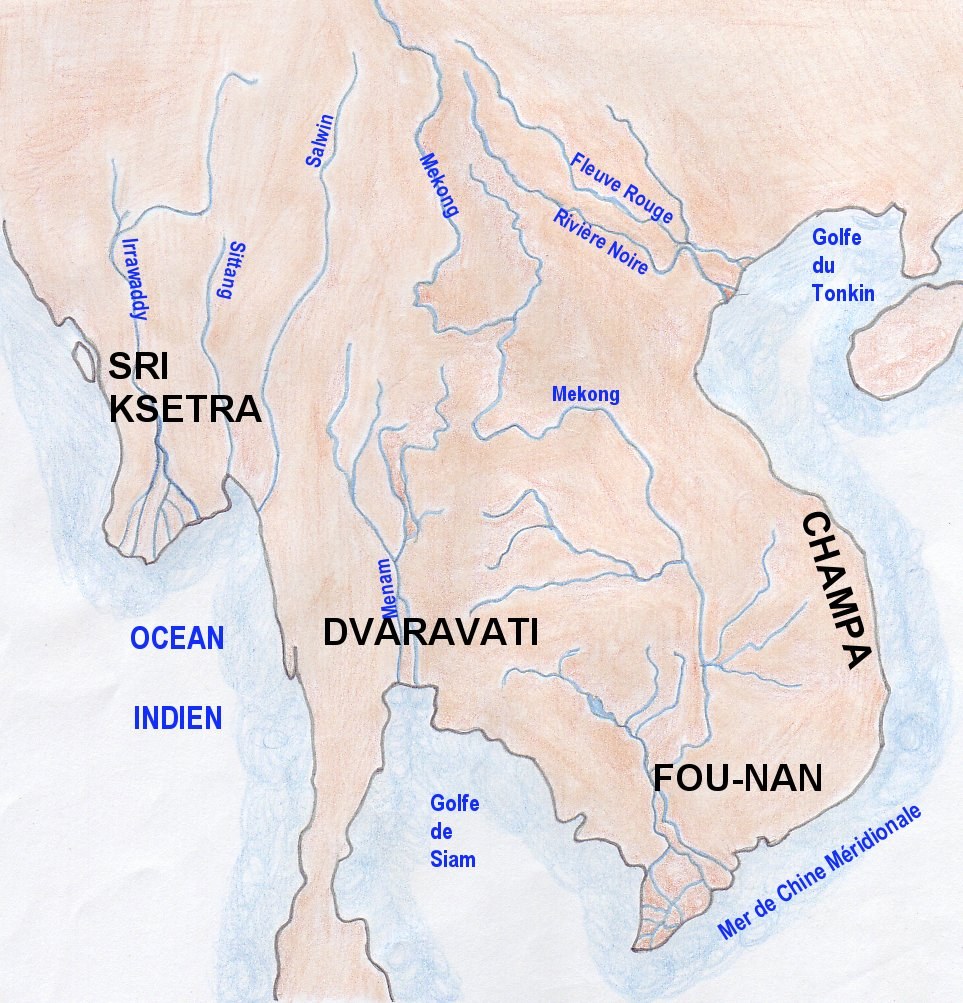
Champa was a kingdom of the shore. Its cities, Indrapura, Vijaya, Kauthara, Panduranga, stood at river mouths, and its wealth came from what it sold to China: eaglewood, the resinous heartwood that the Chinese burned as incense, ivory, rhinoceros horn, cinnamon and spices. None of that grew on the beach. It came down the rivers from us, and salt, cloth, ceramics, metal and the bronze gongs that are the center of our ceremonial life went back up. The archaeologist Trần Kỳ Phương, who has spent his life on the Cham sites, calls this the riverine exchange network and dates it to the seventh century or earlier: “Salt is the most important item of trade between lowlanders and uplanders,” he writes, and the salt road “brought people together, not only for the exchange of commodities, but for cultural and intermarriage reasons as well.” Eaglewood still stands, in Cham ritual, for the tie between the mountains and the sea. That tie is older than any state now claiming us, and it was a trade between neighbors, not a tax.
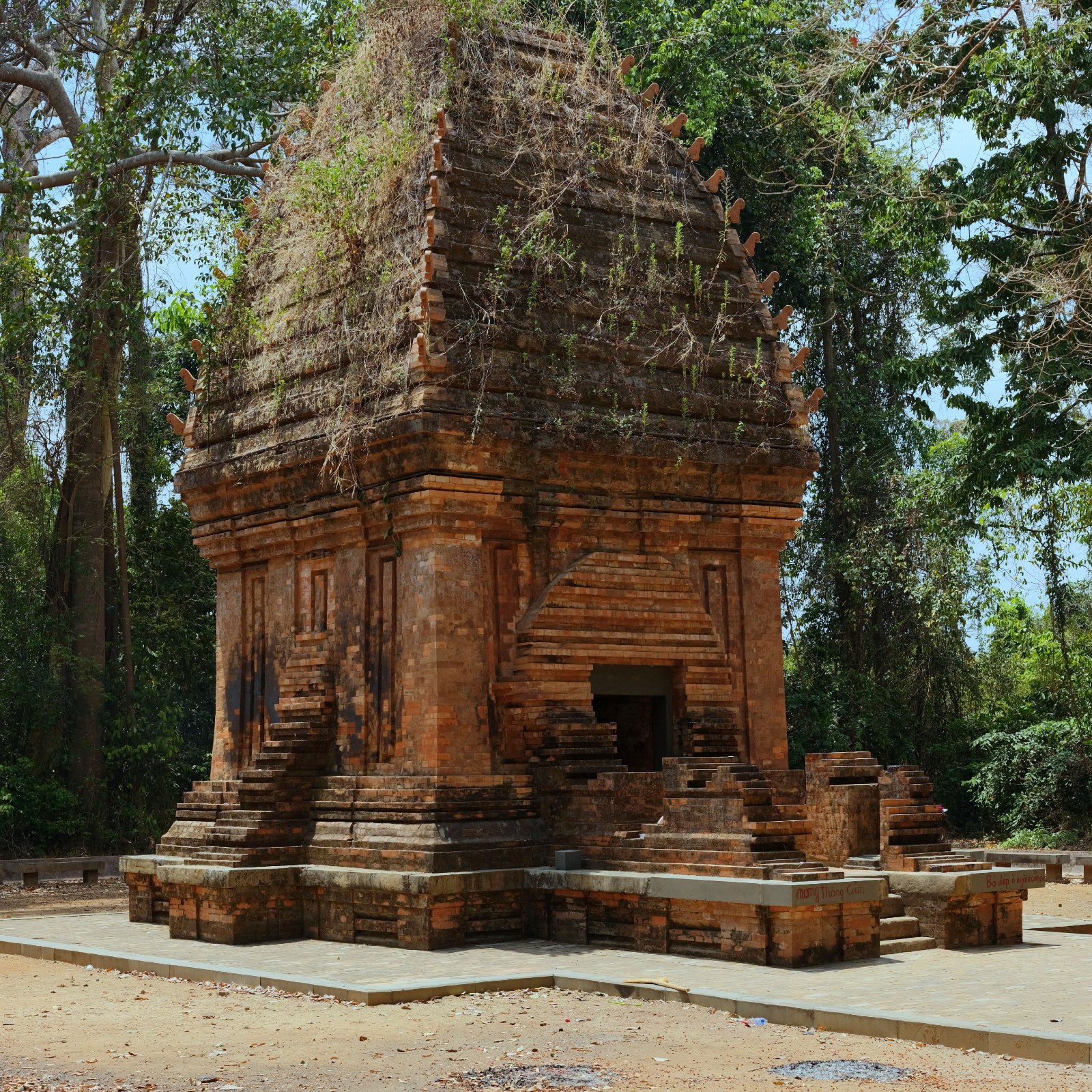

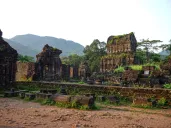
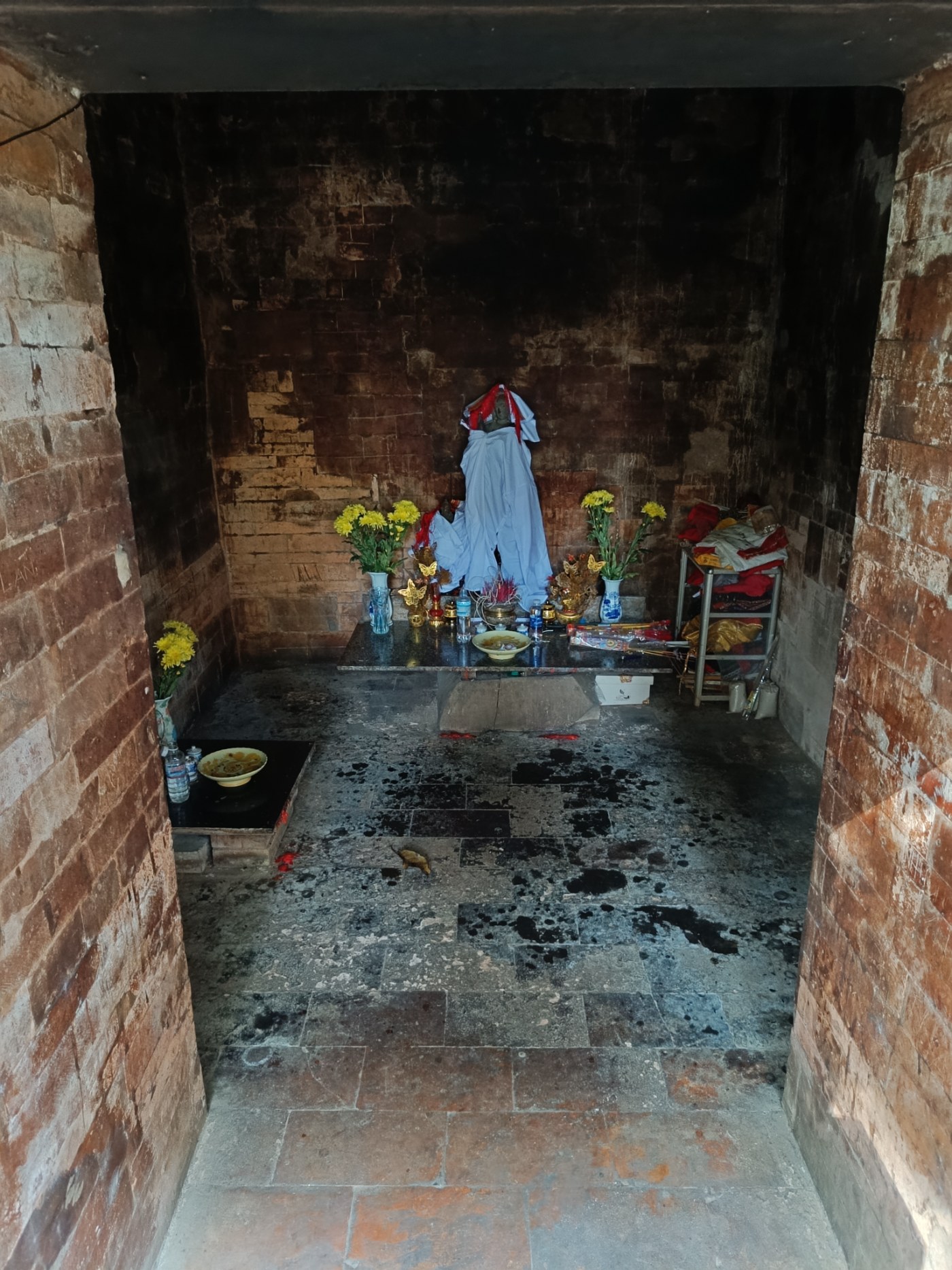
Champa did come up once, and left a mark. In the forest of Ea Sup, on the Ea H’leo where the Srepok basin opens toward Cambodia, stands Yang Prong, a single brick tower with a pointed roof, sixty miles from the nearest other Cham monument. It was built at the end of the thirteenth century, under the king Jaya Simhavarman III, and the French archaeologist Henri Parmentier listed it in 1909 under the heading Pays Moï: temple et inscriptions de Yan Pron. The Jarai and Rhade of Ea Sup have always called it Yang Prong, the great spirit, and they still leave offerings inside it. Further east, at Cheo Reo on the Ba, where the Jarai kings of fire and water had their villages, are the foundations of two more Cham shrines, Yang Mum and Drang Lai, and from Drang Lai came a statue of Shiva on his bull with an inscription dated 1409, in which a Cham king boasts of clearing forest, building a dam and laying out rice fields; the statue was carried off to Tourane in 1927 and is now in the Museum of Fine Arts in Boston. The Ba is the one big river that runs from the plateau straight to the Cham coast, and the Cham came up it. Whether they governed anything there is another question. The American ethnographer Gerald Hickey, writing in 1964, repeated the French view that the year 1150 “marked the beginning of a long period of Cham hegemony over most of the high plateau,” which ended with the Cham defeat of 1471; the linguists, as we have said, doubt that the Rhade and Jarai were ever under direct Cham rule. A tower and two shrines are what the Cham left on the plateau. Compare that with the hundred towers on the coast, and the word hegemony looks large.
.jpg)
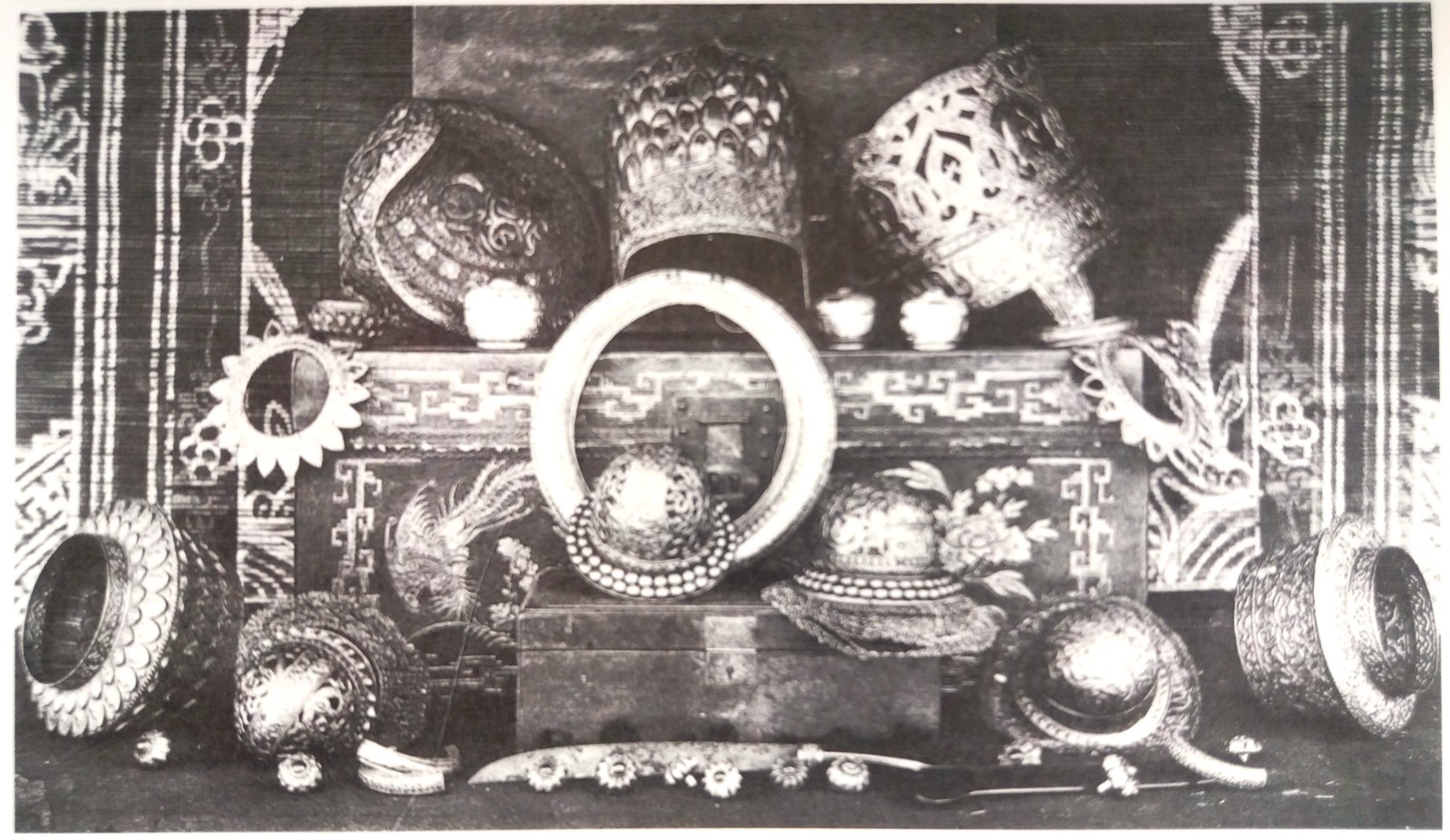
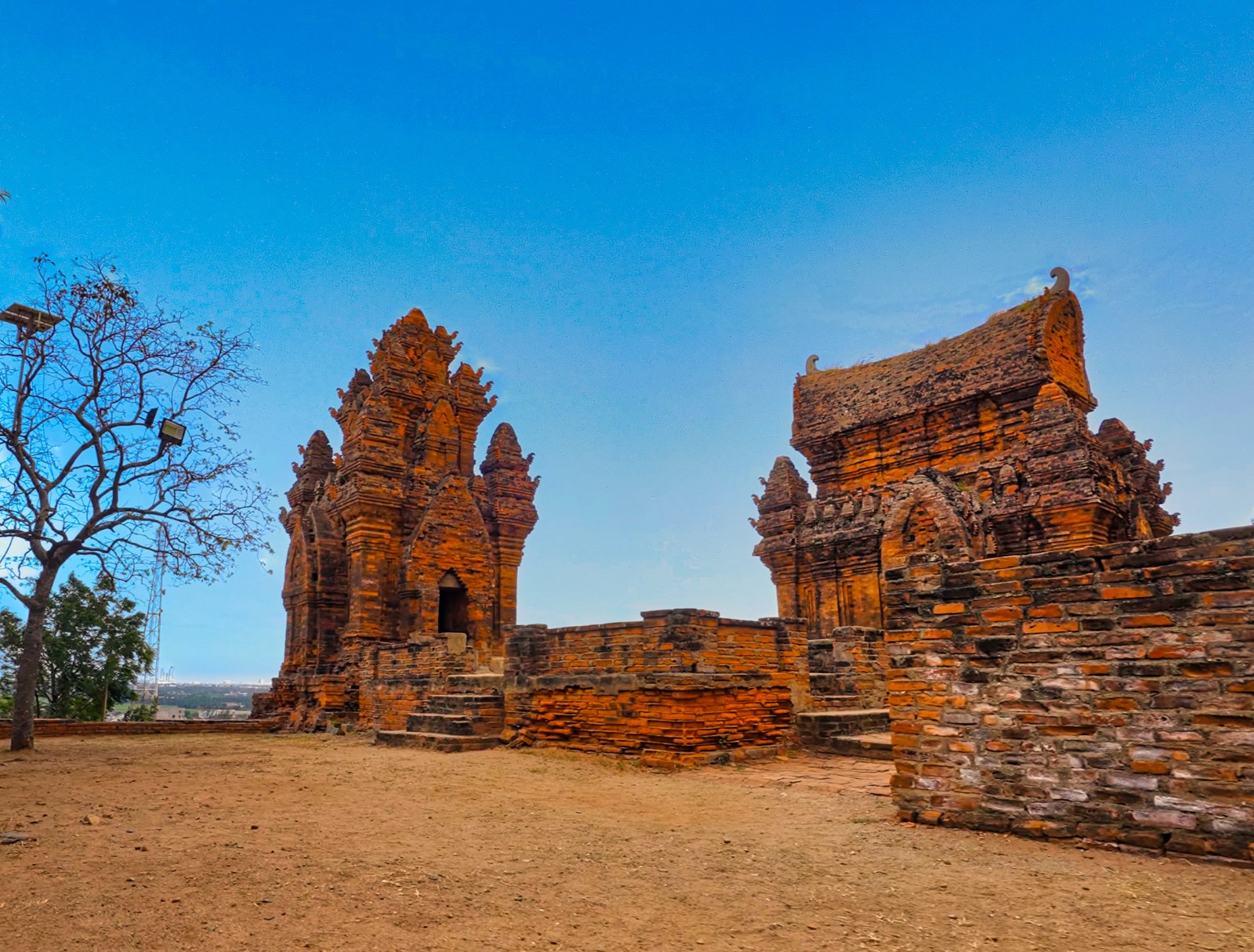
What the Cham did leave among us was a trust. When the Vietnamese army of Lê Thánh Tông destroyed Vijaya in 1471 and the kingdom shrank to Panduranga in the far south, the Cham kings turned to the hills at their backs. The temples of Panduranga, Po Klong Garai and Po Rome above Phan Rang, were kept, in the words of Étienne Aymonier in 1891, “from time immemorial, under the supervision of certain Cham villages, by highlanders called orang glai, men of the forest”: the Raglai, whose name is that phrase. Seven hamlets of Raglai were attached to the cult of one temple alone, and Raglai and Cham together formed the six squads that served it. Aymonier added a sentence we like: these highlanders belonged to “that numerous family of native tribes of Indochina that Europeans improperly call savages.” The legendary king Po Klong Garai himself is said to have been of mixed Cham, Churu and Koho blood. When the last Cham kings had nowhere left to keep their crowns and their robes, the Raglai and Churu villages of the hills kept them, and they carry them down to the Cham at the new year still (see Koho, Maa, Churu, Raglai).


The Kings of Fire and Water
The clearest proof that the highlands before the French were a recognized power and not a blank is the pair of Jarai ritual offices the outside world called the King of Fire and the King of Water, Pơtao Apui and Pơtao Ia, whose villages stood a few miles apart on the watershed above the Ba and the Ayun, in the country of Cheo Reo. They were not kings. Jean Moura, the French representative at the Cambodian court in the 1870s, wrote that “these two savage princes exercise no political or administrative authority whatever; they are good peasants who live by their labor and by the gifts that public piety is willing to make them.” Captain Cupet, who met the Fire King in 1891, wrote the same: no effective authority, “but a great influence founded on superstition.” What they held was a trust of another kind: three talismans, the fruit of a creeper gathered at the last flood and still green, a rattan whose flowers never faded, and a saber with a spirit in it, wrapped in cloth and never shown, of which it was said that if the Fire King drew it a few inches from its sheath the sun would hide and men and beasts would sleep, and if he drew it out entirely the world would end. Cambodians, Lao and Cham all claimed that the saber had once belonged to their own kings. The Fire King was the more feared of the two. The office stayed in one family, and when a king died his body was burned, unlike any other highlander’s, and while it burned his kinsmen ran into the forest and hid, because the first one found would be made king, and, as Cupet was told, the post was not much sought after. The whole institution has its own page in this library (The Kings of Fire and Water); here we set out what it tells us about the highlands before 1800.


It tells us, first, that three courts dealt with the highlands as with a power. Moura had the Cambodian side from the Cambodians themselves. “From all time, and down to the present reign, in which King Norodom has let the custom lapse, the Khmer sovereigns had made a point of paying homage and of sending gifts annually to the two Jarai personages.” The gifts were a young male elephant, richly harnessed, brass wire, glass beads, iron, cotton cloth, and “magnificent pieces of silk destined to wrap the sacred weapon.” They were carried in state up the great river to the governor of Kratie, on the border of Laos, who sent them on “from tribe to tribe to their destination, no Cambodian being willing to expose himself to the dangers and fatigues of a journey like that one.” The Fire King sent back, every time, an enormous cake of wax with the print of his thumb in the middle of it, and two calabashes, one of rice and one of sesame, sometimes with a little ivory and rhinoceros horn. At the Cambodian capital the wax was made into candles and burned on the altars, and in years of epidemic, flood or war a little of the rice and sesame was thrown on the ground to appease the spirits. When King Ang Duong fought the Vietnamese in the 1840s the Fire King sent him nine elephants with his regrets that he could not do more for Cambodia; the Jarai envoys who brought them were feasted for a month at Oudong and dressed from head to foot, and when some of them died of smallpox on the way home the Fire King sent the next dry season to ask for their bones. Norodom, who came to the throne in 1860, sent nothing; the Fire King, surprised, sent two or three notables of the forest to the governor of Kratie “to ask gently for an explanation,” and got none, and the relationship ended. Cupet heard the same story at Kratie thirty years later. The Vietnamese court at Huế had its own version. It recorded the two offices in its annals as Hỏa Xá and Thủy Xá, the Fire Country and the Water Country, and the gazetteer of the empire placed their land, Nam Bàn, six days’ walk west of the outpost of Phước Sơn in Phú Yên. In 1831 the court made their tribute a fixed institution, every three years, through Phú Yên; and in its lists it counted the two kings among the thirteen countries, France and England among them, that it chose to regard as its vassals. A court that puts you on the same list as France is not describing a province.
It tells us, second, how the highlanders themselves understood the arrangement, because in 1891 they said so to a Frenchman’s face. Cupet had walked north from Ban Don through Rhade country and reached Ban Khasom, a village of the Fire King’s people, on February 12, 1891, and on the evening of the 13th the Fire King himself arrived to visit a relative. Cupet was taken into one of the immense partitioned longhouses, where thirty people sat around the jars. “For a famous sorcerer, spoken of as far as Phnom Penh and Bassac, the King of Fire does not look very terrible,” he wrote; nothing set him apart from the others except his height, which was above the European average, and he was finishing a long copper pipe “like a simple mortal.” At a sign from him a few blows on a gong made the whole house silent. Then: “Before we talk business, he said to me, we are going to make the customary sacrifices to the spirits, to make them favorable to us, and drink from the same jar. We shall then be sure that neither of us will lie, for he would die within the year.” Cupet paid for the ceremony: ten pieces of iron for the jar, a fathom of red cloth for the chicken. And then the villagers put their case, and Cupet, to his credit, wrote it down:
Les uns disent que vous venez prendre le « Pi » du Sadète; d’autres vous accusent de vouloir vous emparer de la terre des sauvages. On vous a envoyé sans doute en avant pour reconnaître les chemins; derrière vous doit marcher une grande troupe. « Les Farangs » sont déjà en Annam et au Cambodge. Ils ont arrêté les cadeaux que les rois de ce pays envoyaient aux Sadètes, depuis des siècles: ils nous empêchent d’échanger, comme autrefois, nos esclaves contre des buffles et des éléphants. Que veulent-ils encore? Répondez; nous attendons. Mais ne mentez pas: le Pi du Sadète pourrait vous faire mourir.
Some say you have come to take the King’s talisman; others accuse you of wanting to seize the land of the highlanders. You have doubtless been sent ahead to find the roads; behind you a great army must be marching. The French are already in Annam and Cambodia. They have stopped the gifts that the kings of those countries sent to the Kings for centuries; they prevent us from exchanging, as we used to, our slaves for buffaloes and elephants. What more do they want? Answer; we are waiting. That is a highland account of the old order, given in the year it ended: gifts that came up from the kings of the coast for centuries, a trade that ran both ways, and a land that was ours. It is also honest, as we must be, about what the trade carried (see The slave raids).
Not isolated
Independence is not the same as isolation, and the picture of the highlands as a sealed forest is a colonial invention that later served everyone who wanted to describe us as primitive. Our rivers run both ways. The Se San and the Srepok run west into the Mekong, the Ba runs east to the sea at Tuy Hòa, the Dong Nai runs south toward Saigon, and every one of them was a road. The best description of the trade at the top of one of those roads was written in 1776 by a Vietnamese official, Lê Quý Đôn, in his account of the southern provinces, and he was describing the market at Cam Lộ in Quảng Trị, the “source” where the highland trade came down. “Traders from other places often came with salt, fish sauce, dried fish, iron wares, copper pots, silver hairpins and bracelets in exchange for millet, chickens, ox, hemp, wax, rattan, mulberry bark, barbarian cloth, and curtains from the barbarian peoples.” The highlanders, he says, also carried their own goods down to sell; they drove three hundred oxen to the market at a time; the traders hired elephants to carry the goods home, and an elephant could carry sixty buckets of rice and was worth two bars of silver. He gives the prices at Hội An that the trade was feeding: a pound of calambac, the finest eaglewood, a hundred and twenty strings of cash, a rhinoceros horn five hundred. He lists what the lords of Huế took from the highland sources as tax and tribute: ten rhinoceros horns, fifty pounds of yellow wax, two male elephants, one of them delivered at Bình Khang and the other commuted for a hundred and fifty strings of cash. Salt went up; wax, horn, ivory, cloth and elephants came down. A people with a long-distance trade in prestige goods, tributary relations with three courts, and a body of law elaborate enough to be written down in the 1920s at the length of a code is not a people waiting to be discovered.
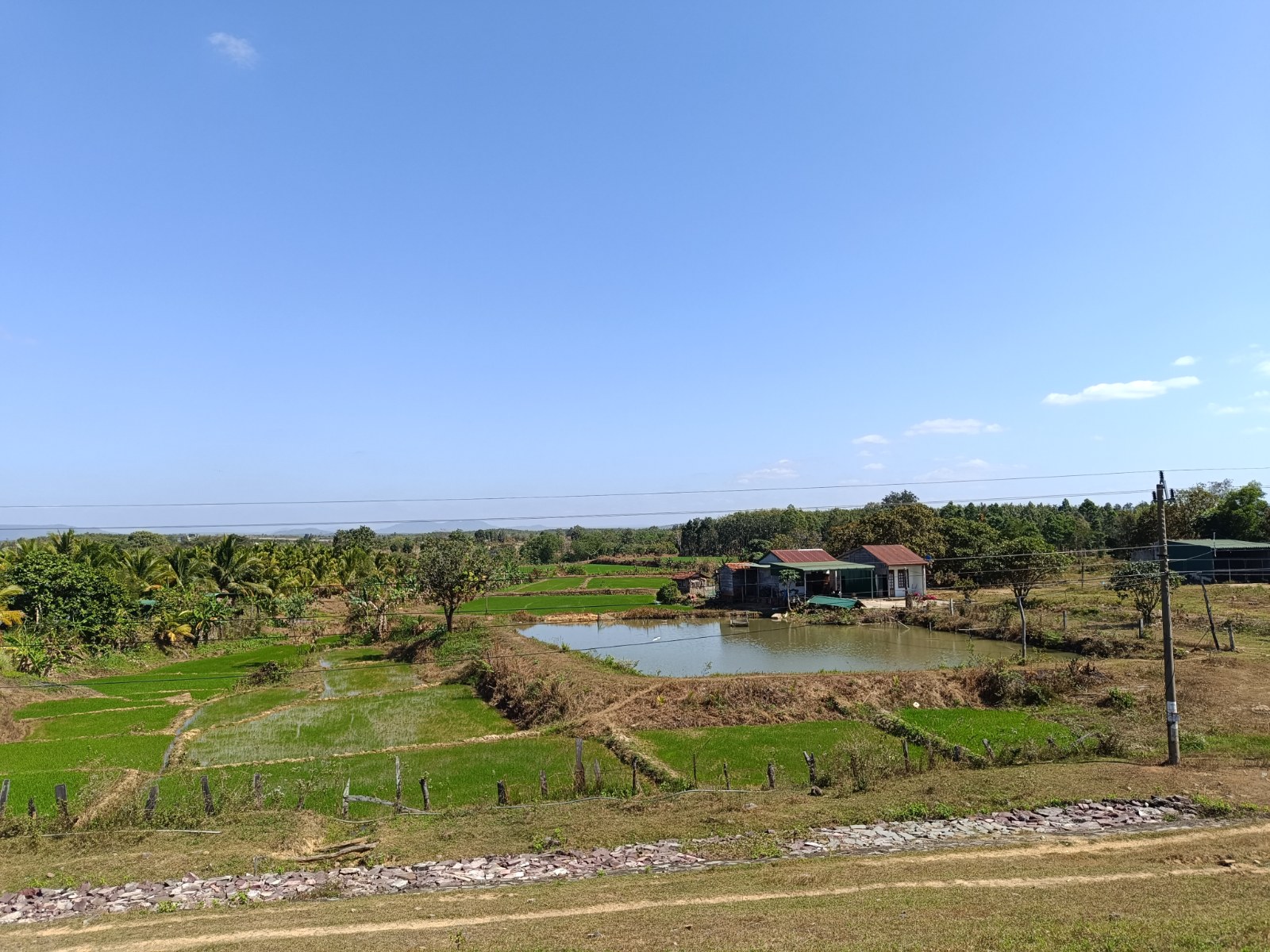

Nor were we always on the receiving end. The Tây Sơn rebellion, which destroyed the Nguyễn lords in the 1770s and shook every state in Indochina, began in the mountains at An Khê on the road from the coast to the Bahnar country, and it began, in the words of the historian Oscar Salemink, among “a coalition of Việt, Cham, Bahnar and other groups” who resisted the lords’ tax increases. The Bahnar, according to the American Army’s handbook of 1966, which took it from French sources, “in the 17th and 18th centuries forced the Khmer king to receive their envoys, evidence that the Bahnar had much power and authority in their own territory,” and in the fifteenth century had fought beside the Cham against the Vietnamese and at other times against the Cham. The Hre, the same handbook says, held that “every man is free.” These are outsiders’ summaries, and we print them as that; but the Mnong and Stieng who told Henri Mouhot in 1859 that their villages were “as many separate communities as there are villages” were telling him the same thing in their own way.
Law and the village
Every people on the plateau had its own territory and its own procedure for a quarrel, and the earliest first-hand description of that procedure is Cupet’s, from the Rhade and Jarai country in 1891. Disputes, he wrote, “are settled amicably between the parties. If they cannot agree, they are brought before a sort of assembly of the most influential persons. The sorcerer intervenes only in certain particular cases, when it is a matter of discovering the author of a theft, a murder or a death whose cause has remained unknown.” The penalties were of two kinds only, because, as he put it, highland custom excluded imprisonment, corporal punishment and death: the fine, and slavery for the man who could not pay it. The law that the assembly applied was not written, but it was fixed. Among the Rhade it was the klei duê, a body of rhymed judgments recited by the men who knew them, and when a French administrator finally wrote it down in 1927 it filled a book (see Customary law and Sabatier and the Rhade code). The Bahnar had the same, and so did every people down to the smallest. Land was held by the village and worked by the families in it, a system of property, simply not the one a colonial registrar would later recognize. Leaders were known by name to everyone they led and answerable to them; a Jarai village, the Army handbook noted with something like surprise, was “the highest political structure attained by the Jarai,” which is to say that the Jarai had chosen not to build a state, not that they had failed to.

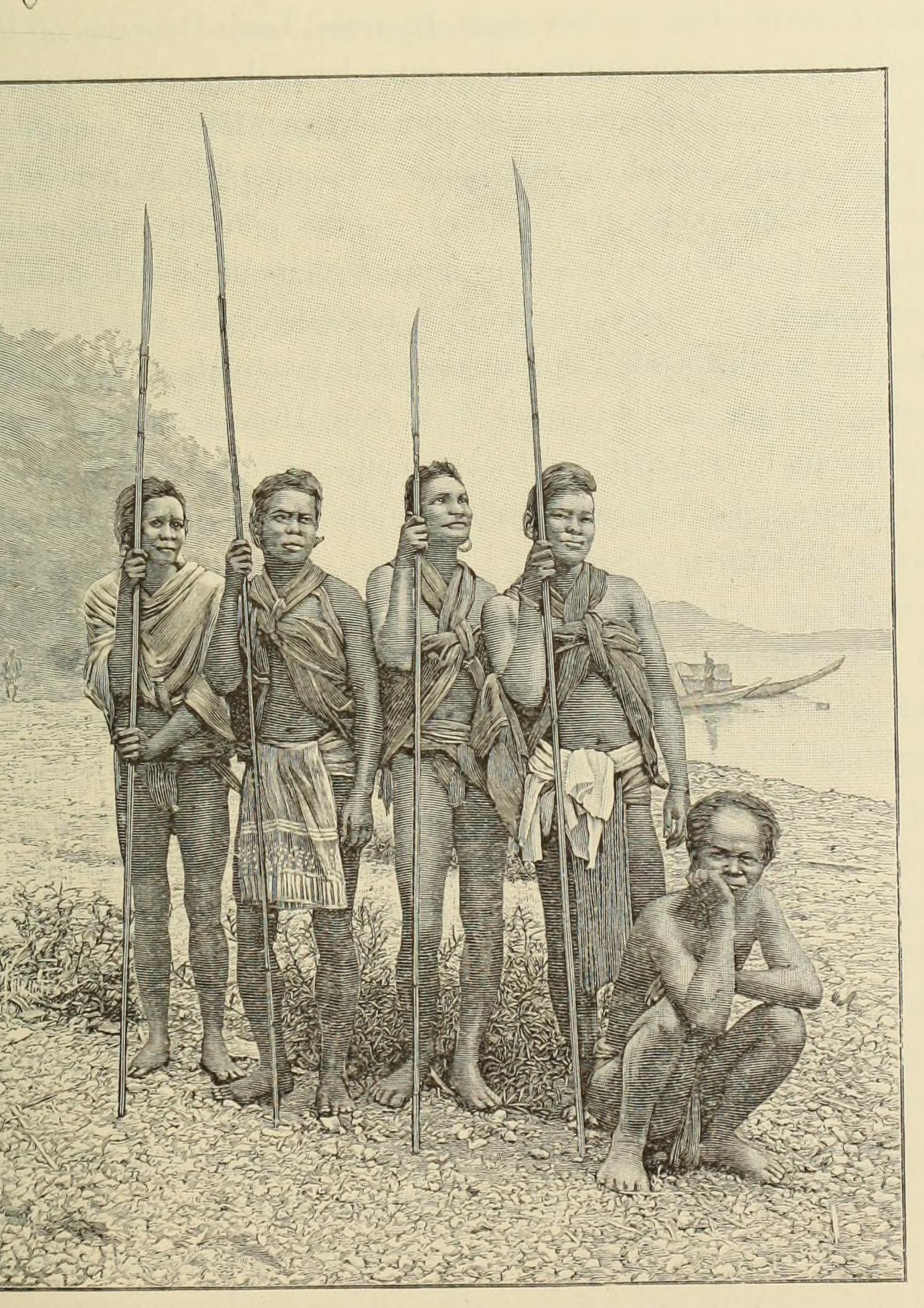
What free did not mean was peaceful, and we should not pretend it did. The seventeenth and eighteenth centuries, Hickey summarized, “were a period of considerable intergroup warfare in the highlands,” and an eighteenth-century account had the Jarai raiding Bahnar villages for slaves to sell to the Lao, and the Sedang at war with their neighbors. Cupet in 1891 called slavery “the true social wound” of the plateau: slaves were taken in war and in raids, and made from insolvent debtors and from men convicted of theft, murder or sorcery, and those who were not kept were “sold off in Laos in spite of the formal orders of the court of Bangkok, which has prohibited this trade.” A slave, he noted, was “a merchandise of great value and of exceptional ease of transport,” and in Laos was exchanged for four or five buffaloes. On the other side of the plateau Mouhot found the Stieng villages near the Cambodian border paying “a triennial tribute of rice and wax” to Cambodians, Lao and Vietnamese alike, and Stieng “dragged as slaves” to the countries around, where they “languish under captivity and try every method of escape, frequently with success.” The King of Cambodia, he added, would have liked to carry off the Stieng wholesale to repopulate his empty provinces, as he had done with the Cham. Freedom in the highlands was the freedom of villages that could defend themselves; it was never a peace. But it was never, either, a state of nature. It was a country of law, with the wound of slavery in it, like every country on its borders at the time.
What the first eyewitness saw
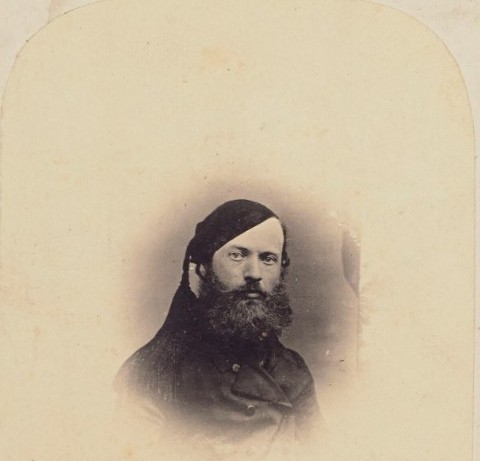
The first European to live among a highland people and write it up for ordinary readers was the naturalist Henri Mouhot, who spent the autumn of 1859 among the Stieng at Brelum, on the Cambodian side of the Stieng country, three years before he died of fever in Laos. His chapter is worth quoting because it was written before anyone had an interest in describing us as anything in particular. The Stieng, he wrote, “form as many separate communities as there are villages, and seem to be a race distinct from all the people who surround them. I am myself inclined to believe them to be the aborigines of the country.” They were “so strongly attached to their forests and mountains that to quit them seems almost like death.” Their neighbors feared them and told exaggerated stories of their bowmanship and their fevers. And then this, which he set against the motto on the public buildings of France: “If there is abundance at one house, the whole village shares in it, and when scarcity prevails, which is often the case, all alike suffer. They work admirably in iron and ivory, and some tribes are noted, as in Annam, for their hatchets and the beautiful workmanship of their sabres. Their drinking-vessels are rude, but of their own manufacture, and the women weave and dye the long fine scarfs which they wear, the best of which are often valued at the price of an ox. They cultivate rice, maize, tobacco, various kinds of vegetables, and fruit-trees, such as bananas, mangoes, and oranges.” He describes the swidden exactly as our grandparents made it: the ground chosen at the first rains, a hundred and fifty meters of bamboo thicket cut in a few days with a cane-handled hatchet, the big trees left standing, the dry canes fired, and then two long bamboos laid on the ground and a man walking the line making holes with a stick in each hand, “and that of the woman begins: stooping down, she follows the line traced by her husband, and from a basket carried at her left side takes a handful of rice, of which she throws a few grains into each hole with great rapidity.” A buffalo was worth six fathoms of thick brass wire, a pig nearly as much. The stranger, he wrote in the French edition, “is always certain of a good welcome.” Mouhot also wrote the first English sentence about the Fire King, from what Father Fontaine of the Kon Tum mission had told him: that the kings of Cambodia and Cochinchina sent him tribute “as a token of respectful homage, in consideration of the ancient power of which their ancestors have despoiled him,” and that the Jarai called him Eni, grandfather (see The Stieng and The rice year).
.jpg)
How the outside imagined us
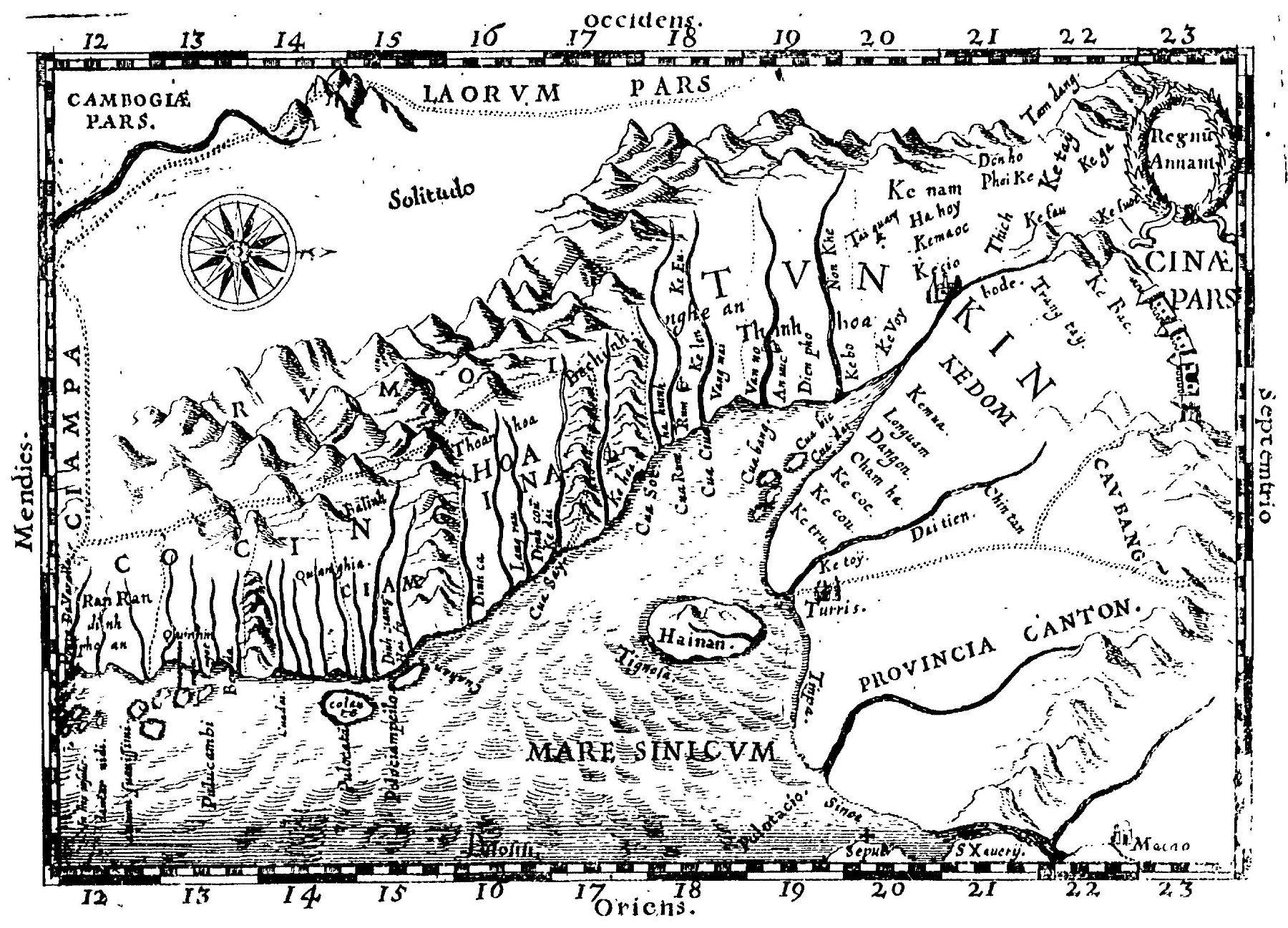
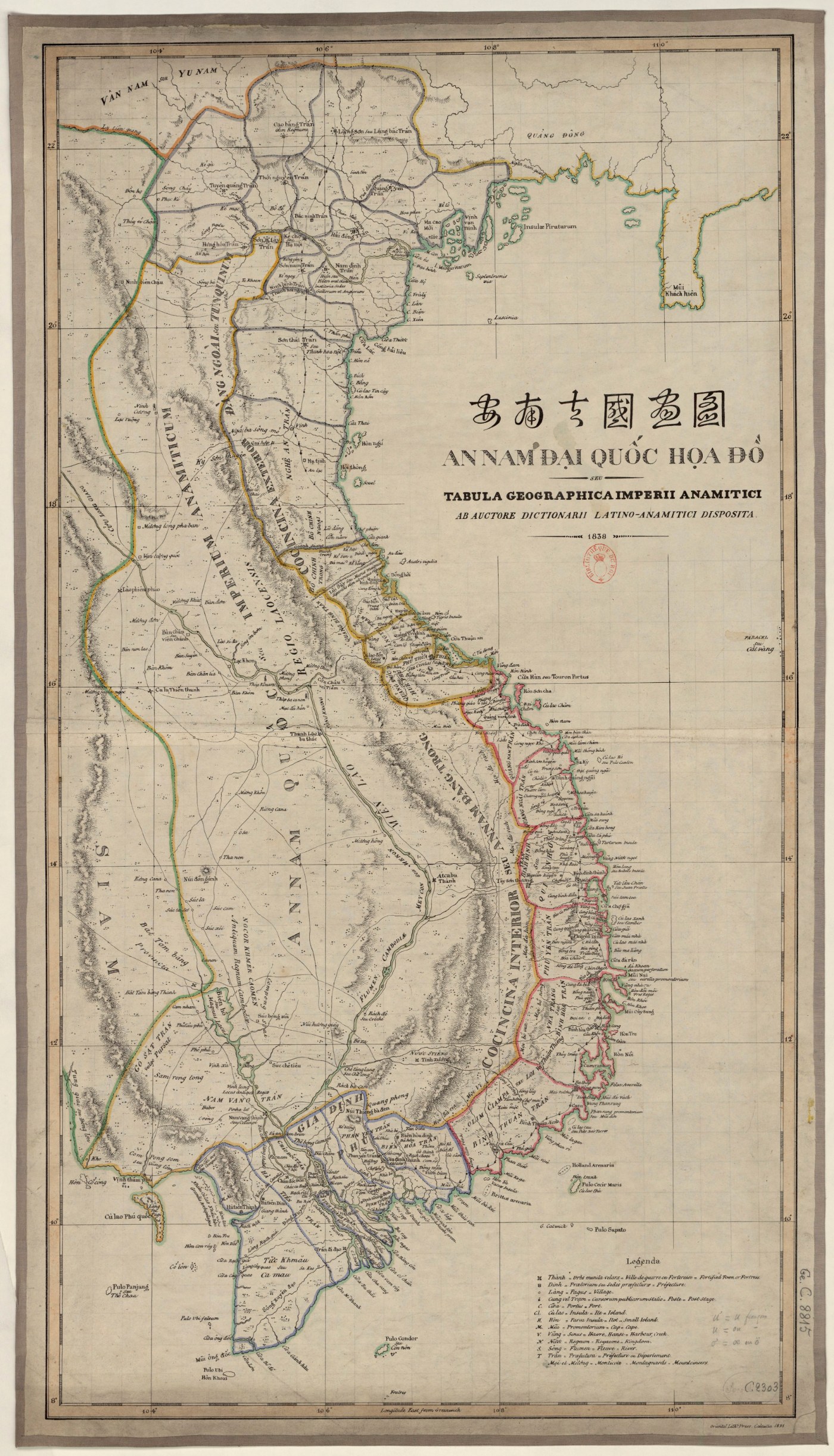
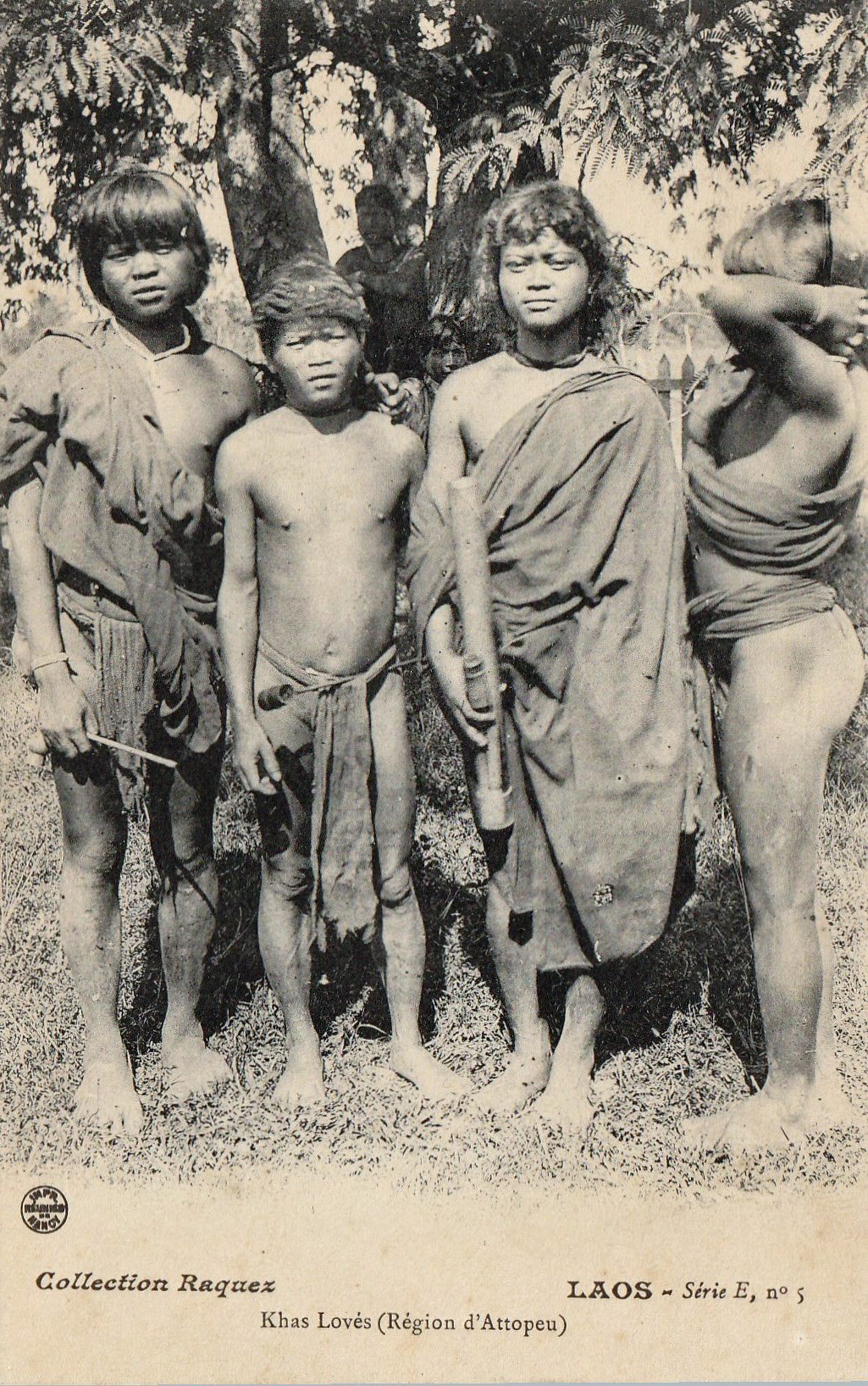
The first European who wrote about this coast, the Jesuit Cristoforo Borri, in the 1620s, described Cochinchina as shut in on one side by the sea and on the other by a ridge of mountains inhabited by the Kemois, “which signifies a savage people; for tho’ they are Cochin-Chineses, yet they no way acknowledge or submit to the king, keeping the fastnesses of the uncouth mountains.” That sentence, the first about us in a European language, already contains the two things every outsider would say for three hundred years: that we were savages, and that we obeyed nobody. Borri’s brother Jesuit Alexandre de Rhodes printed a map in 1650 with the coast named, the mountains drawn as a wall, the Rumoi, the mọi, written across them, and the country beyond marked Solitudo: wilderness. In 1663 Father de Marini listed the kings of Indochina and put among them two kings of the Rumoi, a King of Fire and a King of Water; a bishop’s letter printed in 1841 mentioned the King of Fire again; and Mouhot, Moura, Aymonier and Cupet followed. Bishop Taberd’s map of 1838 was the first printed map to name highland peoples in the interior at all. As late as 1911 Sir James Frazer could open his chapter on the Kings of Fire and Water in The Golden Bough by saying that their fame was spread over the whole south of the peninsula “but only a faint echo of it has reached the West,” and that until a few years earlier no European had ever seen either of them. The word every one of them used for us, mọi, the Vietnamese word, meant savage. The American Army’s own handbook told its soldiers in 1966 that the word “should not be used, because it means savage and is offensive to the tribesmen.” We record the word here because it is in every document about us before 1950, and because it tells you what the writers knew (see Names and words).

Why nobody came up
Our neighbors on the coast knew we were there and did not come. The Cham built one tower on the plateau in a thousand years. The Vietnamese destroyed Vijaya in 1471 and over the next two centuries pushed the Cham south to Phan Rang and then into Cambodia, and still did not come up; the lords of Huế, by their own official’s account, wanted our wax, horn and elephants and set up markets at the sources to get them, and in 1699 brought troops and settlers into the Dong Nai delta below the Koho country, and were content, as the 1966 handbook put it, to keep the highlanders “tranquil and away from the good irrigated rice-lands.” Cambodia sent an elephant a year to the Fire King and no soldier. The reasons were practical. The plateau was defensible and its approaches were narrow; the forest fever killed lowlanders who stayed, and Moura could not find one Cambodian in the border provinces who had ever gone up into the Jarai forests; and the highlands held nothing that the coastal kingdoms needed badly enough to pay the price of holding them, when trade and tribute brought it down for nothing. We should be honest about that. We were left alone in part because we were not yet worth taking. From the moment the highlands became worth taking, for rubber, for coffee, for strategic depth in somebody else’s war, for room to resettle a population, being left alone ended very fast, and the next pages of this library tell how (see The first outsiders and The French arrive).
.jpg)
What free meant
It did not mean empty, and it did not mean simple. It meant that for two thousand years no outside power collected our taxes, conscripted our sons, decided what language our children were taught in, told us where to build our villages, or told us which spirits we could hold sacred. It meant that when the King of Cambodia wanted something from the highlands he sent an elephant and got a cake of wax, and that when the emperor at Huế counted his vassals he wrote the Fire King next to the King of France. It meant that the man who owned the sacred saber smoked a copper pipe in a longhouse full of his neighbors and that none of them bowed. When we ask for self-determination we are asking for something we had and lost, not something we have never tried.
What we cannot date. Almost everything on this page before 1850 rests either on outside records, Cham inscriptions, the Vietnamese court annals, the Cambodian court’s memory as Moura took it down, the French travelers, or on our own oral tradition. The two do not always agree, and neither produces the kind of date a footnote likes. The sources disagree even with one another: Moura says the Cambodian gifts came every year, Mouhot every four or five years, Hickey every three; Moura, Cupet and Frazer say the Fire King’s office was hereditary, Mouhot, from Father Fontaine, says it was not; Hickey dates the end of the Cambodian gifts to 1890, Moura and Cupet to the accession of Norodom in 1860. Where this library gives a year before 1800 it is giving the year the outside record gives, and a reader should treat it as the date of a written mention rather than the date of an event. What our own elders say of the Fire and Water Kings and of the trade roads is recorded on the pages of the peoples concerned.
See also: The Kings of Fire and Water, Before history, The slave raids, Customary law, The first outsiders, Timeline.
Sources
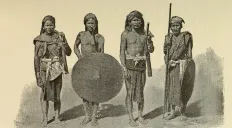
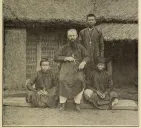
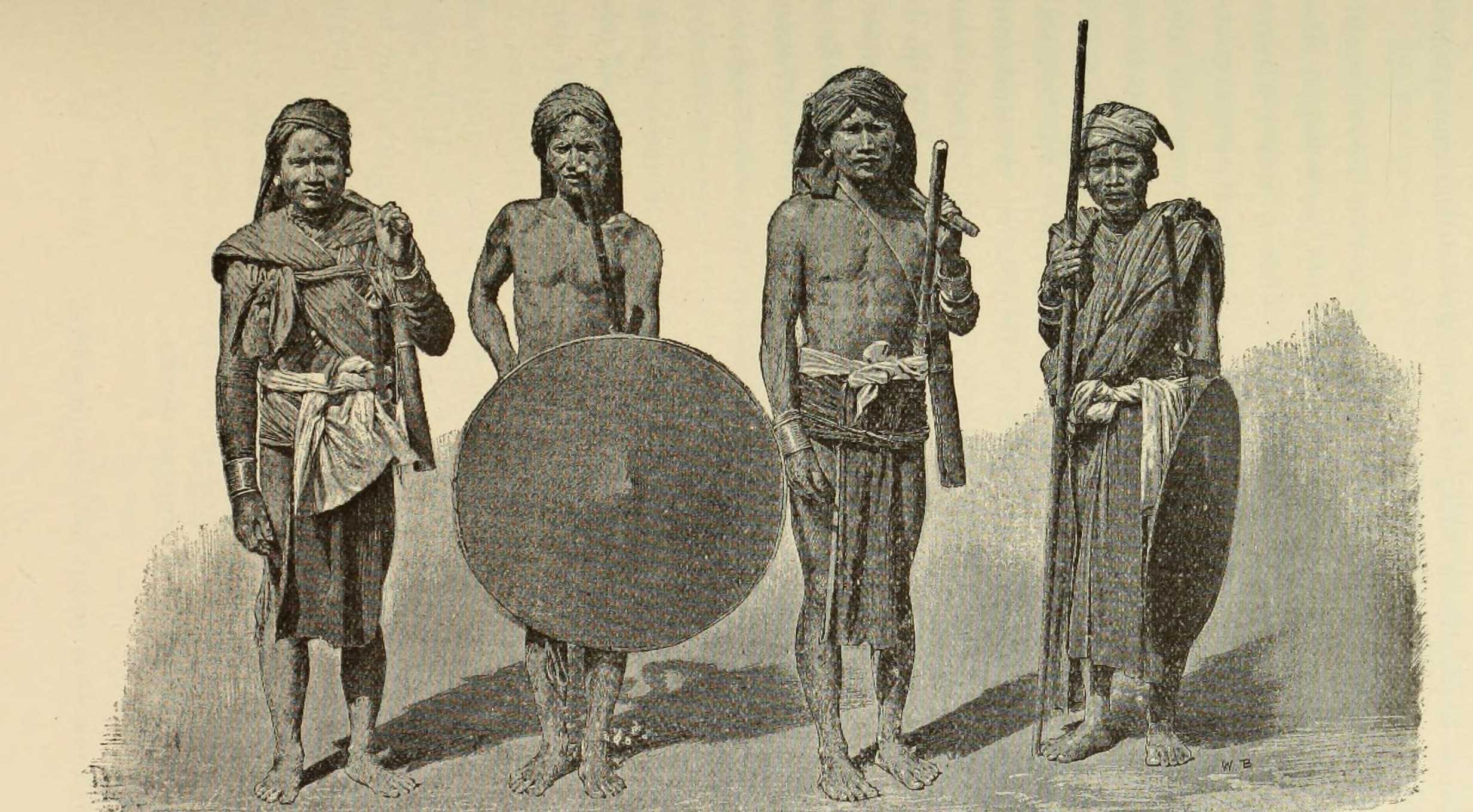
- P. Cupet, “Voyages au Laos et chez les sauvages du sud-est de l’Indo-Chine,” in A. Pavie, Mission Pavie, Indo-Chine 1879–1895: Géographie et voyages III (Paris, 1900), pp. 270–353, DCHO library — the first hearing of the Sadète, the meeting of February 14, 1891, the villagers’ speech, customary justice and slavery; the engravings on this page are from the same volume
- Jean Moura, Le Royaume du Cambodge I (Paris, 1883), pp. 432–436, DCHO library — the Cambodian gifts, the wax cake, Ang Duong’s nine elephants, the end under Norodom
- Henri Mouhot, Travels in the Central Parts of Indo-China I, ch. X, and II, pp. 35–36 (London, 1864), DCHO library, vol. I, vol. II; the French text in Le Tour du monde (1863) on Wikisource — the Stieng in 1859, Hoa-Sa and Thorei-Sa
- Étienne Aymonier, Les Tchames et leurs religions (Paris, 1891), pp. 53, 75–76, DCHO library — the orang glai as keepers of the Panduranga temples
- J. G. Frazer, The Golden Bough, 3rd ed., part I, The Magic Art II (London, 1911), pp. 17–20, on the Internet Archive — the footnote listing Cuénot (1841), Mouhot, Bastian, Moura, Aymonier and Cupet
- Harold E. Meinheit, “Captain Cupet and the King of Fire: Mapping and Minorities in Vietnam’s Central Highlands,” The Portolan 84 (2012), pp. 8–26, on academia.edu — Borri, de Marini 1663, the de Rhodes and Taberd maps, the Đại Nam nhất thống chí on Nam Bàn, the thirteen vassal countries
- Lê Quý Đôn, Phủ biên tạp lục (1776), in Li Tana and Anthony Reid, eds., Southern Vietnam under the Nguyễn (ISEAS, 1993), excerpted by Asia for Educators, Columbia University — the Cam Lộ market, the elephants, the tax in horn and wax
- Oscar Salemink, “A View from the Mountains: A Critical History of Lowlander–Highlander Relations in Vietnam,” in T. Sikor et al., eds., Upland Transformations in Vietnam (NUS Press, 2011), pp. 27–50, on academia.edu — Haut-Champa, the Tây Sơn coalition at An Khê, the 1831 triennial tribute, the slave trade
- Gerald C. Hickey, The Major Ethnic Groups of the South Vietnamese Highlands, RAND RM-4041 (1964), pp. 17–19, DCHO library; Minority Groups in the Republic of Vietnam, DA Pam 550-105 (1966), pp. 21–22, 275, 307, 411, DCHO library — the summaries of Cham, Lao, Siamese and Vietnamese claims, the Bahnar envoys, the word mọi
- Georges Condominas, “Le lithophone préhistorique de Ndut Lieng Krak,” BEFEO 45 (1952), DCHO library; Jean Boulbet, “Découverte d’un troisième lithophone préhistorique en pays Mnong-Maa,” L’Anthropologie 62 (1958), DCHO library; Roger Blench, “From Vietnamese Lithophones to Balinese Gamelans,” IPPA Bulletin 26 (2006), PDF; the 1953 recording, CREM-CNRS
- Nguyen Kim Dung, “The Sa Huynh Culture in Ancient Regional Trade Networks,” and Mariko Yamagata and Hirofumi Matsumura, “Austronesian Migration to Central Vietnam,” both in New Perspectives in Southeast Asian and Pacific Prehistory, Terra Australis 45 (ANU Press, 2017), PDF, ch. 19 — Sa Huynh and Lung Leng
- Marc Brunelle and Graham Thurgood, “The Historical Development of Chamic Languages,” in Rediscovering Cham Heritage in Cambodia (Phnom Penh, 2015), author’s PDF; Michael Vickery, Champa Revised, ARI Working Paper 37 (2005), DCHO library — the two views of how Chamic reached the plateau
- Trần Kỳ Phương, “Interactions Between Uplands and Lowlands Through the ‘Riverine Exchange Network’,” BiblioAsia 4:3 (2008), online; Quang Van Son and William B. Noseworthy, “A View of Champā Sites in Phú Yên Province,” Religions 13 (2022), online — Yang Prong, Yang Mum, Drang Lai, eaglewood
- Corpus of the Inscriptions of Campā, C. 42, the Shiva of Drang Lai; Henri Parmentier, Inventaire descriptif des monuments čams de l’Annam I (Paris, 1909), on the Internet Archive
- Our own records
Compiled September 2026. French and Vietnamese sources are given in our own translation except where the original is printed. Oral accounts of the Fire and Water Kings and of the trade roads are exactly what this page most needs; if your family holds one, we would like to record it (see How to record an elder).