





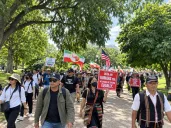
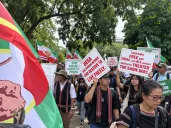


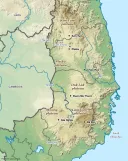
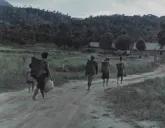
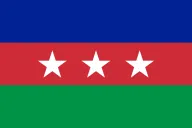
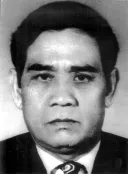
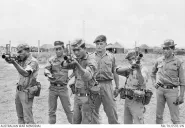

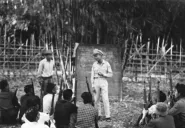
On Friday, February 2, 2001, eight hundred people from four communes walked out of their villages at four in the morning and reached Pleiku at half past eight. By mid-morning there were thousands of them outside the provincial hall. The next day the same thing happened at Buon Ma Thuot, and over the following twelve days at Ea H’leo, at Ayun Pa, at Ea Hral, and at Kon Tum. They asked for three things: the land their families had farmed, the right to hold a service, and a country of their own. The provincial authorities asked them to go home and wait fifteen days. The arrests began within three.
A village had already written twice
The march did not begin in February and it did not begin with a foreign organization. It began with letters.
On April 27, 1995, the people of a Rhade farming hamlet in Dak Lak — one hundred and thirteen households, six hundred and fifteen people, moved off their land in 1985 by government order — wrote to the Central Committee on Nationalities of Vietnam’s National Assembly. They explained that from 1985 their village land had been divided and that two of the resulting villages had been given to Vietnamese settlers. They explained that by 1990 they had ten hectares left for a hundred and thirteen families. They explained that in April of that year the forestry service had brought armed units onto the remaining ground and would no longer let them work it. Then they wrote the sentence that every page on this site is in some sense a footnote to:
“the people of the hamlet of D are in desperate straits, and before long deaths are going to result either as a result of starvation or struggles to make a living.”
They received no answer. On October 24, 2000 — five years and three months later — six hundred and forty-four residents of the same hamlet wrote again, over four hundred and eighty hectares of ancestral land. This time they set out what had happened to it: promised in 1985 that they could keep cultivating the old village fields, they had watched the province turn those fields into a forestry service zone in 1986, and by 1992 contracts on them were going to outsiders. They named a man growing cashews on ground that had been theirs. They said the land taken from the village was not being used for the purpose given, but had gone to officials and to people with connections. They said hired security men had fired weapons to frighten villagers off.
They noted that they had filed a formal complaint on July 27, 1995, and had received no reply in five years.
Fifteen months separate that second letter from the morning the same district walked to Buon Ma Thuot.
Seven weeks separate the march from a third document. On December 15, 2000, eight villagers in Krong Ana district, Dak Lak, wrote a petition in the Rhade language and titled it A Report of the Cruel Action against the Tribal People in the Highlands. It opens:
“We represent the Dega people who are living in the collective village of X in Krong Ana district, Dak Lak province.”
It has six headings. Educated Dega: the executions of our leaders under the French and after 1975, and the sentence “The Hanoi regime sees educated Dega people as a real threat to their government so that they always look for an appropriate excuse to destroy them.” Oppression after 1975: imprisonment, torture, forced early retirement. Students: graduates refused government employment, and more than eight in ten unable to attend school at all because of age limits. Coercive birth control. Land: northern settlers given priority, Dega given inadequate plots and then displaced from those, families made to sign land-release contracts. And religion, in one line: “The Protestant faith is the only religion that is not allowed to be practiced by the tribal people.” On settlement it says simply that the government “recently … resettled tens of thousands of the Vietnamese from the North. They occupied all of our land throughout the areas.” It ends by asking for an international investigation.
That is the platform of February 2001, written in Rhade by Rhade hands, two months before anyone marched. Anyone who wants to argue that the demands of February were invented abroad and posted in has to explain that document first. The eight names on it were withheld when it was published, and they are still withheld, for the same reason the witnesses below are initials: the state that the petition is about was still there, and is there now.
What had been taken
The arithmetic underneath the letters is not in dispute and has never been seriously contested by anyone.
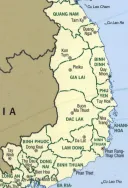
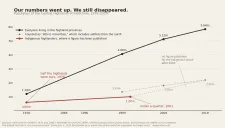
In the early twentieth century the four provinces of the Central Highlands held around two hundred and forty thousand people, almost all of them ours. Between 1940 and 1989 the Kinh share of the region’s population went from five percent to sixty-six percent. Between 1954 and 1962 more than a hundred thousand people were settled in a hundred and seventeen Land Development Centers. In Dak Lak, indigenous minorities were forty-eight percent of the province in 1975; by 1978 the Kinh were sixty-one percent. Between 1976 and 1998 that one province absorbed six hundred and twenty-three thousand new settlers — three hundred and eleven thousand seven hundred and sixty-four of them under plan between 1976 and 1996, and roughly three hundred and fifty thousand more who simply came. Between 1990 and 1994 alone, a hundred and ten thousand spontaneous migrants entered Dak Lak and more than ninety thousand entered Lam Dong. By 1997 Dak Lak held close to a million and a half people, of whom the Rhade and Mnong together were about a fifth. The plan was for the province to take another two hundred and sixty thousand by 2010. See The great migration.
What that meant for a household: a family that had historically cropped one or two hectares with another five or six lying fallow was, by the late 1990s, farming less than one. See The land law for how the paperwork did it, and How we got pushed off for what it looked like on the ground.
And then the coffee price fell. The domestic price ran at forty thousand dong a kilo in 1995 — about three US dollars. By January 2002 it was four thousand two hundred and fifty dong, about twenty-seven cents. A day’s wage as a laborer was about fifteen thousand dong, a dollar. One documented compensation offer for confiscated land was two million dong, about a hundred and fifty-three dollars, for ground the owner had spent more than seven million dong clearing and planting.
Here is what that looked like to the people it was done to. These accounts were given to Human Rights Watch in 2001 by people who had just come out of the highlands or had just crossed into Cambodia. They are dated and placed in the record; the names are not, because the state they describe was still looking for them.
A Jarai man from Gia Lai, March 2001:
“The authorities confiscate our swidden fields or rice paddies and say it’s the property of the government. Just when our fields are ready for harvest, they take the land, plowing it over during the night to make coffee or rubber plantations. Sometimes they even want to demand money from us after they’ve taken our land and plowed it over. All we can do is cry. The Montagnards want to fight back.”
A Jarai man from Dak Doa, on a slower method, June 2001:
“In the dry season they redirect the water so it’s difficult for us to grow our crops. Then right before the rice is ready for harvest, our fields get completely flooded out. This has been happening since 1981.”
A Jarai man from Chu Se, May 18, 2001, on who was doing it:
“The authorities take and sell land to ethnic Vietnamese that is already in use by the ethnic minorities. The Vietnamese get the land title documents, and then they evict the highlanders. It is the commune authorities who are selling land. In other cases, ethnic Vietnamese occupy land that Jarai have left fallow to let it become fertile again. When we complain afterwards, we face intimidation from the authorities. At the same time, there is little point in complaining to the authorities because they are heavily involved.”
A Mnong man from Dak Mil district gave the fullest account. His land was inspected in 2000:
“When they first came, in 2000, I went to talk with them. They said it was the land of the government already. I told them not to take my land: ‘I’ll struggle with you even if I die, because it’s my land.’ They said, ‘You can’t work it because the district government has decided already. You have no power to oppose us.’”
It was taken on May 8, 2001:
“I tried to stop him. I wanted to fight him so he called four others — all Vietnamese, including one Vietnamese policeman. The policeman came to watch because we were fighting. I asked him to help me. He said, ‘I don’t have the ability to help you — I can’t help you.’ The police and my relatives stopped me from burning the tractor.”
“When they plowed my land I was devastated. The coffee was to support my life. When they plowed it, it was like they killed me. They plowed it all — 500 coffee plants, one well, and eighty-seven pepper plants. Afterwards, I had nothing left.”
He said his land went because of what he did on Sundays: “It was because I was the leader of the youth religious group that they took my land. They didn’t do this to my followers. The authorities had been monitoring me for some time.” And asked what the movement was, he gave the plainest definition anyone has given of it: “My understanding of the movement is that it’s the struggle to demand the land of the ethnic minorities and control it ourselves.”
From the same district, one sentence that does not need commentary:
“In my village from 1994–2000 the Vietnamese took our land — even plowing over our cemetery to build their houses. People were very unhappy when they plowed over the cemetery but did not dare oppose them.”
And from a Jarai farmer in Gia Lai, June 27, 2001, the answer to the obvious question — why not use the complaints procedure:
“When we protested about the land problem, the authorities told us to complain to the province. But we don’t know how to write — how can we protest.”
The hamlet in Dak Lak could write. It wrote twice. Nothing came back. That is the complaints procedure as it actually worked, tested at both ends.
And the church
The second grievance was newer and grew faster than anything else in the region. On the government’s own count of registered Protestants — a state counting a people it governs, which will undercount house churches it does not recognize — the four highland provinces went from 52,803 Protestants in 1975 to 228,618 in 1999. Dak Lak went from 11,738 to 98,938, an increase of more than seven hundred percent; Gia Lai from 8,125 to 60,250. Human Rights Watch put the real figure higher: at least a quarter of a million highland Christians, a quarter of the region’s indigenous population.
Against that, the closures. A church burned in Dak Mil district in 1996. The Tanh My church in Lam Dong bulldozed in December 1997. Four Mnong and Stieng churches demolished in Binh Phuoc in 1999. A church destroyed in Dak N’Drung commune, Dak Song district, in December 2000. And the pattern that produced the nighttime services: worship between two in the morning and dawn, which our people described as the sleeping time for police.
A Rhade woman near Buon Ma Thuot, imprisoned in the FULRO years and released in 1985, described what followed:
“When I was released from prison I started to preach the gospel. The Communists arrested me and took me to the provincial police station where I was beaten and put on probation. They say that our religion is FULRO and not a real religion, and don’t allow us to follow it.”
“Every Christmas they would come. We would hide the books and hymnals. They’d ask us why we continued to worship and ask us if we wanted to go back to jail.”
Her record, as it was written down: a million dong in fines — about seventy-seven dollars — and her materials confiscated for a first offense; probation and forced labor after; fifteen days in the commune police station in 1987; and in 1994, four truckloads of armed police to break up a Christmas service.
A Jarai man in Gia Lai who converted in 1997 kept his citations. He had been summoned more than a hundred times, and the papers he still had showed a hundred and twenty-nine days of forced labor between the middle of 1997 and the middle of 2001 — five summonses and thirty days in 1997, seven and thirty-six in 1998, seven and thirty in 1999, four and seventeen in 2000, seven and twenty-four in 2001, and then he left the country. He said:
“Each time they asked me if I was still a Protestant, and when I said yes they made me cut the grass around the People’s Committee building. I got used to it over the years. They won’t change, and I won’t change. It’s part of my life.”
Why our own church and not theirs, from a Jarai Bible teacher in June 2001:
“We want our own religion is because in the past there were Vietnamese leaders who controlled the church. They would come into our villages and take photographs of poor people in the Central Highlands to raise charity money from abroad. None of that money ever reached us. We started the Dega religion in 2000.”
And from the Rhade woman above, the whole of it in one line:
“We want our own religion. It’s our culture — if you kill it, our soul will still live.”
The province’s answer came from Vo Than Tai, Dak Lak’s chief of religious affairs, in an interview with the Financial Times printed on March 12, 2002 — an official whose department’s interest was in placing the church outside the protection of religious-freedom law, saying exactly that:
“Dega Protestantism is not a religion. It is a political organization.”
See The church they closed. One old FULRO fighter, a Mnong who had come out of the forest in the early 1990s, explained in July 2001 why the classification was exactly backward:
“If we didn’t have Christianity and the holy spirit with us, we would still use violence to oppose the Vietnamese, and we would all be dead.”
The year of organizing
Through 2000 a network spread across the highlands, and the honest account of it has two halves that are usually told as though only one could be true.
The first half. From early 2000, organizers working for the Montagnard Foundation — the American organization run by Kok Ksor, a Jarai from Bon Broai in Gia Lai who had been in Bajaraka in 1958 and FULRO in 1964 and had gone to Mondulkiri with Y Bham Enuol — began recruiting in the villages. A meeting near Pleiku in March 2000 started it. It spread to Chu Se and to Cheo Reo, then north into Ea H’leo, then out of the hamlets around Buon Ma Thuot into Buon Don, Dak Mil and Ea Sup, and into Lam Dong; Pleiku organizers worked quietly across into Kon Tum. By the middle of the year there were meetings in dozens of villages and a structure of district, commune and village leaders.
They carried three propositions: that Kok Ksor was the Dega president and had international backing to lead a new country; that Montagnards living in Dega land should ask for their country, then under what the organizers called the oppressive yoke of the Vietnamese, to be returned; and that the struggle would be peaceful, because violence would cost the cause its standing. What they handed out were documents in Rhade about our history, audio cassettes of Kok Ksor, and copies of the Universal Declaration of Human Rights.
The Universal Declaration of Human Rights, carried village to village across the Central Highlands in the year 2000, by men on motorbikes. That is worth holding in mind against everything that came afterward. See Kok Ksor.
The second half. A report written for the office of the United Nations High Commissioner for Refugees in 2006, to help its staff assess Montagnard asylum claims, looked at the same year and found that the people who actually walked were mostly not carrying the platform in their heads:
“many, if not most, of the people who attended the February 2001 demonstrations were villagers who appeared to have little knowledge of MFI aims but responded positively to MFI’s call for demonstrations out of their own frustration”
“They saw MFI’s advocacy of independence as equivalent to ‘getting our land back’ in both the immediate sense of recovering family homesteads and land lost in recent decades to government plantations, and the more historical sense of recovering an area, if not a nation, that had belonged to their ancestors”
These two findings are usually set against each other, and they should not be. Both are true and they fit together without strain. A platform of independence, non-violence and redress was carried through the villages by people who believed it. What most of the twenty thousand heard in the word independence was their fields. A Jarai farmer in Gia Lai said in June 2001, about the man whose name the state spent a year shouting at village meetings:
“He met me in my farm field. I didn’t know him before. I don’t know what the movement is called — I only heard ‘Dega’ — the struggle to get our land back. In my village no one but me followed the movement as far as I know. As for Kok Ksor, I had only heard of him, but not so clearly — from A.S. I knew that Kok Ksor was in America and that he would come in the future and help us.”
And a villager from Chu Se, on how the word arrived:
“I heard about it in church. Ama X told us we have a new leader, named Kok Ksor, the leader of us all. According to Ama X, we would ask for approval to ask for our land back. Many people in the village supported that idea.”
Asked why he demonstrated, a Jarai man from Dak Doa district answered in March 2001 without mentioning any organization at all:
“The main reason we demonstrated was to demand the land of the Jarai that the Vietnamese had occupied. We had asked peacefully for our land back for a long time. The pressure was increasing. We could not live in one group [with the Vietnamese]. There was increasing repression from the Vietnamese so we decided to demonstrate.”
The state knew about all of it well before February. Dozens of suspected members were summoned to police stations between August and October 2000. More than twenty-seven men from Gia Lai were called in at Pleiku in early October. On December 16, 2000, three people — a Rhade, a Koho and a Hmong — were arrested at an organizer’s house in Dak Lak, beaten and kicked in interrogation, held overnight at district level and then five days at the province. On December 19 ten people were summoned in Lam Dong, and telephone service from Lam Dong to the rest of the country was cut off. Human Rights Watch concluded that Vietnamese intelligence had the network through intercepted faxes and calls and probably through informants inside it.
One man summoned in Dak Lak that December described what he said when they asked him:
“The government was following me. They started summoning me to the province in December, when I was called four times, and then twice in January. Each time they would ask me why I was an opponent of the government. I told them straight that we wanted our own country. I was honest. They said if you do this, it’s not real, it’s a trick. I responded that it was not a trick — we were all standing up to oppose the Vietnamese government in order to have our own government for the ethnic minorities. The police were angry. They threatened and intimidated me but didn’t beat me.”
January: the rehearsal
Four dates in January decided February.
January 8. A Mnong couple, both organizers, were arrested in a hamlet near Buon Ma Thuot. The wife was held four nights in the district jail, the husband five at the provincial police station.
January 12. District police arrested Siu Un in Buon Blec, Ea H’leo district, Dak Lak. Three hundred people came to the district office. He was released the same day.
That is the moment the highlands learned that turning out worked. It had been tried, it had cost nothing, and it had got a man back before nightfall. Everything that happened three weeks later was built on it.
January 29. Rahlan Pon and Rahlan Djan were arrested in Chu Prong district, Gia Lai. The official account, given later, was that they had incited ethnic groups to use violence against local government and national unity; the deputy director of the Gia Lai People’s Committee, Nay Lan, told an interviewer in March that they had violated Vietnam’s regulations on border areas.
January 31. About five hundred villagers marched on the Chu Prong district center for those two men. The same day, police surrounded the homes of organizers in Gia Lai, including Bom Jena and Ksor Kroih; troops went in around the villages near Pleiku; roadblocks went up.
The five hundred of Chu Prong went first, on January 31, for two men. On the night of February 1 the word went out to dozens of villages. At four o’clock that afternoon the telephone lines in Pleiku were cut.
Friday, February 2 — Pleiku
Eight hundred people from four communes in Mang Yang and Chu Pah districts left their houses at four in the morning and walked twenty kilometers. They reached the provincial hall at half past eight. By ten or half past there were thousands of people in the square. The government’s own estimate, given to Western reporters, was four thousand; shopkeepers and residents said four thousand; the US State Department’s report for that year says up to four thousand ethnic minority persons. It is the only figure on which the state and the street agreed all year.
One of the men who walked in gave this account:
“We left home at 4:00 a.m., walking for twenty kilometers. We got to the provincial [People’s Committee] hall in Pleiku at 8:30 a.m. Along the road there were many police, who had put up roadblocks. The city streets were filled with barbed wire barricades and four fire trucks were parked in front of the gate to the provincial compound, prepared to use force against the people. The people fought with the police and tried to climb the barricades. At the second intersection near the provincial hall, many people were wounded. As the people approached, the police used lengths of barbed wire to hit the people, and also hit them with wooden batons and electric prods, causing many to be injured. The fighting happened at the barricades and again near the provincial hall. The police started the fighting and at first the people didn’t fight back. We wanted to speak to the provincial governor. Then more people gathered. By 10:00 or 10:30 a.m. there were thousands of people at the provincial hall, and the police began to beat people. That’s when the people fought back. It was essentially a riot. The Vietnamese police ran off; only Jarai police were left to fight with the people. Around 11:00 or 12:00 p.m., the provincial leaders came out to hear the concerns of the people. They met with several of us, with government photographers crowding around to take our pictures. We presented the proposal for the independent state and religious freedom. We asked why they had arrested the two highlanders, and asked for their release.”
Two things in that account should not be passed over. The Vietnamese police withdrew from the square and left the Jarai police facing the crowd — highlanders in uniform set against highlanders who had walked twenty kilometers, which is the oldest arrangement in this country’s administration of us. And while the delegation spoke, government photographers crowded around to photograph their faces. Those photographs were not for the file. They were the arrest list, and four days later the men in them were taken out of their houses at night.
Rahlan Pon and Rahlan Djan were released that day after signing affidavits. A year later they were thought to be back in their village.
Not everyone got there. A man from Chu Se, thirty kilometers out:
“There were police all along the road. They asked why we were there. We said because two people had been arrested and also because of the land [problems]. They tried to stop the people from going to the demonstration but the people didn’t listen and continued on. We were halfway to Pleiku when we saw people on bicycles returning from the demonstration. They told us that the demonstration had happened and that the two people had been released and the authorities promised to solve our problem. At 4:00 p.m. we heard the news and turned back.”
A businessman in Pleiku described it by telephone to Agence France-Presse, and it is one of only two contemporaneous outside descriptions of the marches that survive in retrievable form:
“On Friday and again throughout the weekend, lines of protesters stretching as far as the eye could see marched along the roads leading into Pleiku…The mood of the demonstration was strikingly peaceful.”
Saturday, February 3 — Buon Ma Thuot
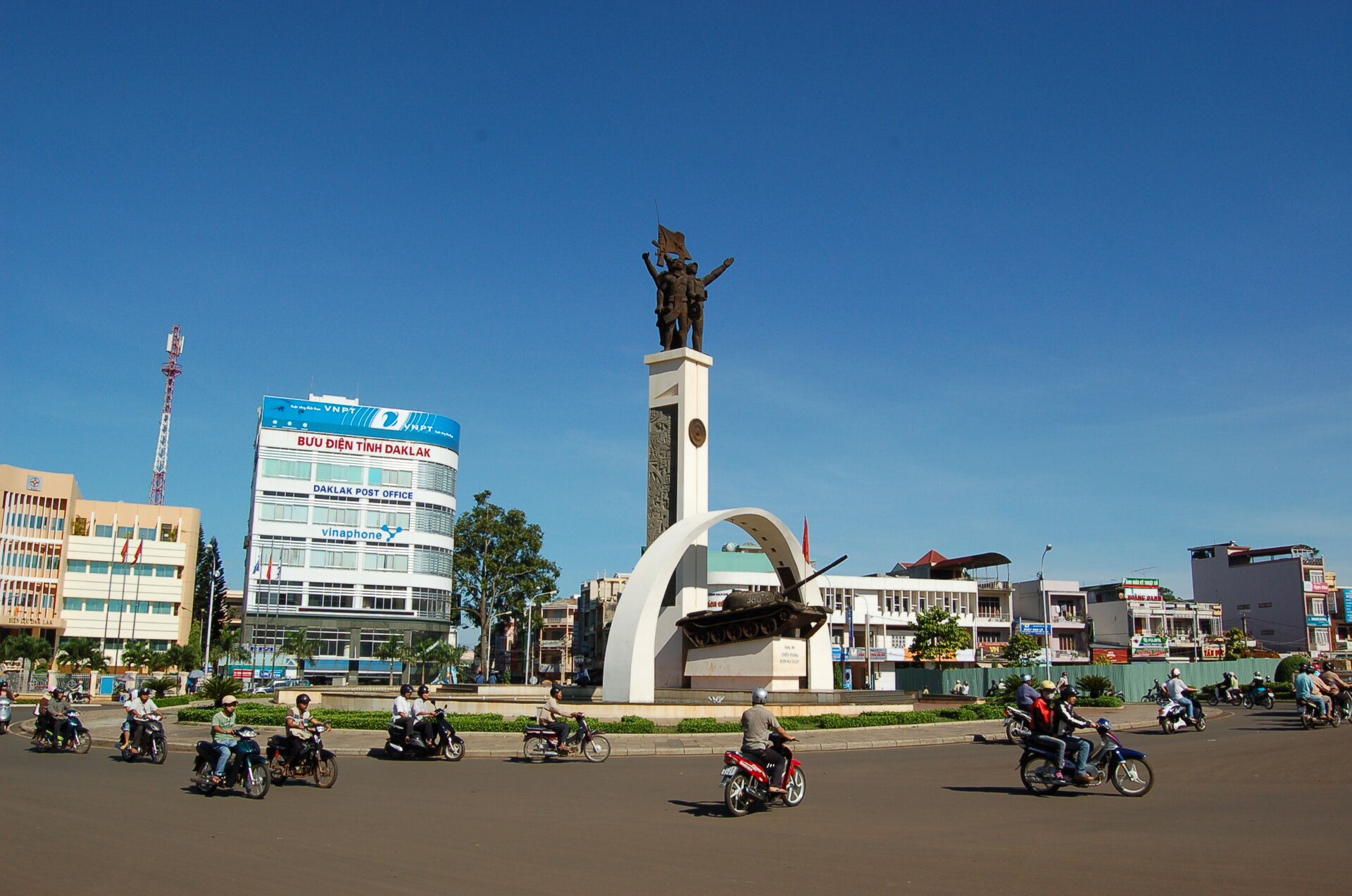

Two hundred people from Ea H’leo set off at midnight, forty kilometers up Highway 14. Halfway, at Buon Ho, police cut the cables on the tractor-drawn trailers they were riding in. They walked the rest. They reached the town at nine in the morning.
“The police cut the cables on the tractor-pulled trailers that many people were riding — otherwise there would have been more people. People got off and walked even without the trailers. When we got to Buon Ho, which is halfway to Buon Ma Thuot, many trailers were cut so people walked. The police hit and scuffled with the people but not seriously. At 9:00 a.m. we got to Buon Ma Thuot. Out of three thousand people [from Ea H’leo], only 500 were able to enter the town. Near the provincial town, in Dak Li commune, the police had erected barricades. The people climbed over them, tore them down, and continued. The police beat one person badly there and kept many from going on.”
Three thousand set out from one district. Five hundred got in.
A man from Buon Kdun, four kilometers southwest of the town, gave the only account anybody has of what was shouted and what was carried:
“The police blocked the road, but we pushed over the barricades. There were six places where there were barricades. The police pointed their guns at us and threw tear gas. We shouted that we want our Dega land back, and we want independence. We were carrying signs. When we entered town they fired water cannons at us. I took a stone and threw it at the water truck. Near the town center they had special police with helmets, plastic shields and electric batons. They threw tear gas. We had documents to give to the authorities, who told us to go home, wait fifteen days, and they would solve the problem.”
How many reached the center depends entirely on who is counting, and every count should be read with its counter in view. The US State Department said five hundred to a thousand — a mission that had not been allowed into the region. Human Rights Watch said several thousand from at least six districts. The 2006 report for UNHCR said up to a thousand or more, and noted that outside reports had run as high as twenty thousand. Vietnamese officials speaking to the foreign press said several hundred. At three in the afternoon, three army tanks were sent into the town.
The authorities produced a well-known Rhade pastor, summoned the previous day, and put him in front of the crowd:
“At the protest the Vietnamese took Pastor [name withheld] to come up to talk to the demonstrators and tell us to stop. He tried to use the police microphone but we told him to use ours. He told us not to protest and said he had not been arrested. But the people didn’t believe him. We trust him but think he was coerced.”
As in Pleiku, a small group was let through to hand over documents and speak. A Rhade delegate:
“They told us to wait fifteen days, go home and stop demonstrating, and they would decide. We said if the problem isn’t solved within fifteen days we will demonstrate again. They said don’t worry.”
The fifteen days is the spine of the whole story. Both provinces asked for it. Nobody on our side broke it. The raids began on the night of February 3.
February 4 to 14 — the districts
February 4, Ayun Pa. Cheo Reo moved on the Sunday. What we know of it comes from the court records: four men were tried at the Ayun Pa district court that October for detaining and beating the deputy police chief and his nephew on February 4, and two men — Y Tum Mlo of Buon Mrao, Krong Hnang, and Nay Pham of Plei Ko Te, Ayun Pa — were arrested that same day. The district moved and the arrests there began within hours.
February 5, Ea H’leo. Several Jarai leaders were served with police summonses, and about a thousand people gathered at the district police station and the People’s Committee. Two descriptions exist and both belong here. Foreign reporters described protesters seizing truncheons from police and waving them, and stripping and tying up one policeman. Jarai participants said police beat the crowd and ordered Vietnamese civilians carrying knives, machetes and hoes to attack it as well. About thirty demonstrators were injured. The detail of armed civilians directed against a crowd is not a one-off; it recurs three years later at Easter, and it is the single strongest continuity between the two.
February 6, Ea Hral commune, Ea H’leo. Around two thousand people. Jarai witnesses said the police and the local Vietnamese did not dare beat them.
February 14, Kon Tum. Three to four thousand people, from three in the afternoon until eight at night, with scuffling, water cannon and electric batons. At least eight people were arrested immediately afterward. Kon Tum is usually left out of the accounts of February 2001; a five-hour demonstration by three to four thousand people is the second-largest single turnout of the month.
Whether Lam Dong marched we do not know. The detailed narrative records only surveillance, summonses and house arrest there; a later summary from the same organization lists Lam Dong among the four provinces where demonstrations took place. We have not been able to settle it, and the people who can are the Koho and Maa families of Lac Duong, Di Linh and Bao Loc. See Koho, Maa, Chu Ru, Raglai.
One thing more, on the word unarmed, because the truth is better than the slogan. The movement’s platform was explicitly non-violent, and its organizers taught that violence would cost the cause its standing. The marches set out unarmed, before first light, on foot. At every barricade where we have a witness, the police struck first. And then, in Pleiku and Ea H’leo and Ayun Pa, people fought back — tore down the wire, threw stones, took truncheons off policemen, and in one district held and beat a deputy police chief. That is what happened. People who have walked twenty kilometers and been hit with barbed wire are not obliged to be saints in order to be in the right.
The nights
The raids started before the fifteen days were half gone.
Night of February 3 to 4, outside Buon Ma Thuot. Three jeeps of provincial police came into a hamlet late. A Rhade man taken that night, released three months later:
“They surrounded my house. My wife was crying. I was wearing only shorts, no shirt. They beat me and gave me shocks with an electric baton. They tied me up and threw me in the jeep. They accused me of organizing the demonstrations, and sent me to the prison in Buon Ma Thuot.”
And on the pattern:
“Within days of our meeting with the People’s Committee they started the arrests. Soldiers and police came to the villages in Russian jeeps with name lists. Tanks were parked outside the villages.”
Name lists. They existed before the demonstrations did; that is what the summonses of the previous autumn and the photographers in the square were for.
February 6, two in the morning, Gia Lai.
“At 2:00 a.m. on February 6, the police, government cadres and ordinary Vietnamese beat gongs and drums and surrounded the villages. They entered the villages, damaged houses, rifled through belongings, and arrested people. Everyone was really afraid. My own house was destroyed, and I had to flee.”
Gongs and drums. The instruments of the highland year, used to surround highland villages at two in the morning. See Gongs and epics.
February 6, midnight, Buon Ea Sup, Dak Lak. Sixty police and soldiers came into the village firing into the air and throwing tear gas. Y Nuen Buon Ya, called Ama El, and Y Nong, called Ama Cong, were dragged out of their houses in their underwear. A neighbor:
“The Vietnamese were screaming and shouting and threatened to burn down our houses. They were mocking our ‘stupid’ ideas and said, ‘It is our land, not yours — you will see. We can kill you all within an hour.’”
February 6, three in the morning, Ea H’leo. Siu Un — the same man three hundred neighbors had freed on January 12 — was taken again. This time he got eight years.
February 6, evening, Gia Lai. The houses of Bom Jena and Ksor Kroih were surrounded and ransacked.
Then the interrogations. A man from Buon Ea Sup, interviewed in October 2001:
“Three police interrogated me in a room. They asked me whether I had documents from Kok Ksor and I said no. Then they beat me. They used an electric baton near my eyes. I don’t know how many times they shocked me; I lost consciousness. When I came to, I realized my back and my stomach hurt badly and that I had probably been kicked many times. They brought me to the police station for such sessions — beating and interrogation — fifteen times over the next fifteen days. In some of the sessions the policeman pinched my ears and twisted my eyelids, and slammed his elbow into my ribs. He was angry that I’d shown other villagers the map and documents and demanded that I confess. They beat me so badly that I finally gave up the documents to them. They still continued to pressure me about religion and tried to get me to sign a document renouncing Christianity. I said I couldn’t write. The policeman took my hand in his and forced my hand. The interrogations went this way every time, every day, until March 9 when I fled.”
He still had the scar by his eye when he told it.
A man taken at Ea H’leo on February 14 and released on May 19:
“At my house they beat me on my head and on my back and arms with a stick. I passed out, and they threw me in a vehicle. When I came to I was in the prison in Buon Ma Thuot. They asked if I wanted to follow Kok Ksor or the government of Vietnam. I said Kok Ksor, and they hit me again.”
And the village meetings, which reached everyone who had not been arrested. From Ea H’leo, March 2001:
“In these meetings, the Vietnamese communist cadre would state: what kind of person is this Kok Ksor that people would follow him? They said he was a person who stole villagers’ cattle, that he had only finished fourth or fifth grade, and what right did he have to declare an independent Dega nation? The world only accepted Ho Chi Minh as the leader of the Vietnamese nation. By historical tradition the whole world recognized the nation of Vietnam; no one in the world recognized a Dega nation.”
From Dak Doa, the same month:
“After we saw others arrested, many people went into hiding. The government and police forced families of those who had fled to turn in their husbands. They took pictures of the houses of the men who had fled and of their wives. They searched and ransacked the houses. Then they called village meetings, in which they included children and youth. The government asked, who do you want to follow: Ho Chi Minh or Kok Ksor? They made the people sign and thumbprint statements and forced the people not to follow Kok Ksor. In my commune the chief of commune called adults and teenagers alike and told them not to follow Kok Ksor. The youth did not know why they were called.”
An eighty-nine-year-old Mnong man from Dak Lak, three times in FULRO, is the oldest voice in the record of that spring:
“After the demonstrations three policemen and about twenty soldiers entered my village to investigate people, especially former FULRO. I fled to my farm field. Three policemen came to my house looking for me. They questioned my neighbors as well but they were especially looking for me. They knew I’d been a FULRO member three times so they were really interested in finding me. The police came six or seven times to my house. Finally in June I was able to escape to Cambodia.”
He was born around 1912. He had been in the forest under the French, under the Republic, and under the Socialist Republic, and in his ninetieth year he walked to Cambodia.
The region closes
On February 7, five days in, the lead item on state television was the success of economic development policy in the Central Highlands. There was no mention of the demonstrations at all.
On February 8 the Foreign Ministry spokeswoman, Phan Thuy Thanh, gave foreign journalists the first official acknowledgement that anything had happened: twenty people arrested in Gia Lai for provocative acts. “They were people who caused social instability and damage, destroyed schools and resisted the authorities.”
On February 9 a military official at the Gia Lai provincial army base told a visitor:
“Outside troops have been mobilized. We have battle plans. Pleiku is ready for any military actions if needed.”
The same day, the US Embassy in Hanoi issued an alert discouraging Americans from traveling to Gia Lai and Dak Lak. By February 10 the party newspaper had reported thirteen hundred military reinforcements sent to the region since late January. An unnamed Western diplomat, quoted in a wire dispatch of February 13, made the observation the whole month turns on:
“don’t send in troops and helicopters just to deal with urban demonstrations.”
Then the region shut. More than five hundred troops went to Kon Tum in mid-March. On March 16 a four-day guided tour of Dak Lak and Gia Lai was laid on for the foreign press corps. On April 27 the army newspaper announced that thirteen military regiments would settle an economic defense zone in Dak Lak and Binh Phuoc, resettling close to a hundred thousand soldiers, militia and their families and clearing two hundred and thirty thousand hectares. European diplomats were given a four-day tour on May 31. The US ambassador asked to visit in March and was allowed in July. In February 2002, as the first anniversary came round, another twenty-three hundred soldiers went into Gia Lai, Dak Lak and Kon Tum.
The US State Department’s report for 2001 records the closure in seven words: after the February unrest, entry into the area was restricted for several months for most foreigners.
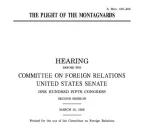
The United States Congress put it at greater length. House Concurrent Resolution 178 of the 107th Congress was introduced on June 28, 2001, by Mr. Ballenger and Mr. Burr of North Carolina — two members whose districts hold the Montagnard community resettled there in the 1980s, at a moment when the US–Vietnam bilateral trade agreement was before Congress and the resolution’s closing clause warned Hanoi that continued mistreatment threatened normalization. It was written to create leverage, and saying so does not touch its recitals:
“Whereas in February 2001 several thousand Montagnards participated in a series of peaceful demonstrations throughout the Central Highlands, demanding religious freedom and restoration of their confiscated lands”
“Whereas the Government responded to these peaceful demonstrations by closing off the Central Highlands and sending in military forces, tanks, and helicopter gunships”
“Whereas for the last 4 months the Government has refused to allow any meaningful access to the Central Highlands by diplomats, journalists, or other observers”
“Whereas credible reports by refugees who have escaped from the Central Highlands indicate that the Government has executed some participants in the demonstrations and has subjected others to imprisonment, torture, and other forms of physical abuse”
Note what the last of those rests on. Refugees. Our people, telling what they had seen, to a Congress that then wrote it into the record as credible. That is what testimony does when someone is willing to listen to it. See What Washington has said.
Plei Lao, March 10
Plei Lao is in Nhon Hoa commune, Chu Se district, Gia Lai. Its people have been Christians since 1974, when a Jarai man brought the religion in. A villager:
“Christianity did not come to Plei Lao from foreigners. The Jarai became Christians because we saw that religion could help us have harmony in the family. God could protect us.”
Two hundred people from Plei Lao alone set out for Pleiku on February 2. Most were stopped at the barricades. They came home to a village with police and soldiers patrolling it, and they did what our people do when they are frightened: they prayed, in shifts, around the clock. For the ten days before March 10 the meetings ran from nine in the morning to three in the afternoon, five in the evening to ten at night, and one in the morning to dawn. Attendance grew to between five hundred and a thousand people from more than a dozen surrounding hamlets. The church they met in was a wooden and thatch building twelve meters by six and a half, which they had built themselves in July 2000.
“After the demonstrations we were afraid all the time. There were police and soldiers constantly patrolling in our village. We had many prayer meetings — not just on Sundays — to pray and respect God and ask for help and protection.”
“This is our tradition to pray day and night — as a prayer for help and protection — especially during times when we are fearful.”
And a third villager, whose account we print because it is what he said and not because it helps:
“When we meet like this, part [of the meeting] is religious and part is political; for example talking about the fact that this land is the property of the ethnic minorities and the international community has approved our proposal for independence already.”
The international community had approved nothing. Men had gone from village to village that year saying it had, and people believed them, and it was not true, and they were about to find out what it cost. We print it because leaving it out would make the village into something simpler than it was.
At seven in the evening on March 9, hundreds of soldiers and riot police surrounded Plei Lao. At four the next morning about sixty of them came in, in three jeeps and army trucks, while the village was at prayer. They took a young man asleep in a coffee plantation at the village edge, bound him, gagged him and put him in a jeep.
“We worshipped until 4:00 a.m., when the soldiers came, shining their flashlights. We were praying at the time. The people tried to stop the soldiers, and told them we were praying. Some of us got close to the police jeep. When it got light, I saw one person handcuffed and gagged inside. His name is S.”
About sixty villagers crowded the jeep to get him out. The police used tear gas and batons. The young man’s sister was beaten until blood came from her mouth, screaming for her brother. The villagers got him out of the vehicle. The police fired into the air, and then at people who were running.
Rmah Blin, aged thirty-three, of Plei Luh Yo, was shot. He was taken to the provincial hospital in Pleiku and died there at two o’clock that afternoon. Seventeen people were beaten with batons or electric truncheons; several had bullet wounds; one man was shot in the leg and another in both legs. Rmah Blin is in our Memorial register.
There is a second account of how he died. The US State Department’s report for 2001, attributing it to one credible report, says that “Two or three soldiers reportedly shot and killed a civilian who had threatened another soldier with a spear.” That report is compiled largely from embassy reporting, by a mission that had been refused entry to the highlands for four months of the year it covers, in the year that same government was bringing a trade agreement with Hanoi into force. Its account of the spear is second-hand and it says so. The villagers who were standing there say the police fired into the air and then at people running away. We set both down. We do not think they are of equal weight, and we say why rather than leaving the reader to guess.
Around noon the police turned to the church. A man who was handcuffed while it happened:
“First the police ordered some Vietnamese civilians to ransack and destroy the church with axes. They used a cable tied to a vehicle to topple it and the soldiers used their gun butts. Then they forced the ethnic Jarai to burn it. The police made the Jarai pour five liters of gasoline and ten liters of machine oil on the church, but they couldn’t get it to burn. So then the police took over and they set fire to it. Everyone was crying — for the dead and wounded, and for the church.”
Then this. “Afterwards the police put fresh earth over the ashes and smoothed it so outsiders couldn’t tell there had ever been a church there.”
That is the policy of fifty years in a single gesture, performed on one morning in one village by men with shovels. Not only take it. Make it so that nobody passing can tell it was ever there.
About seventy men were arrested at Plei Lao that day. Eleven — six from Plei Lao, five from Plei Kia — were taken to the commune headquarters, kicked and beaten in the truck on the way but not at the station, interrogated until about midnight, and released. More than twenty went to the provincial prison in Pleiku. Twelve of those were from Plei Lao; four had not come home by November. One of the young men taken:
“I was one of those arrested. I hadn’t fought back or hit the police — I was too afraid. I just wanted to protect the church and prevent the police from going there. They were searching the whole village and entered each house. Around 9:00 a.m. they arrested me, near the church. They tied my hands behind my back, put me in the jeep, and kicked and hit me. When they arrested me I had blacked out — I think from the gas, or maybe from being shocked with an electric baton. I only came to when they threw me in the jeep to take me to the commune office.”
That afternoon police fired into the air and threw tear gas in Plei Kli and Plei Djrek while making more arrests. Afterward, soldiers were quartered in the village, three to a house at the homes of suspected church leaders.
“If we had five people sitting together, they’d accuse us of having a political meeting. So we didn’t meet each other so much. They would watch each house. If they saw four or five people together in a house they’d arrest and interrogate them. From that time we never dared worship in groups, except in the family.”
Ten days later someone in Plei Lao wrote a note in Jarai and got it out of the village. It is short enough to give whole:
“Now they’ve killed and arrested many of us. Since March 10 the people are very afraid. Some have fled to the forest, others are in hiding elsewhere, afraid to return to the village to work. The government doesn’t allow us to follow our religion. If we don’t follow the government and continue to conduct our worship meetings, the authorities said they will arrest us and put us in jail or even shoot and kill like before. Please let the U.N. and the international organizations know about this immediately, to protect the people.”
March 20, 2001. Handwritten, in Jarai, by somebody whose name we do not have.
The goat’s blood
From May 2001, in Ea H’leo district in Dak Lak — largely Jarai country near the Gia Lai line — the authorities began holding mass renunciation ceremonies. They peaked between May and mid-August and spread into Gia Lai villages in the second half of the year. At least twenty-four villages in Ea H’leo alone: Buon Dang, Buon Treng, Buon Sam A, Buon Sam B, Buon Tung, Buon Areng, Buon Le, Buon Blec, Buon Dung, Buon Breng, Buon Druh, Buon Tri A, Buon Tri B, Buon Sec, Buon Kha, Buon Cuah, Buon Drai, Buon Hyao, Buon Bir, Buon Hvuai, Buon Hving, Buon Co, Buon Ta Li.
Each person who had demonstrated was served with a written summons to a working session. The whole village was assembled. Provincial, district, commune and village officials attended, with military and police commanders, and soldiers around the perimeter. A banner was hung. Two of them were recorded:
“Judgment Ceremony of the People who Opposed the Government and Joined the Demonstrations”
“The Ceremony to Repent from Following Dega Christianity”
Each person then stood in front of the banner, read out a confession the authorities had written, pledged to cut off outside contact, renounced Christianity, drank rice wine mixed with goat’s blood, and accepted a written pledge signed by the district chief. The pledge form survives. It was issued by the Ea H’leo Commune People’s Committee on May 26, 2001, under the heading Socialist Republic of Vietnam — Independence, Freedom, Happiness, and signed by the commune committee chairman, R Chum Y Rok. Its five undertakings are: correct one’s mistakes and behave lawfully; reject the bad group and report such activity; take part in productive work; adopt a new way of life with new cultural values and reject all kinds of superstition; and comply with all advice, instructions and laws provided by the party and the state. It closes: “If I violate the above points I have signed I will face complete responsibility under the laws of our country.”
Read the fourth undertaking again. A man is made to drink blood from a bowl in front of his village, and in the same ceremony to sign a paper rejecting all kinds of superstition.
What it was like to be in one, from Ea H’leo in October 2001:
“We were afraid [the wine] had poison in it and that they wanted to kill off all of the demonstrators. We remembered about the Bible saying not to drink blood, and we were afraid that we had violated God.”
“They asked us to drink goat’s blood, but we never saw any goat. We wondered where the blood was from. If we didn’t drink, they would beat us. We didn’t know if it was from a chicken or a dog or what. I am afraid I will have health problems in the future.”
“The police told me that drinking blood with wine would cleanse my sins and wrongdoings. If we didn’t drink, they would charge that we still opposed the government and that we were not their people.”
And from a Rhade man in Dak Lak in October 2001:
“I wanted to kill myself, slit my own throat because of the pressure. Sometimes when the police would come, I’d say kill me, I don’t care. Finally I was able to escape to Cambodia.”
Understand what was actually being done here. The blood oath is a highland form. Sealing a covenant with blood and rice wine before the assembled village is ours, and it is old, and it is one of the things the classification of our religion as a political organization was supposed to be protecting us from. The state did not simply ban the church. It built a counterfeit of a Dega rite, staged it in the village square, and made people perform it against themselves. Then it had them sign a paper renouncing superstition. See Customary law.
The names

Between September 2001 and December 2002 the courts of Gia Lai and Dak Lak worked through the people they had taken. What follows is drawn from a listing of highland prisoners compiled in January 2003, published with the compilers’ own warning that it “should not be considered to be exhaustive.” Village spellings are as they were recorded. Dates of arrest are given day and month.
Sentenced September 26, 2001 — People’s Court, Gia Lai
- Bom Jena (Bom Jana), Bahnar, born 1956, Plei Kueng Grai, Dak Doa. Arrested February 6. Twelve years and five years’ probation, for inciting social disorder, opposing state and party unity, and organizing illegal activities for an independent Dega state.
- Ksor Kroih, Jarai, born 1963, Plei Sor, Dak Doa. Arrested February 6. Eleven years and five years’ probation, for undermining national unity.
- Ksor Poi, Jarai, born 1962, Plei Kueng Grai, Dak Doa. Arrested February 6. Ten years and five years’ probation.
- Siu Boch, Jarai, born 1965, Plei Lao, Chu Se. Arrested March 10. Eight years and five years’ probation.
- Siu Yui, Jarai, Plei Lam Klah, Chu Prong. Arrested February 26. Eight years and five years’ probation.
- Siu Tinh, Jarai, born 1963, Plei Tot Bioc, Chu Se. Arrested February 6. Eight years and five years’ probation.
- Siu Un, Jarai, Buon Blec, Ea H’leo, Dak Lak. Arrested February 2001, tried in Gia Lai. Eight years.
Sentenced September 26, 2001 — People’s Court, Dak Lak
- Y Nuen Buon Ya (Ama El), Rhade, Buon Ea Sup, Ea Sup. Arrested February 25. Eleven years and five years’ probation, for destabilizing public security.
- Y Nok Mlo, Rhade, Buon Ktla, Krong Buk. Arrested February 16. Eight years.
- Y Bhiet Nie Kdam, Rhade, Buon Pheo, Krong Buk. Arrested February 2001. Six years.
- Y Tum Mlo, Rhade, Buon Mrao, Krong Hnang. Arrested February 4. Eight years and four months, with an added charge of illegal weapons possession.
- Y Phen Ksor, Jarai, Buon Sek, Ea H’leo. Arrested February 25. Seven years.
- Y Rin Kpa, Jarai, born 1968, Buon Drai, Ea H’leo. Arrested February 2001. Ten years.
- Y Drut Nie, Jarai, Buon Sek, Ea H’leo. Arrested February 25. Seven years, with an added charge of destruction of public property.
Those fourteen are the men reported at the time as “fourteen ethnic minority persons sentenced to prison terms ranging from 6 to 12 years.” They had names, villages, districts and ages. Notice also what the listing shows about how the cases were built: the same day’s demonstrations produced two different charge labels in two provinces — undermining national unity in Gia Lai, destabilizing public security in Dak Lak. The charge followed the court, not the conduct. See The laws used against us.
October 2001 — Ayun Pa district court, Gia Lai
Arising from February 4. Y Nglu of Plei Glung, seven years. Siu Un of Plei Glung, born 1965, eight years — a different man from the Siu Un of Buon Blec above. Siu Seo of Plei Joning, born 1970, five years. Siu Tel of Plei Ke, born 1959, five years. Rmah Djoan of Plei Athai, born 1958, five years. The charge in each case was disturbing public order and illegally detaining people.
October and November 2001
Kpa Bring, Rhade, Buon Jung, Krong Pac, nine years. Y Kao Buon Ya, Jarai, Buon Ea Sup 1, arrested March 26, seven years. Y Khu Nie, Rhade, Buon Tri B, Ea H’leo, five years. Ksor Alup, Jarai, born 1948, Plei Breng 2, Ia Grai, five years. Ksor Blung, Jarai, born 1958, Plei Breng 3, Ia Grai, four years. Y Wang Nie Kdam, Jarai, Buon Areng, Ea H’leo, four years. Y Bliet Ayun, Rhade, born 1956, Buon Jung, Krong Pac, three years. Ksor Sun, Jarai, born 1960, Krong Pac, two years. Y Nueng Nie, Rhade, born 1972, Buon Ea Yong, Krong Pac, two years.
November 19, 2001 — People’s Court, Dak Lak
Four men of one village, all arrested on the same day: Y Nong Buon Ya (Ama Cong), born 1968, four years; Y Muk Nie, born 1970, five years; Y Mriu Eban, born 1968, six years; Siu Sop, born 1968, six years. All four are from Buon Ea Sup, and all four were arrested on March 26, 2001 — the morning nineteen of their neighbors were handed back across the Cambodian border. See below.
January 25, 2002 — Chu Se district court, Gia Lai
Four men charged with organizing illegal migrations, all of them arrested in Cambodia and forcibly returned: Siu Beng, born 1964, Plei Betel, returned April 30, 2001, three and a half years; Siu Be, born 1957, Plei Luh Ngo, returned April 30, three and a half years; Kpa Hling, born 1961, Plei Ho Bi, returned May 15, five and a half years; Y Hnoch, Bahnar, born 1959, Brong Mang, Dak Doa, returned May 15, five and a half years.
Kpa Hling and Y Hnoch were among the sixty-three people deported from Ratanakiri on the night of May 15, 2001 — the same day Cambodia’s national police chief assured the UNHCR regional representative that Vietnamese refugees would be protected. See The Cambodian camps.
2002 — the men taken at the border
Rahlan Loa, Jarai, born 1964, Buon Toat, Krong Pac, arrested December 2001, nine years and five years’ probation, Gia Lai, August 10, 2002, for illegally leaving Vietnam to oppose the people’s administration. Y Tim E Ban, Rhade, born 1968, Buon Dha Prong, Buon Ma Thuot, arrested December 24, 2001, eight years, Dak Lak, October 22, 2002. Y Coi B Krong, Rhade, born 1972, Buon Ko Mleo, arrested December 24, 2001, eight years, same date. Y Tho Mas E Ya, Rhade, born 1955, Buon Bu Dak, Dak Mil, arrested November 29, 2001, eight years, same date. Ksor Dar, Jarai, born 1955, Plei Weh, Dak Doa, three years, Gia Lai, November 15, 2002. Rahlan Phyui, Jarai, born 1971, Plei Sung Kat, Duc Co, two years, same date.
December 25, 2002 — People’s Court, Dak Lak
Eight men, sentenced on Christmas Day. Most had been arrested and forcibly returned from Cambodia on December 27, 2001. The charge sheet reached back twenty-two months: undermining state and party unity, organizing illegal migrations, and contacting overseas groups “to cause disorder in Buon Ma Thuot Feb. 3, 2001.”
- Y Thuon Nie, Rhade, born 1973, Buon Kwang, Krong Buk — ten years and four years’ probation.
- Y Pum Bya, Rhade, born 1965, Buon Kmien, Krong Buk — eight years and four years’ probation.
- Y Tien Nie Kdam, Rhade, born 1980, Buon E Nao, Buon Ma Thuot — eight years and four years’ probation. He was twenty-two.
- Y Boh Nie, Rhade, born 1968, Buon Drao, Buon Ma Thuot — eight years and four years’ probation.
- Y Are Nie, Rhade, born 1965 — eight years and four years’ probation.
- Y Lem Bkrong, Rhade, born 1962, Buon Kwang — eight years and four years’ probation.
- Y Ju Nie, Rhade, born 1964, Buon Brieng, Ea Kar — eight years and four years’ probation.
- Y Nai Mlo, Rhade, born 1966, Buon De, Krong Hnang — eight years and four years’ probation.
The men of the prayer meeting
Six more men are listed with their sentences but without a trial date, all arrested at Plei Lao on March 10, 2001 — the morning Rmah Blin was shot. From Plei Lao: Siu Thuk, born 1963, six years; Kpa Thop, born 1963, six years; Siu Grih, born 1958, six years. From Plei Bo 1: Rmah Teng, born 1958, eight years; Rmah Anur, born 1950, eight years; Ksor Hnel, born 1976, six years. With Siu Boch above, that is seven men from one prayer meeting, serving forty-eight years between them.
The same listing carries, without trial dates: Y Prom, Bahnar, born 1963, Plei Bia Bre, Dak Doa, eight years. Nay Pham, Jarai, born 1953, Plei Ko Te, Ayun Pa, arrested February 4, five years. Hyan and Dol, Bahnar, of Plei To Drah, Chu Se, both arrested May 22, two years each. Goih and Dinh Mlem, Bahnar, of Plei To Drah, both arrested October 5, six years each. Byun, Bahnar, Plei Lon B12, eight years. Brong Kpa, Rhade, Buon Jung, Krong Pac, nine years. Y Nuel Nie, Rhade, Buon Jung, eleven years. Bli, Bahnar, born 1964, Plei Pheo, six years. Siu Ye, Jarai, born 1978, Plei Mo, six years. Bah, born 1966, Plei Hrai Dong, six years. Em, Jarai, born 1955, Plei Ia Lang, Pleiku, seven years. And Y Het Nie Kdam, Rhade, of Buon Sek, Ea H’leo, arrested August 28, 2002, sentence not recorded — against whose name the compilers noted that a report had circulated of a man of the same name dying under lethal injection, and that the government press produced a man of that name, from a different address, in December 2002.
Seventy men. Against them, the totals that were published at the time: at least thirty-five highlanders sentenced between September 2001 and January 2002; thirty-six sentenced to four to thirteen years by the end of 2001 with thirty-two more awaiting trial; more than two hundred detained and as many as seventy serving long sentences by January 2003; and by 2011, more than three hundred and fifty Montagnards sentenced since 2001 on national security charges, with at least sixty-five of them arrested while trying to reach asylum in Cambodia, and more than two hundred and fifty in prison or awaiting trial. Our own organizations put the count higher still: we told the UN Committee on the Elimination of Racial Discrimination that about five hundred people were tried in closed proceedings and sentenced to between two and eighteen years, with others held without trial for three to nine months, and said openly that we had removed identifying details to protect people still at risk. See Prisoners: Gia Lai and Prisoners: Dak Lak.
How many died
This is the question we are asked most often and the one the reader should be given honestly, with every figure attached to whoever produced it.
One death is documented by name. Rmah Blin, thirty-three, of Plei Luh Yo, shot at Plei Lao on March 10, 2001, died in Pleiku at two that afternoon.
Nothing in the record, ours or anyone else’s, places a death in the five towns between February 2 and February 14. We say so plainly, because what this page is for is what happened. And we say it beside the other fact: that from the week the demonstrations ended, the region was shut to every outside observer for four months.
The US State Department, for 2001: “Early in the year, at least one extrajudicial killing reportedly occurred during the ethnic clashes in the Central Highlands.” And: “Reports suggest that there were at least three or four other killings by security personnel related to the ethnic unrest in the Central Highlands; however, these cannot be confirmed.” This is a government report written from embassy reporting by a mission that had been kept out of the region for four months of the year it describes, published while that government was implementing a trade agreement with Hanoi. Its three or four is a floor and nothing else. It is not the number of people who died; it is the number a diplomatic mission could hear about from outside a closed province.
The US Congress, in June 2001, on refugee accounts: the government “has executed some participants in the demonstrations.” No number given.
Our own organization, in written testimony to the Tom Lantos Human Rights Commission on March 26, 2014, covering 2001 and 2004 together: over thirty thousand people protested; tanks and helicopters were used to break the protests; “hundreds of Montagnard were killed, over 2,000 were missing without return, and over 500 were arrested and jailed for up to 17 years.”
And separately, the count of what happened after the courts had finished: since 2001, at least twenty-five Montagnards have died in prisons, jails or police lock-ups after beatings or illness sustained in custody. See How we died.
Those figures do not reconcile, and we are not going to pretend that they do. What can be said is this. One man is named. Three or four more were reported to a mission that could not go and look. Our own organization, made up of the people it happened to, counts in the hundreds across both years. And for four months, in exactly the window when a count could have been made, the province was shut to diplomats, to journalists, and to everyone else — by the government whose forces did the shooting.
That closure is not a reason to discount our number. It is the reason ours is the only number that could exist.
The injuries are better recorded: hundreds of demonstrators hurt, on the 2001 assessment for UNHCR; scores on both sides, in the State Department’s account; about thirty at Ea H’leo on February 5; seventeen beaten and several shot at Plei Lao.
The border
Within days people began crossing from Dak Lak and Gia Lai and hiding in the forests of Ratanakiri and Mondulkiri. Leaders crossed from Gia Lai in mid-February. Dozens went over from Dak Lak in early March. On March 24 officials in Mondulkiri arrested twenty-four Rhade and flew them by military helicopter to Phnom Penh, where they were held at Gendarmerie headquarters; on March 31 Hun Sen agreed to let UNHCR interview them, they were recognized as refugees, and in early April they went to the United States with fourteen Jarai who had reached UNHCR separately.
Two days after that helicopter, on March 26, nineteen men from Buon Ea Sup were handed back at the Bou Praing crossing. The Dak Lak provincial governor, the provincial military commander and the provincial police chief were there to receive them. Fifteen were eventually released on condition their families vouched for them in writing, forbidden to work their fields without permission or to gather in groups of more than three. Four of their neighbors got four to six years. On August 24, seventy-eight men from Ea Sup and Ea H’leo gathered near the border and hid in the forest without food for more than a week; on September 1 they crossed. The full account of what Cambodia did with our people, and what UNHCR did and did not do, is at The Cambodian camps.
By May 11 UNHCR staff had brought about a hundred and fifty people out of the Mondulkiri forest to an encampment at Sen Monorom. By the end of that month close to four hundred were sheltered at two sites. Talks opened in Hanoi in July over more than three hundred refugees and broke down when Vietnam refused unrestricted UN access to the Central Highlands. In late August more than a hundred Rhade and Mnong arrived in a single week, most of them running from the goat’s blood ceremonies, and Jarai came from Gia Lai who had been hiding in the forest, or in pits dug under their own houses, since February.
Two men explained why they had gone. A Jarai land rights organizer:
“I fled from my village after I saw forty police ransack my neighbor’s house and take him away to jail. I escaped to Cambodia but in my heart I didn’t want to come here. I felt I was abandoning the people in Vietnam — not only my wife and children, but also the movement. I didn’t come here in order to resettle elsewhere but to get information to our leader so that he could find a way to solve the problem. Once I got here I realized that I couldn’t return to Vietnam or I’d be arrested. The situation hiding in the forest was also very difficult. Police were hunting for us on both sides of the border. We ran out of food, we had no shelter from the rain, and some of us fell ill from malaria. Soon we realized we couldn’t stay in Cambodia and we couldn’t go back to Vietnam. We asked the U.N. to help us; otherwise we would have been arrested. Now all I wonder is, what about my wife and children in Vietnam — I’ve had no news about what happened to them after I left.”
And a Rhade man who had been tortured and held in Buon Ma Thuot after the marches:
“I fled to Cambodia to meet the upper levels — the international community and the U.N. — to solve the problem of land. I don’t ever want to see Vietnamese [people] again, until this problem is solved. I abandoned my wife, my house, my children. I fled to Cambodia to show the U.N. about our struggle for the land of Dega. I want the U.N. to [delineate] clearly the map: which is the area of the ethnic minorities, and which is the area of the Vietnamese. I want the international community to understand clearly that I didn’t come here to get rich or to resettle abroad. We just want our land. When we have our land, we can support our families and live freely. We want the world to know that we want justice. We want our own country.”
In Phnom Penh that spring, Vietnamese officials came to see them:
“We were questioned several times by Vietnamese people when we were in Phnom Penh. Vietnamese people also took videotapes of us there. The Vietnamese Red Cross person tried to force us to take letters and watch a videotape. He argued in English with an American man about this. We all stuck our fingers in our ears and lowered our heads when they put on the video. We refused to take the letters.”
One of them recognized a face:
“I had seen him before — at the demonstration in Buon Ma Thuot. He was watching us and talking to the police, but dressed in civilian clothes. He was staring at me during the demonstration and asked me to stop demonstrating. When he met me in Phnom Penh, he asked me if I would go back to Vietnam. I said not until we get land for our people.”
What we do not have
Four things are missing from this page, and for three of them the person who can supply it is probably reading it.
The documents handed over in Pleiku and Buon Ma Thuot. Delegations went through the police lines in both towns and put papers into the hands of provincial officials. The papers are described — a request to settle the land and religion problems and a proposal for an independent state — and their text has never been published anywhere. Some of the men who carried them were named, jailed, and later resettled. Some are in Greensboro, Charlotte, Raleigh and New Bern. If a copy was kept, or if anyone can set down from memory what was written, that is the most important single document still outstanding from February 2001.
What was on the signs. One witness says: we were carrying signs. Nobody has ever recorded what was painted on them. Somebody carried one.
Whether Lam Dong marched. See above. The Koho and Maa families know.
The villages. Hundreds of villages sent people to those five towns. Three villages are documented in any detail — Buon Ea Sup, Plei Lao, and the hamlet in Dak Lak that wrote the letters. Everyone else’s February is unwritten. If your village walked, we would like the hour you left, the road you took, how far you got, and who did not come home. Write it down, or sit an elder down and record it. See How to record an elder.
Twelve days in February, and then four months behind a closed door. What is on this page came out of that door in the pockets of people walking to Cambodia. It is not a substitute for a record. It is the record.
Terms
- Tin Lanh Dega
- Dega Protestantism. The independent highland church, organized from 2000 outside the state-recognized Evangelical Church of Vietnam. Vietnamese officials classify it as a political organization rather than a religion, which removes it from the protection of religious-freedom law.
- Giấy Triệu Tập
- A written summons to a police working session. Refusal is an offense; repeated summonses were used through the 1990s and after 2001 as a punishment in themselves, since each one costs a day in the fields.
- Bản Cam Kết
- A written pledge, signed by the person undertaking it and countersigned by an official. After February 2001 these were issued at village ceremonies and required the signer to abandon outside contacts, renounce Christianity, and accept liability under the law for any breach.
- Article 87
- Undermining the policy of unity: sowing divisions between the people and the administration or between ethnic groups. Two to fifteen years. It requires no violent act. Renumbered Article 116 in the 2015 penal code.
See also: Easter Week 2004, The Cambodian camps, 2001–2005, The church they closed, The memorial register, Kok Ksor.
Sources
- Human Rights Watch, Repression of Montagnards: Conflicts over Land and Religion in Vietnam’s Central Highlands, April 2002 — the book this page mostly rests on, and a book built out of interviews with our people conducted between March and December 2001 in Cambodia and in the highlands. Its nine appendices reproduce the village petitions of 1995 and 2000, the Rhade-language petition of December 15, 2000, the interrogation and pledge documents, and the Cambodian transfer papers of March 2001
- Human Rights Watch, New Assault on Rights in Vietnam’s Central Highlands, January 2003 — Appendix 1, the listing of seventy highland prisoners from which the names on this page are taken, published with the compilers’ statement that it is not exhaustive
- Human Rights Watch, Montagnard Christians in Vietnam: A Case Study in Religious Repression, March 2011 — the ten-year totals and the deaths in custody
- United States Department of State, Country Reports on Human Rights Practices 2001: Vietnam — the demonstrator counts, the September sentencing dates, the closure of the region, and the account of the killing at Plei Lao. Compiled largely from embassy reporting by a mission refused entry to the highlands for four months of the year it covers
- United States Congress, House Concurrent Resolution 178, 107th Congress, introduced June 28, 2001 — introduced by two North Carolina members while the bilateral trade agreement was before Congress
- Vietnam: Situation of Indigenous Minority Groups in the Central Highlands, a Writenet report commissioned by UNHCR’s Status Determination and Protection Information Section, June 2006, and WRITENET Paper No. 05/2001 — written to help UNHCR staff assess Montagnard asylum claims. Neither published PDF carries an author’s name, so we cite them by title
- Our own submission to the UN Committee on the Elimination of Racial Discrimination, 80th session, and our own written statement to the Tom Lantos Human Rights Commission, March 26, 2014 — our own organizations’ counts
- United Press International, “Vietnam struggling to end highlands unrest,” February 13, 2001 — the US Embassy travel alert and the Western diplomat’s remark about troops and helicopters
Compiled September 2026. No Vietnamese government or state media source is used as a source on this page. Where a Vietnamese official statement appears — the Foreign Ministry on February 8, the Dak Lak religious affairs department in the Financial Times, the reinforcement and settlement figures announced in the party and army press — it is quoted from an outside report that reproduced it, and it is there as evidence of what the state said, not as evidence of what happened. Three things on this page we could not settle: whether Lam Dong demonstrated in February 2001; what was written on the documents handed over in Pleiku and Buon Ma Thuot; and what was painted on the signs carried into Buon Ma Thuot. Village and personal name spellings in the prisoner listing are as they were recorded at the time; several men appear in the record under two spellings, and where we know of a second we have given it. If you know a correction to any name here, or a name that is missing, we want it.