










Every page in this library carries its sources and says where it is thin. This page gathers those places in one list: the figures nobody has been able to settle, the years we have almost nothing on, the documents we know exist and have never seen, the names we are missing, and the places where our sources disagree. It is kept deliberately, because a record that shows only its strong parts cannot be trusted with its strong parts either.
What this page is not
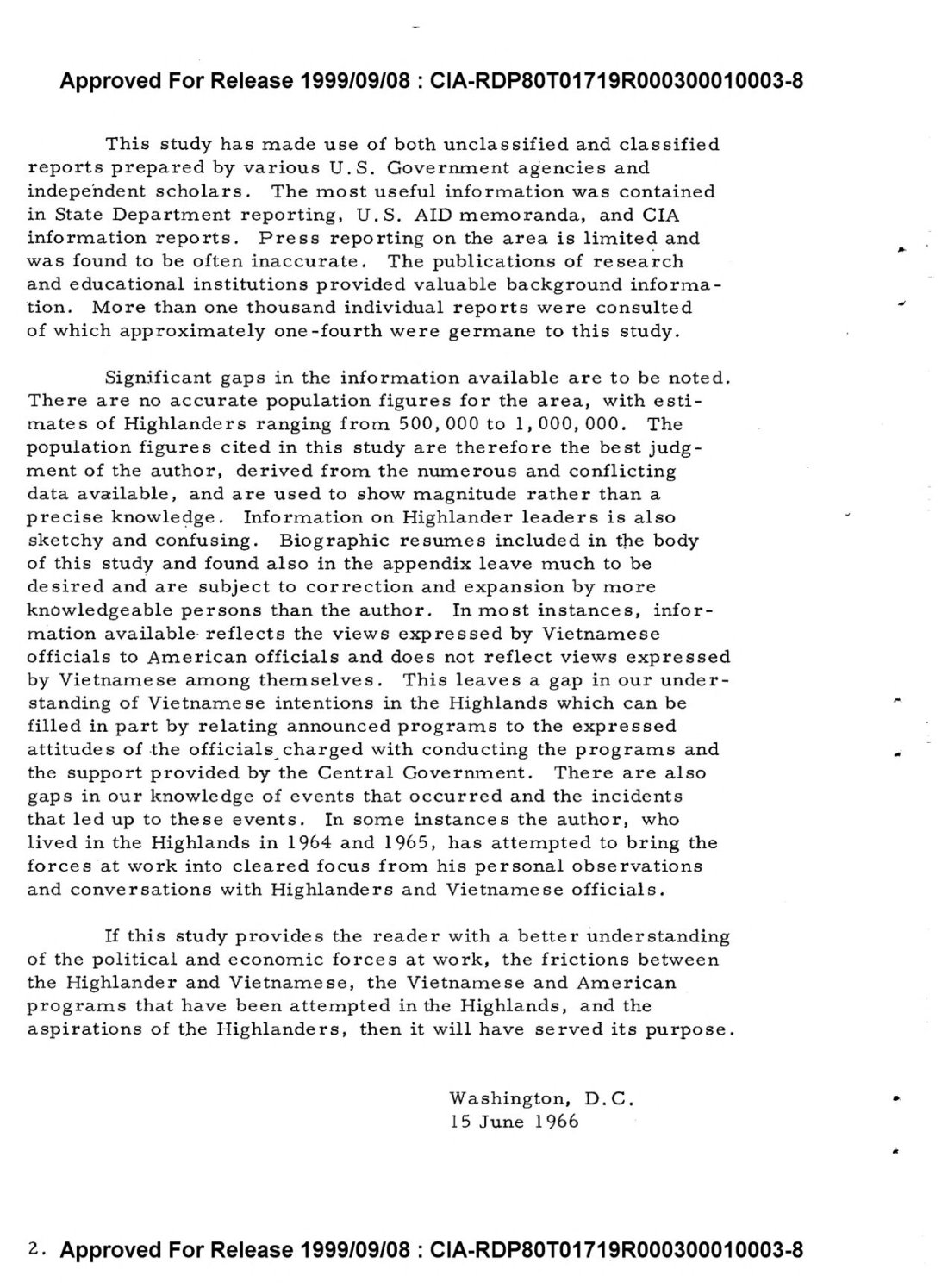
Where a figure or an account on this list comes from our own people, its being ours is not the weakness in it. Vietnam does not publish what it does to us and has not done so for fifty years, and the absence of an outside document is a fact about the state, not about the person remembering. The Americans who studied us in the 1960s said as much about their own work: that their information had “significant gaps,” that their population figures were only “the best judgment of the author,” and that what they knew of our leaders was “sketchy and confusing.” What follows is a list of what has not yet been cross-checked, and of what it would take to settle each item. It is not a list of things we doubt.
Figures nobody has been able to settle
| Figure | Whose it is | What would settle it |
|---|---|---|
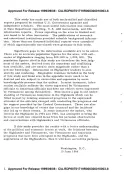
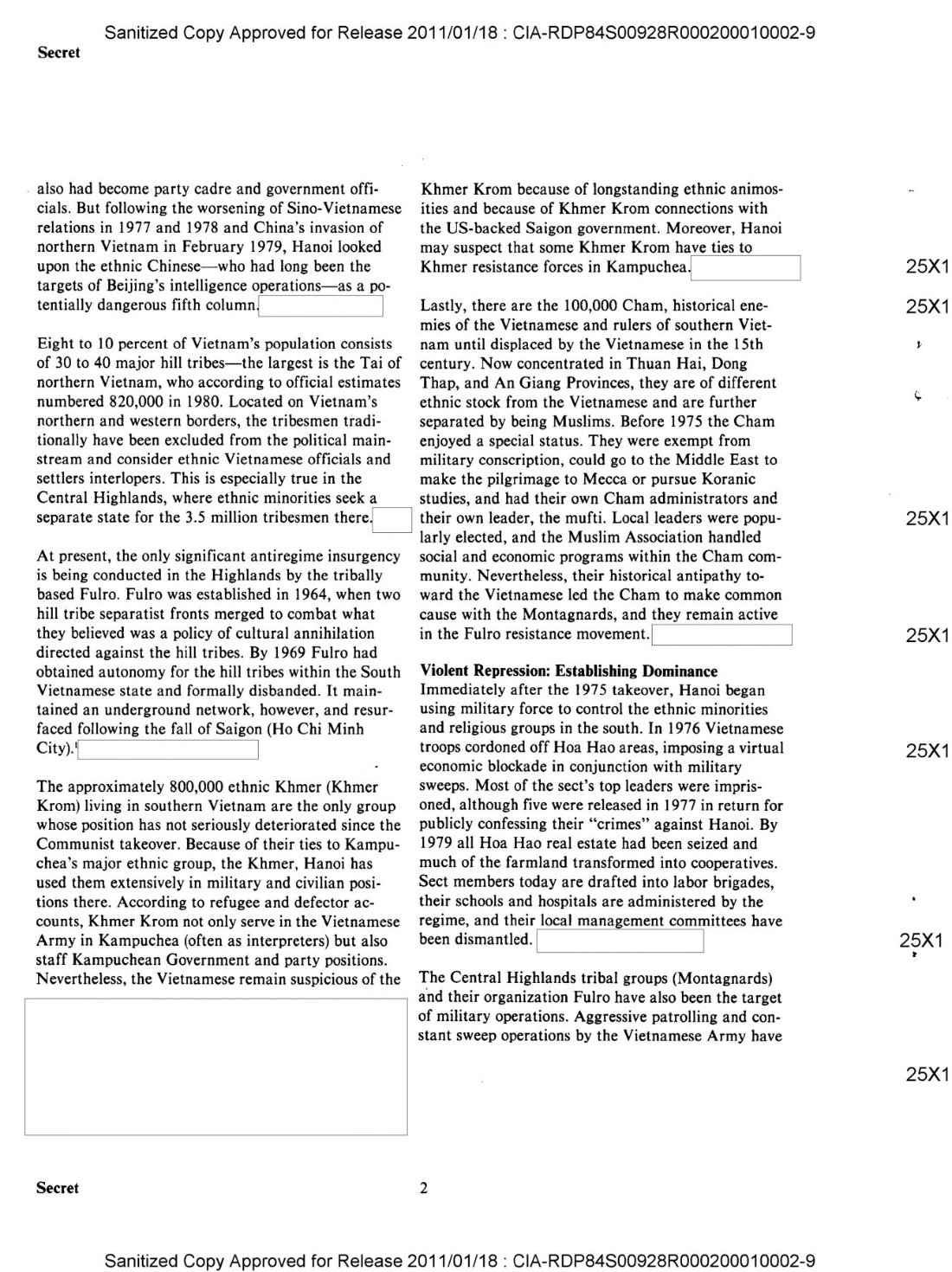
| Three to three and a half million Dega in the colonial period | Our own records | No colonial count comes near it: every outside count from 1953 to 1974 falls between about 460,000 and a million, and every one was made by an administration that could not reach most of our villages. The one outside figure of that size is the CIA’s, for 1983: “the 3.5 million tribesmen there,” with no source given. Knowing what our figure was built from, and whether the CIA’s shares its origin, would settle it. |
| About 850,000 settled on our land under Diem | Our own records | The published series stop in 1963: more than 140,000 settled on highland land by the end of 1956 (CIA), more than 100,000 in 117 highland land development centers by the end of 1962 (Human Rights Watch, after Hickey), and Vietnamese more than 40 percent of the seven highland provinces by 1963 (CIA). The program’s own files, or the American aid reports of 1957 to 1963, would settle it. |
| At least 200,000 highlanders dead in the war, and eighty-five percent of their villages abandoned or destroyed | Gerald C. Hickey, Shattered World (1993), page 261 | An estimate by the anthropologist who knew our villages best, published without its working. Others render his eighty-five percent as a share of our people driven from their villages rather than of the villages themselves; the two are different measures. |
| More than a million Dega killed in the wars | Our own community’s history, as a Dega witness gave it to the US Senate Committee on Foreign Relations on March 10, 1998 | Also published without its working. No register of our dead was kept, and no independent observer has been free to count them since 1975. |
| About 60,000 Dega killed between 1975 and 1982 | Our own submission to the United Nations, 1993 | Testimony from the villages and the forest, set against whatever the Vietnamese security files hold. Only the first is within our reach. |
| The number of Dega in North Carolina and the United States | Estimates | No census counts us; every official system records us as Vietnamese. The estimates run from “several thousand” in North Carolina (a US Senate resolution of 2023) and about 5,000 there (a press report of 2024) to more than 12,000 across the country (a Greensboro association, 2021). The Governor of North Carolina’s proclamation of September 2026 says “thousands.” Only a count of our own would settle it. |
| The dead of Easter Week 2004 | Five counts | Two by the government that sealed the region; at least ten by Human Rights Watch; eight, by name, by Amnesty International; twenty to twenty-five by people who were there; about four hundred by the Montagnard Foundation. A list of names, village by village, would settle it. |
Years we have almost nothing on
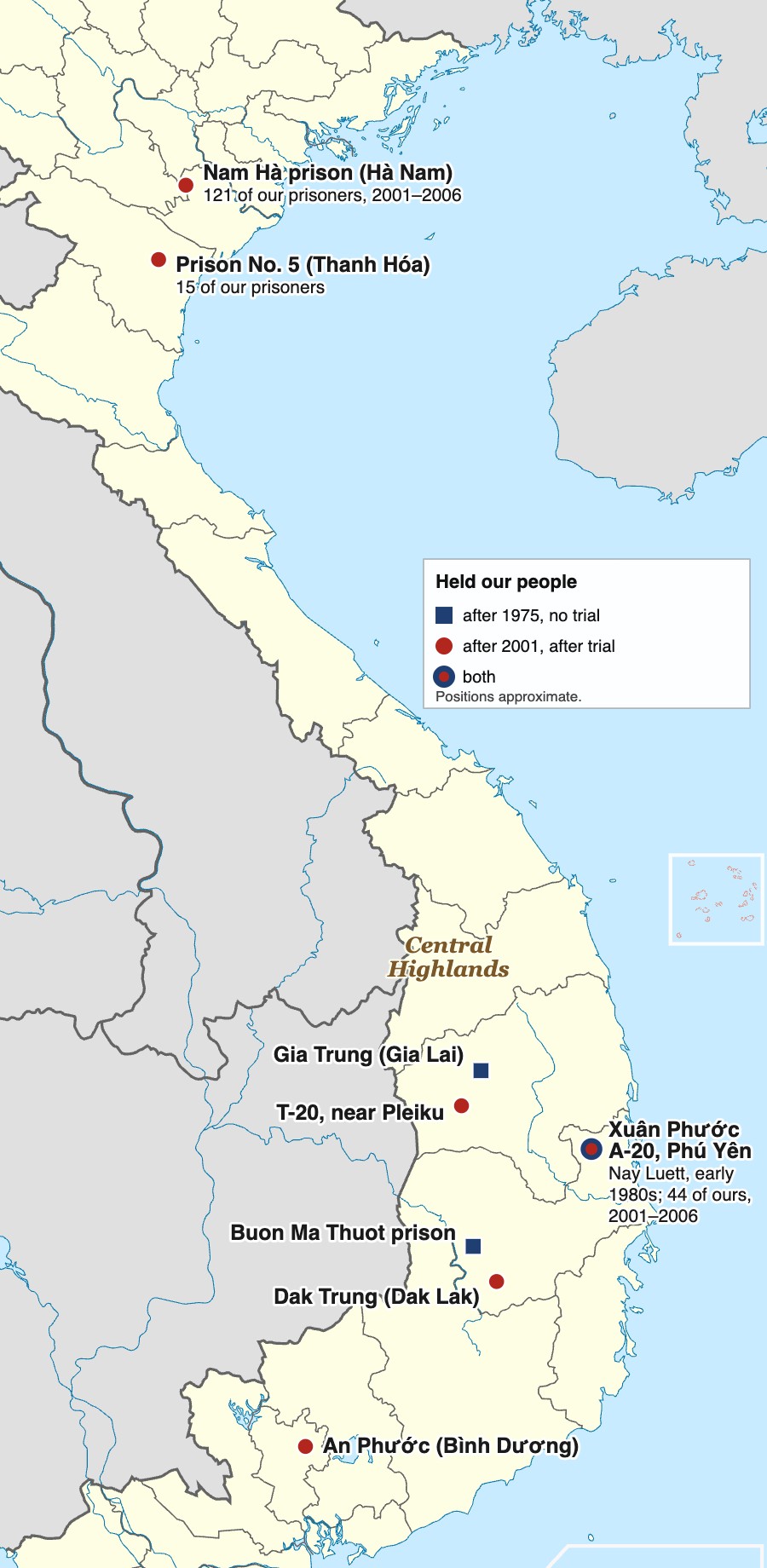
- 1975 to 1990, the re-education camps. The worst-documented part of our history. A handful of the camps that held our people can be named, among them Gia Trung, the prison at Buon Ma Thuot, Xuân Phước and Nam Hà, and the camps sets out what is known for the former South as a whole. For our people specifically there is no count, no roll of the dead, and not a single published first-person account of the inside of a camp. Amnesty International wrote in 1990 that the Montagnard pastors still held were a group about whom “information … is scarce.” This is the gap with the least time left on it.
- FULRO in the forest, 1975 to 1992. Seventeen years, thousands of people, and almost no internal record. What exists is journalism, above all Nate Thayer’s reporting from Mondulkiri in 1992, and the CIA’s paper of 1983. The first full history of FULRO, published in 2025, stops at 1975; its author said he lacked enough clear information to go further. One Dega memoir covers those years from inside: H’Yoanh Buonya’s account, written with Harriet Hill, of the forest from 1975 until she reached North Carolina in November 1986, published in 2013 as Escaping Viet Nam. It has not yet been read for this library.
- Village by village after February 2001. The provincial picture is documented. What happened in individual villages in the years afterward is not: only three are documented in any detail, Buon Ea Sup, Plei Lao, and the hamlet in Dak Lak that wrote the letters.
- Cu Kuin, after the trial. The sentences of January 2024 are known in outline from the UN: ten to life, 43 to between six and twenty years under article 113, 45 to between three and a half and eleven years under article 299, six of them in absentia, and one each to two years and to nine months. Three of the hundred can be named from sources outside the Vietnamese state press. Where any of them is held is not known, and not one account has been published by anyone who was taken in the manhunt and let go.
- The bauxite families. Figures from a government report of May 2009, as a Berkeley dissertation set them out, count 404 ethnic minority households at Tan Rai and 15 at Nhan Co among those affected by the mines. We have no account of where those families went or what the resettlement sites are like. See Bauxite.
- The dam villages, twenty-five years on. The study of the Yali Falls resettlement was done in 2000 and published in 2001. Nobody independent has been back to the nine resettlement sites since. See The dams.
- The wider diaspora. Finland took about seventy-five of our people in 2005, and Canada eight that year and fifty in 2011. There is no count for France, for the American states beyond North Carolina, or for Australia. See Beyond North Carolina.
- Women’s lives, throughout. Our sources are overwhelmingly male, because the soldiers, the prisoners and the petitioners in the record are male. Dega women sets out what can be established and the shape of what is missing. The one book by a Dega woman about the forest years is the memoir named above.

Documents we know exist and have never seen
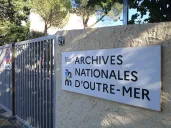
- The signed statute of 1951. We hold Bảo Đại’s ordinance of May 21, 1951, and the French ordinance of 1946, as typed transcriptions in French with English translations, in our library. We do not have a photograph of either signed original, or an archive reference for one. The French colonial archives at Aix-en-Provence, and the official gazette of the State of Vietnam, are where they should be.
- The BAJARAKA letters of 1958. BAJARAKA wrote to the American ambassador on July 7, 1958 and to President Diem on September 8, and showed the ambassador copies of a letter to the United Nations signed by 45 of our leaders, which they had asked the British and French ambassadors to forward. We know them only from a CIA summary. The American embassy’s files at the National Archives, the British Foreign Office files at Kew and the French diplomatic archives should each hold at least one.
- FULRO’s own papers of 1964 and 1965. The declaration of September 20, 1964, and the provisional constitution FULRO sent to the UN Security Council in November 1965, reached the American embassy. No text of either has been published.
- The records of the Ministry for Ethnic Minorities’ Development, 1967 to 1975. The ministry our leaders ran is known almost entirely from the outside. Its own files, if they survive, would be among the Republic of Vietnam’s records in the state archives in Ho Chi Minh City. The American side of its work, the files of the CORDS Office of Highland Affairs, is at the National Archives at College Park, and has not been read for this library.
- The memorandum of 2005. Vietnam, Cambodia and UNHCR signed a memorandum of understanding on January 25, 2005 about our people in the Cambodian camps. Human Rights Watch and UNHCR both quoted it in 2006, so both held it; neither published it. What happened to each person returned under it is not recorded anywhere public.
- The designation of March 6, 2024. The decision naming two overseas Montagnard groups “terrorist organizations”, its legal basis and its evidence have never been published outside the Vietnamese state press, and nor has the list of the dozens of people said to have been designated with it.
- Our own submission of 1993. Our first submission to the United Nations, made in Geneva in July 1993, is known from its text and from the Working Group’s report on that session, but we have not found a UN document symbol for it.
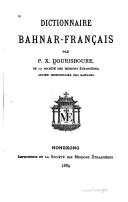
- The Kon Tum mission’s own archive. The Paris Foreign Missions hold the mission’s files from 1850, with deposits made by the mission itself in 1964 and 1975: the richest unexplored source for our nineteenth century.
- Figures for our own peoples. Education, health and population figures for each of our peoples, province by province. None is published outside Vietnam, and since the provinces were merged on July 1, 2025 none can be built from the old series. The UN committee on racial discrimination told Vietnam in 2023 that it had not developed the tools to count the groups the Convention covers.
- Land papers. Land use certificates, refusals, compensation notices and survey maps for highland land: the single most useful class of document for our land claim, and the one most likely to be sitting in a family’s house.

Names we are missing
- The missing of Easter Week 2004. Some of those reported taken, with their whereabouts unknown, are named in Easter Week 2004. No full list has ever been made.
- Sixty-two people in the Gia Lai prisoner records whose record ends in “whereabouts unknown” or “family believes murdered.” See the Gia Lai prisoners.
- Ninety-seven of the hundred convicted in January 2024, whose names appear only in the Vietnamese state press, which this library does not use.
- Everyone imprisoned since 2006, which is where our own prisoner records stop. Later lists exist in part: Human Rights Watch in 2011, and the victims list of the US Commission on International Religious Freedom, which by our count names 44 of our people. None of them holds the prisoners of 2024.
- The dead in custody since 2011. Human Rights Watch counted at least 25 of our people dead in custody between 2001 and 2011, most of them unnamed. Nobody has counted since.
- The people sent back. The 167 returned from Cambodia on December 27, 2001; the 94 deported from Phnom Penh on July 20, 2005 (101 by Human Rights Watch’s count); those returned under the memorandum of 2005; the thirteen sent on from Cambodia to the Philippines in 2015.
- The people taken in Thailand in 2025. Sixty-eight were detained in Nonthaburi in February and about seventy in October. Where they are now is not known.
- The seventy named in our submission of 1993 as killed in Gia Lai and Kon Tum on May 24, 1975. Their names have never been set beside any other record.
- Y Bham Enuol’s family. Our own records name eleven: his wife, eight children and a son-in-law. Which of them were in the French embassy in Phnom Penh on April 20, 1975, and whether any of them lived, is not written anywhere we have found.
Places we cannot find
- Where Y Quynh Buondap is held. He was handed from Thailand to Vietnam on November 28, 2025. By February 2026 he was reported to be serving a ten-year sentence. UN experts said in December 2025 that his whereabouts were unknown, and ten months after his extradition no source outside Vietnam has said where he is, or whether he has seen a lawyer or his family. See Y Quynh Buondap.
- Where the Montagnard Foundation’s archive went after Kok Ksor died in 2019. Our own prisoner records were built in part from its files; the archive itself has not been located. See Kok Ksor.

Where our sources disagree
Our own records, the scholarship, the governments’ papers and the human rights reports do not always agree, and we print the disagreement rather than choosing quietly. The articles that use these figures give the range and say whose each one is.
| Question | What the sources say |
|---|---|
| When BAJARAKA began | Organizing in 1957 and an organization by July 1958 (CIA); early 1958 (Hickey). A meeting at Pleiku on May 1, 1958 was a meeting of its central committee, not its founding. January 5, 1958 is also printed, and we have not found its source; May 1955 appears only in an online encyclopedia, without a citation. |
| The demonstrations of 1958 | A general strike at Ban Me Thuot on September 9 and the arrest of the seven leaders on September 15 (Hickey); demonstrations in four towns on October 15, broken up by troops in armored vehicles, and the arrests after (CIA). |
| When FULRO was founded | August 1, 1964 (FULRO’s own proclamation, and our 1993 submission); July 1964 (Human Rights Watch); September 20, 1964, the day of the rising (many accounts). The CIA thought FULRO a reorganization of BAJARAKA. |
| Who was its first president | Y Bham Enuol (our own tradition, and most American accounts); Chau Dara, with Les Kosem and Y Bham Enuol as vice-presidents (the proclamation of August 1, 1964, as Noseworthy prints it). |
| Vietnamese killed in the rising of September 1964 | About 73 in all (CIA); 36 Special Forces and 17 militia; 55; or 11, 15 and 10 at three named camps, depending on the account. |
| When the highland courts were restored | March 1965 (the US Army’s handbook of 1966); Decree Law 006/65 of July 22, 1965 (Hickey, who prints the decree). Our leaders had asked for it again at Saigon that March. |
| The agreement of 1968 | Signed December 19 (Hickey, writing within the year) or December 11 (later accounts). The date of December 30 for the seizure of Camp Le Rolland comes only from later accounts. |
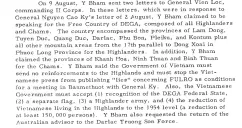
| How Y Bham Enuol died | He walked out of the French embassy in Phnom Penh on April 20, 1975 with about 150 of our people (François Ponchaud, who saw it). The Lambert stadium as the place of death rests on one memoir. More than three hundred died with him, counting families, by our own count. |
| How Nay Luett died | At home, within two months of his release, in 1983 (our own records); killed in jail in Dak Lak in 1983 (our own submission of 1993); February 14, 1984, in captivity (Michael Benge). |
| FULRO’s strength after 1975 | Ten thousand fled to Cambodia in 1975 (Michael Hayes, 2025); more than 8,000 killed or captured by 1979 (Nate Thayer’s sources); about 7,000 in the early 1980s (Human Rights Watch); about 2,000 insurgents in 1983 (CIA). |
| The group resettled in 1986 | 201 (the State Department), 209, 212, or “over 200”: very probably the same group, counted at the border, on approval and on arrival. |
| The last FULRO group, 1992 | 407 (Thayer), 398 (the Washington Post and the State Department), 402 (the State Library of North Carolina), 417 (one community history). |
| The dead of Easter 2004 | 2 (the government that sealed the region); at least 10 (Human Rights Watch); 8 by name (Amnesty International); 20 to 25 (people who were there); about 400 (Montagnard Foundation). |
| The hour of the attacks of June 11, 2023 | “At dawn” (Radio Free Asia, reporting the Vietnamese press); 00:35, the time most often repeated, whose origin we have not traced. |
| The length of the trial of January 2024 | Five days, with one day of deliberation (the UN); three days (Human Rights Watch); four days ending January 22 (AFP). |
| The Nonthaburi arrests of February 2025 | 65 detained (the UN); 43 sentenced to six months in prison (the UN, and AFP from the lawyers) or fined 4,000 baht, with eight days in jail for those who could not pay (the police, as reported by BenarNews). |
What we will not print
An account we cannot attribute to somebody who was there, or to a published source, goes on this page rather than into an article. A figure whose origin we have lost is printed with that said plainly, and not given a source it does not have. A detail that would identify a person still in Vietnam does not appear at all, even where it would strengthen the case. And we do not republish the Montagnard Foundation’s archive as though it were ours; it is a source, and cited as one.
Why this page is here
A library built to support a claim has an obvious temptation, and the way to resist it is to publish the gaps where anyone can check them. If a Vietnamese official wanted to attack this library, this page is where they would start, and we would rather hand them the page than have them find it themselves. Everything else here is stronger for it.


If you can close one of these gaps
Read reporting safely first, then how to document, then how to reach us. A photograph of one document, or one account from somebody who was there, changes more here than any amount of further reading. For an elder’s memory of any of the years above, see how to record an elder’s story.
Sources
- CIA, The Highlanders of South Vietnam (June 1966), preface and chapters on BAJARAKA and FULRO, in our library; CIA, Vietnam: Repressing Ethnic Minorities and Religious Groups (1983), in our library
- Gerald C. Hickey, The Highland People of South Vietnam (RAND, 1967), in our library; Accommodation and Coalition in South Vietnam (RAND, 1970), in our library; Shattered World (1993), page 261
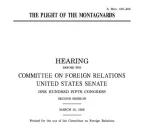
- Our own records, and our submission to the UN Working Group on Indigenous Populations (Geneva, July 1993); US Senate, The Plight of the Montagnards (March 10, 1998), in our library
- Human Rights Watch, Repression of Montagnards (2002), in our library; No Sanctuary (2006), in our library; Montagnard Christians in Vietnam (2011), in our library
- Amnesty International, Viet Nam: “Renovation” (Doi Moi), the Law and Human Rights in the 1980s (1990), in our library; Renewed concern for the Montagnard minority (2004), in our library
- UNHCR, Country Operations Plan 2007: Viet Nam (2006), in our library; UN special procedures, communications AL VNM 4/2024 and AL OTH 84/2025, and press release of December 3, 2025; Committee on the Elimination of Racial Discrimination, concluding observations on Viet Nam (2023), in our library
- William B. Noseworthy, “Lowland Participation in the Irredentist ‘Highlands Liberation Movement’ in Vietnam,” ASEAS 6 (2013), in our library; François Ponchaud, Cambodia: Year Zero (1978); Michael Hayes, “FULRO: a war of their own in Cambodia,” Asia Times, April 9, 2025
- H’Yoanh Ksor Buonya and Harriet Hill, Escaping Viet Nam: H’Yoanh’s Story (2013)
- Jason Morris, The Vietnamese Bauxite Mining Controversy (PhD, University of California, Berkeley, 2013)
- US Senate resolution 395 (118th Congress, 2023); Governor of North Carolina, proclamation of Montagnard Dega People’s Day (September 2026); US Commission on International Religious Freedom, victims list for Vietnam (2026)
- Foreign Relations of the United States, 1958–1960, volume I, document 33; US National Archives, records of CORDS, Military Region 2, Office of Highland Affairs
Compiled September 2026, and meant to shrink. When somebody closes one of these gaps, what they found goes into the article it belongs to, with credit to them unless they ask us not to name them.