












At about half past midnight on Sunday, June 11, 2023, two groups of armed men attacked the commune headquarters at Ea Tieu and Ea Ktur in Cu Kuin district, Dak Lak. Nine people were killed: four police officers, two commune officials, and three civilians whose names have never been published. We do not defend that attack and nothing on this page is a defense of it. What followed is the substance of this page. Local people were called on by the state’s own media to go out and help catch anyone wearing camouflage clothing, and armed themselves with knives and machetes to do it. About a hundred people were arrested. Seven months later a court sitting in the open, for five days, with nineteen lawyers between ninety-four defendants, convicted every one of the hundred. Fourteen United Nations experts examined the trial and found that it lacked a clear legal basis, was not independent of political influence, and functioned as a prejudicial tool to collectively shame the defendants without properly assessing individual responsibility.
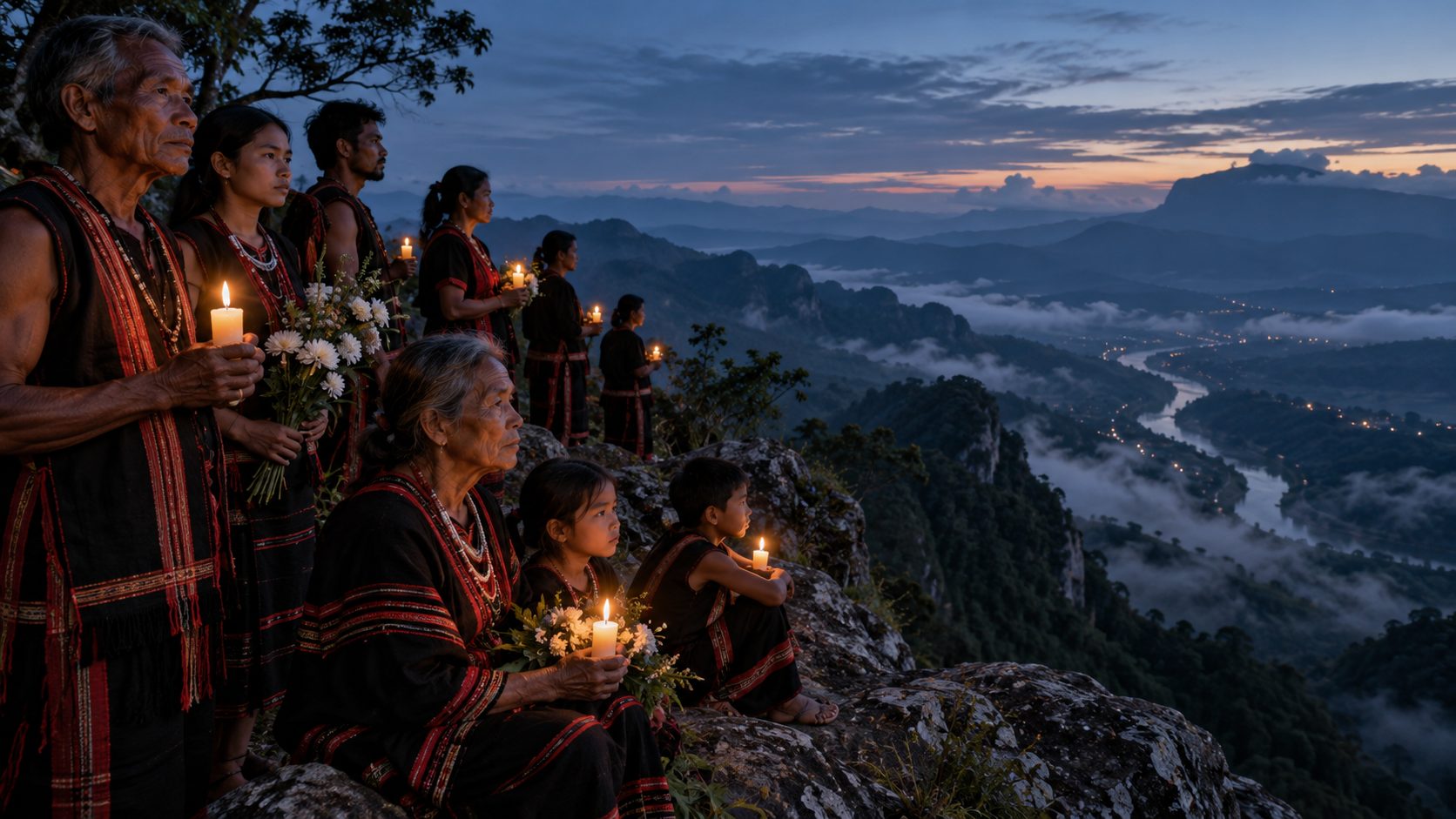
The night
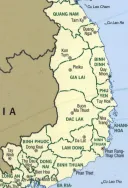
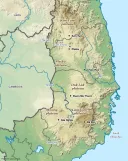
Two groups moved at about 00:35 on June 11, 2023, against the headquarters of the People’s Committees, and the commune police posts attached to them, at Ea Tieu and Ea Ktur. The two sites are about a kilometer apart. Cu Kuin district lies immediately southeast of Buon Ma Thuot; its eight communes are Ea Ning, Ea Tieu, Ea Ktur, Ea Bhok, Hoa Hiep, Dray Bhang, Ea Hu and Cu Ewi, and it is substantially Rhade country.
The International Work Group for Indigenous Affairs, in its Vietnam chapter for 2024, describes what happened in one sentence: in the early morning of June 11, 2023, two groups of people armed with guns, knives and Molotov cocktails attacked the headquarters of the People’s Committee of Ea Tieu commune and Ea Ktur commune, Cu Kuin district, in Dak Lak province.
How many attackers there were is not settled: reports range from about forty to about fifty. Documents and papers were burned; windows and the main entrance were smashed. Three civilians were taken hostage; two were freed by police and one got away by himself. We have no names, ages or people for the three.
Nine people were killed. The UN communication of June 2024 gives the composition: four police officers, two local officials — the Secretary of Ea Ktur commune and the Chairman of Ea Tieu commune — and three civilians.
The names of six of the nine have circulated, through the Vietnamese press. We give them because people who are killed should be named, and we say where the names come from.
The police officers: Hoàng Trung, major; Trần Quốc Thắng, major; Hà Tuấn Anh, captain; Nguyễn Đăng Nhân, captain. The commune officials: Nguyễn Văn Kiên, Party Secretary of Ea Ktur commune, and Nguyễn Văn Dũng, chairman of the Ea Tieu People’s Committee. Both men are described as having come to the scene after the attack began and having been intercepted and shot. Two wounded officers are also named: Senior Lieutenant Đàm Đình Bốp and Captain Lê Kiên Cường.
The three civilians are not named anywhere outside Vietnam. That is the first thing this page has to say that it does not know, and it matters more than it looks. The attackers are said to have stopped vehicles on the road and killed the people in them. Two of the three communes involved are heavily Rhade. It is entirely possible that some of the three were Dega. Nobody outside Vietnam has established it either way, and nobody has tried.
What nobody has established
The governing sentence on this page was written by an indigenous-affairs practitioner based in Vietnam, in the Vietnam chapter of the International Work Group for Indigenous Affairs’ annual survey: although the motivation and goal of the Dak Lak attackers remain unclear. And immediately after it, the context she places it in: for decades the area has been the scene of tensions between Kinh and highlanders, and of protests and confrontations against the central state, above all over land, economic hardship and the repression of the evangelical churches.
Notice who wrote that. It is not a foreign advocacy organization with nothing at stake. It is written by somebody who has to go on living and working in Vietnam, who has every reason not to overstate against the state, and who nevertheless declines to accept the state’s account of motive. That makes the sentence stronger, not weaker.
What the state said
Taken from non-Vietnamese carriers, because this library does not use Vietnamese state media as a source.
On June 16, 2023, a Ministry of Public Security spokesman described the attackers as young people who harbored delusions and extremist attitudes, and named no organization and no individual as having incited them. On the same day, detainees were said to have claimed they wanted to steal weapons in order to make news headlines, which they hoped would give them the chance to emigrate. That is the closest thing to a stated motive anywhere in the record. It comes from people in custody without lawyers, and it does not fit easily beside what came next.
On June 23, 2023, the same ministry said the attack had taken place with the support and guidance of several organizations and individuals from overseas. It named none of them on that date. A major general heading the ministry’s Homeland Security Department said those arrested included members of a US-based organization tasked with staging attacks.
In January 2024 the defendants were reported to have confessed to being lured, incited and forced by reactionary groups in the United States and Thailand, and the court ruled that they had offended through lack of understanding.
And what the state also said
On September 7, 2023, Vietnam’s Vice Minister of Public Security told the Vietnamese press that the events of June 11 were unfortunate, and that frustration over the country’s growing wealth gap and poor land management by local officials were partly to blame — while insisting that negligence was not the only issue and calling the violence an inevitable consequence of relentless opposition and sabotage. At the trial his listing of root causes was reported as the socio-economic problems of the Montagnards in the region: the gap between rich and poor, land management, and building the political system.
Hold the sequence in view. In June the Ministry of Public Security said the cause was foreign direction. In September the Vice Minister of Public Security said the causes included land and poverty. In January its court convicted a hundred people on the foreign-direction theory. The state’s own second-highest police official had already named the domestic causes. See The land law, which sets out what a land grievance in the highlands can and cannot do: seventy to eighty percent of all complaints the Vietnamese state receives are about land, half a million of them were mishandled over a decade, and there is no forum outside the provincial authority that issued the certificate in the first place.
The denials
Several overseas Montagnard organizations denied involvement and condemned the attack in late June 2023. Y Quynh Buondap, later convicted in absentia for it, said: “I am in no way related to that armed group. It is absurd for the Vietnamese government to make such accusations!” and “They didn’t produce any evidence but accused me of that.”
What our own people said about the accusation
H Biap Krong is a Rhade human rights defender from Dak Lak who left Vietnam in October 2015 and was herself later declared a terrorist by Hanoi. On the day the hundred verdicts came down she made the sharpest analysis anyone has made of what those verdicts were:
“From 1980 until now, when most highlanders are repressed and accused under charges like sabotaging the state’s policy of great unity, what they actually did is not what is in the verdict.”
“But for everyone the courts put on trial, the accusations are very much the same, and have been all along. It is like an essay learned and re-learned by heart — that they were drawn in, that they were incited by forces outside. To anyone who follows what happens in the Central Highlands, this is no longer strange.”
And then the argument that the outside commentary has not made:
“For highlanders brought to trial, the sentences the Vietnamese state hands down — and specifically the Dak Lak authorities in the Central Highlands — are usually very long, six years to seventeen. So they cannot trade away their lives and their safety to go and listen to incitement from abroad.”
Think about what she is saying, because it is a point about evidence and not about loyalty. Everybody in the highlands knows exactly what a conviction costs, because everyone knows somebody who is serving one. People who know the price do not pay it on the strength of a message from South Carolina. The theory of foreign incitement requires the people it describes to be simpletons, which is also, conveniently, the thing the court found: that they had offended through lack of understanding.
On her own designation she said: “I have nothing to do with the shooting incident in Dak Lak. This accusation by the government is completely baseless.”
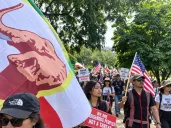
Rong Nay, director of the Human Rights Organization of the Montagnards in North Carolina, asked the question that nobody in Hanoi has answered. If the state keeps the strict control of the Central Highlands that it does keep — the surveillance, the informers, the summonses, the police in the villages — how did it discover nothing at all about Cu Kuin until it happened? At a march on the White House and the Vietnamese Embassy on November 3, 2023, he said:
“After many years, from 1975 to 2023, 48 years, we realize that the situation of human rights and religion in Vietnam in general and with the highlanders in the Central Highlands in particular has not changed at all.”
“The police always harass people, enter people’s homes without asking permission.”
And from a Rhade pastor who has been a refugee in Thailand since 2017, speaking on the day the trial opened, the sentence that comes closest to an explanation:
“The shooting is not a terrorist incident, but this is a sign that the water has broken its banks and people cannot stand the oppression.”
An explanation of why something happened is not a justification of it, and we are not offering one. Nine people were killed at Cu Kuin and they were killed for nothing. Both of those things are true at once, and the reason this page insists on saying so is that the Vietnamese state has spent three years arguing that anyone who tries to explain the pressure must be endorsing the violence. That argument is how a hundred people came to be convicted in five days.
So, plainly, what is unresolved
- Why. No motive has been established by any process that can be checked. The only stated motive in the record came from people held without lawyers.
- Who organized it. No organization has been shown to have planned it. Two organizations have been declared to have done so, by the state that prosecuted the case, and the UN experts found the declaration was made absent substantiation of engagement in terrorism.
- Whether anyone abroad directed it. Asserted in general terms on June 23, 2023 and never substantiated publicly. The US ambassador condemned the attack in the strongest possible terms on July 25, 2023 and said his embassy was willing to work with the Vietnamese government to clarify what was behind it. Three years later that has produced nothing public.
- Who the attackers were. Six men described as ringleaders were named when arrested in July 2023 — Y Khing Lieng, Nay Duong, Y Hoal Eban, Y Ju Nie, Nay Yen and Nay Tam. What relation those six bear to the hundred who were eventually tried has never been set out anywhere.
- Whether the attackers and the hundred convicted are the same people. That is the question the rest of this page is about.
There has never been an independent investigation, and there is no mechanism by which there could be one. Vietnam restricts access to the Central Highlands for independent investigators. In August 2023 it told the UN Working Group on Arbitrary Detention and three Special Rapporteurs, formally and in writing, that there are no indigenous people in Vietnam, and that no such thing as the so-called indigenous Montagnard exists among its fifty-four ethnic groups.
A state that denies the existence of the people it is prosecuting is not a state whose account of their motives can be taken on trust. See Indigenous rights at the UN.
The manhunt
This is the part of the story the outside world has not looked at, and it is the part that decided who went to prison.
The researcher quoted above, who has followed the highlands since the 1990s, described it this way:
“The manhunt was probably the most intensive thing I’ve ever seen or heard of in Vietnam.”
“So many were so frightened, almost terrorized by the intense show of force by police and elite security units that they fled their homes.”
A Southeast Asia specialist at the US National War College said security forces had deployed very high-end sniper rifles under shoot-to-kill orders.
Then this, from the joint allegation letter sent to the Vietnamese government on June 14, 2024 by thirteen United Nations mandates:
“In response an intense security operation involving heavily armed police and other security units from Viet Nam’s Ministry of Public Security rapidly led to the detention of a large number of people.”
“Local residents were called on by state media to assist the authorities to search for and apprehend persons wearing commonplace ‘camouflage’ clothing, and duly armed themselves with knives, machetes and sticks.”
“Some Montagnard residents fled their homes in fear.”
“there were reports of arbitrary arrests, extrajudicial killings, torture, and other forms of cruel, inhuman, or degrading treatment”
Read the second of those again slowly. The state mobilized the civilian population, through its own broadcasters and newspapers, to go out and catch people identified by nothing except the clothes they had on. The civilians armed themselves with knives, machetes and sticks and went. In a district that is substantially Rhade, the people being hunted by their neighbors were Rhade.
That is not an allegation by an exile organization. It is a finding in a UN special procedures communication signed by thirteen mandates, and it has been on the public record since August 2024.
And it is corroborated from a completely different direction. A Vietnamese criminal defense lawyer, speaking in January 2024 about the arrests of the previous June:
“Given that the police were arresting, indiscriminately, any highlander who happened to be wearing camouflage clothing in that area in the middle of June 2023, I do not believe it is possible that all 100 of those highlanders are guilty.”
Thirteen United Nations mandate holders in Geneva and a Vietnamese defense lawyer in exile, working from entirely separate material, describe the same net: cast by clothing, not by evidence.
The arrest count, day by day
Every one of these figures originated with the Ministry of Public Security and was carried by a foreign news agency. The sequence is worth seeing whole.
| Date, 2023 | Reported |
|---|---|
| June 11 | 16 detained; two hostages freed |
| June 12 | 22, then 26, then 39 |
| June 13 | 46, three said to have surrendered |
| June 16 | more than 50 |
| June 17 | 62 arrested or surrendered |
| June 20 | 74 detained; firearms and 1,199 rounds of ammunition seized |
| June 23 | 84 prosecuted: 75 for terrorism against the people’s authorities, 7 for failure to report criminal activity, 1 for concealing criminals, 1 for organizing illegal emigration |
| July 21 | nearly 100 detained; six “ringleaders” all in custody |
| September 7 | nearly 100 |
| January 16, 2024 | 100 defendants at trial |
Eighty-four were charged on June 23. A hundred stood trial. Nobody has explained who the other sixteen were or when they were added.
The reach went further than the district. Cambodia ordered increased border security in three provinces to stop anyone crossing. Police fined at least five Facebook users for sharing news about the attack, on the ground that sharing it was harmful to the state, and fined businesses that sold imitation camouflage clothing. Two Vietnamese human rights lawyers objected at the time that publishing suspects’ photographs and statements without consent breached image rights under the Civil Code, and that statements taken from suspects should have been kept confidential; both said the detainees needed lawyers immediately. At that point neither the ministry nor the provincial police had formally opened cases against the people already in custody.
Held
From the UN communication:
“Detainees were denied access to lawyers for protracted periods of months following their arrests and were also denied access to family visits.”
And from the UN experts’ public statement of August 28, 2024:
“Some detainees were subjected to torture and cruel, inhuman or degrading treatment or punishment in detention, including forced confessions.”
The families of a hundred people have left almost no trace in the public record. What exists is a briefing note by Christian Solidarity Worldwide reporting that family members of those convicted said the charges were based on confessions made under duress — and eleven words given to Radio Free Asia in January 2024 by a relative of one defendant, who is not named:
“The family was not allowed to visit, could not hire a lawyer, and could do nothing at all.”
A hundred families went through the seven months between June and January. Two sentences of what that was like have been published. The families are the witnesses and nobody has asked them.
A death
Y Pum Buonya was an evangelist of the Evangelical Church of Christ in the Central Highlands. In December 2023 he had been publicly denounced in front of his fellow villagers for refusing to disband his house church. He died on March 8, 2024.
Three accounts of that death exist and they do not agree.
The fourteen UN experts, in August 2024: “One detainee, Mr. Y Būm Byă, died in custody on 8 March 2024 after being tortured.” The communication adds that his body had been badly beaten, that he had earlier been forced to publicly renounce his unofficial house church and had been arrested and beaten by police, and that he had been charged with undermining national unity.
Christian Solidarity Worldwide: his body was found hanging from a tree after he had been summoned to a meeting with public security officers at a cemetery near his home.
His own church: he was killed after being beaten and threatened by police.
The three agree that police summoned him and that he died. They do not agree on where he was when he died. There has been no independent post-mortem, and nobody outside Vietnam has settled it. Vietnam subsequently issued an arrest warrant for the founder of his church, Pastor A Ga, who lives in the United States. Y Pum Buonya is in our Memorial register.
The trial

The People’s Court of Dak Lak province opened on January 16, 2024 and delivered a hundred verdicts on January 20. It sat as a mobile court — a court convened outside a courthouse and staged as a public event.
On that form of court, the UN communication is unambiguous:
“Vietnamese law has never sought to regulate the use of mobile court procedures, such that they lack an adequate legal basis and are necessarily arbitrary in operation.”
And on what it actually did:
“the proceedings did not perform a legitimate educative function but resulted in publicly embarrassing, shaming, humiliating or degrading the defendants and their families.”
Note the last three words. A later summary drops them. The communication does not, and they are the point: the families were part of what was being shamed, in front of the district, on purpose.
The mechanics
A second UN communication, of July 24, 2025, gives the arithmetic:
“On 16 January 2024, 100 defendants – of whom, 99 ethnic Montagnards – were brought to trial in connection with this violent attack.”
“On 20 January 2024, all defendants were tried by a ‘mobile court’ of five judges. The trial proceedings took place over a period of five days, with one day of deliberations.”
“Nineteen lawyers were present at the trial to represent the 94 defendants, who were present at the trial.”
“Six defendants, including Mr. Y Quynh Bdap, were tried and sentenced in absentia, and did not receive legal representation.”
Nineteen lawyers. Ninety-four defendants present. Five defendants to a lawyer, over four days of hearing, on charges carrying life imprisonment — and, in the prosecution’s submission for the alleged ringleaders, death.
Human Rights Watch gives the same trial from the other end: each defendant’s hearing lasted a maximum of fifteen minutes.
Fifteen minutes is not enough time to establish what one person did on one night. The Vietnamese defense lawyer quoted earlier said so at the time:
“There is not even enough time for the bench, the prosecution and the lawyers to question each suspect to establish what he did, let alone for the whole run of procedures before and after. Unless this is the kind of trial that people colloquially call a ‘pocket verdict.’ Everything was settled in advance.”
He was harder still on the defense:
“I believe the lawyers and legal-aid workers did not discharge their duty, and indeed, from the way the press describes it, I believe they sold out their own clients by mounting such a negligent defense.”
“So at the trial, instead of being defended, they became the victims not only of the prosecuting organs but of irresponsible lawyers who had come to terms with the authorities.”
Trying a hundred people in four days, he said, was not feasible. And unlike the corruption trials that get saturation coverage in Vietnam, almost nothing of what the defense said was reported at all; the reports noted only that the lawyers agreed with the prosecutors.
How long the trial ran is itself disputed, which tells you something. The UN communications say five days with one day of deliberations. Radio Free Asia’s Vietnamese service said less than five days, running January 16 to 19. Human Rights Watch said three days. Agence France-Presse and Christian Solidarity Worldwide describe a four-day trial concluding January 22. The court opened on January 16 and delivered a hundred verdicts on January 20; how many of those days were hearing and how many were deliberation is reported differently by every body that examined it, because no independent observer was allowed in the room.
How many of the hundred were Montagnard is also reported differently. The June 2024 communication says most, with one defendant of the majority Kinh background — that is, ninety-nine. The July 2025 communication says ninety-nine. Radio Free Asia, reporting from the opening day, said ninety-three of the hundred were of ethnic minority background. We print the disagreement.
The charges and the sentences
Fifty-three defendants were charged under Article 113 of the 2015 Criminal Code, terrorism aimed at opposing the people’s government. Forty-five were charged under Article 299, terrorism. One under Article 348, organizing or brokering illegal exit, entry or stay. One under Article 389, concealment of crimes. See The laws used against us.
The sentences, from the UN communication, which is the most precise account in existence outside the Vietnamese press:
| Sentence | Defendants | Offense |
|---|---|---|
| Life imprisonment | 10 | Article 113, terrorism to oppose the people’s government |
| Six to twenty years | 43 | Article 113 |
| Three and a half to eleven years | 45 | Article 299, terrorism |
| Two years | 1 | Article 348 |
| Nine months | 1 | Article 389 |
A hundred people, a hundred convictions, no acquittals. Five defendants received twenty years and two received nineteen; ninety-two were ordered to pay compensation.
The three who can be named
Only three of the hundred are named anywhere outside the Vietnamese press, and all three were tried in their absence, in another country, without a lawyer. That fact should be sat with for a moment: the only defendants whose names the world knows are the ones who were not in the room.
- Y Sol Nie — life imprisonment in absentia, for commanding, leading, manipulating and directing the attacks. Reported to be a US citizen.
- Y Mut Mlo — tried in absentia and described as an alleged mastermind. The reported sentence conflicts: eleven years in one account, life imprisonment in another. We have not been able to settle it and we are not going to pick one.
- Y Quynh Buondap — ten years in absentia under Article 299. Co-founder of Montagnards Stand for Justice; a refugee recognized by UNHCR and living in Thailand since 2018. See Y Quynh Buondap.
The other ninety-seven names exist only in Vietnamese state media. We do not print names from that source, so this library cannot tell you who ninety-seven of the hundred are. That is a real cost of the rule and we state it rather than hiding it. Anyone in the highlands or the diaspora who knows a name and a village can give this library something no archive anywhere holds.
What the fourteen experts said
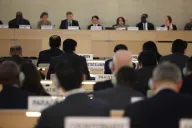
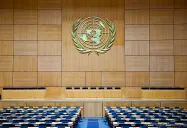
On August 28, 2024, fourteen United Nations experts issued a public statement under the headline Experts condemn misuse of counter-terrorism law against Montagnards in Viet Nam. It concerns, in their words, “the discriminatory misuse of counter-terrorism law by the Socialist Republic of Viet Nam against Montagnard Indigenous Peoples.”
“The 100 people were mainly charged with vague and over-broad terrorism offences and were prosecuted in a mass trial.”
“The mobile court lacked a clear legal basis and was not independent of political influence.”
“It was a prejudicial tool to collectively shame the defendants, without properly assessing individual responsibility.”
“The mass prosecution did not guarantee individual rights to prepare a defence, to access and choose legal representation, and to examine and cross-examine witnesses.”
The fourteen were Ben Saul, Cecilia M Bailliet, Irene Khan, Gehad Madi, Morris Tidball-Binz, Aua Baldé, Gabriella Citroni, Grażyna Baranowska, Ana Lorena Delgadillo Pérez, Nazila Ghanea, Jose Francisco Cali Tzay, Gina Romero, Mary Lawlor and Nicolas Levrat. They hold eleven mandates between them, covering counter-terrorism, arbitrary detention, enforced disappearance, extrajudicial execution, freedom of expression, freedom of assembly and association, human rights defenders, the independence of judges and lawyers, the rights of indigenous peoples, minority issues, freedom of religion or belief, torture, migrants, and international solidarity.
Name what this source is and what it wants, as this library does with every source. UN special procedures are independent experts, unpaid, appointed by the Human Rights Council. They have no enforcement power at all. What they have is the ability to put a finding on the public record in terms a government has to answer, and their whole standing depends on not overstating. That is why the wording matters: they did not say the trial was unfair. They said the court lacked a clear legal basis, was not independent of political influence, and was a prejudicial tool to collectively shame. Experts who overstate get ignored. This is what they were prepared to sign.
Vietnam’s mission in Geneva asked for a two-month extension to reply, on August 15, 2024.
Two organizations become terrorist organizations
On March 6, 2024, the Ministry of Public Security designated two organizations as terrorist organizations.
Montagnard Support Group Inc, registered in North Carolina and founded in 2011 by former members of FULRO. And Montagnards Stand for Justice, the group Y Quynh Buondap co-founded.
The allegation was that both had engaged in propaganda, recruitment, training and the financing of terrorist activity, had aimed to establish a separate state in the Central Highlands, and had been involved in the June 2023 attacks. Under the announcement, anyone who joins, finances or trains with either organization is liable for the crime of terrorism or of financing terrorism.
Follow the mechanism. The group collects accounts of church closures and police summonses and passes them to human rights bodies. Once it is legally a terrorist organization, every person in the highlands who ever sent it a photograph of a demolished church is, as a matter of Vietnamese law, a person with a terrorist connection. The designation does not need to be enforced against anyone to work. It only needs to be believed.
The UN experts’ finding on it: the listing was made absent substantiation of its engagement in terrorism, and to the extent that it targets the legitimate political activities or the defense of human rights by Montagnard peoples, it may impermissibly interfere with the freedoms of expression, assembly and association, the right to take part in public affairs, and freedom from discrimination on the basis of race, language, religion, national or social origin, or political opinion.
What the people designated said:
“Our organization is a non-violent organization. The Vietnamese government is a terrorist organization.”
“This accusation is just a demonstration of the Vietnamese government’s anger and its efforts at revenge.”
And, on what it does to people who are not designated:
“They can be at risk anytime.”
“It’s really hard to connect with people in the Central Highlands.”
H Biap Krong is the clearest illustration of what the designation does to a person who has never held a weapon. She fled Vietnam in October 2015. On March 6, 2024 she was labelled a terrorist. She then had to leave Thailand and seek asylum in a third country. She was safe, and then she was not, and nothing about her changed.
What it did inside the highlands
The best-documented consequence is what happened to the churches.
The US Commission on International Religious Freedom, in its December 2025 update on Vietnam: authorities in the Central Highlands continue to subject ethnic minority Christians to enhanced harassment in the wake of the attack, and Montagnard Christians worshiping with independent house churches in the region — the Good News Mission Church and the Evangelical Church of Christ among them — reported increased government suppression of their faith since the attack.
The legal position, as the UN communication sets it out, is that Montagnard congregations of the Evangelical Church of Christ in the Central Highlands, including house churches, are not officially recognized in Vietnam and are illegal. See The church they closed and The Evangelical Church and registration.
The named cases, with what each is:
Y Krec Bya, a missionary of the Evangelical Church of Christ, was arrested on April 8, 2023 — two months before Cu Kuin — under Article 116, undermining the great national unity. He was allowed neither family nor lawyer visits. On March 28, 2024 he was sentenced to thirteen years in prison and five years’ probation for sabotaging the implementation of solidarity policies. He had already served an eight-year sentence. His brother was prevented from entering the courthouse.
H Ik Kbuor, his wife, of Buon Don district: on April 14, 2024 police interrupted a Sunday worship gathering at her home. The previous November they had warned her about hosting church meetings there and threatened her with fines or imprisonment.
Nay Y Blang, of the same church, in Phú Yên, was arrested in mid-May 2023 and sentenced on January 26, 2024 to four and a half years for refusing to disband his house church. The UN communication records that no defense lawyer was present at his trial.
Y Bre Eban, his wife H Nguom Bya, and Y Lem Mlo were subjected to public denunciations on March 22, 2024 and ordered to return to the fold of the state-recognized Evangelical Church of Vietnam (South).
Y Si Eban: on August 20, 2023 two police officers entered his home and threatened to have him fined and imprisoned. Y Khiu Nie: on April 9, 2024 he was interrogated as to whether he had been taking part in further civil society trainings. Y Po Mlo, a Montagnard rights campaigner, was arrested in August 2024 and charged under Article 116.
And in November 2023, five months after the attack, a concentrated sequence in Buon Don district: on the fifteenth, police broke up a prayer gathering at a house; on the seventeenth, they summoned the people who had attended for interrogation and tried to make them sign commitments; on the nineteenth, they broke up another prayer meeting, and went after the meeting places in Kdun village and Ko Dung B village as well. The church’s founder, in the United States: “On Sunday morning, they came and disturbed them and did not allow followers to gather together.”
Across the border
On March 14, 2024, a delegation of Vietnamese public security police went to neighborhoods with large concentrations of Montagnard refugees in Nonthaburi province, north of Bangkok, and in Bang Len district of Nakhon Pathom province. Eight officers, two of them in plain clothes, including the director of Gia Lai provincial police and a police lieutenant colonel, with investigators, interrogators and an official of the Vietnamese embassy.
The communication to the Government of Thailand records that Thailand has been cooperating with the Vietnamese government to identify Vietnamese Montagnard refugees in Thailand for their possible forced repatriation. The delegation pressed people to come outside their homes for interviews, pressed them to go back to Vietnam, and filmed them on phones and cameras. It asked where the people convicted in absentia were, warned the refugees not to hide anyone the Vietnamese police were hunting — and declared that they would arrest a hundred other Montagnard activists.
A hundred. The number is not a coincidence and it was not meant to be.
What the refugees said afterward:
“If we returned to Vietnam, we would die.”
“We would never be safe. What the Vietnamese [authorities] want is to imprison us.”
One reported that the officers had told them: once you return to Vietnam, we’ll take care of everything. A Bahnar refugee said the Gia Lai police director had offered to act as their guardian if they went home, and otherwise threatened arrest and the loss of the government’s forgiveness. Another said officials promised that the government would be lenient and would provide them with land and vehicles, and warned that if they did not come back, the police would have to arrest them.
On February 23, 2025, Thai police raided a funeral service in Nonthaburi and detained sixty-eight Montagnard asylum seekers for illegal entry and residence. Forty-three held UNHCR refugee cards. The funeral had been organized by Y Quynh Buondap’s wife, for her mother, who had died in Vietnam. Those detained were fined four thousand baht each; those who could not pay faced eight days in jail and transfer to an immigration detention center. One of the men detained:
“They acted very quickly. We requested attorneys to be present, but they rushed the process to avoid the attorneys.”
And Y Quynh Buondap himself. Convicted in absentia on January 20, 2024. Arrested in Bangkok under the Immigration Act on June 11, 2024 — one year to the day after the attack. Extradition granted by the Bangkok Criminal Court on September 30, 2024, upheld by the Court of Appeal on November 26, 2025, and carried out on November 28, 2025. He was thirty-three.
The UN experts had warned in July 2024 that if extradited he would be at risk of enforced disappearance and torture. On December 3, 2025 they said: “We strongly condemn the extradition of Y Quynh Bdăp by Thailand…This transfer violated the obligation of non-refoulment…His current whereabouts in Viet Nam remain unknown.” His family and his lawyers could not find out where he was for many hours. See Y Quynh Buondap, Thailand: screening and status and Asylum today.
On Christmas Day 2024, while all of that was going on in Bangkok, an inter-agency delegation from the Dak Lak provincial government went to the home of his wife’s family in the highlands carrying a document headed Letter Calling on the Wanted to Surrender, and asked the relatives to sign it and to actively encourage him to give himself up and receive leniency. His father, Y Phô Êban, said the officials warned that if the family would not sign, the authorities would not help if any difficulties arose in the future.
“We won’t let Y Quynh return because it’s too dangerous for him.”
“The authorities here are very hostile. They threaten us and will show no leniency.”
“Since they’ve labeled Y Quynh a terrorist, I’m certain they won’t spare him.”
That is what the word does when it reaches a village: a father in Dak Lak on Christmas Day, being asked to sign a paper about his son.
What we do not have
The names of the three civilians killed on June 11, 2023, and whether any of them were Dega. Three people were killed on a road at night in a Rhade district and nobody outside Vietnam knows who they were.
The names of ninety-seven of the hundred defendants, with their villages, their ages and what each was accused of doing. They exist in the Vietnamese press and nowhere else, which means this library cannot print them. Families can.
A single first-person account by anybody who was detained during the manhunt and released. Hundreds of people were picked up in June 2023. Not one published account exists, in any language, by a person who was taken and let go. That is the most valuable missing document in this whole story, because it is the only thing that would settle what the net actually caught.
What the families went through. Two published sentences, for a hundred households, across seven months of no visits and no lawyer.
Where the sixteen came from between the eighty-four charged in June and the hundred tried in January.
If you were detained and released in June 2023, if your family had someone in that courtroom, or if you know the name of one of the ninety-seven, this library would like the record. See How to record an elder and Documenting an incident.
Terms
- Mobile court (phiên tòa lưu động)
- A court convened outside a courthouse and staged as a public event, historically used in Vietnam for what is described as an educative function. The UN experts found that Vietnamese law has never regulated the procedure, that it therefore lacks an adequate legal basis, and that it is necessarily arbitrary in operation.
- Article 113
- Terrorism aimed at opposing the people’s government, in the 2015 Criminal Code. Fifty-three of the hundred were charged under it; ten received life.
- Article 299
- Terrorism. Forty-five of the hundred were charged under it, with sentences from three and a half to eleven years. Y Quynh Buondap was convicted under this article in his absence.
- Article 116
- Undermining the great national unity — the renumbered Article 87 of the 1999 code. This is the charge used against pastors and house-church members, and it requires no violent act.
- Non-refoulement
- The rule of international law forbidding the return of a person to a country where they face a real risk of torture or persecution. The UN experts state that the obligation is absolute, even in relation to persons suspected of criminal activity in another country.
See also: Y Quynh Buondap, The laws used against us, The church they closed, Asylum today, The land law.
Sources
- United Nations joint allegation letter AL VNM 4/2024, June 14, 2024, thirteen mandates — the central document. The nine dead; the manhunt and the mobilization of civilians against people in camouflage clothing; the denial of lawyers and family visits; the mobile court; the full sentencing breakdown; the analysis of the March 2024 designation; the named church cases; Y Pum Buonya; and the March 2024 delegation to Thailand
- United Nations joint communication AL VNM 3/2025, July 24, 2025 — the five judges, the nineteen lawyers, the ninety-four present and the six in absentia; and the refugees detained in Thailand. A parallel letter, AL THA 6/2024, went to the Government of Thailand on June 14, 2024
- Office of the High Commissioner for Human Rights, Experts condemn misuse of counter-terrorism law against Montagnards in Viet Nam, Geneva, August 28, 2024, and the experts’ statements of July 4, 2024 and December 3, 2025 on the extradition
- International Work Group for Indigenous Affairs, The Indigenous World 2024, Vietnam chapter, by Lương Thị Trường — the description of the attack and the finding that the motivation and goal of the attackers remain unclear
- Human Rights Watch, World Report 2025, Vietnam chapter — the fifteen minutes per defendant, and the case of Y Po Mlo
- Radio Free Asia, English and Vietnamese services, June 2023 to January 2025 — the arrest sequence, the trial, H Biap Krong, the defense lawyer’s assessment, the family’s eleven words, the Buon Don church raids of November 2023, the Vietnamese police delegation to Thailand, and Y Phô Êban
- Voice of America, July 17, 2023 — Y Phic Hdok, Y Bion Mlo, and the assessments of the manhunt. VOA is the external broadcasting service of the United States government
- BenarNews, February 26, 2025 — the funeral raid at Nonthaburi and the sixty-eight detained; Agence France-Presse, January 22, 2024 — the sentencing detail and the compensation orders
- Christian Solidarity Worldwide, general briefings on Vietnam, May and November 2025 — the families’ account of confessions under duress, and the account of Y Pum Buonya’s death; and the US Commission on International Religious Freedom, Vietnam country update, December 2025
Compiled September 2026. No Vietnamese government or state media source is used as a source on this page, and that rule costs something here that it does not cost elsewhere: almost every detail of the trial, including ninety-seven of the hundred names, was published only by Vietnamese state outlets. Where a state figure or statement appears above, it is because a foreign news agency carried it, and it is given as evidence of what the state said. The names of the six dead police officers and commune officials reached the world the same way, and we print them because the dead should be named. Several things here are unsettled and are printed unsettled: how long the trial actually ran; whether ninety-three or ninety-nine of the hundred defendants were Montagnard; Y Mut Mlo’s sentence; and where Y Pum Buonya was when he died. DCHO condemns the attack of June 11, 2023. Nine people were killed and nothing on this page is offered in mitigation of that. What this page is about is what was done to several hundred people who were not there.