








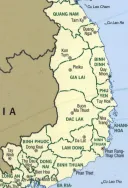













Between 1946 and 1955 our country existed on paper. A French ordinance of May 27, 1946 took five highland provinces out of Annam and made them a territory of their own, with its seat at Buon Ma Thuot. In 1950 Bảo Đại took the territory as his personal Crown Domain, and in 1951 he signed a special statute for it: our chiefs and our courts kept, our land rights “guaranteed in entirety,” our languages in the schools, our men to serve at home. In 1955 the Republic of Vietnam abolished all of it. In 1958 Saigon’s own land development office wrote down why: the Crown Domain had recognized that the land was ours. The documents survive, and we hold them.


Before 1946: the Crown Domain the French made
The idea did not begin in 1946. The CIA’s history of the highlands, written in 1966, records that in 1898 France prescribed a mixed Franco-Vietnamese administration for the peoples on the Vietnamese side of the Annamite chain, but that in practice the administration was entirely French. The court at Huế was allowed to appoint an Imperial Delegate to the area, which was established as a Crown Domain, and he was the only Vietnamese official employed there. Vietnamese settlement was controlled “almost to the point of non-existence”: an estimate of 1953 found only about six thousand Vietnamese in the whole of the highlands outside Da Lat. Our own officials ran the districts and cantons under French residents.
The French did this for their own reasons, and the CIA named them: the plantations, the labor, and an anthropologist’s wish to keep old ways of life in a sealed compartment. The result, for us, was half a century in which the highlands were administered as a country apart. That is the ground the documents of 1946 to 1951 stand on.
May 27, 1946: the ordinance
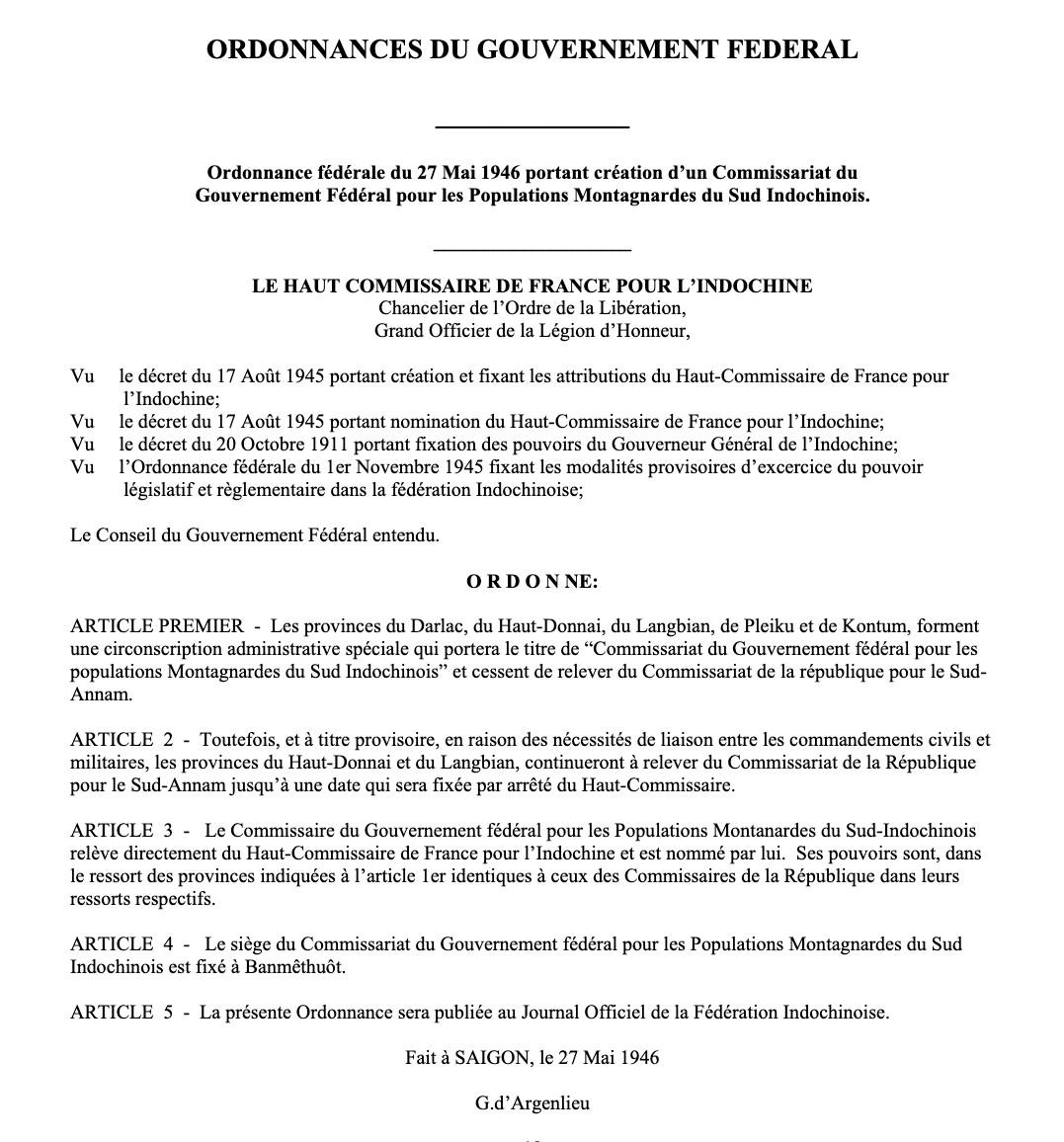
When the French came back after the Japanese surrender, the High Commissioner for Indochina, Admiral Thierry d’Argenlieu, signed a federal ordinance at Saigon on May 27, 1946. Its first article, in the English translation in our library:
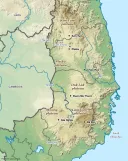
“The provinces of Darlac, Haut-Donnai, Lang-Bian, Pleiku and Kontum form a special administrative division which will bear the title ‘Commissariat of the Federal Government for the Montagnard Populations of South Indochina’, and cease to be under the jurisdiction of the Commissariat of the Republic for South Annam.”
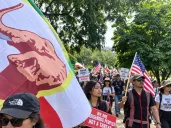
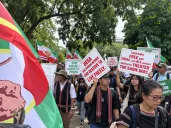
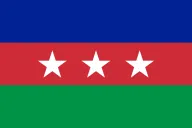
The commissioner answered directly to the High Commissioner. Article 4 fixed the seat at Buon Ma Thuot. Article 2 held back two of the five provinces for the moment: because the civil and military commands needed to work together, Haut-Donnai and Lang-Bian, the country around Da Lat, stayed with South Annam “until such date as is determined by a decree of the High Commissioner.” The CIA records that in 1947 the commission became the Delegation of the High Commission for the five provinces. The French called the territory the Pays Montagnard du Sud-Indochinois, and it had a flag: the tricolor with a crescent and three stars.
The ordinance is five articles long and says nothing about borders, rights or self-government. What it does is take our provinces out of Vietnam’s administration by law. Everything that followed was built on that.
The oaths of May 31
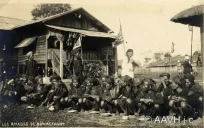
Four days later, at Buon Ma Thuot, representatives of our peoples swore oaths of allegiance. We know the date because the 1951 statute recites it in its preamble: “the oaths of allegiance sworn to our person on May 31, 1946 in Banmêthuôt by the representatives of the populations of the Montagnard country of the South.” The oath was a custom the French had brought into the highlands in 1926; the CIA records that it was sworn by the traditional formula, with the sacrifice of buffaloes. That summer a highland delegation, led by Ma Krong, the president of the customary court of Darlac, also attended the French conference at Da Lat on the future of the Indochinese federation.
In the same year the French began raising what they called the Armed Forces of the Racial Minorities, attached to the French commissioners and not to any Vietnamese army. In late 1948 they formed a Mountaineer Guard of the P.M.S. from part of the old Indochinese Guard of South Annam; by 1950, the CIA records, it had 2,376 men, 115 of them French. The soldiers and the country were made together. That story is on The first war in the highlands, 1946–1954.
1949–1950: given to the Crown
In 1949 France brought Bảo Đại back as head of a State of Vietnam inside the French Union. The exchange of letters of March 8, 1949 between President Vincent Auriol and Bảo Đại dealt with us in its first article. The CIA quotes it: “the administration of the non-Vietnamese populations whose historical home is situated on Vietnamese territory” was to be defined in a special statute agreed between Bảo Đại and the French government, guaranteeing our free evolution in accordance with our traditions and customs.
By Ordinance No. 6 of April 15, 1950, Bảo Đại attached to his own person “the provinces and territories inhabited by the non-Vietnamese populations traditionally dependent upon the Crown.” On July 25, 1950, a further decree created a special administrative division, the Delegation of His Majesty for the Royal Domains, “the Montagnard country of the South.” The ordinary Vietnamese administration was kept out. The French High Commissioner’s delegate became an Imperial Delegate, still a French officer at first, and a joint Franco-Vietnamese Economic and Social Council was set up for the highlands.

.png)
Our people were asked, after a fashion. The 1951 statute records “the wishes expressed by the representatives of the Montagnard populations on May 26, 1950 in Kontum, on June 5, 1950 in Pleiku, on June 10, 1950 in Darlac, on June 26, 1950 in Haut-Donnai.” What those representatives said is not recorded in any document we hold.
The arrangement was not popular in Saigon. The CIA records that Vietnamese nationalist politicians resented being kept out of the highlands while having to contribute to their budget, and that “Bao Dai was intent on preserving the Highlands as a private hunting preserve, and the French supported his attitude.” We record the Emperor’s motives as the CIA saw them. They do not change what he signed.
May 21, 1951: the statute
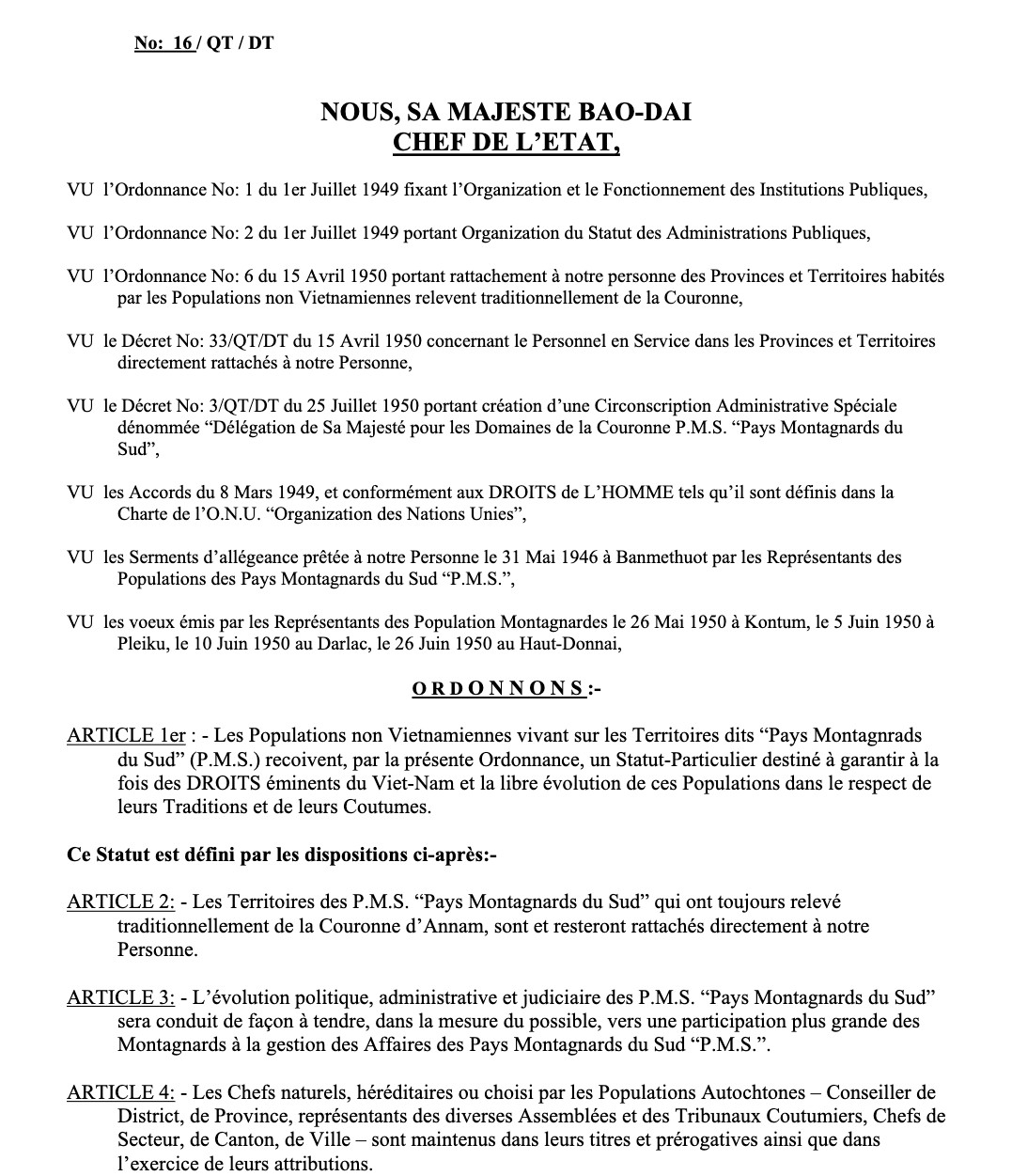
At Da Lat on May 21, 1951, Bảo Đại signed Ordinance No. 16/QT/DT. Its first article, in our library’s English translation:
“The non-Vietnamese populations living on the territories called ‘Montagnard country of the South’ (P.M.S.) receive, by this present ordinance, a special statute to be destined to guarantee at the same time the eminent rights of Vietnam and the free evolution of these populations in the respect of their traditions and of their customs.”
The rest of it, article by article:
- Article 2. The territories of the P.M.S., “which have always been dependent traditionally on the Crown of Annam, are and will remain attached directly to our person.”
- Article 3. Their political, administrative and judicial evolution was to lead, as far as possible, toward a greater part for the Montagnards in running their own affairs.
- Article 4. The natural chiefs, hereditary or chosen, from district and province councilors to the chiefs of cantons and villages, and the customary tribunals, “are retained with their titles and prerogatives.”
- Article 5. An economic council for the P.M.S.
- Article 6. Justice between Montagnards to stay with the customary tribunals, which “will continue to apply the customs particular to each ethnic group concerned”; a mixed commission to codify the customs.
- Article 7. “The rights acquired by the natives over landed property are guaranteed them in entirety.” Every sale, lease or acquisition of land was to need administrative approval, after the native leaders had been told and consulted according to tradition.
- Article 8. Medical aid and schools; “The teaching of dialects will be maintained” and remain the basis of primary education.
- Article 9. No heavier military service than elsewhere, and Montagnards to serve “with priority to the defense of their own territory.”
Why a statute we did not ask for is worth having
Because of what it concedes. To grant a people a special statute guaranteeing its free evolution according to its own traditions is to concede three things at once: that the people is distinct, that its traditions are its own, and that its continuing in them is a matter of right and not of tolerance. Every Vietnamese government since has denied all three. They were conceded in 1951 by a Vietnamese head of state, in a document he signed himself. We did not draft it, and the record of what we asked for in 1950 is lost. It is still evidence.
1954–1955: taken back
After Geneva the protection went, piece by piece. Bảo Đại announced in July 1954, the CIA records, that he was surrendering his special powers in the highlands. In March 1955 a new ordinance put the highlands under the national government; the Imperial Delegation was abolished and the French province chiefs removed. In June 1955 our chiefs were summoned to Buon Ma Thuot to swear the oath again, to President Ngô Đình Diệm this time, with the buffalo sacrifice and the drinking of blood. The CIA’s comment: Diem came “for the purpose of accepting an oath of allegiance from the Highland tribes and not to grant autonomy or recognize special status.” In October 1955 he deposed Bảo Đại, and the Crown Domain went with the Crown.
Within five years every provision of the 1951 statute that mattered had been reversed: the customary courts wound up, our languages out of the schools, our land given to settlers without our consent. What was done, and how, is on Pushed off, 1954–57.
What Saigon wrote in 1958
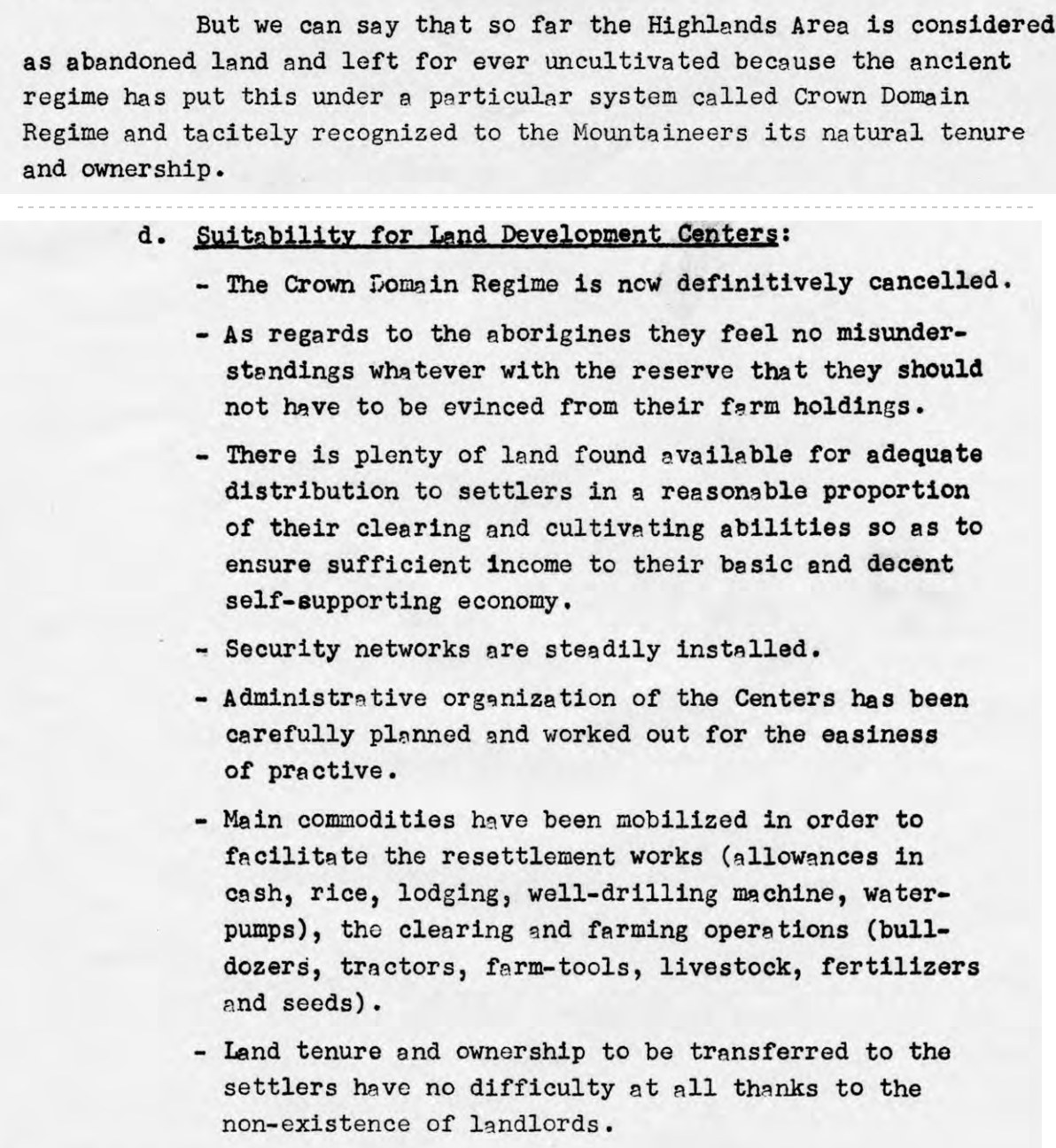
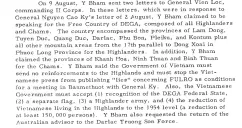
The most useful sentence about the Crown Domain was written by the government that abolished it. In 1958 the Republic of Vietnam’s Commissariat General for Land Development prepared a briefing on its program to settle Vietnamese in the highlands. Explaining why the land had not been developed before, it said:
“… the ancient regime has put this under a particular system called Crown Domain Regime and tacitely recognized to the Mountaineers its natural tenure and ownership.”
And under the heading “Suitability for Land Development Centers”:
“The Crown Domain Regime is now definitively cancelled.”
That is Saigon’s own admission, in 1958, that the regime it had just abolished recognized our ownership of the land, and that abolishing it was what made the settlement possible. The whole briefing is in our library.
What we hold, and what we do not
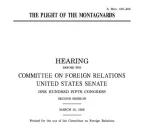
Our library holds typed transcriptions of both ordinances, the federal ordinance of 1946 and Ordinance No. 16/QT/DT of 1951, in French and in English translation, together with the CIA’s 1966 history of the highlands and Saigon’s 1958 land development briefings. They are here.
What we do not have is a photograph of either original, or an archive reference for one. The 1946 ordinance was published in the Journal officiel de la Fédération indochinoise; the 1951 ordinance should be in the records of the State of Vietnam and in the French archives at Aix-en-Provence. We do not have the record of what our representatives said at Kon Tum, Pleiku, Darlac and Haut-Donnai in 1950, or the words of the oath of May 31, 1946. If you know where any of these is, please write to us.
See also: The country itself, The first war in the highlands, 1946–1954, Pushed off, 1954–57, BAJARAKA, 1958, Sabatier, the oath of 1926 and the Rhade law code.
Sources
- Federal Ordinance of May 27, 1946, and Ordinance No. 16/QT/DT, Dalat, May 21, 1951: French text and English translation, DCHO library
- Central Intelligence Agency, Vietnamese Affairs Staff, The Highlanders of South Vietnam: A Review of Political Developments and Forces (June 1966; declassified 1999), chapters I–II, DCHO library — the 1898 Crown Domain, the 1947 Delegation, the Mountaineer Guard, the Auriol letters, the 1950–1955 sequence and the oath of June 1955. The CIA later ran programs among our people; it is not a neutral witness.
- Republic of Vietnam, Commissariat General for Land Development, Briefing on Central Highlands Land Development Area (1958), DCHO library — Saigon’s account of the Crown Domain and its cancellation
- Gerald C. Hickey, Sons of the Mountains (Yale, 1982) — the 1946–1955 sequence. Hickey worked for many years under RAND contracts funded by the US government.
- Oscar Salemink, The Ethnography of Vietnam’s Central Highlanders (2003) — the territory and the highland army
- Université du Québec à Montréal, Dictionnaire historique de la guerre d’Indochine, “Pays Montagnards du Sud (PMS)”
Compiled September 2026. Quotations from the ordinances are from the English translation in our library; the French text is authoritative.