
Knowledgebase
Under the Socialist Republic
1975 to today: the land, the church, the protests and the trials.
Articles
21 articles
How we died
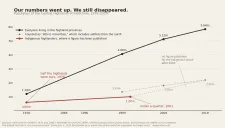
Hundreds of thousands of our people were killed in wars fought across our land by armies that were not ours: at least one in five of us, by the only careful count. What has happened since those wars ended is harder to count, and it is the reason we use the word genocide. This page sets out the figures we have, where each comes from and what each...
The land, and what was planted on it
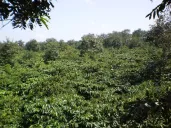
Vietnam went from a marginal coffee producer to the second largest in the world in about fifteen years, on the red basalt of the Central Highlands. The story of how that happened and the story of what happened to us are the same story told from two ends. Forest cover in our highlands fell from 42.8 percent in 1990 to 19 percent in 2020, and most...
The church they closed
Most of us are Christians, and the state has decided that one form of our Christianity is not a religion at all but a political conspiracy in religious dress. That decision, written into a prime minister’s instruction in February 2005, is the legal hinge on which most of the last twenty-five years of persecution in the highlands turns. This page...
February 2001: the highlands stand up
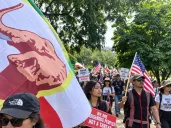
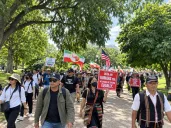
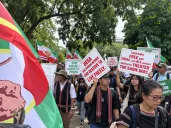
On Friday, February 2, 2001, eight hundred people from four communes walked out of their villages at four in the morning and reached Pleiku at half past eight. By mid-morning there were thousands of them outside the provincial hall. The next day the same thing happened at Buon Ma Thuot, and over the following twelve days at Ea H’leo, at Ayun Pa,...
Easter Week 2004
On the Saturday and Sunday of Easter 2004, people came out of their villages in thirty-nine communes across seventeen districts of Gia Lai, Dak Lak and Dak Nong. They came on farm tractors with trailers behind them, packed with food for five days, because they meant to stay. They were asking for four things: their land, the right to worship, the...
Cu Kuin, June 2023 — and the trial that followed
At about half past midnight on Sunday, June 11, 2023, two groups of armed men attacked the commune headquarters at Ea Tieu and Ea Ktur in Cu Kuin district, Dak Lak. Nine people were killed: four police officers, two commune officials, and three civilians whose names have never been published. We do not defend that attack and nothing on this page...
The schools, and the language they are not taught in
In a century and a half our children have been taught in our languages for only a few short stretches: by the Kon Tum missionaries, in the French schools of Darlac, in the Protestant mission schools, and in a bilingual program the Republic of Vietnam ran with American money in its last years. Every government since 1955 has in the end made the c...
Bauxite: the plateau as a mine
Under the coffee is the ore. Most of Vietnam’s bauxite lies under the Central Highlands, in the red laterite of Dak Nong and Lam Dong. In 2007 the government planned twenty-five mines and seven alumina plants there. Two plants were built, at Tan Rai and Nhan Co, and in 2026 the state and its partners were planning to double them and to add more....
The dams: Yali Falls and the rivers
The Se San and the Srepok run west out of our highlands into Cambodia and the Mekong. From 1993 they were dammed. At Yali Falls alone 6,782 people were moved, three in five of them Jarai, Rongao and Bahnar, into standard houses with no kitchen, onto land that was promised and never arrived. Downstream, in Ratanakiri, people drowned in releases f...
The camps and the prisons, 1975 to today
Since 1975 our people have been held in two generations of camps and prisons. The first held the men of the old order: our ministers and officials, the soldiers who had served with the Americans, and our pastors, taken without trial after the war. The second has held the people of the churches and the land protests since 2001, tried in groups an...
The years between, 2005–2022
Between the Easter protests of 2004 and the attacks at Cư Kuin in 2023 there were no mass demonstrations in the highlands, and the world mostly stopped looking. The pressure did not stop; it changed shape. Instead of breaking up crowds, the authorities went village by village: meetings at which families were made to renounce their church, arrest...
Stateless in our own country
Thousands of highland families in Vietnam have no identity papers. Without them a child cannot enroll in school, a couple cannot register a marriage, a family cannot transfer its land, or see a doctor on public insurance, and no one can lawfully leave the country. These are people born in the highlands to parents born there, with no other nation...
Rubber
Coffee is the crop people associate with the highlands, and we write about it on Land taken for coffee. Rubber is the older story and the wider one. It came with the French, it was worked by people who died in great numbers doing it, and in our own time it has taken highland land on both sides of the border: from our villages in Gia Lai and Dak...
The great migration: New Economic Zones and settlers
In 1921 there were twenty Vietnamese living in Darlac. By 1997 there were a million and a half people in the province that replaced it, and we were one in five of them. No war, epidemic or famine did that. It was done by migration: first planned by the state, family by family into New Economic Zones, and then, when coffee made the highlands rich...
Our defenders and prisoners
These are the records of highland people imprisoned for their faith, their organizing or their testimony, whose cases are well enough documented to set down in full: pastors and deacons of the house churches, a man who wrote down the names of other prisoners, a man who met American diplomats. Most were convicted of “undermining national unity.”...
Ha Mon: the Catholic movement the state calls an “evil way”
In a village on the Krong Poko, in the last years before the water came, a Bahnar woman named Y Gyin said that the Mother of God had appeared to her and had told her people to gather, to pray, and not to let themselves be moved. Within four years the reservoir was over the ground she named. Within eleven the state had run public denunciation mee...
The Evangelical Church and registration
Most of our Protestants belong to congregations the state does not recognize. The largest state-recognized Protestant body is the Evangelical Church of Vietnam (South), and the choice put to highland house churches for twenty-five years has been the same: join it, or be named Dega Protestants, a label the state treats as separatism. This page is...
The highland Catholic Church under the Socialist Republic
On March 27, 1975, in a town that had fallen eleven days earlier, the French bishop of Kon Tum consecrated a Vietnamese successor so that the diocese would not be left headless when he was expelled. Within eighteen months the minor seminary, the major seminary and the school that had trained highland catechists since 1908 were all shut, and the...
Forests, logging and the sacred groves
The highlands were forest country, and the forest was ours: farmland in rotation, hunting ground, the place of the spirits and of the dead. After 1975 the forest became state property, managed by state forest enterprises and cleared for settlers and coffee, until less than a fifth of the region was under trees. What remains is being handed back...
Re-education and the forest, 1975–1992
After April 1975 our leaders went to prison without trial, our soldiers went to the camps or to the forest, and our pastors went to both. The men who reached Cambodia fought on for seventeen years on corn and poisoned potatoes, waiting for orders from a president who had already been dead for most of that time. The men who came home from the cam...
Schools, language and the university gap
Our children start school in a language they do not speak, under a rule that is written in no decree: Vietnamese only in the classroom. Primary school nearly works. By fifteen the system has lost half of them. A Rhade teacher will pretend not to understand a Rhade child who asks him a question, because that is what he has been told to do, and a...
Powered by WBAMS