














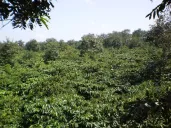




Vietnam went from a marginal coffee producer to the second largest in the world in about fifteen years, on the red basalt of the Central Highlands. The story of how that happened and the story of what happened to us are the same story told from two ends. Forest cover in our highlands fell from 42.8 percent in 1990 to 19 percent in 2020, and most of what replaced it was coffee. This page is about the soil, the four ways the land changed hands, the boom, the crash, and what we ask for now.

Why the soil mattered
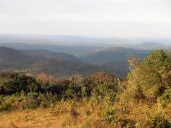
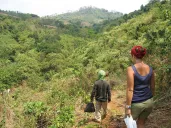
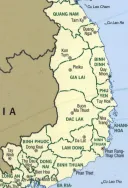
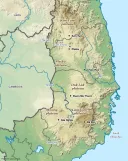
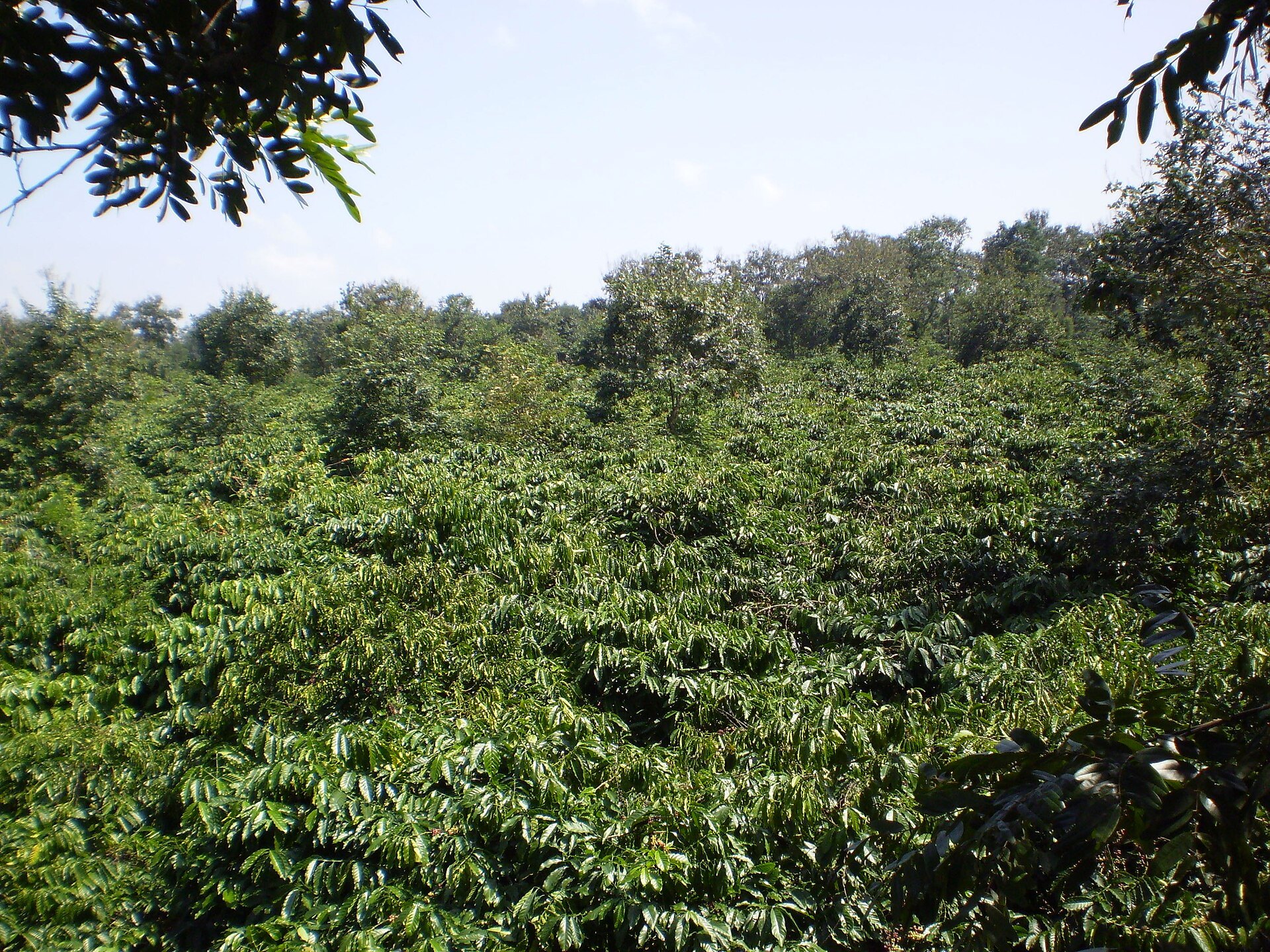
The plateau is volcanic. Weathered basalt across Dak Lak, Gia Lai, Dak Nong and Lâm Đồng makes some of the best coffee land in Asia, and robusta, hardier and cheaper than arabica, suits it exactly. The French planted the first trees in the 1850s and ran plantations around Buon Ma Thuot from the 1920s; see Sabatier and the Rhade code. But the industry as it now exists dates from the reforms of 1986. Since then, as one reporter summarized it, the country’s annual production “has exploded, up from 18,400 tonnes to more than 1.9 million tonnes.” The United States Department of Agriculture put the area under coffee in 2024 at about 730,000 hectares, and recorded that “the Central Highlands region, which includes Dak Lak, Lam Dong, Dak Nong, Gia Lai, and Kon Tum provinces, accounts for 92 percent of the total coffee cultivation area and 90 percent of national coffee output.” Vietnam is the world’s largest producer of robusta and supplies nearly 40 percent of the world’s exports of it.
That is what the land is worth. Every dispossession described below is a rational response to that number by somebody who was not us.
The four transfers
Resettlement, from 1956
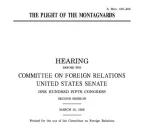
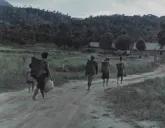
The Republic of Vietnam’s land development centers moved lowland settlers, many of them refugees from the north, onto highland land. By the end of 1962 more than 100,000 people had been placed in 117 centers, “where they farmed rubber and other crops,” in Human Rights Watch’s summary. Villages were moved to make room. The government’s own briefings on the program are in our library; the policy and our answer to it are on BAJARAKA.
New Economic Zones, from 1975
After 1975 the new state moved people into the highlands on a scale Diệm never reached: 623,000 new settlers into Dak Lak alone between 1976 and 1998, planned and spontaneous, and more than three million into the region as a whole since 1975. The numbers are on The great migration. Human Rights Watch, looking back from 2002, wrote that “the establishment of the New Economic Zones had the opposite effect in many areas from what had been envisioned,” producing “massive deforestation and clashes over lands traditionally inhabited by the ethnic minorities.”
Fixed field, fixed residence, from 1976
Định canh định cư, sedentarization: announced as an end to what officials called an unstable nomadic life. In practice it confined a farming people who had always rotated their fields to small controlled areas of poor cropland, and released the rest of the plateau. The fallow years of the rice cycle, the years a hillside rests, were treated as idle land; see The rice year.
Certification, from the 1990s
Under the Land Law of 1993 all land still belongs to the state, but individuals can acquire the right to use and occupy it, and that right is written in a certificate. Land held by a village in common and farmed on long rotation does not look like property to a land registry. When the certificates were issued, they were issued over ground that was already in use, to the people who had most recently arrived on it and who could produce the paperwork. A Mnong man who had fled to Cambodia said it in one sentence to Human Rights Watch: “Suddenly agricultural land that used to belong to us belongs to Vietnamese people who have the proper stamps and papers.” Nothing was stolen in a way a court would recognize. That is the point. See Land law and customary land.
And a certificate, once a highlander had one, did not hold. Human Rights Watch recorded the case of a Mnong farmer in Dak Mil who in 1999 paid 20,000 đồng for a land certificate and 40,000 đồng a year in tax, and understood it to mean “that my whole life I will have the land.” In May 2001 the local authorities announced that they needed his hectare for a school and plowed it. “When they plowed my land I was devastated. The coffee was to support my life. When they plowed it, it was like they killed me. They plowed it all—500 coffee plants, one well, and eighty-seven pepper plants.” An Ede woman who led a church in Dak Lak: “I had title to my soybean farm since 2000, but the authorities took it anyway. They said they had authorization from the province to give my land to the government.” In Dak Doa, Gia Lai, the streams the Jarai used to water their fields were diverted in the early 1980s to irrigate state tea and coffee plantations; “In the dry season they redirect the water so it’s difficult for us to grow our crops.”
What the boom did
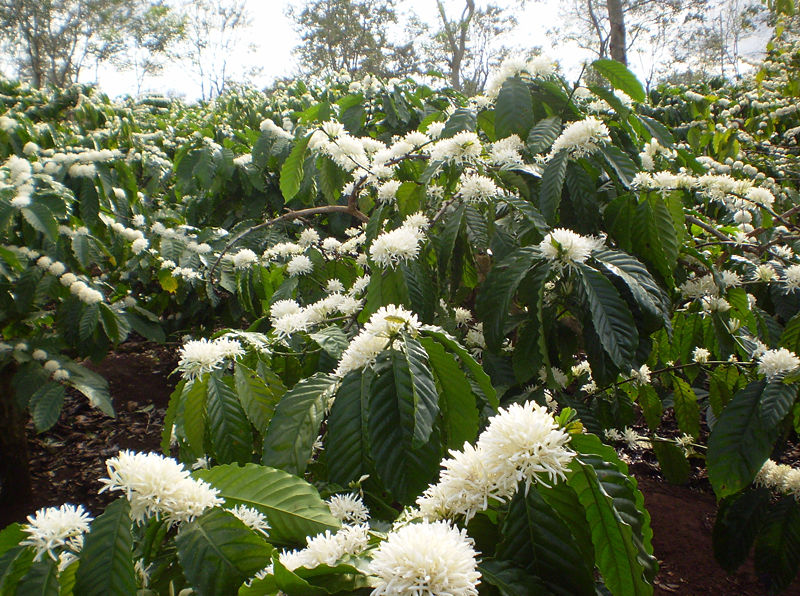

The reforms of the late 1980s turned the basalt into an industry. Planned resettlement was overtaken by spontaneous migration: people came for coffee, cleared land, and planted it. Between 1990 and 1994 alone some 110,000 spontaneous migrants settled in Dak Lak and more than 90,000 in Lâm Đồng. The researchers who mapped the coffee districts of Dak Lak and Dak Nong from satellite images between 2000 and 2010 describe the mechanism exactly: “the acquisition and conversion of agricultural lands to perennial crops for external markets by capital-endowed Kinh households … and on the other hand the corresponding displacement of poor households of ethnic minorities relying on shifting cultivation towards the forest margins.” Their conclusion: “Displacement of shifting cultivation into the forest margins, pushed by market crops expansion, was the spatial manifestation of the marginalization of local ethnic minorities and poor migrants, pushed by capital-endowed migrants. This marginalization is a long-standing process rooted in the colonization and development strategy for the highlands followed since colonial times.”
Deforestation in the Central Highlands over this period is among the fastest documented anywhere in Southeast Asia. Coffee Watch, in its 2026 report Robusta’s Reckoning, found that tropical forest cover in the region “plummeted from 42.8% in 1990 to just 19% by 2020,” with the loss “most rapid between 1995 and 2010.” What went with the forest was not scenery. It was the hunting, the forest products, the water, the burial groves and the fallow that let a village’s fields recover; see Forests, logging and the sacred groves.
What the boom then did to everyone
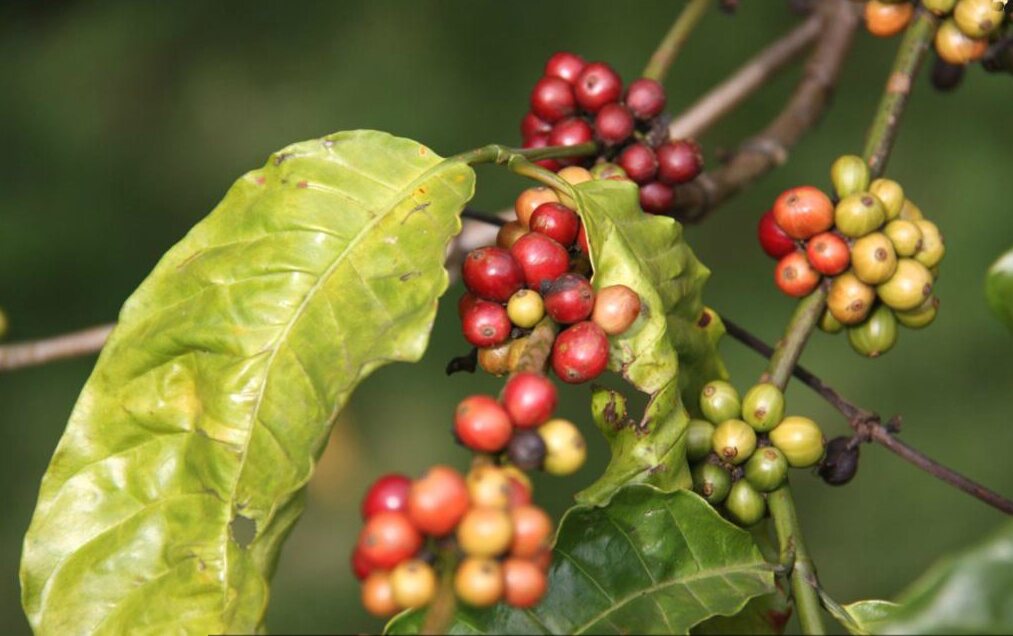

The price collapsed. A kilo of coffee that sold for 40,000 đồng in 1995 sold for 12,000 in February 2000 and 4,250 in January 2002. Human Rights Watch found that “many highland farmers, already living below the poverty line, lost almost everything they had with the global plummet of coffee prices after 1999,” and that the crash “had exacerbated ethnic tensions in the region.” Our families had turned to coffee on small plots as an alternative to the rotating rice fields, which need more land than they had left, and so had, in HRW’s words, “virtually no risk margin.” The protests of February 2001 came in the middle of that fall; see The 2001 protests.
It is worth being precise about who suffered what. The migrants were mostly poor people sent or drawn to a frontier and left to manage; many are now two or three generations in. The quarrel is with the program and the state that ran it, not with the family on the next plot. What separates the two positions is this: the migrant lost money in 2001, and our household had lost its land before the price ever moved.
The nutrient treadmill
The industry built on our soil is now in trouble on its own terms. Coffee Watch describes “fragmented habitats, accelerated soil erosion and a ‘nutrient treadmill’ where farmers must use increasing amounts of fertilizer to maintain yields in exhausted soils,” and estimates that “50% of Vietnam’s robusta belt could become unsuitable for coffee” as temperatures rise and rainfall becomes erratic. We note this without satisfaction. If the plateau becomes unfarmable, it will not be handed back. It will be a ruined homeland with more people on it than it can feed, and we will still be the people with the fewest options.
The conversion goes on
The forest that is left is still being converted, and almost none of it to us. In Lâm Đồng, Mongabay reported in April 2024, the prime minister approved in March 2022 a reduction of the province’s forest land by 58,915 hectares by 2030, nearly a tenth of the 596,642 hectares it had in 2021, for projects and plantations. “By comparison, only 0.14% of the economic development conversion is allocated for ethnic minority communities.” The same report describes the Churu and the other peoples of the province, who “have traditionally engaged in shifting cultivation, clearing small patches for agriculture and then letting them return to forest, a technique that leaves the forest as a whole intact over time.” That figure deserves reading twice. When forest land in our highlands is turned into plantations, mines and projects, about one hectare in seven hundred goes to the people who lived in the forest.
The land claim, stated carefully
We do not ask for the eviction of Vietnamese families who have farmed the highlands for three generations. We ask for four things: that communal and customary tenure be recognized as tenure; that land taken without consent or compensation be acknowledged as taken; that a process exist through which a village can bring a claim and be heard by somebody who is not the provincial authority that issued the certificate; and that what remains of the forest not be cleared over our objection. None of that requires anyone to lose a home. See What we ask for.
The numbers behind the migration
| Period | What happened | Source |
|---|---|---|
| 1956 to 1962 | more than 100,000 lowlanders settled in 117 land development centers in the Central Highlands under Ngô Đình Diệm | Human Rights Watch, 2002 |
| 1976 to 1998 | 623,000 new settlers into Dak Lak: 311,764 planned and about 350,000 spontaneous | Human Rights Watch, 2002 |
| 1990 to 1994 | some 110,000 spontaneous migrants into Dak Lak and more than 90,000 into Lâm Đồng | Human Rights Watch, 2002 |
| since 1975 | more than three million people moved into the region | Radio Free Asia, 2024 |
| 1990 to 2020 | forest cover in the Central Highlands falls from 42.8 to 19 percent | Coffee Watch, 2026 |
| 2000 to 2010 | net deforestation of 0.31 percent of the coffee districts of Dak Lak and Dak Nong each year, driven by coffee pushing shifting cultivation into the forest margins | Meyfroidt, Vu and Hoang, 2013 |
| 2024 | about 730,000 hectares under coffee; 92 percent of the area in the Central Highlands | US Department of Agriculture, 2025 |
| to 2030 | 58,915 hectares in Lâm Đồng approved for removal from forest status; 0.14 percent of land converted to economic use allocated to ethnic minority communities | Mongabay, 2024 |
See also: Rubber, The rice year, The great migration, Land law and customary land, How we got pushed off our land.
Sources
- Human Rights Watch, Repression of Montagnards (April 2002), chapters V and VI — the migration figures, the land certificates, the Dak Mil, Dak Lak and Dak Doa cases, and the coffee price collapse
- Naina Rao, “Vietnam’s coffee boom fueled by decades of deforestation, report finds,” Mongabay, July 22, 2026, on Coffee Watch, Robusta’s Reckoning — forest cover 1990 to 2020, the 95 percent and 40 percent figures, the nutrient treadmill and the climate projection
- Patrick Meyfroidt, Vu Tan Phuong and Hoang Viet Anh, “Trajectories of deforestation, coffee expansion and displacement of shifting cultivation in the Central Highlands of Vietnam,” Global Environmental Change 23 (2013)
- US Department of Agriculture, Foreign Agricultural Service, Coffee Annual: Vietnam, May 19, 2025 — the area and the regional shares
- Jenny Gustafsson, “Coffee’s in danger: Can Vietnam’s Robusta save it from climate change?” Al Jazeera, March 17, 2024 — production since 1986
- Le Quynh, “Forests in Vietnam’s Central Highlands at risk as development projects take priority,” Mongabay, April 2024
- Radio Free Asia, “Who are Vietnam’s Montagnards and what are their grievances?” September 2, 2024
- Andrew Hardy, Red Hills: Migrants and the State in the Highlands of Vietnam (NIAS Press, 2003); Pamela D. McElwee, Forests Are Gold: Trees, People, and Environmental Rule in Vietnam (University of Washington Press, 2016)
Compiled September 2026. If your family holds a land use certificate, a refusal, a compensation notice or a survey map for highland land, those documents are the evidence this claim most lacks. Read how to document first.