




Knowledgebase
Exile
Leaving the highlands: Thailand, Mondulkiri, North Carolina, and the people still waiting.
Articles
12 articles
Mondulkiri, 1992: the end of the armed struggle
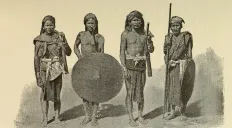
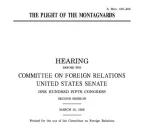
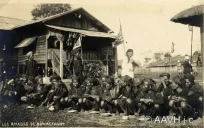
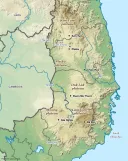
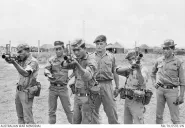
In September 1992 two journalists walked into the forest of Mondulkiri, in eastern Cambodia, and found 407 FULRO guerrillas and their families living in five villages with six churches, still fighting a war that had ended seventeen years before. Nobody had told them that their president had been killed in 1975. On October 10 they handed 194 weap...
North Carolina
The largest community of our people outside Vietnam is in North Carolina, in Greensboro, Charlotte, Raleigh and New Bern. It is there because the American soldiers we fought beside came home to Fort Bragg and would not let the subject drop, and because when the survivors of the resistance walked out of the forest in 1985 and 1992 those soldiers...
The Cambodian camps, 2001–2005
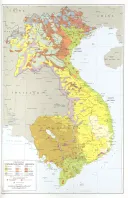
The border between Vietnam and Cambodia runs through the middle of one people. The Mnong of Dak Nong are the Bunong of Mondulkiri; the Jarai of Gia Lai are one of the largest peoples of Ratanakiri. When the crackdown came after February 2001, our people walked east to west across a line that meant nothing to them, into villages where the languag...
Asylum today: Cambodia, Thailand, and the reach of the state
For twenty-five years the way out of the highlands has been west, on foot into Cambodia, and then onward to Bangkok. Both doors have been closing. Cambodia shut its border sites in 2002, sent back hundreds of people and has recognized almost none since. In Thailand our people live as illegal migrants with a UN card that Thai law does not recogni...
The wider diaspora
North Carolina holds the largest community of our people outside Vietnam, but it is not the only one. There are Dega in at least five other American states, in France, in the refugee neighborhoods of Bangkok, and in Cambodia, where the Jarai and the Bunong were never a diaspora at all, because the border was drawn through them. This page is what...
Y Quynh Buondap
Y Quynh Buondap is a Rhade Christian from Dak Lak who spent his twenties collecting the names of our prisoners and writing down what was done to our churches. He fled to Thailand with his family in 2018, was recognized as a refugee by the United Nations, and helped found Montagnards Stand for Justice. In January 2024 a Vietnamese court he never...
Kok Ksor
A Jarai from Bon Broai who joined BAJARAKA at fourteen, went over the border at seventeen, came home from a war by way of a Khmer Republic training course in Virginia, and spent the second half of his life in a small city in South Carolina making our case in rooms where states have to listen. For thirty years Kok Ksor was the Dega most foreign g...
Our organizations
A directory of the organizations that Dega people in exile have founded, and of the groups that work closely with us: what each is, where it is, when it began, and what has happened to it since. We list them so that readers know who is who. Listing an organization here is not an endorsement of everything it says, and none of them speaks for us.
The 2002 resettlement: from the Cambodian camps to North Carolina
In the summer of 2002 about nine hundred of our people were flown from a disused factory in Phnom Penh to airports in North Carolina, fifty at a time, three or four times a week, on ordinary commercial flights. Most had been in the forest or in a camp for a year. Three quarters of them were men, and most of those men had left a wife and children...
Thailand’s screening mechanism: what it offers a Dega refugee
Thailand has no refugee law. It has one procedure, written in 2019 and switched on in September 2023, that can give a person who cannot go home a Thai status called “Protected Person.” In its first thirty months it produced seven of them, out of an urban caseload of more than five thousand five hundred. All seven were granted in the first thirte...
Our veterans in America
Sixty-one thousand of our men fought beside the Americans between 1961 and 1975, by the count the United States Senate itself uses. The United States brought some of the survivors to North Carolina in 1986 and 1992 because of that service, and has twice passed resolutions honoring it. It has never counted one of them as a veteran. This page sets...
Beyond North Carolina: Canada and other countries
Most of us who were resettled went to the United States, and a smaller number to Canada. But the second country to take us was not Canada. It was Finland, in May 2005, a month before the first flight to Vancouver, and about seventy-five of our people went there. Nobody has written a word about them in twenty-one years. That is the shape of every...
Powered by WBAMS