
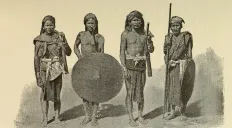
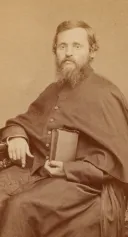
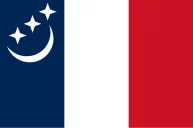
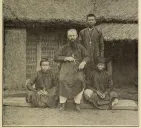




Reading about the Dega means reading four vocabularies at once, ours, the French, the Americans’ and the Vietnamese state’s, and they do not agree. Each outside name was given by someone at a particular moment for a particular purpose, and each still carries the purpose. This glossary gives the words you will meet in the records on this site: what we are called and what we call ourselves, the words of our own life, the names of the territories and movements, the words of the American war, the vocabulary of the state that governs us now, and the spellings you will have to search.
What we are called
- Dega, Degar
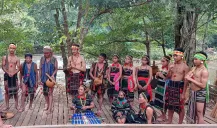
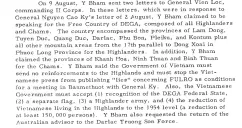
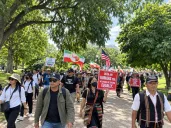
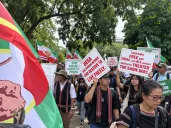
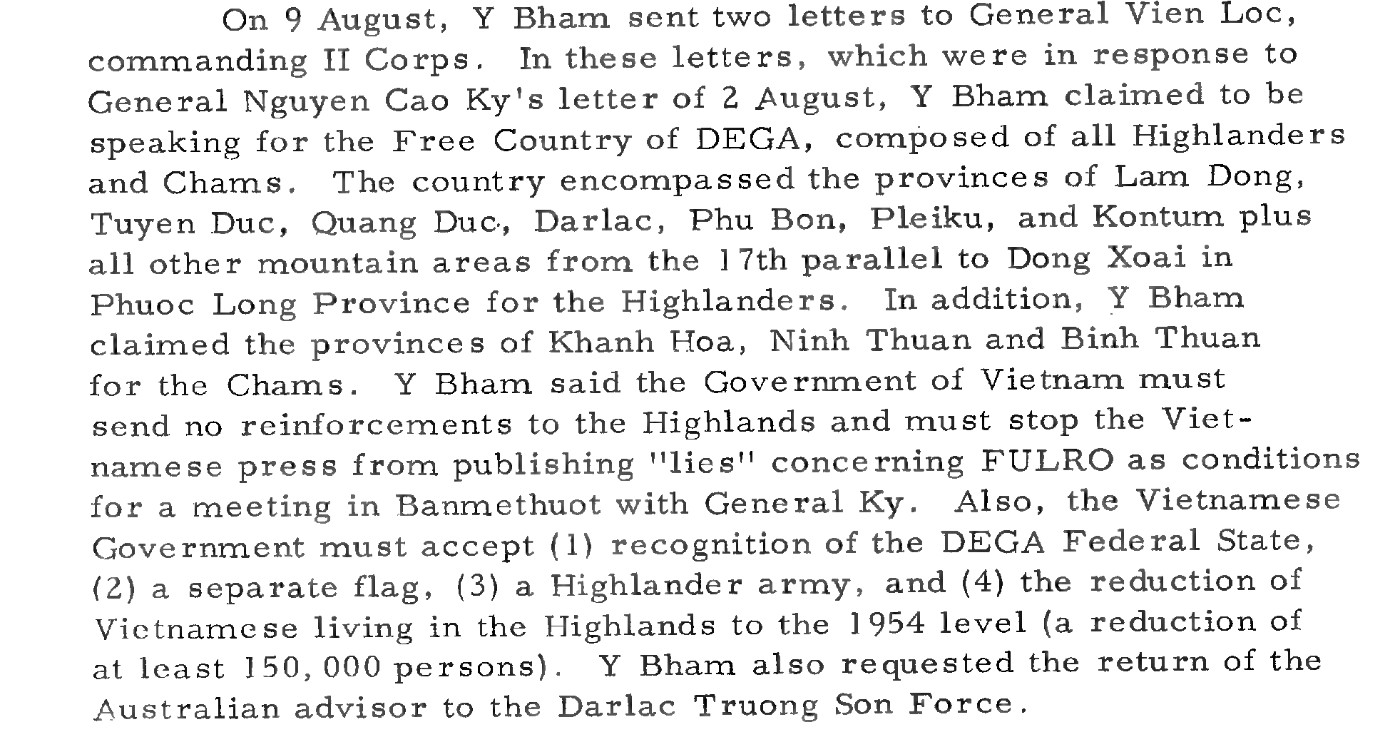
- Our own name for ourselves, and the only one we chose. What it means is contested: “the first” or “the original,” a Rhade story of the first two people, De and Ga, or “sons of the mountains,” from the Rhade anak ede gar; Who are the Dega sets the accounts side by side. Among the Rhade in the 1960s it was the word for all highlanders. The earliest use we have found is August 9, 1965, when Y Bham Enuol wrote in the name of the Free Country of DEGA; FULRO was also known in those years as the Movement for the Liberation of the DEGA-Chams and the Provisional Government of the DEGA-Cham High Plateaus. The spelling Degar belongs to the Montagnard Foundation. Both spellings are in use. The Vietnamese authorities use the word as a synonym for rebels.
- Anak Cu Chiang
- “Children of the Mountains,” the name for all five major peoples that our own organization put on a record of our songs.
- Montagnard
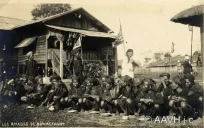
- French for a mountain dweller. The French used the old Vietnamese and Lao and Khmer words for savage until, in the 1940s, a more respectful name became politically useful; they tried Pémsiens, after the initials of their highland territory, and the scientific-sounding Proto-Indochinois, and settled on Montagnards. The ordinance of May 27, 1946, made it official. Most Americans adopted the word after 1955, and our history is recorded under it in most outside sources. Some scholars reject it as a colonial term. Many of our people, in Vietnam and in America, still call themselves Montagnards. We use it where the record uses it, and it is not an insult.
- Highlander
- The English translation of Montagnard preferred by the anthropologist Gerald Hickey, and the word the CIA’s analysts used throughout their review of our politics in 1966.
- Yard
- American shorthand from the war, a short form of Montagnard. The Special Forces call it a term of endearment, and the soldiers who served with us used it that way. Its critics point out that it was the name for the highlanders who fought on the American side.
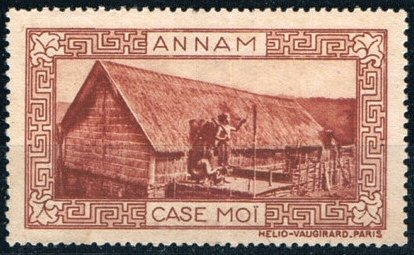
- Moi
- Vietnamese for savage, with the added sense of servitude that the slave trade in the highlands gave it. It is in the Gia Định gazetteer of the early nineteenth century; the French took it over and put it on stamps, postcards and maps; and the American army was still warning its soldiers in 1966, in seventeen chapters of its handbook on our peoples, that the word meant savage and was offensive. It is a slur, and it did a job: a savage has no government to negotiate with and no title to the ground.
- Kha, Pnong
- The Lao and Khmer words of the same meaning. Pnong is taken from the Mnong’s own name for themselves, bu Nong.
- Đồng bào Thượng, người Thượng “highland compatriots,” “highlanders”
- The official term of the Republic of Vietnam from 1955 to 1975. The American army recommended it to its soldiers in 1966 in place of moi.
- Sắc tộc, người sắc tộc “ethnic group,” “ethnic people”
- The later term of the Republic of Vietnam. Its constitution of 1967 recognized the existence of the ethnic minorities, promised customary courts and a law of special rights, and created a Council of Ethnic Minorities. The Communist side rejected người sắc tộc as racist, reading it as “colored people.”
- Dân tộc thiểu số “ethnic minority”
- The term of the Communist governments. The minority framing goes back to the constitution of the Democratic Republic of Vietnam of 1946; since 1975 the Socialist Republic files us among the fifty-three officially recognized minorities, beside the Kinh majority, with no name for the peoples of the highlands as such. It describes the result of a century of resettlement as though it were a fact of nature, and a minority is by definition a fraction of someone else’s nation. In 2023 Vietnam said there are no Montagnards in the Central Highlands.
- Kinh
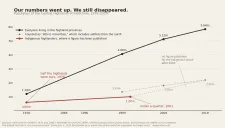
- The ethnic Vietnamese, the majority people. In 1940 they were about five percent of the people of the highlands; by 1989, about two-thirds.
- Indigenous peoples
- What we say we are: first, continuous, with our own institutions. The word carries rights that “minority” does not. UN human rights experts wrote in 2024 of “Montagnard Indigenous Peoples” and of the rights of Indigenous Peoples to self-determination. See Indigenous rights at the UN.

Words of our own life
- Buôn, plei, bon, kon village
- The Rhade, Jarai, Mnong and Bahnar words for village, and so the first part of many place names: Buon Ma Thuot, the village of the father of Thuot; Pleiku; Kon Tum. The Jarai say plei in the north and bon in the south.
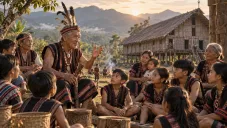
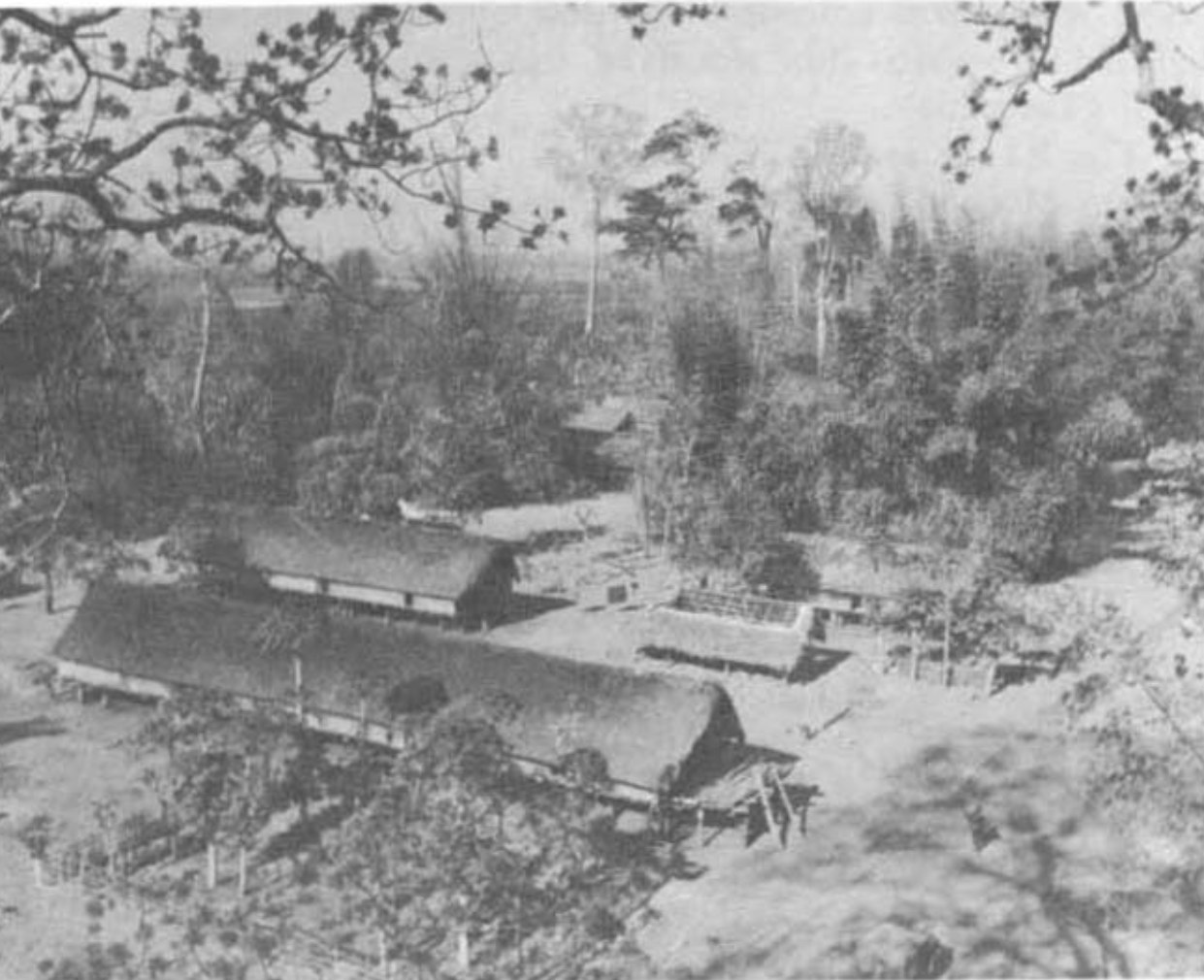
- Longhouse
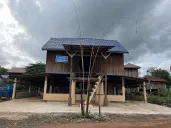
- The Rhade and Jarai house on piles, shared by several families of one line. Among the Rhade a married couple lives in the bride’s longhouse.
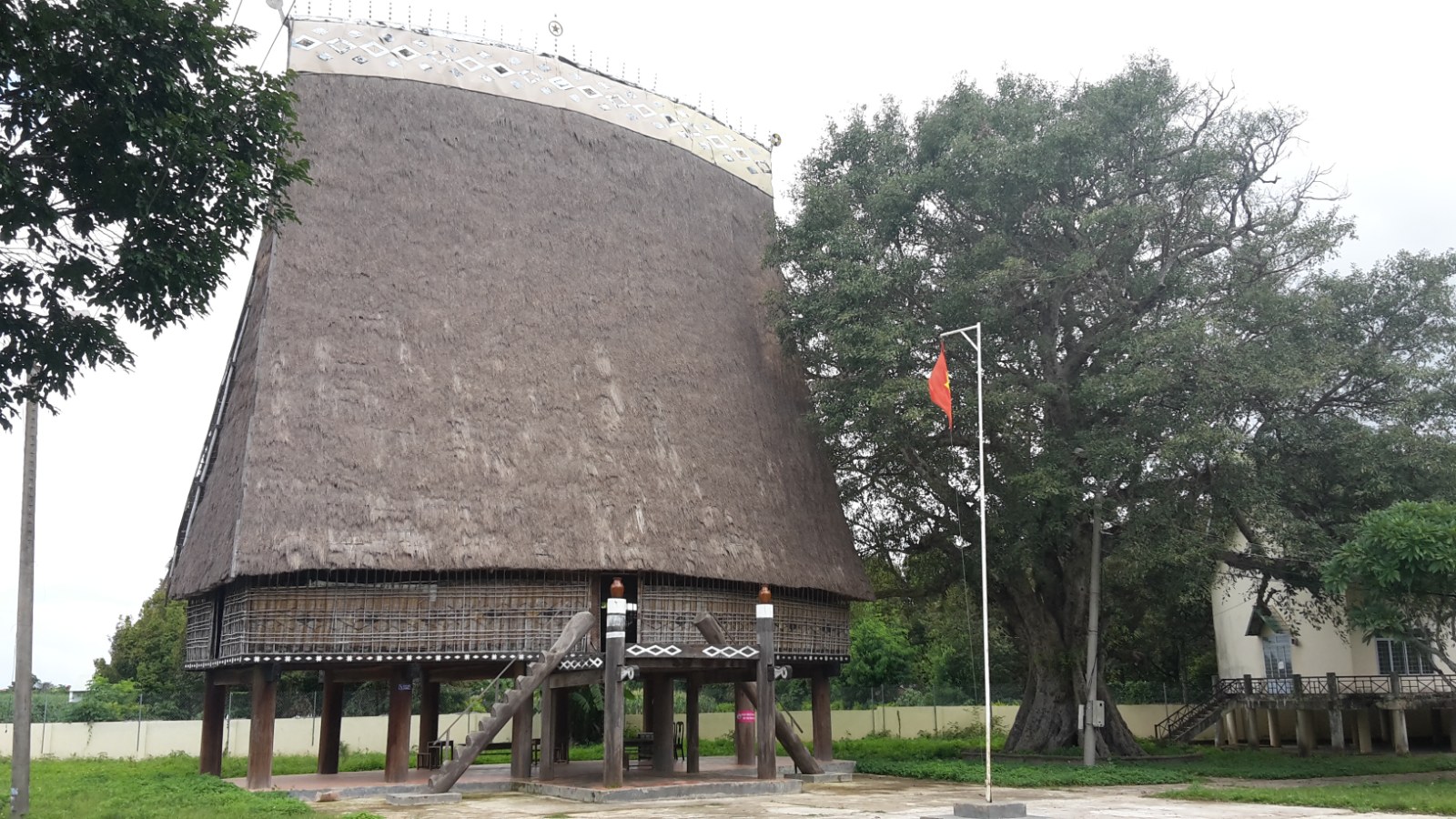
- Rông
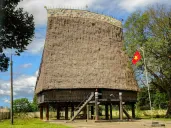
- The Bahnar and Sedang communal house, recognizable from any other house by its high pointed roof, where the young men slept and the village met. See Growing up Dega.
- Po lan
- Among the Rhade, the woman who holds title to the land for her kin group; she gives permission to farm within it and demands the penalty when the land is wronged. See Dega women.
- Ray
- The swidden field, cut and burned from the forest and farmed in rotation. The French and Vietnamese literature calls it ray. See The rice year.
- Jar wine
- Rice wine brewed in large old jars and drunk through long straws at sacrifices and feasts, in order of rank. Among the Mnong the jar must never touch the lips, because spirits live in the wine. See Jars and the buffalo feast.
- Gongs
- The instrument of every ritual of village life, and a measure of a family’s wealth. UNESCO proclaimed the space of gong culture of seventeen highland peoples a masterpiece of the world’s heritage in 2005. See Gongs and epics.
- Klei khan
- The long recited epics of the Rhade. See Gongs and epics.
- Sadet
- The Jarai title of the King of Fire and the King of Water, whose authority was more religious than political. See The kings of fire and water.
- Xep blood oath
- The alliance oath of the highland peoples, sealed with animal blood and jar wine, which made peace between villages that had been at war.
- Kong
- The bracelet, open at one end, given as a sign of friendship and brotherhood. See The bracelet.
- Yang
- The spirits. See Yang, the spirits.

Places and polities
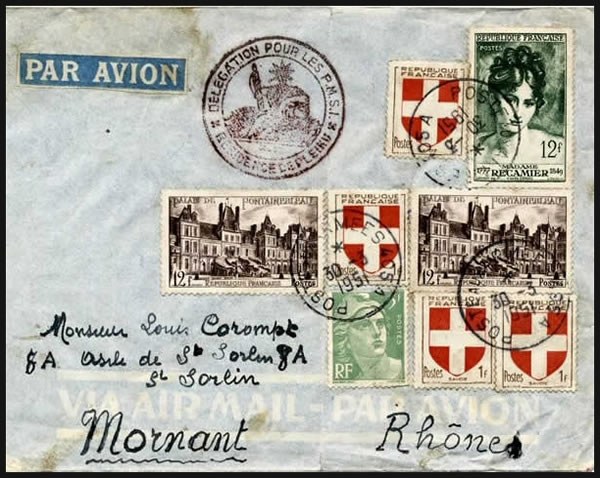
- P.M.S.I. Populations Montagnardes du Sud-Indochinois
- The highland territory created by the French high commissioner, Thierry d’Argenlieu, by ordinance on May 27, 1946: the five provinces of Darlac, Haut-Donnai, Langbian, Pleiku and Kontum, detached from Annam, with their seat at Ban Me Thuot. The initials stand for the peoples, not the country, though the name is often written Pays Montagnard du Sud-Indochinois. The ordinance is in our library, with an English translation in our library.
- P.M.S. Pays Montagnards du Sud; Crown Domain
- The same country after 1950. An ordinance of April 15, 1950, attached the provinces inhabited by non-Vietnamese peoples to the person of Bảo Đại, as chief of the State of Vietnam, as a Crown Domain; a decree of July 25, 1950, created his Delegation for the Crown Domains of the P.M.S.; and on May 21, 1951, at Dalat, he signed its statut particulier.
- Statut particulier special statute
- The charter of 1951, which promised at once to guarantee “the eminent rights of Viet-Nam” and the free development of our peoples in respect of their traditions and customs. After the rising of 1964 FULRO’s central demand was that every future government honor a statute of the same kind; a new one was drafted by a congress of highland representatives, and in August 1968 it was still waiting to be promulgated.
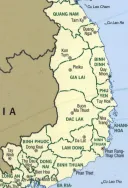
- Cao Nguyên, Miền Thượng, Tây Nguyên
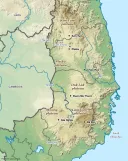
- The Vietnamese names for the highlands: the high plateau and the highland region under the Republic of Vietnam; since 1975, Tây Nguyên, the western plateau. On July 1, 2025, its provinces were merged with the coastal provinces beside them; see A map of the highlands.
- Annamite chain
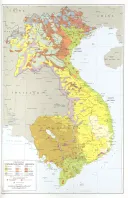
- The mountain range along the spine of Indochina, the Chaîne Annamitique of the French maps, which the Vietnamese call Trường Sơn. It is the watershed between the Mekong and the sea; our plateaus lie along it and to the west of it.

Movements and organizations
- Front for the Liberation of the Montagnards
- The first highland political organization, secret, which wrote to Ngô Đình Diệm in March 1955 with a list of demands, among them the right to fly our own flag.
- BAJARAKA
- From Bahnar, Jarai, Rade, Kaho (Koho). Our first modern political movement, 1957–58, unarmed. When two thousand people gathered in Ban Me Thuot to demand the release of its arrested members, the government sent armored units of the 23rd Division to break up the demonstration. The movement was ended by prison: its leaders were arrested from September 1958, and Y Bham Enuol was held until early 1964. See The BAJARAKA movement.
- FULRO
- Front Unifié de Lutte des Races Opprimées, the United Front for the Struggle of the Oppressed Races. The highland, Cham and Khmer Krom fronts merged in the summer of 1964 and issued their declaration on August 1; the front came into the open with the rising of the night of September 19–20, 1964. The armed struggle ended in Mondulkiri in 1992, when the last men and their families, counted at 398, 400 and 407 in different accounts, came out to the United Nations. Printed versions of the French name are often garbled; this is the correct one. See FULRO.
- FLHP, FLC, FLKK
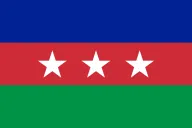
- The three fronts of FULRO: the Front for the Liberation of the Highlands, the Front for the Liberation of Champa and the Front for the Liberation of Kampuchea Krom. See The Dega flags.
- Highland Affairs
- The South Vietnamese offices for the highlands: a Directorate for Highland Affairs under the prime minister from 1964, raised to a Special Commission for Highland Affairs in 1966 under Paul Nur, and later a Ministry for the Development of Ethnic Minorities. See Paul Nur and Nay Luett.
- Tin Lành Dega “Dega Protestantism”
- Evangelical Christianity as practiced by our own congregations, in our own languages; as a movement it emerged in 2000, joining faith to the defense of our land and, for some, to self-rule. The state treats it as a political front rather than a religion. Prime Minister’s Instruction No. 01/2005/CT-TTg of February 4, 2005, allowed worship only to groups with no connection to Dega Protestantism or FULRO.
- ECVN, SECV
- The Evangelical Church of Vietnam, whose southern branch is the government-authorized Protestant church in the highlands. Registering with it is the lawful route; refusing to has been a stated reason for arrest. See The Evangelical Church and registration.
- Ha Mon
- A highland Catholic movement founded in Kon Tum in 1999, which the authorities call a sect and have met with forced renunciations. See Ha Mon.
- Montagnard Dega Association
- The first organization of our elders in North Carolina, founded in Greensboro in 1987.
- Montagnard Foundation
- The organization of Kok Ksor, which took the name “Degar-Montagnards” into the Unrepresented Nations and Peoples Organization, a member from 2003 to 2016. See Kok Ksor.
Words of the American war
- CIDG Civilian Irregular Defense Group
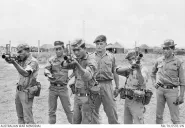
- The American Special Forces program that armed and trained highland villages from 1961, beginning with one medical sergeant at Buon Enao and growing to more than twelve hundred Special Forces soldiers by October 1964. Formally the Vietnamese Special Forces commanded; the Americans advised.
- Buon Enao
- The Rhade village of about four hundred people near Ban Me Thuot where the program began in October 1961. By the middle of April 1962, forty villages around it had joined.
- Strike force
- The full-time armed companies of a CIDG camp, as distinct from the village militia.
- A-team
- The twelve-man Special Forces detachment that lived in each camp.
- Mike Force
- The mobile strike forces, the first formed in October 1964 in II Corps, used as reserves to reinforce camps under attack. See Mike Force and SOG.
The machinery
- Dinh điền “land development center”
- The Diệm government’s program to settle lowland Vietnamese in the highlands, formulated in 1956 and launched in 1957. By 1963 there were 225 centers with 274,945 people. A Highlander Resettlement Program followed in 1958, moving our villages off their land.
- Định canh định cư “fixed cultivation, fixed residence”
- The sedentarization program of the Communist government, launched in 1968 in the north and extended to the highlands after 1975. Presented as ending an unstable nomadic life, it moved villages off long-rotation land onto plots that could not feed them.
- Vùng kinh tế mới “New Economic Zone”
- The settlement program that moved lowland people into the highlands after 1975, with state farms and forest enterprises. Between 1976 and 1996 Dak Lak alone took in 311,764 planned migrants and about 350,000 others who came on their own.
- Public self-criticism session tờ giấy kiểm điểm, the pledge form
- A compulsory village meeting at which people are made to renounce their faith and undertake to cease religious or political activity, usually by signing a pledge. Recorded officially as voluntary. Forced renunciation is prohibited on paper by Instruction No. 1 and by Decree 22 of March 1, 2005.
- Goat’s blood ceremony
- From May 2001, in at least two dozen villages of Ea H’leo district and in Ea Sup and Gia Lai, people who had joined the February demonstrations were made to stand before the village and the provincial officials, confess, renounce their religion and drink rice wine mixed with goat’s blood, while soldiers surrounded the village. The Jarai who were asked had never heard of such a ceremony. It is not our custom; it looks like officials’ imitation of the old alliance oath, turned into an oath of submission.
- Mobile court tòa án lưu động
- A court convened outside a courthouse as a public event. On January 20, 2024, a mobile court convicted one hundred people on terrorism charges at one sitting; fourteen UN experts called it a prejudicial tool to collectively shame the defendants, without a clear legal basis and not independent.
- PA43, A43
- The provincial units of the Department of Central Highlands Security, a Ministry of Public Security department founded on July 19, 2004, and renumbered A90 in 2010.
- Penal Code articles
- The charges used against us. Under the code of 1999: article 87, undermining the unity policy; 88, propaganda against the state; 89, disrupting security; 91, fleeing abroad to oppose the people’s administration; 258, abusing democratic freedoms. Under the code of 2015, in force from 2018, the same offenses are articles 116, 117, 118, 121 and 331, and terrorism is 113. None of the first five requires an act of violence to be proved. See The laws used against us.
- Education center cơ sở giáo dục
- A place of detention without trial, used against highland Christians.
- Non-refoulement
- The rule that no state may return a refugee to a country where his or her life or freedom would be threatened. On November 28, 2025, Thailand returned Y Quynh Bdăp, a recognized refugee since 2019, to Vietnam; UN experts said that the transfer violated the obligation. See Asylum today.
Spellings you will have to search
Names in the records on this site were written down by many hands, from several languages, over sixty years. If a search fails, the name is probably present under another spelling. These are the variations that actually occur.
| Element | Variants you will meet | Why |
|---|---|---|
| Men’s name prefix | Y-, Y , Y joined to the name | The Rhade and Jarai prefix for men, punctuated differently by each source |
| Women’s name prefix | H’, H , Ho | The prefix for women, with the apostrophe often lost in typing; some older records write Y- for women too |
| Diacritics | Byă / Bya · Bdăp / Bdap / Buondap · Êñuôl / Enuol / Eñuol · Nưr / Nur | Vietnamese and Rhade spelling against plain ASCII |
| “Village” | Buôn / Buon · Plei / PLei / Plếi / Plây · Bon / Bổn · Kon | Rhade, Jarai, Mnong and Bahnar words, plus Vietnamese làng and thôn on official maps |
| Districts | Dakdoa / Dak Doa / Đắk Đoa · Krông Pắc / Krong Pac · Chư Sê / Chu Se / Cu Se · Cư Kuin / Cu Kuin | Re-spelled repeatedly; some districts were also re-drawn, and all were abolished in July 2025 |
| Provinces | Darlac / Daklak / Dak Lak / Đắk Lắk · Kontum / Kon Tum · Gialai / Gia Lai | Dak Nong was separated from Dak Lak in 2004, inside the period the prisoner records cover; in 2025 the provinces were merged |
| Peoples | Rhade / Rhadê / Rade / Raday / Ê Đê / Ede · Jarai / Jorai / Gia Rai / Jrai · Bahnar / Ba Na · Mnong / M’nông / Bunong / Pnong | French, American, Vietnamese and self-designations, all in circulation |
| Buon Ma Thuot | Banmethuot · Ban Me Thuot · Buon Ama Thuot · Buon Me Thuot · Lac Giao | The colonial spelling, the wartime American one, two modern ones, and Lac Giao, the name on South Vietnamese maps |
| FULRO | Front Unifié de Lutte des Races Opprimées · “de la Lutte” · “des Race” · “pour la Libération” | The first is correct; the others are misprints that recur in reports |
The practical rule: search the distinctive part of a name, without prefixes, without diacritics, and in more than one province’s table. The prisoner records explains the search in full.
See also
- Who are the Dega — why the name is the argument
- The tribes and the languages — the peoples, and their spellings
- Four highland towns — what Buôn Ma Thuột, Pleiku, Kon Tum and Đà Lạt mean
- Writing our languages — how our words came to be written
Sources
- Human Rights Watch, Repression of Montagnards (2002), footnote 5 and chapters III, IV, V and XVI — the official names 1955–75 and after, anak ede gar, BAJARAKA, the settlement programs, the goat’s blood ceremonies; No Sanctuary (2006), in our library — the pledge forms; Montagnard Christians in Vietnam (2011), in our library — Tin Lành Dega, Instruction No. 1, Decree 22, SECV, Ha Mon, PA43, education centers
- UNHCR Centre for Documentation and Research, Vietnam: Indigenous Minority Groups in the Central Highlands (WRITENET, 2002) — Moi, Kha and Pnong, Pémsiens and Proto-Indochinois, the American and Vietnamese names, Cao Nguyên, Tây Nguyên
- Department of the Army, Minority Groups in the Republic of Vietnam (1966), in our library — the warning against moi, đồng bào Thượng, the village words, the communal house, jar wine, the sadet
- Gerald C. Hickey, The Major Ethnic Groups of the South Vietnamese Highlands, RAND RM-4041 (1964), in our library — ray, po lan, the longhouse, the xep, the Crown Domain; The Highland People of South Vietnam, RAND RM-5281 (1967), in our library — the Rhade meaning of Dega, FULRO’s names, Highland Affairs, the land development program
- Central Intelligence Agency, The Highlanders of South Vietnam (1966), in our library — the letters of August 9, 1965
- The ordinance of May 27, 1946, in our library; the ordinance of May 21, 1951, from our own records; Christopher Goscha, “Pays Montagnards du Sud (PMS),” Historical Dictionary of the Indochina War
- US Department of State, Foreign Relations of the United States 1964–68, vol. V, document 264 — the statute still unpromulgated in August 1968; Constitution of the Republic of Vietnam (1967), articles 2, 24, 97 and 98; Constitution of the Democratic Republic of Vietnam (1946), articles 8, 15 and 66
- Robert W. Jones Jr., “A Team Effort,” Veritas 3, no. 2 (2007) — “Yard”; Francis J. Kelly, U.S. Army Special Forces 1961–1971 (1973), in our library — CIDG, Buon Enao, the strike forces, the A detachment, the mobile strike forces
- Office of the UN High Commissioner for Human Rights, press releases of August 28, 2024 and December 3, 2025 — the mobile court and the return of Y Quynh Bdăp; Radio Free Asia, “Vietnam says there are no Montagnards in its Central Highlands,” August 9, 2023; UNHCR, Master Glossary of Terms (2006) — non-refoulement
- Penal Code of 1999, English translation, International Commission of Jurists; Criminal Code of 2015, English translation, in our library; United Nations in Viet Nam, UN Recommendations on the 2015 Penal Code (2017) — the article numbers
- Human Rights Watch, Training Document of the Central Bureau of Religious Affairs (2006, unofficial translation) — the dates of Instruction No. 1 and Decree 22; UNESCO, Space of Gong Culture; UNPO, Degar-Montagnards
- Our own records — Anak Cu Chiang
Compiled September 2026. Vietnamese terms are given with their diacritics; highland place names in the text are given plain, as they appear in most of the records. Where a term has been used in more than one sense, each is given. If your family uses a word for any of these things that this page does not carry, write to us.