











Knowledgebase
Records and how to use us
The timeline, the names, the prisoners, and how to bring something to us safely.
Articles
19 articles
Timeline: 875 to today
The Dega story in one place, from the Cham kingdom on the coast to the extradition of a refugee from Bangkok in November 2025 and the trials of 2026. Each entry is short; where an article in this library covers it in depth, the entry links to it, and the sources are given there.
Names and words
Reading about the Dega means reading four vocabularies at once, ours, the French, the Americans’ and the Vietnamese state’s, and they do not agree. Each outside name was given by someone at a particular moment for a particular purpose, and each still carries the purpose. This glossary gives the words you will meet in the records on this site: wh...
Frequently asked
The questions we are actually asked, including the hostile ones, which we would rather answer than leave to be answered for us.
Reporting safely from inside the highlands
For anyone inside the Central Highlands, or with family there, who is thinking of sending information to people abroad, to us or to anyone else. It sets out what has happened to people who did, what the state can now see, and the choices that make contact less dangerous. It cannot make contact safe.
How to document an incident
A report that a human rights body can act on looks different from a report that something terrible happened. This page sets out what makes the difference, what each UN mechanism asks for, how to keep photographs and files so that they prove something, and what writing it down can cost a person in Vietnam today. Read Reporting safely first.
Reporting an incident to DCHO
How to bring something to us, what we do with it, where it can go, and what we will and will not do. It is written for a family or a witness who has decided to tell someone outside what happened. If you are inside the Central Highlands, read Reporting safely before you do anything on this page.
The prisoner records: what they are and how to search them
Our records hold 337 Dega by name, men and one woman imprisoned for their faith, their land or their people in five provinces, arrested between 2001 and 2006. This page explains what the records are, where they came from, what they show, how they compare with the lists kept by others, what the gaps mean, and how to search them for somebody, incl...
If a family member is detained
What to write down and what to try, in the first hours and the weeks after, in Vietnam and in Thailand. We are not lawyers and this is not legal advice. It is what families who have been through it have told us mattered, set beside what the law says and what happens in practice.
Prisoners of conscience: Gia Lai
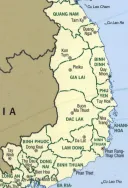
Two hundred and thirty-three Dega from Gia Lai province, recorded by name as imprisoned for their faith, their land or their people, arrested between 2001 and 2006. This is the largest of our five province records, and the one with the most silence in it: for sixty-two of these people the record ends in “whereabouts unknown” or “family believes...
The memorial register
This register names the Dega men and women whose deaths since 1975 at the hands of the police, soldiers or prison authorities of Vietnam have been published by an independent source. It is short, and that is the first thing to understand about it. The most-cited figure about our dead — at least twenty-five Montagnards dead in custody since 2001...
Prisoners of conscience: Dak Lak
Sixty-six Dega from Dak Lak province, recorded by name as imprisoned for their faith, their land or their people, arrested between 2001 and 2004. Almost every one of them carries a sentence and a prison in the record, and almost every prison is the same one: Ha Nam, in the north. It is a record, not an argument. Every line is a person somebody i...
Prisoners of conscience: Dak Nong
Thirteen Dega from Dak Nong province, recorded by name as imprisoned for their faith, their land or their people, arrested between 2004 and 2006. For two of them the record ends in “family believes murdered.” Dak Nong barely existed as a province during these years, and its short record has to be read together with the Dak Lak one it was carved...
Prisoners of conscience: Binh Phuoc
Fourteen Dega from Binh Phuoc province, recorded by name as imprisoned for their faith, their land or their people, all from a single district, Bu Dang, and arrested in 2005. Binh Phuoc lies just outside the Central Highlands, and its presence in these records is a reminder that our people, and the arrests, did not stop at the provincial line. I...
Prisoners of conscience: Kontum
Eleven Dega from Kon Tum province, recorded by name as imprisoned for their faith, their land or their people, arrested in 2004 and 2005. Not one sentence is recorded against any of them. That blank column is itself the record’s clearest statement about how little news left this province. It is a record, not an argument. Every line is a person s...
What we do not know
Every page in this library carries its sources and says where it is thin. This page gathers those places in one list: the figures nobody has been able to settle, the years we have almost nothing on, the documents we know exist and have never seen, the names we are missing, and the places where our sources disagree. It is kept deliberately, becau...
Sources and method
How this library is built, what it is made of, what it does with its sources, and the rules it holds itself to. If you intend to use anything here in a submission, a filing, a court case or an article, this page tells you what you are relying on and how far it can be pushed.
How to record an elder’s story
Most of our history was never written down. It lives in the memories of people now in their seventies, eighties and nineties, in North Carolina, in Cambodia and in the highlands, and when they die it goes with them unless someone records it. This is a practical guide for families who want to do that. It covers asking permission properly, recordi...
The Dega flags
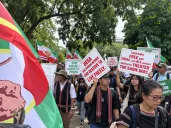
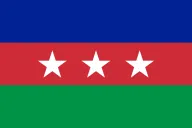
There is no single Dega flag. There have been at least eight, each made by a movement or an organization at a particular moment, and each carrying the history of the people who made it. Before any of them was sewn, a flag of our own was already a political demand: our leaders asked for one in 1955, in 1964, four times in 1965, in 1966 and in 196...
Where to find photographs, and how to credit them
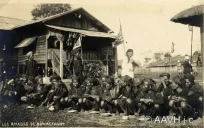
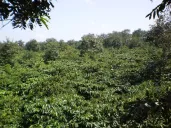
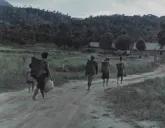
Every photograph in this library has a source and a license, and we credit each one. This page lists where pictures of the highlands and of our peoples can be found, which of them may be reused and on what terms, what the licenses mean, and how we credit what we use, so that families, teachers and writers can do the same. It ends with what matte...
Powered by WBAMS