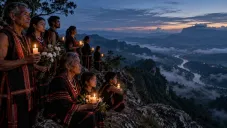
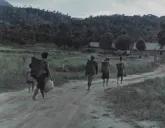
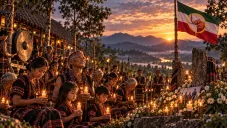
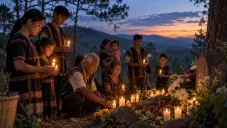

We are the indigenous peoples of the Central Highlands of Indochina: some thirty peoples, two unrelated language families, one plateau, and a single shared experience of what has been done to it. Almost every name the outside world knows us by was given to us by somebody else, and each one carries an argument about who we are and who has the right to say so. This page gives the short answer, then the names in the order they were put on us, then the two things that make the claim an indigenous claim rather than a plea for fair treatment: our prior and continuing relationship with the country, and the international instruments Vietnam itself has voted for.

The short answer
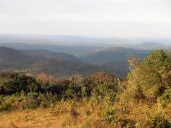
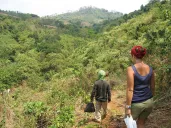
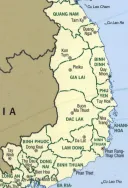
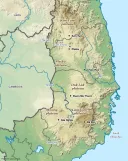
The Dega are the original inhabitants of the plateau country that runs down the spine of southern Vietnam, between the Annamite range and the Cambodian and Lao borders. The American handbooks of the 1960s measured it at roughly a hundred miles wide and two hundred long, from the Ngoc Linh massif in the north, 8,500 feet high, to the edge of the delta fifty miles above Saigon: two plateaus, the northern one around Kon Tum, Pleiku and Buon Ma Thuot at six hundred to sixteen hundred feet, and the southern one around Dalat at three thousand and more, with the Lang Bian peaks above the town. For most of the twentieth century that country was five provinces, Kon Tum, Gia Lai, Dak Lak, Dak Nong and Lam Dong. On July 1, 2025, Vietnam merged its sixty-three provinces into thirty-four and the five ceased to exist as separate units: Kon Tum went into Quảng Ngãi, Dak Nong into Lâm Đồng with Bình Thuận, Gia Lai into a province run from Quy Nhơn on the coast, and Dak Lak absorbed Phú Yên. The lines on the map move. The plateau has not.
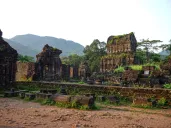
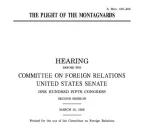
We were there before the Vietnamese state reached the coast below us, before the French drew the borders of Indochina, and before either of the two Vietnams existed. The archaeology says so: more than sixty sites of the late Neolithic and early metal age have been found on the plateau, and at Lung Leng in the Kon Tum lowlands twenty-one radiocarbon dates put the occupation between 3,500 and 2,000 years ago. The people of those sites are the ones from whom the Sa Huynh culture of the coast, the ancestor of Champa, took part of its shape. Our own accounts say two thousand years, which is what our witnesses told the United States Senate in 1998. The ground says longer.
.jpg)
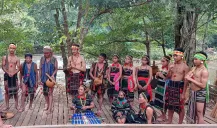
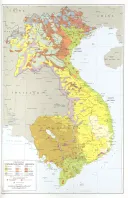
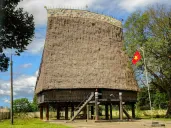
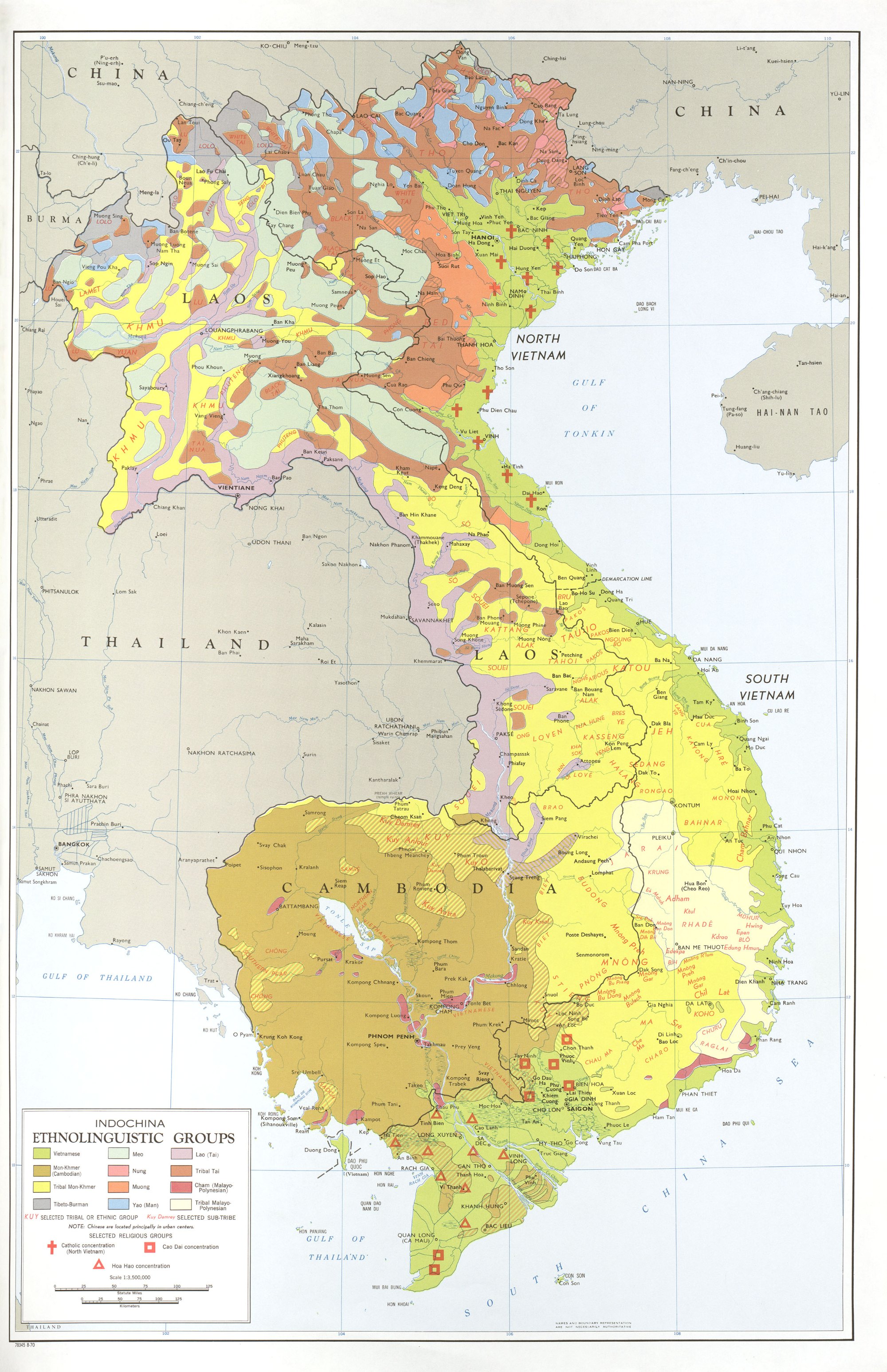
We are not one people in the way a nation-state understands the word. We are a federation of peoples, Jarai, Rhade, Bahnar, Koho, Mnong, Sedang, Ma, Stieng, Raglai, Chu Ru, Bru, Katu, Brau, Ro Mam and others, speaking languages from two different families, with different marriage rules, different house forms and different histories of contact. The count of peoples depends on who is counting: eighteen tribal chapters in the American handbook of 1966, “approximately 22” in the CIA’s review the same year, “more than 30” in the Australian and British government notes of the 2020s, “over 28” in our own organization’s count, and thirty or so in most modern references. Vietnam’s own list of fifty-four ethnic groups, fixed in 1979, cuts the plateau another way, and merges some of our peoples into others. What makes us one is not descent from a common ancestor. It is a common relationship to the same country, a common way of living on it, and a common history of being displaced from it. Before the French there had never been a political structure above the village, and none of our languages had a word for all the highland peoples together. The word came with the outsiders, and we have made it ours.
The names, and who gave them
The question of what to call us is not a footnote. Each name in the list below was given by a neighbor or a ruler, at a particular moment, for a particular purpose, and each one still carries the purpose.
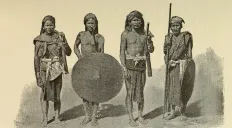
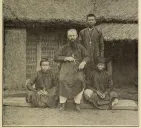
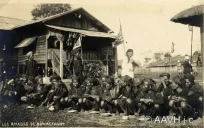
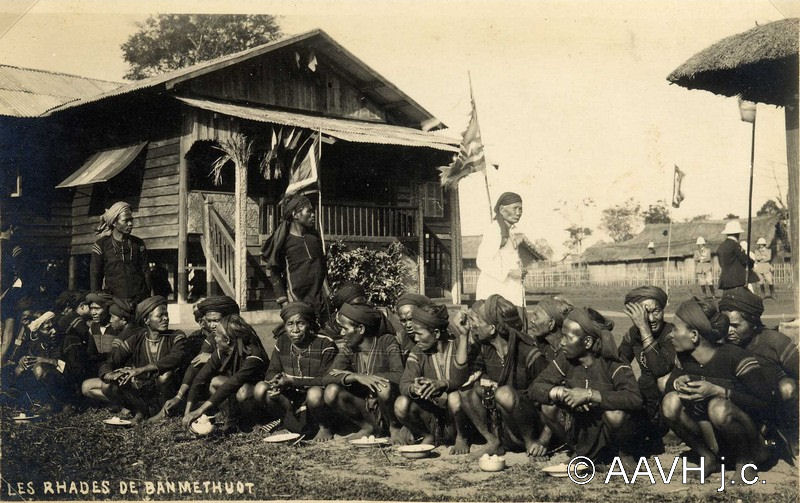
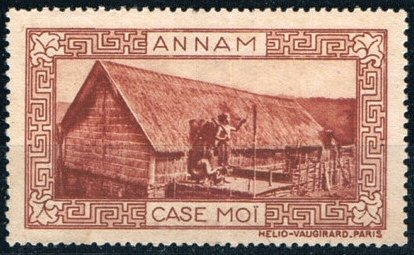
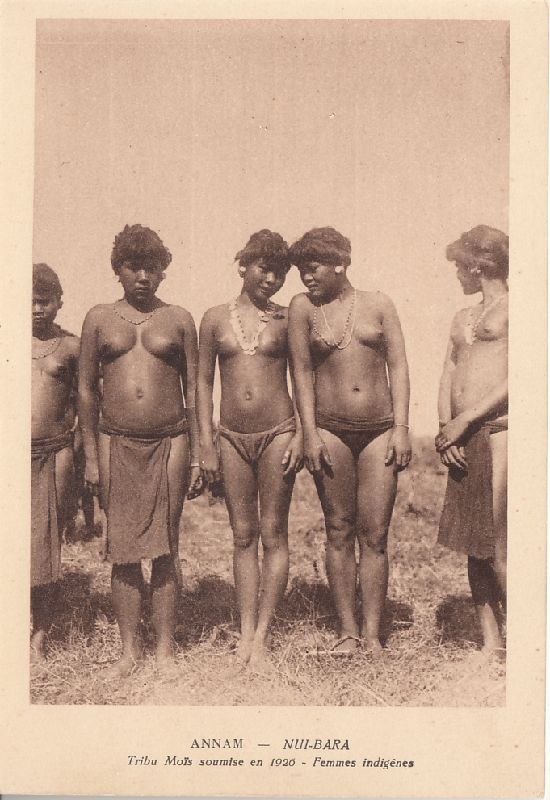
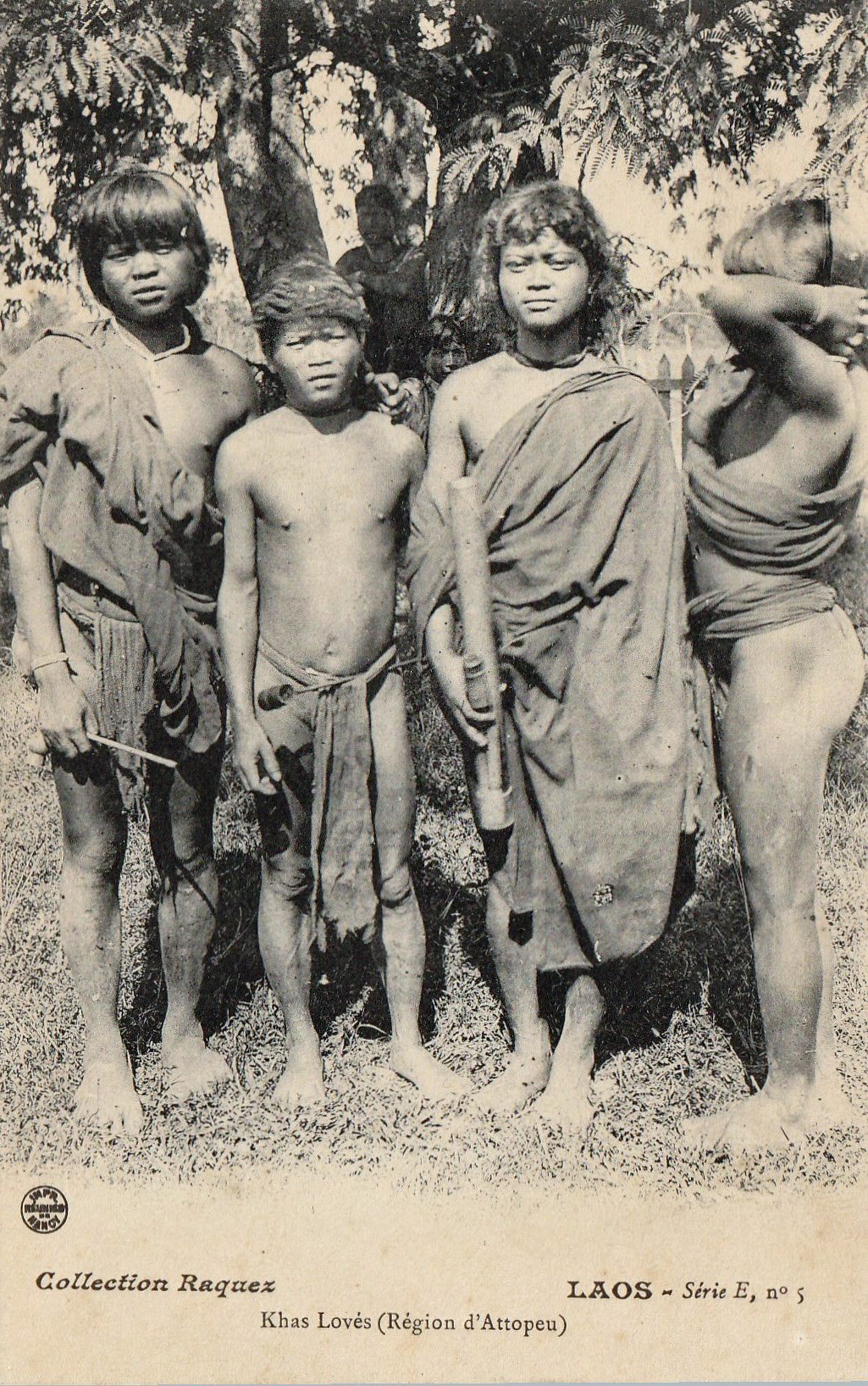
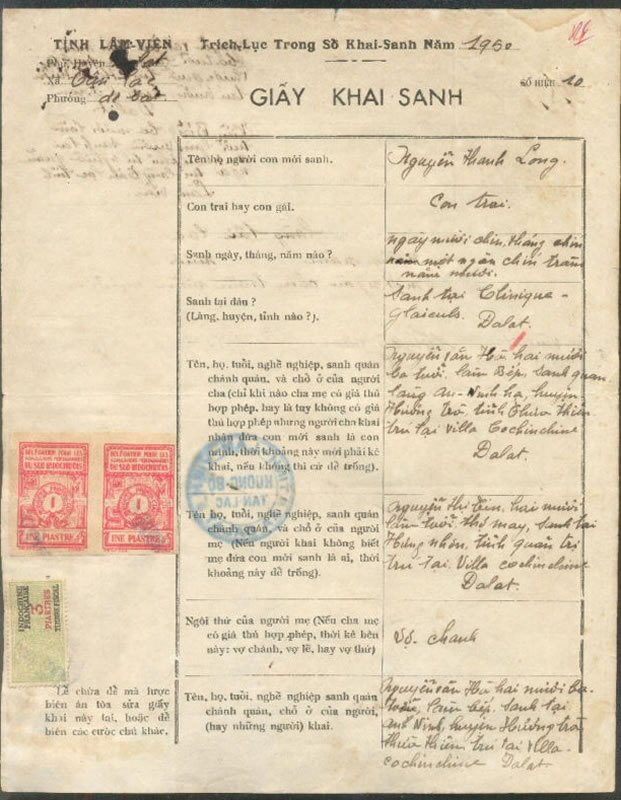
Mọi is the old Vietnamese word, and it means savage. It is not a neutral word and never was. It is in the Gia Định gazetteer of the early nineteenth century, which describes the mountains in the north of the province as “full of interminable forests” where “the populations moi” live in their small villages and pay tribute to the empire of Annam; European maps of the 1600s already carry it as “Kemoy.” The French took the word over from the Vietnamese and made it their own: their earliest writing calls us sauvages, and by the 1900s the Vietnamese word had displaced even that. It went on stamps, postcards and the captions of family photographs. The American army was still warning every soldier in 1966, in every chapter of its handbook on our peoples, that “the term moi should not be used, because it means savage and is offensive to the tribesmen.” It had to warn them because the word was still current. We have never found the date on which any Vietnamese government formally gave it up.


Kha and Pnong are the same word in Lao and Khmer: slaves, or savages. The Lao called every highland people west of the Annamite crest Kha, and the slave markets of Attapeu were where the people taken from the Sedang, Jeh and Halang country were sold. The Khmer word Pnong comes from the Mnong’s own word for themselves, bu Nong, the people of the village, and was turned into a general term of contempt for everyone in the forest east of the Mekong. The Cham called us Mlecchas and Kiratas, barbarians and mountaineers, in Sanskrit. Every lowland neighbor had a word like this, and none of the words was ours.

.jpg)
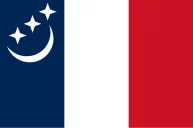
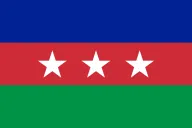
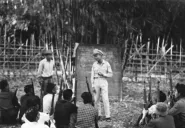
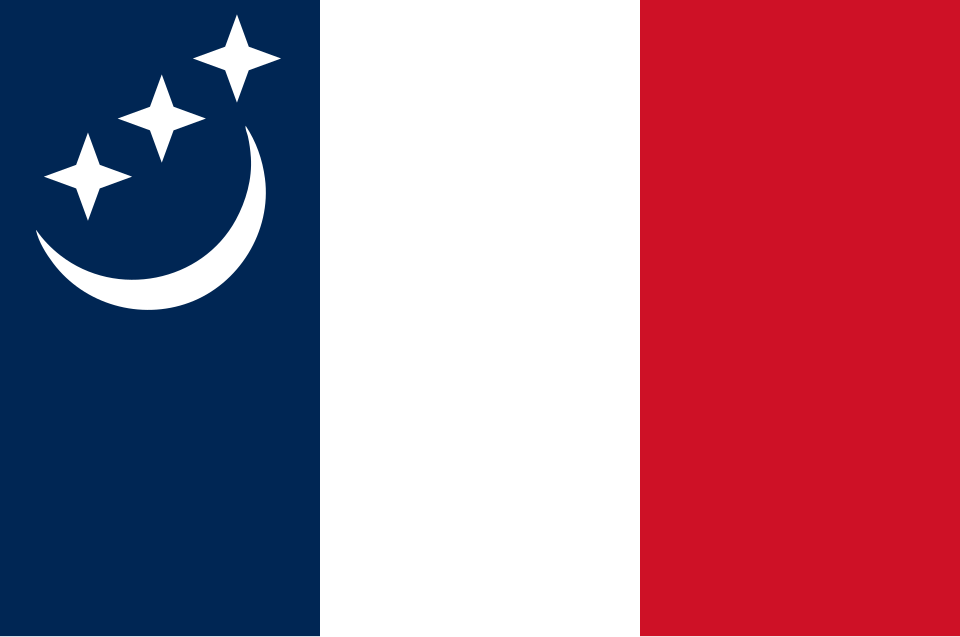
Montagnard is French for a mountain person or highlander. It is descriptive and not hostile, but it is a colonial category, and it has a birthday. On May 27, 1946, the French high commissioner Thierry d’Argenlieu, faced with Hanoi’s claim to all of Vietnam, signed a decree making the five highland provinces of Annam a “Special Administrative Circumscription,” the autonomous territory of the Populations montagnardes du Sud-Indochinois, the PMSI, under a French delegate. Four days later he created the separate Republic of Cochinchina. The French spokesman at the Fontainebleau conference that summer said that “neither geographically, historically nor ethnically” could the highlands be considered part of Vietnam. In 1950 two decrees attached the same provinces personally to the emperor Bảo Đại as the Crown Domain of the Pays Montagnard du Sud, and in May 1951 he signed the statut particulier, which guaranteed us the rights of Vietnamese citizens, the “free evolution” of our peoples “in the respect of their traditions and of their customs,” our chiefs, our customary law, and, in its seventh article, that “the rights acquired by the natives over landed property are guaranteed them in entirety.” The colonial motive was plain: a French officer had written in 1934 of “the providential presence of large groups of vigorous and independent highlanders, of a race absolutely apart, capable of serving as a counterweight” to the Vietnamese and Khmer. But a name that had been an adjective became, for the first time, the name of a country with a flag, a seal and a capital, first Dalat and then, from 1948, Ban Me Thuot, and the hundreds of young men who met in the classrooms of the Collège Sabatier there and learned Rhade as a common language went home with a word for all of us. The Americans inherited the word from the French in the 1960s, which is why it is the one most used in English. The historian Mathieu Guérin, who has written the best French account of how we were governed, refuses it because it “refers too much to the colonial troops” and because our relationship was never really with the mountains; it was with the forest.

.jpg)
Người Thượng, highland people, is the polite Vietnamese term, the one the Republic of Vietnam used, and đồng bào dân tộc thiểu số, ethnic minority compatriots, is the official one today. The CIA analysts who reviewed our politics in 1966 wrote “Highlanders” throughout, and left “Montagnards” and “Moi” to the French and the Vietnamese. All of these are improvements on the older word. None of them concedes indigeneity. A minority is a fraction of a nation, and that fraction is precisely what is in dispute.
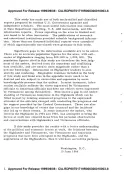
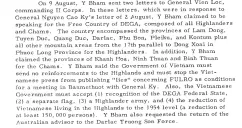
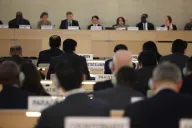
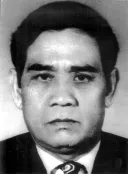
Dega, also written Degar, is ours, and it is the only one of these names that assumes we get to name ourselves. What it means is contested, and we would rather say so than pretend to a certainty we do not have. Our own organization in North Carolina glosses it as a Rhade word for “the first” or “the original.” The resettlement guide written for American caseworkers in 2002 says it comes from a Rhade creation story in which the first two highlanders were named De and Ga. The UNHCR’s researchers in 2006 gave “sons of the mountains,” from the Rhade de ga, “according to some accounts.” The spelling Degar, with the final r, belongs to the Montagnard Foundation of Kok Ksor, which took it to the Unrepresented Nations and Peoples Organization in 2003 as “Degar-Montagnards”; our own organization has long held that the spelling is a new term, created by the Foundation, with no distinctive meaning for the other peoples, and that the name that belongs to all five major peoples is Anak Cu Chiang, the Children of the Mountains, which is the name our own organization put on a record of our songs. No linguist has settled the morphology, and the Rhade dictionaries that might are not online. The date is clearer than the meaning. The earliest use in any record we have found is August 9, 1965: two letters from Y Bham Enuol, the president of FULRO, to the commander of II Corps, claiming to speak for “the Free Country of DEGA, composed of all Highlanders and Chams,” a country of seven highland provinces and all the mountains from the seventeenth parallel to Dong Xoai, and demanding recognition of “the DEGA Federal State,” a separate flag, a highland army, and the reduction of the Vietnamese living in the highlands to the level of 1954, a reduction, the CIA noted, of at least 150,000 people. The word was a political program before it was anything else. It came to the United States with the first refugees, who chose it over Montagnard because of the colonial associations of the French word, and it went into the name of the first organization our elders founded in Greensboro, the Montagnard Dega Association, in 1987. Vietnam uses it too, in its own way: Human Rights Watch found in 2002 that the authorities use “Dega” as a synonym for rebels, and the state treats Tin Lanh Dega, Dega Protestantism, as a cover for an independence movement rather than a religion. The UN Committee on the Elimination of Racial Discrimination wrote “Degar (Montagnard)” in 2012 and “Montagnards” in 2023. Neither committee asked us.
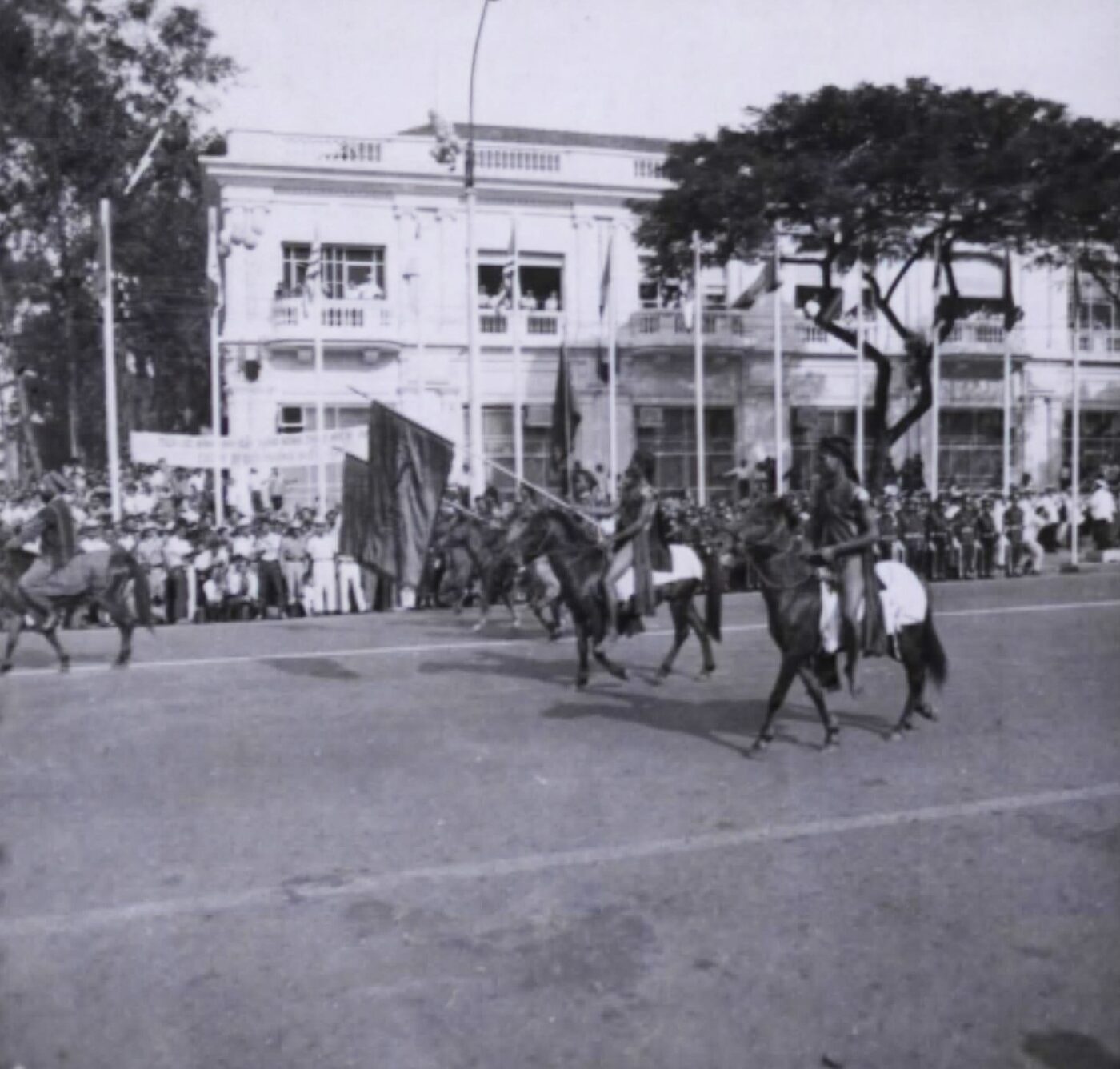

This library uses Dega throughout, and Montagnard where we are quoting or pointing to a source that uses it, which is most of the human rights literature, most of the American military record, and most of the resettlement paperwork that brought our families to North Carolina. We use the tribal names as the tribes use them, and give the Vietnamese and French spellings beside them on the tribes and languages page, because a prisoner appears under one spelling in one record and another in the next.
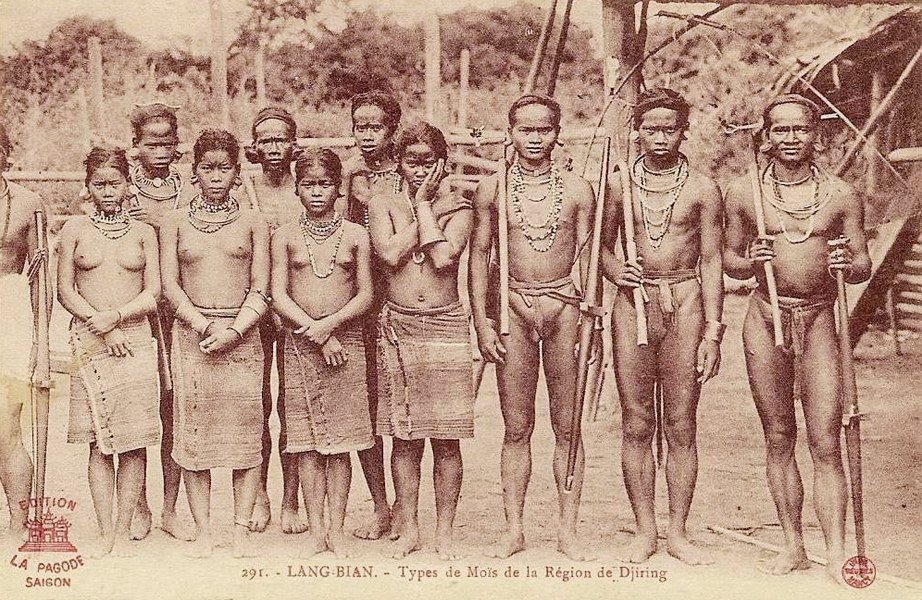

Two language families, one country
The clearest evidence that we are a federation rather than a single people is linguistic. Our languages divide between two families that are not related to each other at any reachable depth.
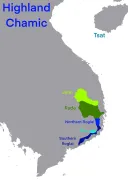
The Jarai, Rhade, Raglai, Chu Ru and Haroi speak Chamic languages, a branch of Malayo-Polynesian and therefore Austronesian, the family that runs from Madagascar through Indonesia and the Philippines to Polynesia. Our nearest linguistic relatives are the Cham of the coastal plain, and beyond them the Malay world; the Jarai and Rhade languages are close enough to each other to be placed together on a single branch. The Bahnar, Sedang, Mnong, Koho, Ma, Stieng, Hre, Cua, Jeh, Halang, Rengao, Brau and Ro Mam speak Bahnaric languages, a branch of the Austroasiatic family, related to Khmer and at a greater distance to Vietnamese itself. The Bru, Katu and Ta Oi of the northern end of the chain speak Katuic, a separate Austroasiatic branch, not Bahnaric at all. The old French and American handbooks called the second family Mon-Khmer; the linguists’ reference works today call it Austroasiatic and give the branches directly.
Two families on one plateau, intermarried, trading, sharing rituals and gong music and house forms for centuries. The American army’s own ethnographer found in 1964 that peoples speaking languages of different families, if they lived next to each other, were “sufficiently familiar with one another’s languages to communicate with relative ease.” The genetics agrees with him. A study published in 2024, from the mitochondrial DNA and Y chromosomes of 369 men of the Churu, Raglai, Rhade, Jarai, Cham, Koho, Hre, Bahnar, Mnong and Ma, found the Austronesian-speaking peoples of the highlands closer to their Austroasiatic-speaking neighbors than to any Austronesian population elsewhere, and concluded that the Austronesian languages spread on the plateau largely by people changing their language, not by one people replacing another. The two families are two histories of speech, not two bloods. That is what a homeland looks like when it has been continuously inhabited for a very long time by people who were not trying to become a single nation.
How many of us there are
Nobody has ever counted the Dega as Dega. Every figure is somebody’s count of somebody else’s categories, and the spread is about two to one. The State of Vietnam counted “an estimated 500,000” highland people in the Crown Domain in 1953. The Bajaraka movement claimed to speak for 586,000 in 1958. The American handbook of 1967 gave “approximately 600,000” for the Central Highlands and the CIA the year before “about 700,000.” The 1999 census, as the UNHCR’s researchers reproduced it, gave 317,557 Jarai, 270,348 Rhade, 174,456 Bahnar, 128,723 Koho, 92,451 Mnong and 66,788 Stieng; the 2019 census, as the British Home Office reproduces it, 513,930 Jarai, 398,671 Rhade, 286,910 Bahnar, 200,800 Koho and 127,334 Mnong. These are the Vietnamese state’s counts of a people it governs, and we cite them through the independent works that repeat them. The resettlement guide of 2002 and Human Rights Watch the same year said about one million; the Minority Rights Group and the Australian government say between one and two million; the State Department told the Senate in 1998 “800,000 to 1,000,000.” Across the border, Cambodia’s 2019-based count of its twenty-two indigenous peoples came to 172,980, of whom the Bunong, Tampuan, Jarai and Kreung, our own peoples on the other side of a French line, are the four largest.
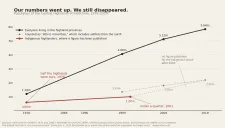
The figure that matters more than any total is the share. At the beginning of the twentieth century the four highland provinces held around 240,000 people and almost all of them were us. Between 1940 and 1989 the Vietnamese share of the highland population rose from 5 percent to 66 percent; by 2002 the region held about four million people, of whom a quarter were indigenous; today the Kinh are around two-thirds. We became a minority in our own country within a single lifetime, by policy. The population page sets the counts beside each other and says what each one is.
What makes the claim an indigenous claim
Vietnam’s position is that we are among the fifty-three ethnic minorities of a country of fifty-four ethnic groups, entitled to the protections the state extends to minorities and to nothing more. Its delegation told the UN’s racial discrimination committee in November 2023 that the state “did not use the term ‘indigenous peoples’ but rather ‘minority people’ for historical reasons.” Our position is that we are indigenous peoples with a distinct territory, a prior and continuing relationship with that territory, our own institutions of law and governance, and a history of dispossession, and that this meets the ordinary international meaning of the term.
The international meaning is not ours to invent. The UN’s Martínez Cobo study, the foundation of everything since, defined indigenous peoples in 1986 as those “having a historical continuity with pre-invasion and pre-colonial societies that developed on their territories,” who “consider themselves distinct from other sectors of the societies now prevailing in those territories,” who form “non-dominant sectors of society,” and who are “determined to preserve, develop and transmit to future generations their ancestral territories, and their ethnic identity.” The UN’s working understanding today rests on self-identification, historical continuity with pre-colonial societies, a strong link to territory, distinct social and political systems, distinct language and culture, a non-dominant position, and the resolve to continue as a distinct people. The ILO’s Convention 169 of 1989 defines indigenous peoples by descent from the populations that inhabited a region “at the time of conquest or colonisation or the establishment of present State boundaries,” and makes self-identification “a fundamental criterion.” Every element of every one of those tests is met on this plateau. We were here before the coast was Vietnamese. We keep our own law, our own languages and our own villages. We are governed by others. We have not agreed to stop being ourselves.
The distinction is not academic. A minority asks a state for fair treatment. An indigenous people has, under an instrument Vietnam voted for, rights that exist independently of the state’s generosity. On September 13, 2007, the General Assembly adopted the Declaration on the Rights of Indigenous Peoples by 143 votes to 4, and Viet Nam is in the list of those in favor. The Declaration says that indigenous peoples have the right to self-determination (article 3), to autonomy in their internal affairs (article 4), to the lands, territories and resources they have traditionally owned or used (article 26), to determine their own identity and membership (article 33), and that they “shall not be forcibly removed from their lands or territories,” and that no relocation shall take place “without the free, prior and informed consent of the indigenous peoples concerned” (article 10). Vietnam has not ratified Convention 169, and it does not recognize any of its peoples as indigenous. The UN’s racial discrimination committee has told it twice, in 2012 and again in December 2023, that it notes the state’s “reluctance to engage in open and inclusive discussions on the recognition of indigenous peoples,” has asked it to respect “the principle of self-identification” of the Khmer Krom and the Montagnards, and has found that under the present land law our communities are “only notified 15 days in advance that their land has been acquired and are subject to relocation, without compliance with the principle of free, prior and informed consent.” Which word applies decides what can be asked for. That is why the word is fought over, and it is why the fight over the word looks, from outside, disproportionate to what it is about. It is not about a word. It is about whether the land can be taken with fifteen days’ notice.
What we are not saying
We are not saying the Dega are the only people with a claim to live in the Central Highlands, or that the Vietnamese families who have farmed there for three generations should be moved. Most of them were sent there by a state program and had no more choice about it than we did. The dispute is with the policy and with the state that ran it, not with the neighbors it produced.
Where we are now
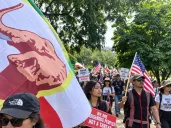
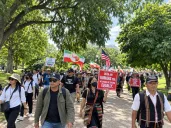
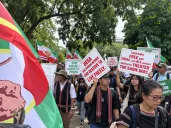
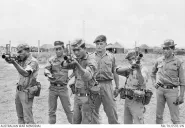
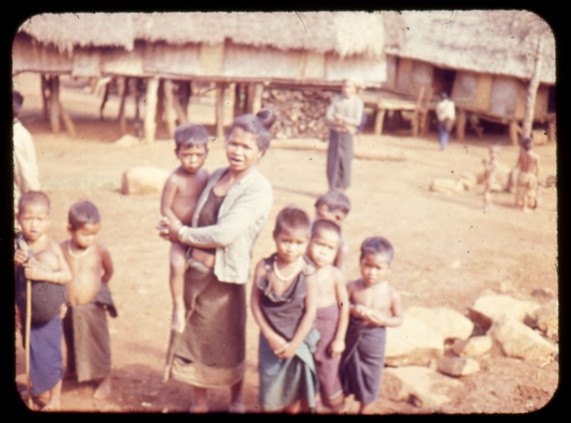
Most of us are still on the plateau, under a state that convicted a hundred of us in January 2024 for the attacks on the commune police stations in Dak Lak on June 11, 2023, and that prosecutes, in the UN committee’s words, “a disproportionate number” of us under its terrorism law. Some thousands are outside. The first two hundred and twelve of our soldiers, the remnant of FULRO, reached North Carolina on November 24, 1986; a second group of about four hundred, found in the forests of Mondulkiri and Ratanakiri by the UN peacekeepers in Cambodia, arrived in November 1992; close to nine hundred villagers who had fled the crackdown after the demonstrations of February 2001 were resettled in Greensboro, Charlotte and Raleigh in the summer of 2002; and about six hundred of the seven hundred and fifty covered by the agreement of January 2005 between the UNHCR, Cambodia and Vietnam went the same way, while ninety-four were deported and ninety-six went back. Small numbers came by family reunification in between. The North Carolina community was about 3,000 in 2000, about 5,000 in 2008, and is put today at more than 12,000, the largest Dega community outside Vietnam, as a United States senator said on the floor of the Senate in 2016. More than six hundred of us lived as unregistered refugees in Bangkok in 2018, and it was from Bangkok that Thailand extradited Y Quynh Bdăp, a UNHCR-recognized refugee and the founder of Montagnards Stand for Justice, to a ten-year sentence in Vietnam on November 28, 2025. We are in the highlands, in the Cambodian border provinces, in Bangkok, in the Piedmont of North Carolina, and, since 1986, in the records of the United States as people who came out of a war on the American side. All of that is who the Dega are.
.jpg)
Where to go next
- The tribes and their languages — who is who, how the two families divide, and every spelling of every name
- How many Dega there are — the counts from 1953 to 2019, and why they disagree
- The country itself — the plateaus, the rivers, the borders
- Names and words — the full glossary, including the terms you will meet in court documents and news reports
Sources
- Gerald C. Hickey, Sons of the Mountains: Ethnohistory of the Vietnamese Central Highlands to 1954 (Yale University Press, 1982) — the standard historical ethnography; Hickey, The Major Ethnic Groups of the South Vietnamese Highlands (RAND RM-4041, 1964), DCHO library — the two language stocks, “moi,” “nguoi thuong,” “montagnards,” the Crown Domain
- Oscar Salemink, The Ethnography of Vietnam’s Central Highlanders: A Historical Contextualization 1850–1990 (University of Hawai‘i Press / RoutledgeCurzon, 2003) — on how each administration produced the category it then governed; Salemink, Beyond Complicity and Naïveté (1999), DCHO library
- US Army, Minority Groups in the Republic of Vietnam (1966), DCHO library — the eighteen tribal chapters and the warning against “moi”; US Army, Area Handbook for South Vietnam (1967), DCHO library — the geography of the plateau, the 600,000
- CIA, The Highlanders of South Vietnam: A Review of Political Developments and Forces (June 1, 1966), DCHO library — “about 700,000,” twenty-two groups, Bajaraka’s 586,000, the letters of August 9, 1965 and the “Free Country of DEGA”; CIA, The Montagnard Problem in South Vietnam (June 27, 1966), DCHO library
- Raleigh Bailey, Montagnards: Their History and Culture (Center for Applied Linguistics, 2002), DCHO library — De and Ga, the choice of the name in the United States, the Montagnard Dega Association of 1987, the waves of 1986, 1992 and 2002
- Writenet for UNHCR, Vietnam: Situation of Indigenous Minority Groups in the Central Highlands (June 2006), PDF — “sons of the mountains,” the 1999 census table, 33 percent
- Human Rights Watch, Repression of Montagnards (April 2002), Refworld — “Dega” as the state’s word for rebels, 240,000 to four million, 5 percent to 66 percent, the statut particulier of May 21, 1951; HRW, Montagnard Christians in Vietnam (2011), DCHO library
- Unrepresented Nations and Peoples Organization, Degar-Montagnards — membership 2003–2016
- Christopher Goscha, Historical Dictionary of the Indochina War, “Pays Montagnards du Sud (PMS)” — the decree of May 27, 1946, Fontainebleau, the Crown Domain of 1950, the Collège Sabatier, the 500,000 of 1953
- Mathieu Guérin, Des casques blancs sur le Plateau des Herbes (thesis, 2003), DCHO library — Moi, Pnong and Kha, “Kemoy,” the officer’s letter of 1934, why he refuses “montagnards”; P. Cupet, Mission Pavie III (1900), DCHO library — Khas and Moïs
- Thomas Pearson, Missions and Conversions: Creating the Montagnard-Dega Refugee Community (Palgrave Macmillan, 2009), ch. 2 — no structure above the village and no word for all of us before the French
- UN General Assembly, Declaration on the Rights of Indigenous Peoples (resolution 61/295, September 13, 2007); José Martínez Cobo, Study of the Problem of Discrimination against Indigenous Populations, vol. V (E/CN.4/Sub.2/1986/7/Add.4), UN Digital Library, para. 379; UN Permanent Forum on Indigenous Issues, “Who are indigenous peoples?”; ILO, Convention No. 169, article 1
- UN Committee on the Elimination of Racial Discrimination, concluding observations on Viet Nam, CERD/C/VNM/CO/10-14 (April 16, 2012) and CERD/C/VNM/CO/15-17 (December 27, 2023), the latter as quoted in the UK Home Office Country Policy and Information Note (December 2024); OHCHR, summary of the CERD dialogue with Viet Nam (November 2023) — “for historical reasons,” the 100 arrested
- Minority Rights Group, Highlanders in Vietnam — thirty or so peoples, one to two million, two-thirds Kinh; Encyclopedia Britannica, Montagnard
- US Senate, Committee on Foreign Relations, The Plight of the Montagnards (March 10, 1998), DCHO library — “800,000 to 1,000,000”; Congressional Record, February 2, 2016, S485, Senator Burr
- Tran Qui Thinh, “Late Neolithic/Early Metal Age Sites in the Central Highlands (Tay Nguyen) of Vietnam,” Indo-Pacific Prehistory Association Bulletin 25 (2005), PDF — sixty sites, Lung Leng; Thao et al., “Investigating demic versus cultural diffusion and sex bias in the spread of Austronesian languages in Vietnam,” PLOS ONE 19 (2024), open access
- US-ASEAN Business Council, “Vietnam Launches Historic Transition to 34 Provinces” (June 16, 2025); Cambodia Indigenous Peoples Organization, National Report, Update 2024 — 172,980
- UN News, April 28, 2006 — the 750 of the January 2005 agreement, 605 resettled, 94 deported; IRIN, December 17, 2010; UNC Greensboro Center for New North Carolinians, “Montagnards” (2008) and “Can you help us get to America?” (2018); Sudha et al., Our Elders, Our Legacy (UNCG, 2023); NCpedia, Montagnards
- Human Rights Watch, “Thailand: Montagnard Activist Extradited to Vietnam” (December 1, 2025); OHCHR, UN experts on the extradition of Y Quynh Bdăp (December 3, 2025)
- Our own records — “the first,” “the original,” Anak Cu Chiang, the 212 soldiers of November 24, 1986 and the families of November 1992
Compiled September 2026. The counts of peoples and people are given with their counters, because every one of them was made by a government, an army or an intelligence service counting a people it did not belong to. The meaning of our own name is given as each of the accounts gives it; a Rhade speaker who can settle it should write to us. If your family uses a tribal name or spelling this page does not carry, write to us: the list is not closed.