







Knowledgebase
War and resistance
1954 to 1975: partition, assimilation, BAJARAKA, FULRO, and the men who led them.
Articles
18 articles
Pushed off, 1954–57
In 1953 there were about six thousand Vietnamese in our highlands outside Da Lat. By the end of 1956 more than 140,000 Vietnamese refugees from the north had been settled on our land. By 1963 Vietnamese were more than 40 percent of the people of the seven highland provinces. This is how it was done: the French left, the Republic of Vietnam aboli...
BAJARAKA, 1958
BAJARAKA is four peoples in one word: BAhnar, JArai, RAde, KAho. It was the movement in which our educated men, most of them teachers, clerks, soldiers and policemen of the new Republic of Vietnam, asked for our country back with letters, a petition and a march. They wrote to President Diem, to the American, French and British ambassadors and to...
FULRO, 1964–1992
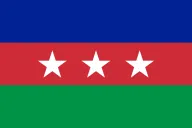
On the night of September 19, 1964, the strike forces of four American-trained camps in Darlac and Quang Duc rose against their Vietnamese officers and marched on Buon Ma Thuot, and a movement announced itself: the United Front for the Struggle of the Oppressed Races, FULRO. It was made by the men of BAJARAKA, released from Diem’s prisons seven...
The men of FULRO
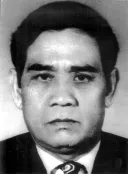
FULRO is usually told as the story of one man. It was never only his. This is a register of the others we can name — the Cham officer who invented the word for what we were supposed to be, the two men called Adrong whom the record keeps confusing, the interpreter who funded a liberation front out of an American payroll, the commander who walked...
The American years, 1961–1975
It began in one Rhade village six kilometers from Buon Ma Thuot, in October 1961, with an American volunteer who spoke our language, a Special Forces medic, and three weeks of argument with the elders. Within a year two hundred villages were armed. Within two years Saigon had taken the guns back from men who had been told they could keep them. O...
1975, and what came after
The Republic of Vietnam began to lose the war in our country, at Buon Ma Thuot on March 10, 1975, and it lost the highlands in two weeks. For our people the spring of 1975 was not an ending. Our minister asked the Americans for protection and was refused. Two thousand of our people waited on a beach at Nha Trang for a ship that never came. Our l...
Paul Nưr and Nay Luett: the ministry years
Two men who tried the other route. Both were BAJARAKA founders, both went to prison for it under Diem, and both then took office inside the government that had jailed them — one as a province administrator who became the first highlander in a Saigon cabinet, one as the minister who held that ministry to the last week of the Republic. Both died i...
Mike Force, SOG and the special operations war
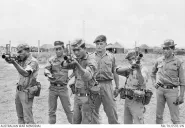
From 1964 the Americans stopped asking our men to guard their own villages and started asking them to go wherever the war was worst. They went: in the Mobile Strike Forces, the Mike Forces, that were flown in to camps under siege, and in the reconnaissance teams and raiding companies of MACV-SOG that crossed into Laos and Cambodia. The Americans...
Dak Son, December 5, 1967
On the night of December 5, 1967, Viet Cong troops with flamethrowers burned a Stieng settlement called Dak Son in Phuoc Long province. That much is not in dispute and never has been. What is in dispute, though almost nobody says so, is the number: the 252 dead that everyone quotes was published by an American magazine four days after the CIA’s...
Massacres of our people
This page is a register of the killings of our people that are documented: who was killed, where, when, by whom, and how we know. It names every kind of killer, because our people were killed by all of them — by the Viet Minh and the Viet Cong, by the North Vietnamese army, by the Khmer Rouge, by the governments of South Vietnam and Cambodia, by...
The battles fought on our land
Both armies agreed that whoever held the Central Highlands would decide the war, so the largest battles of the American war, and the offensives that ended it, were fought where our villages stood. The histories of those battles count sorties, tons of bombs and enemy dead to the last digit. They name the hills by their height and the villages by...
The missions and the doctors
In May 1972, with Kontum under siege, the American doctor who ran the highland hospital there put half of it on helicopters and flew out. Before she went she handed the hospital over to Sister Gabriel, her most experienced Montagnard nurse. Earlier in the fighting, more than thirty of our staff and patients had lain on top of her in a human blan...
Highlanders on the other side
Not all of our people fought beside the Americans. Some went with the Viet Minh against the French, took the boat north in 1954, and came back down the trail as cadres of the National Liberation Front. A Rhade leader of BAJARAKA became a vice-president of the Front. Across the border, a Jarai boy from Ratanakiri became Pol Pot’s bodyguard, while...
The Trail and the poison
Two things came through the highlands during the American war that had nothing to do with us and fell on us anyway. One was the Ho Chi Minh Trail, the web of roads and paths that carried North Vietnam’s war into the South along our western edge. The other was the herbicide the United States sprayed to strip the forest from the Trail and the crop...
Moved by force: hamlets, camps and relocation, 1957–1972
For fifteen years, from 1957 into the 1970s, governments moved our villages. Saigon moved them to make room for Vietnamese settlers, then to empty the country the Viet Cong held. The American army lifted them out by helicopter so that it could fight where they had lived. A South Vietnamese general moved them again at harvest, on a few hours’ not...
Tet 1968 in the highlands
The American field force that held the highlands wrote its own verdict on Tet four pages after it counted the dead: “Heaviest attacks were launched initially” at “the highlands population centers of Kontum and Ban Me Thuot.” The first and hardest blows of the 1968 offensive in the whole of II Corps fell on two of our market towns. Then the same...
Highland refugees of the war years
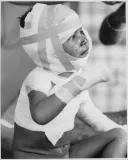
In the autumn of 1970 a South Vietnamese corps commander ordered the province chiefs of the highlands to empty every one of our hamlets that had been graded C or D. Families were given a few hours’ notice, in the harvest season, and told to leave the gongs and the jars behind. At Plei De Groi, 2,500 people were moved in; by the following October...
Highland women in the war, 1954–1975
In 1966 the United States Army published a handbook that told its own personnel, in one identical line repeated for nineteen of our peoples, to stay away from our women. The same book recorded that in Darlac six or seven of every ten of our babies died before their first birthday, and that Rhade law puts the land in the women’s keeping. A year l...
Powered by WBAMS