












North Carolina holds the largest community of our people outside Vietnam, but it is not the only one. There are Dega in at least five other American states, in France, in the refugee neighborhoods of Bangkok, and in Cambodia, where the Jarai and the Bunong were never a diaspora at all, because the border was drawn through them. This page is what we can establish about everyone outside Vietnam and outside North Carolina. It is thinner than we would like, and it says so.
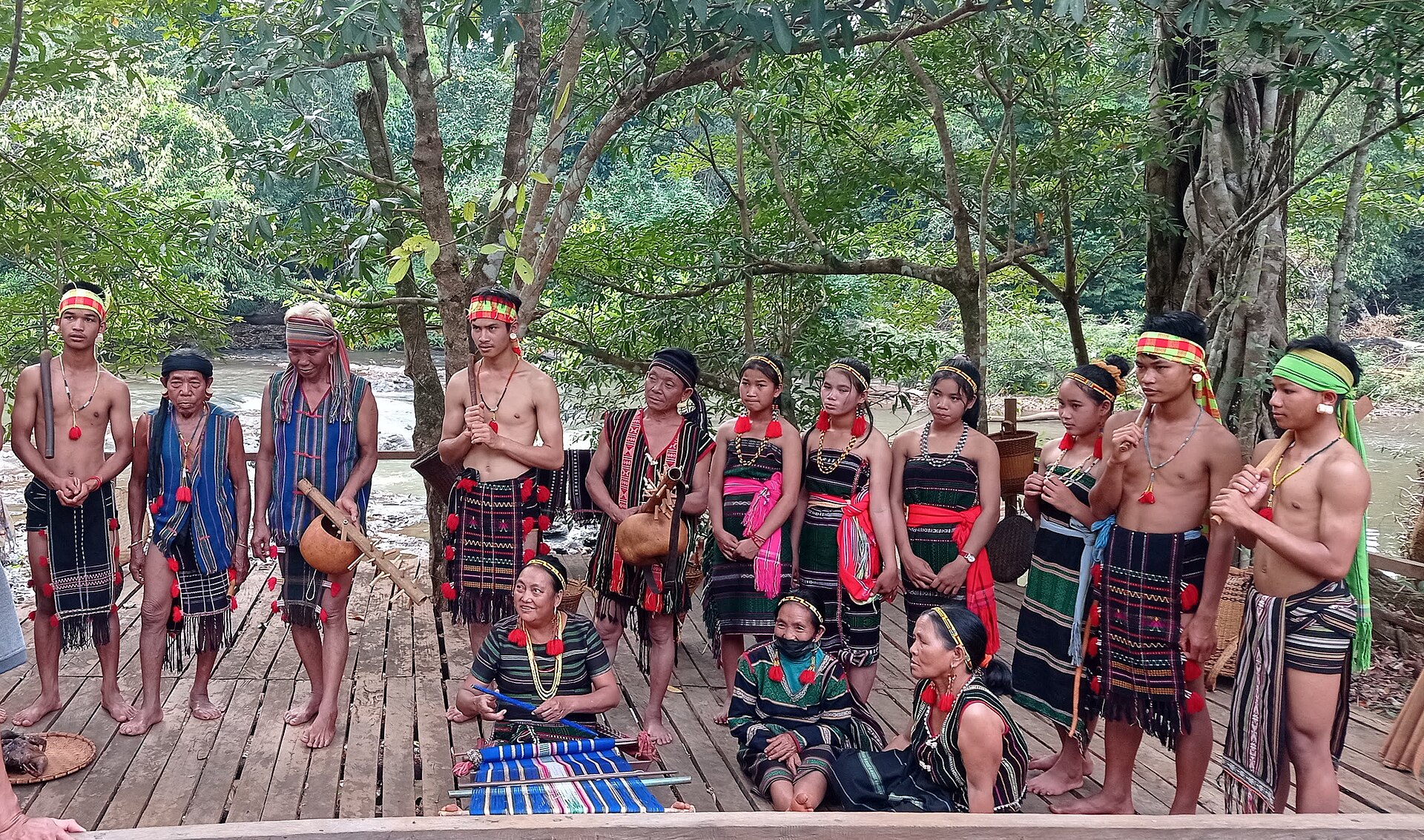

Before 1986 there were about thirty
That is the figure to start from. Before the first resettlement, Raleigh Bailey’s study for the Center for Applied Linguistics records, roughly thirty of our people lived scattered across the United States: a handful of individuals, mostly connected to American servicemen. Everything since has grown from the 201 fighters of 1986, the 398 who came out of Mondulkiri in 1992, the family reunification and Orderly Departure arrivals of the 1990s, and the close to 900 who came from the Cambodian camps in 2002. The story of those arrivals is on North Carolina and Our veterans in America.
The United States outside North Carolina
| Place | What we know | As of |
|---|---|---|
| Greensboro, North Carolina | about 2,000; about half the state’s community in 2024 | 2000, 2024 |
| Charlotte | about 700 | 2000 |
| Raleigh | about 400 | 2000 |
| New Bern | a fourth site from 2002 | 2002 |
| California, Florida, Massachusetts, Rhode Island, Washington | small communities; no figures published | — |
The pattern outside North Carolina is secondary migration rather than placement: people resettled elsewhere by an agency who then moved, or families who followed work. The blank cells in that table are real. We have found no published count for any of the five states. Nationally, a Greensboro paper wrote in 2021 of “more than 12,000 Montagnard people living in the United States alone, with most of them living in North Carolina”; the United States Senate, more cautiously, records “an estimated several thousand Montagnards currently reside in North Carolina.”
France
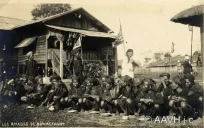
France has a community whose origins are older and different. The connection runs back through the mission at Kon Tum and the colonial schools, and through the men who served in the French army across Indochina and, in some cases, evacuated with it in 1954 and 1955; see The Kontum mission and The first war. Others came after 1975, when France took Indochinese refugees in large numbers, and a few came in the 1990s and 2000s. Most of the community is said to be Bahnar. A figure of about five thousand circulates, but we have not been able to trace it to a census, a study or a community organization’s own count, so we do not print it as fact. It is the one part of our diaspora that predates the American war, and the one we know least about.
Thailand
In the last decade, as Cambodia stopped being a refuge (see Asylum today), people who flee the highlands have gone further, to Thailand. They live in Bangkok and in Nonthaburi province just outside it, most of them recognized as refugees by the United Nations High Commissioner for Refugees or registered with it as asylum seekers, and, in Human Rights Watch’s words, “generally not authorized to work under Thai law.” Nobody publishes their number. What is documented is that it is a community, and that it is hunted: Human Rights Watch recorded that in early March 2024 Vietnamese police visited “neighborhoods near Bangkok with populations of Montagnard asylum seekers and refugees,” that Thai police detained more than sixty of our people on February 23, 2025 and seventy more on October 29, 2025, and that “Thai police regularly detain UNHCR-recognized refugees.” It was there that Y Quynh Buondap founded Montagnards Stand for Justice, and from there that Thailand handed him back to Vietnam on November 28, 2025, a recognized refugee, to serve a ten-year sentence passed in his absence. His case is the reason this section exists, and the reason we say as little as we do about the others who are still there.
Cambodia, which is not a diaspora
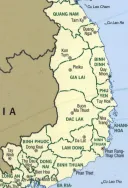
The Jarai of Ratanakiri, about a quarter of that province’s population, and the Bunong of Mondulkiri are not exiles. They are the other side of a line drawn in Paris through a single people. That is why Mondulkiri was where FULRO could survive for seventeen years, why it was the obvious refuge after 2001, and why the camps of 2001 to 2005 were not, for most of the people in them, a foreign country. It is also why the dams matter on both sides of the border at once: the same river, the same people, one government’s decision. They have their own page, Kin across the border.
What the community built
Wherever our people have settled in numbers, the same institutions have followed. The Montagnard Dega Association was formed in Greensboro in 1987, a year after the first arrivals, for mutual assistance and cultural events; the Montagnard Association of North Carolina in 1988; see Our organizations. The churches, Rhade, Jarai and Bahnar congregations, mostly evangelical Protestant with a Catholic minority, do most of the work a state agency would do elsewhere: interpreting, funerals, housing, finding a cousin a job. Work is factory, warehouse, food processing, landscaping and maintenance. Bailey found that the earlier arrivals reached low-income self-sufficiency within about five years; the 2002 group, who came as villagers rather than soldiers, had a much harder time. Schooling explains a good deal of that: men arriving from the highlands typically had about five years of it and read at around a third-grade level, which is the downstream consequence of the schools.
The thing the diaspora is for
Almost every document that survives about our people survives outside Vietnam. Service papers, camp rosters, photographs, letters, the names of villages that no longer carry those names: inside the highlands almost none of that can safely be kept. A community of some thousands in the American South, a smaller one in France, and an uncounted number of refugees around Bangkok are currently the archive of a people of about a million. That is a fragile arrangement, and it is aging. The men who arrived in 1986 were soldiers in 1975; the 1992 group came out of seventeen years in a forest. Their grandchildren speak English. Whatever is not recorded while that generation is alive is not recorded.
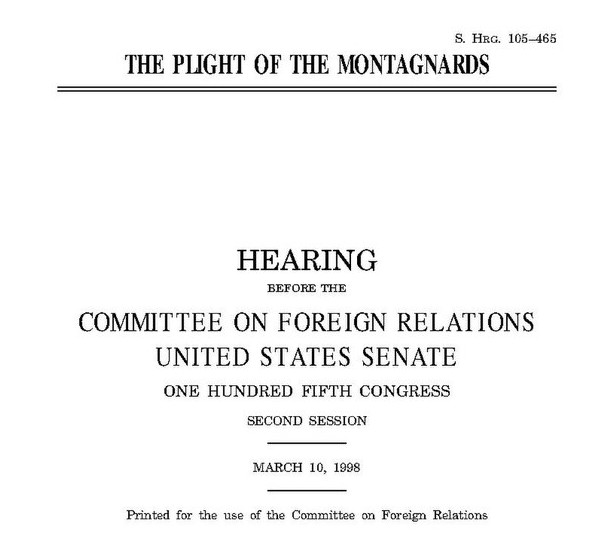
What the younger generation has that the elders did not is English, citizenship and the ability to write to a senator. Y Hin Nie told the United States Senate in 1998, “Within the United States, we increase in citizenship,” and he meant it as a promise. Most of the submissions that now reach the United Nations about the Central Highlands, and most of what reaches Congress, come from people in that position; see What Washington has said and The UN record.
Help us complete this page
We have no current count for any community outside North Carolina, nothing on the French community’s own organizations, nothing reliable on Thailand, and nothing at all on our people in Canada, Australia or elsewhere in Europe. If you are part of one of those communities, please write. A rough number and a city would be a real improvement on what is here.
Sources
- Raleigh Bailey, The Montagnards: Their History and Culture (Center for Applied Linguistics, 2002), and as reproduced by ANCHOR: A North Carolina History — the pre-1986 figure of about thirty, the city breakdown, the five other states, religion, employment and education
- US Senate, S. Res. 395, October 4, 2023
- Sayaka Matsuoka, “How the younger generation is working to be the ‘voice of the unheard’ for Montagnard elders,” Triad City Beat, May 12, 2021; Marielle Argueza, Next City, July 19, 2024
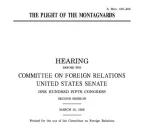
- US Senate, The Plight of the Montagnards, March 10, 1998, DCHO library — Y Hin Nie
- Human Rights Watch, “Thailand: Montagnard Activist Extradited to Vietnam,” December 1, 2025, and “Thailand: Vietnamese Refugees at Risk from Hanoi,” November 13, 2025
- General Population Census of Cambodia 2019 — 26,922 Jarai
Compiled September 2026. This remains one of the thinnest pages in the library, and we would rather print a blank than a guess.