







Hundreds of thousands of our people were killed in wars fought across our land by armies that were not ours: at least one in five of us, by the only careful count. What has happened since those wars ended is harder to count, and it is the reason we use the word genocide. This page sets out the figures we have, where each comes from and what each one measures, what we do not know, and why we use the legal term, with the strongest arguments against it.

Killed in the wars
| What was counted | Figure | Whose figure |
|---|---|---|
| Highlanders killed in the Second Indochina War | at least 200,000 | Gerald C. Hickey, as reported by Human Rights Watch in 2002 |
| Highlanders who died or were killed in the war | 200,000 to 220,000, about half of the adult men | Michael D. Benge, 2010 |
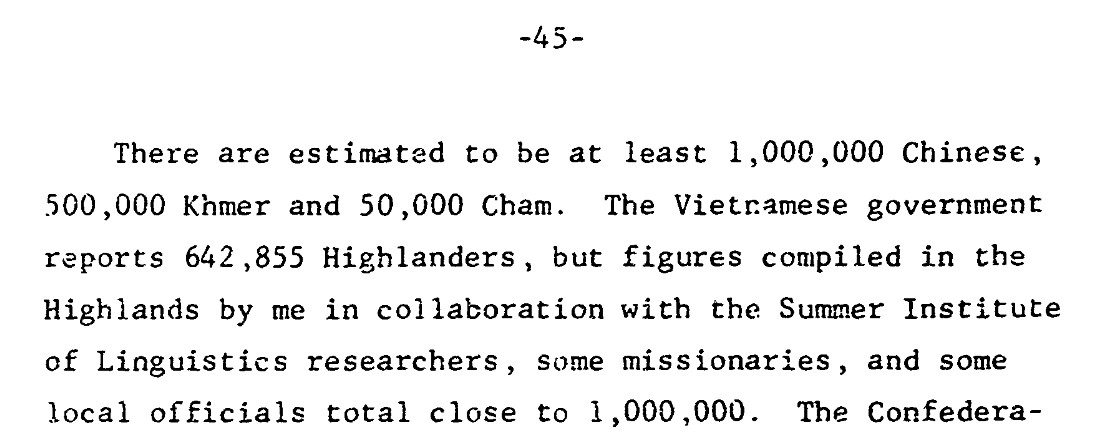
| Highland population during the war | close to 1,000,000; the Saigon government counted 642,855, and the CIA about 700,000 in 1966 | Gerald C. Hickey, 1970 |
| Highlanders forced from their villages | more than 85 percent of the people | Gerald C. Hickey, as reported by Human Rights Watch |
| Villages destroyed or abandoned | 85 percent | We testified to this before the US Senate in 1998; Michael D. Benge, 2010 |
| Our people killed | more than a million | We testified to this before the US Senate in 1998, without a period or a method |
Two different things are called 85 percent. One is the share of our people driven from their villages; the other is the share of villages destroyed or abandoned. They are not the same measure and should not be run together. The million is our own figure. We have never published how it was reached, and no outside source supports it. By Hickey’s own two numbers, 200,000 dead out of about a million, one of us in five died. Among the Bru, the Pacoh and the Katu, by the end of the war not one house was left standing.
It was not an accident of geography alone. Our men were conscripted by the French and by the Viet Minh in the first war, and recruited by every party to the second. Our villages stood on the plateau that both sides had decided the war would be settled on, and the strategic hamlets, the free-fire zones, the defoliation and the bombing all fell there. We did not start either war and had no stake in the question either was fought over.
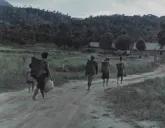
Some of the dying was done in camps. In January 1971 about 2,500 highlanders were moved by force to a resettlement site at Plei De Groi in Pleiku. By March between 200 and 300 of them had died of exposure, malnutrition, tuberculosis and an influenza-like fever, and when American auditors visited in October only 750 people lived there. At Buon Kli B in Darlac, 6,244 highlanders were moved because the area was called insecure, and about twenty died of sickness and hunger. Between May 1970 and August 1971, 62,546 people, highlanders and others, were relocated in Military Region 2, which took in the highlands, many of them against their will. These are the best-documented deaths of their kind, because the United States government counted them itself. The killings that were recorded one by one are set out on Massacres of our people; see also Strategic hamlets and relocation.

Killed after the wars
The victory of 1975 was followed by executions, imprisonment, re-education camps and forced labor, aimed at former soldiers, civil servants, students, pastors and village leaders on the ground that we had been the eyes and ears of the Americans. The leaders who had served the southern government and its provinces were jailed. Y Bham Enuol, the president of FULRO, was taken out of the French embassy in Phnom Penh by the Khmer Rouge in April 1975 and killed; the men still fighting in the forest did not learn of it for seventeen years. See Y Bham Enuol in Phnom Penh.
Thousands went into the forest. By 1979 more than 8,000 FULRO fighters had been killed or captured, by the count a Phnom Penh newspaper was given in 1992. Our own records put the number who died in the forest from hunger, disease, tigers and wounds at more than 8,000, and the number captured and executed or dead in the re-education prisons at several thousand. Nay Luett, the former minister for ethnic minority development, spent nine years in prison and died at home within two months of his release in 1983. When the last FULRO group surrendered in Mondulkiri in 1992, about four hundred people were left; the counts run from 398 to 417. See Re-education and the forest, Paul Nur and Nay Luett and Mondulkiri, 1992.
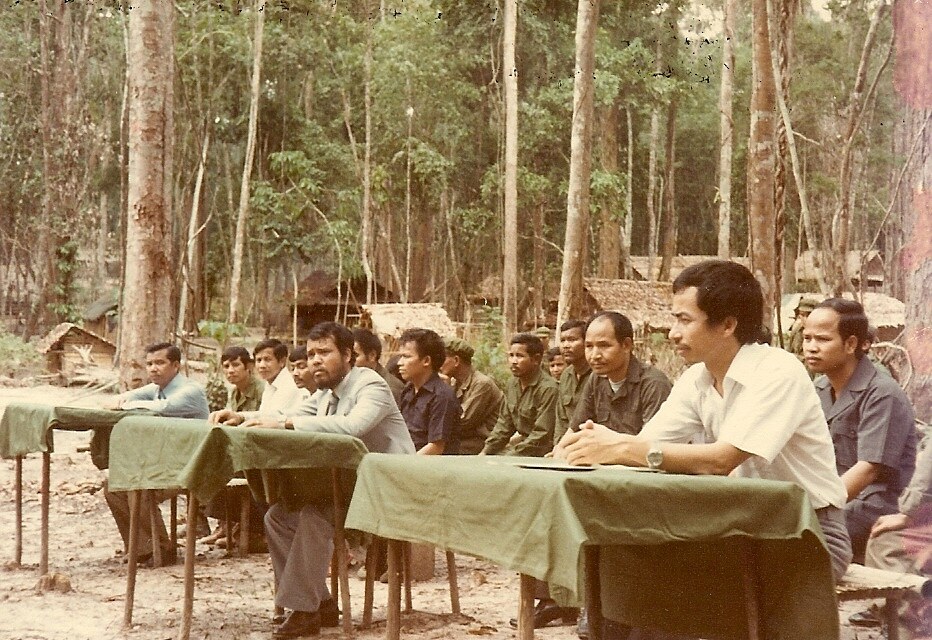
No systematic count of the dead of this period exists, because the people who could have made one were inside it. The two figures of 8,000 are not the same: one counts the killed and captured, the other the dead. This is the largest hole in our record and we say so plainly.
Killed and dying in custody, since 2001
For the modern period there are figures, because outside organizations have been able to collect them. The first killing we know of came on March 10, 2001, at Plei Lao in Chu Se, Gia Lai, when police and soldiers fired into a crowd of Jarai villagers gathered for an all-night prayer. Rmah Blin, thirty-three, was shot and died in the provincial hospital that afternoon. At Easter 2004 the government admitted two deaths; Human Rights Watch confirmed at least ten, and witnesses in Buon Ma Thuot put the number at twenty or more. See The protests of 2001 and Easter week 2004.
| What Human Rights Watch counted, 2001 to 2011 | Figure |
|---|---|
| Montagnards sentenced to long prison terms on national security charges | more than 350 |
| In prison or awaiting trial in 2011 | at least 250 |
| Of those imprisoned, arrested while trying to reach asylum in Cambodia | at least 65 |
| Dead in prisons, jails or police lockups after beatings or illness, or soon after early release | at least 25 |
The charges were almost always three articles of the 1999 Penal Code: undermining national solidarity (article 87), disrupting security (article 89) and fleeing abroad to oppose the people’s administration (article 91). In the 2015 Code they became articles 116, 118 and 121. None of them requires proof of violence. See The laws used against us. Human Rights Watch named only one of the twenty-five dead. Nobody has kept a count since 2011.
Deaths with names on them
Y Ben Hdok, twenty-nine, of Dak Lak, was arrested on the evening of April 28, 2008, on his way home from work, over protests earlier that month, and held for three days without his wife or his mother being allowed to see him. On May 1 the police told his wife he had hanged himself during a break in his interrogation. A member of his family told Human Rights Watch that his head was broken, his ribs were broken, his leg was broken and his teeth had been knocked out. The Montagnard Foundation reported that he had been tied to a jeep and dragged.
The Montagnard Foundation named others in a report to the European Parliament in 2008. None of these deaths has been confirmed by anyone else.
| Name | Died | As the Montagnard Foundation reported it |
|---|---|---|
| Ksor Thup | August 30, 2006 | in Ba Sao prison, Ha Nam, after severe torture |
| Dieu Suoi | May 29, 2007 | from torture by the authorities |
| Siu Blok | October 1, 2007 | from abuse and torture by the authorities |
| Y Mpi | October 5, 2007 | never recovered from torture in prison |
| Rahlan Hen | March 17, 2008 | from torture |
| Y Thiep Mlo and Y Bui Nie, children | April 15, 2008 | beaten and drowned on the bank of the Kdrol river, with stones laid on their chests |
In January 2016 a Montagnard pastor died of injuries from police torture; a fellow pastor who reported the death to the US ambassador for religious freedom was then arrested himself, as the US Congress was told in June 2016. The man was not named. At Christmas 2016 the father of Y Phic Hdok was taken and killed.
On June 11, 2023, armed men attacked two commune police stations in Cu Kuin, Dak Lak, and killed nine people: four police officers, two commune officials and three civilians. We say plainly that those nine were killed by the attackers. In the security operation that followed, UN experts recorded reports of arbitrary arrests, extrajudicial killings, torture and deaths in custody. See Cu Kuin, 2023.
Y Bŭm Byă, an evangelist of an unregistered highland church in Ea Tu, on the edge of Buon Ma Thuot, was called by the police to meet them at a cemetery near his home. Villagers who went looking for him hours later found him hanging there on March 8, 2024. His body had been badly beaten. He had been arrested and beaten before and made to renounce his church in front of his neighbors; the accounts date that arrest to August or December 2023. The police made no comment and arrested no one. Fourteen UN experts said he died in custody after being tortured. He was not one of the Cu Kuin defendants.
Sixteen years apart, in the same province: a man in the hands of the police, a death, and a body that does not match the account given. In 2008 the police gave an explanation. In 2024 they gave none.
The slower kind
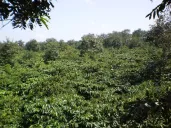
Not all of it is killing. In May and July 1976 Hanoi radio announced programs to settle the highlanders and end their “unstable nomadic life.” In 1978 the vice-minister of culture, Nông Quốc Chấn, wrote that outmoded habits were to be wiped out. The resettlement programs moved villages off long-rotation land onto plots of about an acre and a half that could not feed a family, while more than three million people moved into the region. Around 2001 the highlands were losing some 30,000 hectares of forest a year. By Coffee Watch’s count, forest cover fell from 42.8 percent of the land in 1990 to 19 percent in 2020, and undisturbed forest from 2.49 to 1.61 million hectares between 1990 and 2024; the two figures do not match and we give both as they were published. With the forest went the fallow, the hunting and the forest foods that had made a village’s year balance. See Land taken for coffee and Schools and language.
The health figures follow. In 1989 a Jarai could expect to live fifty-four years, a Kinh sixty-eight. In 2001 as many as 45 percent of ethnic minority children in the highlands were malnourished, and infant and child mortality there was the highest in the country; families paid fees for care, and women were told that if they had too many children the children would not be treated. In 2015, 40.6 percent of the children of some ethnic minorities in the highlands were stunted, against 15.8 percent of Kinh children.
None of that produces a body with a date on it. All of it shortens lives, and all of it was policy.
Why we say genocide
The word is not chosen for effect. The Convention on the Prevention and Punishment of the Crime of Genocide of 1948 defines genocide as any of five acts committed with intent to destroy, in whole or in part, a national, ethnical, racial or religious group as such: killing members of the group; causing them serious bodily or mental harm; deliberately inflicting on the group conditions of life calculated to bring about its physical destruction; imposing measures intended to prevent births; and forcibly transferring its children to another group.
The Republic of Viet-Nam acceded to the Convention on August 11, 1950, so it bound the southern state throughout the war. The Socialist Republic of Vietnam acceded on June 9, 1981. It entered a reservation against article IX, which lets any party take a dispute to the International Court of Justice, and it is not a party to the Rome Statute of the International Criminal Court. The Convention and the Declaration of 1948 are in our library; see What Vietnam has signed.

The word is older among us than this page. FULRO’s leaflets in the revolt of September 1964 accused the Vietnamese of a “systematic genocidal policy.” Michael D. Benge, an adviser to the southern government’s Ministry for Ethnic Minorities who spent five years as a prisoner of the North, has written of ethnic cleansing, cultural leveling and environmental genocide in the highlands. The Montagnard Foundation called its 2008 report a blueprint for ethnic cleansing. In February 2022 Genocide Watch placed Vietnam’s treatment of the Dega at the eighth of its ten stages, persecution; it has not called it genocide.
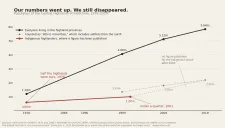
The strongest arguments against us deserve to be stated. The element the case turns on is intent, and the International Court of Justice held in 2015 that intent can be inferred from a pattern of conduct only when it is the only reasonable inference. The drafters of the Convention considered cultural genocide and left it out, so the destruction of customs and worship is not in itself the crime. By the state’s own census, the indigenous peoples of the highlands grew from 925,000 to 1,625,000 between 1979 and 1999, faster than the country as a whole, which is hard to square with conditions calculated to destroy us physically. And the wartime dead were killed by every army in the highlands, none of which set out to destroy us as such.
Our answer is the documentary record. A government that announces the end of a people’s customs, prosecutes a people’s form of worship under its own name, “Dega Protestantism,” resettles a people off its land as a program, and imprisons those who object under an article about national solidarity has written down its own intentions. Whether that record meets the Convention’s standard is a question for a court. Because of Vietnam’s reservation, no court can hear it without Vietnam’s consent. We would like it put to one.
What we do not know. How many of our people died in the re-education camps, or were executed after capture, after 1975. How many died of hunger in the resettlement and New Economic Zone years. The names of most of the twenty-five who died in custody between 2001 and 2011. Anything like a count since 2011. How many asylum seekers died in the forest on the way to Cambodia; those who came out spoke of malaria and hunger. Where exactly Hickey published the figure of 200,000: one account places it in Free in the Forest (1982), another in Shattered World (1993), and we have not been able to check the page. How our own figure of more than a million was reached.
Sources
- Human Rights Watch, Montagnard Christians in Vietnam: A Case Study in Religious Repression (March 2011), in our library — the 350, 250, 65 and 25, the Penal Code articles, Y Ben Hdok
- Human Rights Watch, Repression of Montagnards (April 2002) — Hickey’s 200,000 and 85 percent, the 1964 leaflets, Y Bham Enuol, the 1976 broadcasts, Plei Lao, malnutrition, life expectancy, fees for care; Vietnam: Torture, Arrests of Montagnard Christians (January 2005) and No Sanctuary (June 2006), in our library — Easter 2004
- Gerald C. Hickey, Accommodation and Coalition in South Vietnam (RAND P-4213, 1970), in our library — the population count; Free in the Forest (Yale, 1982) and Shattered World (Pennsylvania, 1993), page 261, as cited by Joe P. Dunn, Athens Journal of History 10 (2023) — the wartime dead, the Bru, Pacoh and Katu
- Michael D. Benge, “The History of the Involvement of the Montagnards of the Central Highlands in the Vietnam War” (December 2010) — 200,000 to 220,000, the villages, the plots, his words
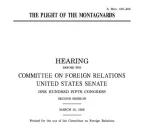
- US Senate, The Plight of the Montagnards, March 10, 1998, in our library — our testimony; our own records — the forest years, the prisons, Nay Luett
- US General Accounting Office, Follow-Up Review on Assistance to War Victims in Vietnam (1972), in our library — Plei De Groi, Buon Kli B, the 62,546; CIA, The Highlanders of South Vietnam (1966), in our library — the 700,000
- Phnom Penh Post, September 12 and October 23, 1992 — FULRO’s losses and the surrender
- Oscar Salemink, Vietnam: Indigenous Minority Groups in the Central Highlands, UNHCR Writenet paper (January 2002) — the census figures, forest loss, the life expectancy study; Salemink, The Ethnography of Vietnam’s Central Highlanders (2003) — Nông Quốc Chấn
- Montagnard Foundation, Vietnam’s Blueprint for Ethnic Cleansing (May 2008), tabled at the European Parliament — the deaths of 2006–2008
- US House of Representatives, hearing of June 22, 2016, in our library — the pastor who died in January 2016; US Commission on International Religious Freedom, hearing of January 13, 2026, testimony of Y Phic Hdok
- Christian Solidarity Worldwide, April 23, 2024 and May 29, 2025; Morning Star News, May 2024; Radio Free Asia, September 2, 2024; UN special procedures, AL VNM 4/2024 (June 14, 2024) and press release of August 28, 2024; UK Home Office, Country Policy and Information Note: Vietnam, Ethnic and religious minority groups (December 2024) — Cu Kuin and Y Bŭm Byă
- UN Viet Nam, January 31, 2018 — stunting; Coffee Watch, Robusta’s Reckoning (June 16, 2026), as reported by Mongabay — the forest figures
- Convention on the Prevention and Punishment of the Crime of Genocide (1948), in our library; UN Treaty Collection, status of the Convention, with Viet Nam’s reservations; International Court of Justice, Croatia v. Serbia, judgment of February 3, 2015; Genocide Watch, special report, February 28, 2022
Compiled September 2026. The years from 1975 to 1990 are the gap. If you or your family can give an account of a re-education camp, a disappearance or a death from that period, read reporting safely first, then tell us.