





Most of us are Christians, and the state has decided that one form of our Christianity is not a religion at all but a political conspiracy in religious dress. That decision, written into a prime minister’s instruction in February 2005, is the legal hinge on which most of the last twenty-five years of persecution in the highlands turns. This page is about how we became a Christian people, what the state calls Dega Protestantism, the instruments it uses against it, the ceremonies of renunciation, and the count of the dead and imprisoned, from the goat’s blood oaths of 2001 to the arrests of 2025.
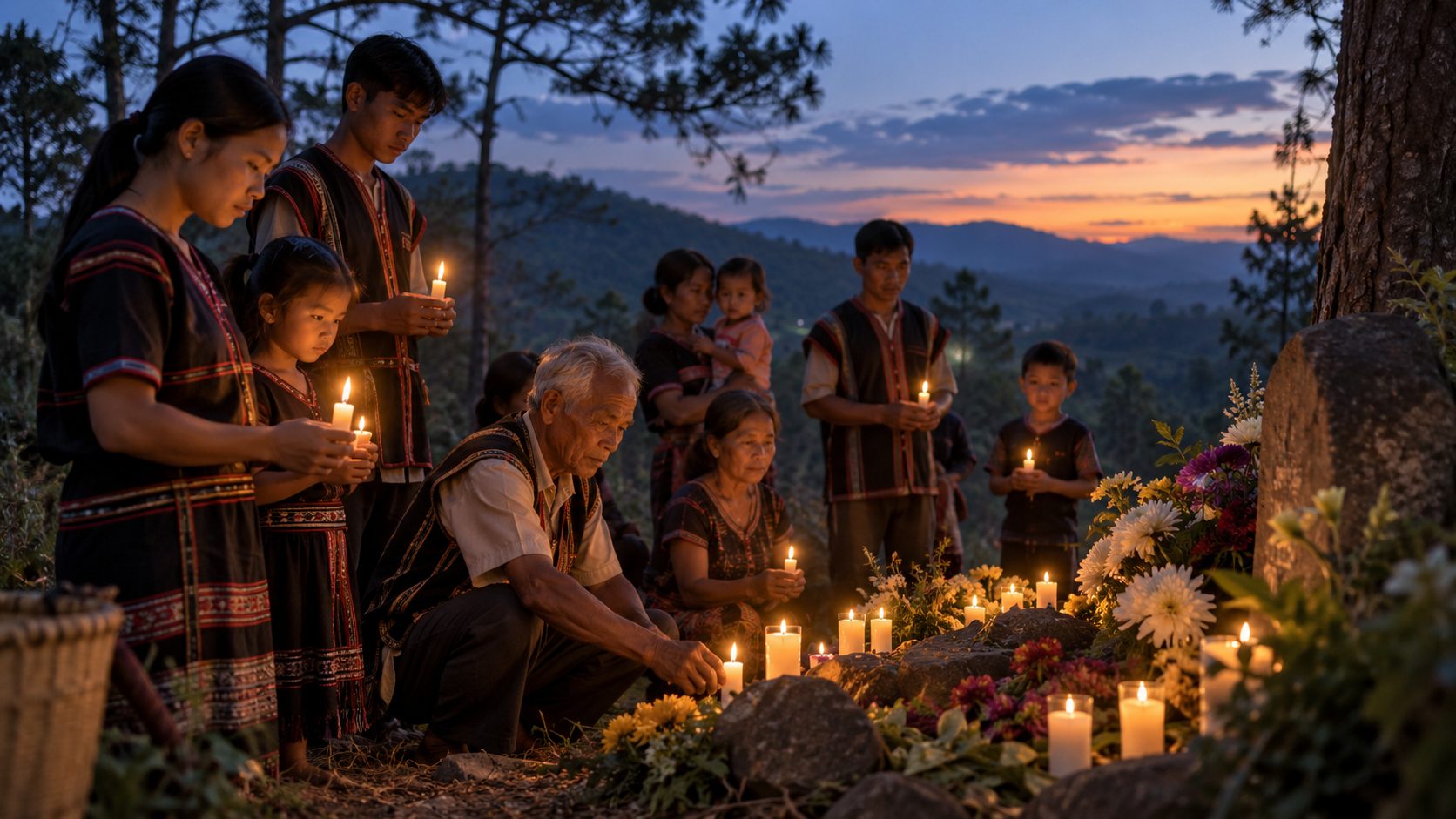
How we became a Christian people
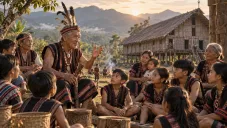
We were animists for the whole of our history, and a common animist thread still runs through all our peoples; see Yang. Catholic missionaries reached the Bahnar in 1850, and the story of that church is on The Kontum mission. The Protestants came later: the first evangelical missionaries of the Christian and Missionary Alliance arrived at Đà Nẵng in 1911, and in the early 1930s, as one historian puts it, “C&MA missionaries headed to remote upland areas and began evangelizing to the ethnic minorities.” Conversion grew through the 1950s and 1960s, especially around Buon Ma Thuot. By 1975 there were, by the same account, about 70,000 highland Protestants.
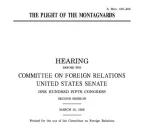
The decisive period came after that, and for a specific reason. After 1975 the churches were closed and we were accused of having been the Americans’ church; Y Hin Nie told the United States Senate in 1998 that 80 percent of the highland churches had been turned into storehouses and half the pastors, priests and deacons were dead or missing. Then, in the late 1980s and 1990s, as the armed resistance collapsed and the last FULRO fighters walked out of the forest, our people converted or returned to the church in tens of thousands. “During the 1990s,” Human Rights Watch wrote, “increasing numbers of Montagnards joined unofficial Christian house churches.” By 2002 it estimated that “between 229,000 to 400,000 are thought to follow evangelical Protestantism”; by 2014 a Vietnamese scholar working from the state’s own figures put highland Protestants in the Central Highlands at 550,000.
The timing is not a coincidence, and it is worth saying plainly rather than leaving for others to infer. When an armed movement ends, the people who believed in it do not stop being a people. The church became the only institution we still had that was ours, met weekly, and had leaders we chose. Everything that has been done to the church since follows from the state understanding this as clearly as we do.
What “Dega Protestantism” is
Around 2000 a strand of highland church life emerged that the state named Tin Lành Dega, Dega Protestantism. Human Rights Watch describes it as a movement “that combined evangelical Christianity with aspirations for greater political freedom,” and notes that “many Montagnards distrust the government-authorized Protestant church in the Central Highlands … Some Montagnards have opted to worship in village or house churches that they control themselves.” In our own terms it is evangelical Christianity practiced by Dega, in Dega languages, in congregations we lead, connected to our claims about land and standing. In the state’s terms, in the words of the prime minister’s instruction of 2005 as HRW quotes it:
“This is a religion with a dubious origin. The exiled FULRO members deliberately set up that religion of Dega Protestantism just to use as the tool for their dark political schemes.”
That characterization is the whole argument. If Dega Protestantism is a religion, banning it violates the freedom of religion Vietnam has undertaken to protect; see What Vietnam signed. If it is a political front, banning it is national security and no treaty is engaged. Everything downstream, the arrests, the renunciations, the sentences, rests on that classification. And because the classification is made by the police, any house church can be declared Dega Protestant when it is convenient. “The government declares,” HRW wrote, “that many highlanders who belong to independent or unregistered house churches are Dega Protestants, which authorities assert is not a legitimate religion.”
The instruments
Instruction No. 1, February 2005
The prime minister’s Instruction No. 01/2005/CT-TTg, on Protestantism, “specifically bans Dega Protestantism.” It instructs officials to “fight attempts by hostile forces to abuse Protestantism to incite people to act subversively,” and sets the terms on which a Protestant group may register at all: groups “must submit applications to local authorities providing the names of their adherents, along with their photographs and biographical information, and certify that the group will not allow its members to engage or be involved in protests, riots, and ‘reactionary’ organizations such as Dega Protestantism or FULRO.” A church that wants to exist must hand the police a list of its members with their photographs. See The Evangelical Church and registration.
Decree 22, March 2005
Decree 22, implementing the Ordinance on Beliefs and Religions of 2004, “bans any religious activity deemed to threaten national security, public order, or national unity.” It also, HRW noted, “strictly forbids coercion of citizens to convert or renounce one’s religion”: a provision that every renunciation ceremony described below breaks, and that has never, to our knowledge, been enforced against an official. Together, HRW concluded, the two texts “provide legitimacy to government officials and police arresting or forcing the recantation of faith of Montagnards belonging to religious groups that operate independently of the government-approved Southern Evangelical Church of Vietnam.” The Law on Belief and Religion of 2016, in force since 2018, and Decree 95 of 2024 replaced these texts without changing their logic; see The Law on Belief and Religion.
The security units
After the Easter protests of 2004 the state built a machine for the work. In July 2004, HRW records, “the Department of Central Highlands Security (Cục An ninh Tây Nguyên) is founded after a national conference on security in the highlands presided over by then-Deputy Prime Minister Nguyễn Tấn Dũng. Elite police units, such as PA43, Political Security Section VI units, the Mobile Intervention Police, and the ‘Special Task Force’ are dispatched to the region to back up provincial and district police to prevent further demonstrations, root out Montagnard activists in hiding, stop the flow of asylum seekers to Cambodia, and bring an end to groups allegedly taking advantage of ethnic issues and religion to incite social turmoil.” A whole department of the Ministry of Public Security exists for us.
Renunciation
The characteristic instrument in the highlands is not the courtroom but the village meeting. People are assembled and required to state publicly that they abandon their faith, and to sign a pledge. The official record calls this voluntary.
The goat’s blood, May 2001. Three months after the February protests, in HRW’s words: “Officials organize ‘goat’s blood ceremonies’ in dozens of villages in the Central Highlands. Villagers who participated in the February 2001 demonstrations are forced to stand up in front of their entire village and local authorities to admit their wrongdoing, pledge to cease any contacts with outside groups, and renounce their religion. To seal their loyalty, they are forced to drink rice wine mixed with goat’s blood.” An oath drawn from our own customary practice was turned into an instrument of recantation. It is worth sitting with what that means about who was advising whom.
The pledges, 2005 and 2006. An Ede woman told HRW what the paper said: “Just about everyone has to sign the pledges, which say: ‘I won’t demonstrate anymore, I won’t participate in the Dega separatist movement or Dega religion. If I do wrong and violate the pledge, I understand that next time, the police will arrest me.’” In Gia Lai in early 2006 the meetings were monthly and mandatory, some of them held on the village football field, with pastors of the recognized church present. A Jarai man described his interrogation: “The police told me not to follow my religion anymore. If I agreed not to follow Christianity then I would be released. If I continued following [my] religion then I would be sent to prison in Hanoi. … The police wanted me to either follow the ‘old traditional religion’ [animism] or if I wanted to continue to follow Christianity, then it must be the approved Vietnamese religion. I refused.” After three days in the commune police station: “I told them: ‘I won’t stop following my religion. I stop drinking, I stop smoking, but I will follow my religion forever.’”
The campaign of 2010. “Throughout 2010 and early 2011, hundreds of Montagnards in the Central Highlands were pressured or coerced to abandon Dega Protestantism in public criticism ceremonies by signing pledges or through intimidation.” HRW’s list, drawn largely from what the provincial press itself boasted of:
- June 6, 2010, Dak Mil, Dak Nong: at a ceremony to launch a “mass movement to protect national security,” two men brought forward to confess publicly to supporting Dega Protestantism and FULRO.
- July 12, 2010: state media report that 97 households, 297 people, in the villages of Tok and Roh in Chu Se, Gia Lai, have “voluntarily” abandoned Dega Protestantism.
- September 24, 2010, Ia Suom, Gia Lai: 24 people “voluntarily” commit to abandon Dega Protestantism and FULRO.
- October 2010: state media report that 567 households in Krong Pa, Gia Lai, have committed to “renouncing” the religion.
- November 24, 2010, Hring village, Cư M’gar, Dak Lak: followers of the Ha Mon Catholic movement made to confess and sign pledges to abandon the “false” Ha Mon religion; see Ha Mon.
The “evil way,” 2014. By 2014 the state had a new word. Religious groups it does not recognize are labeled tà đạo, “evil way” religions, and a provincial report HRW obtained recorded that “as of October 2014, 1,758 people in Gia Lai, Dak Lak, and Kon Tum provinces were identified as participating in ‘evil way’ religion in 10 different districts, with 39 ‘cores’ in hiding.” In late September 2014 the police of Chu Puh arrested three Jarai, Rmah Blot, Ksor Hlip and Kpa Chul, as local leaders of “peaceful evolution.” A man who had fled to Cambodia told HRW in 2015: “Every time the police summoned me to the commune police station, they beat me and denied me food. I was placed in a small room with hands tied and an interrogator beat me. I was kept in that position overnight, too.” Another: “I was hit everywhere; they even used electricity to shock me.”
The count
Human Rights Watch’s report of March 2011, in our library, is the fullest reckoning of the first decade:
| What | How many |
|---|---|
| Sentenced by the end of 2001 alone | 36, to terms of four to thirteen years |
| Sentenced on national security charges, 2001 to 2011 | more than 350 |
| In prison or awaiting trial, March 2011 | at least 250 |
| Arrested while trying to reach asylum in Cambodia | at least 65 |
| Died in prisons, jails or police lock-ups since 2001 | at least 25 |
One of the dead has a name that belongs here. Y Ben Hdok was twenty-nine when the police arrested him on the evening of April 28, 2008 as he came home from work, over protests earlier that month in Dak Lak and the flight of several villagers to Cambodia. “On May 1, 2008, the police told Hdok’s wife that he hanged himself during a break in his interrogation and told them to pick up his body, which had been brought to the hospital. ‘His head was broken, his ribs were broken, his leg was broken, and his teeth were knocked out,’ a family member told Human Rights Watch.” The authorities, who had been holding him, said he had killed himself. We have found no record of any examination of the body by anyone outside the police. That is what would settle it, and it is what was never allowed. The dead we can name are on The memorial register.
What this is not
Not every Dega Christian belongs to Dega Protestantism, and not every congregation in the highlands is unregistered. Many worship in registered churches under the Evangelical Church of Vietnam (South) and are left largely alone. We say this because the state’s case depends on treating all Dega Christianity as one seditious mass, and we are not going to make its argument for it by doing the same.
Since 2011

The pattern did not stop when Human Rights Watch finished counting. What changed was the vocabulary and the reach.
- 2010 to 2011. Y-Huong Nie of Buôn Drao in Krông Búk, Dak Lak, was taken by the security police on September 15, 2010 and tried on July 4, 2011: five years, by the account of a diaspora organization at the time, for worshipping in an unregistered house church and refusing, under torture, to sign a renunciation. We have only that one account of his case.
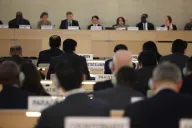
- July 2014. The United Nations Special Rapporteur on freedom of religion, Heiner Bielefeldt, came to Vietnam. “The planned visits to An Giang, Gia Lai and Kon Tum provinces were unfortunately interrupted from 28 to 30 July,” he said in Hanoi on July 31. “I received credible information that some individuals whom I wanted to meet with had been either under heavy surveillance, warned, intimidated, harassed or prevented from travelling by the police.” And: “I am convinced that serious violations of freedom of religion or belief are a reality in Viet Nam – in particular, but not only, in rural areas.” See The UN record.
- 2019. The UN Human Rights Committee found that members of unrecognized religious communities, “ethnic minorities or indigenous peoples,” “are forced to renounce their faith, pressured to join a competing sect” and “subject to physical assaults, which sometimes leads to death.”
- 2023. Nay Y Blang, an Ede church member of Sông Hinh in Phú Yên, was arrested on May 18 for holding prayer meetings of the Central Highlands Evangelical Church of Christ in his house, and Y Krec Bya, a missionary of the same church, in April. After the attacks of June 2023 at Cư Kuin, the US Commission on International Religious Freedom found that “Montagnard Christians worshiping with independent-affiliate house churches in the region, such as the Good News Mission Church and the Evangelical Church of Christ, also reported increased government suppression of their faith since the attack.” See Cư Kuin, June 2023.
- 2024. Nay Y Blang was sentenced on January 26 to four years and six months. On March 8 the body of the evangelist Y Pum Buonya was found hanging from a tree after he had been summoned to meet public security officers at a cemetery near his home in Ea Tu, Buon Ma Thuot; he had been arrested and beaten in December 2023 and “forced to recant his association with the church in front of villagers who had been forcibly assembled.” Fourteen UN experts later recorded that he “died in custody on 8 March 2024 after being tortured.” Two days after a pastor of the recognized church said on police television that religious freedom must be within the framework of the Party and the state, Y Krec Bya was sentenced to thirteen years and five years of house arrest under Article 116. In September the Dak Lak police detained the evangelist Y Thinh Nie “for repeatedly refusing to join the state-controlled church,” and in October “held a public denunciation to pressure more than 20 Montagnard Christians to join the registered church.”
- 2025. Courts in Gia Lai and Dak Lak sentenced Ro Cham Grong, Y Po Mlo and Y Thinh Nie to between seven and nine years under Article 116, “undermining the national great unity,” in March and May, and arrested pastor Y Nuen Ayun in October under the same article. USCIRF summarized the year: the authorities subjected our Christians to “persistent surveillance and harassment, frequent home visits, disruption of religious gatherings, physical abuse, and forced renunciation of faith to pressure them to join state-sanctioned churches affiliated with the Evangelical Church of Vietnam or disband.” The prisoners are named on Our defenders and prisoners.
Alongside the arrests runs a quieter measure: identity papers. At the UN in November 2023 a member of the Committee on the Elimination of Racial Discrimination put it to Vietnam that “there were reportedly some 20,000 stateless households in the Central Highlands.” A person without papers cannot own land, travel, enroll a child in school or leave the country legally, which is the point; see Stateless in our own country.
See also: The Evangelical Church and registration, The laws used against us, The highland Catholic Church, The years between.
Sources
- Human Rights Watch, Montagnard Christians in Vietnam: A Case Study in Religious Repression (March 30, 2011), DCHO library (also at hrw.org) — the figures, the instruments, the 2010 ceremonies, Y Ben Hdok
- Human Rights Watch, No Sanctuary (June 2006), DCHO library — the pledges and the villagers of 2005 and 2006; Repression of Montagnards (2002) — the population estimate
- Human Rights Watch, Persecuting “Evil Way” Religion (June 26, 2015), and World Report 2026
- Heiner Bielefeldt, press statement on his visit to Viet Nam, Hanoi, July 31, 2014; UN Human Rights Committee, concluding observations CCPR/C/VNM/CO/3 (2019), DCHO library; OHCHR, statement of UN experts, August 28, 2024; OHCHR, summary of the CERD dialogue, November 2023
- US Commission on International Religious Freedom, Annual Report 2025, Annual Report 2026, and Vietnam Country Update (December 2025), DCHO library
- Christian Solidarity Worldwide, on the death of Y Pum Buonya, April 23, 2024
- Chung Van Hoang, “Evangelizing Post-Đổi Mới Vietnam: The Rise of Protestantism and the State’s Response,” ISEAS Perspective 2017/34 — the mission history and the population figures of 1975 and 2014
- US Senate, The Plight of the Montagnards (1998), DCHO library — Y Hin Nie on the churches after 1975
- UNPO, “A 5 Year Sentence For Refusing to Recant Faith” (September 2011) — a diaspora account, single-sourced
Compiled September 2026. The figures for 2001 to 2011 are Human Rights Watch’s; no one has counted the years since with the same care, and we are trying to.