













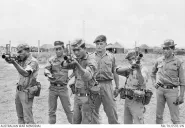

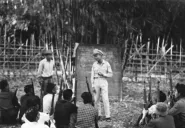
Vietnam has ratified the major human rights treaties, voted for the Declaration on the Rights of Indigenous Peoples, and has sat as a member of the United Nations since 1977. The obligations are not disputed and they are not optional. Set against them is the record in the Central Highlands, documented by the United Nations’ own bodies. This page puts the two columns side by side, in the treaties’ own words, and then shows that the machinery for holding a state to them has actually been used.
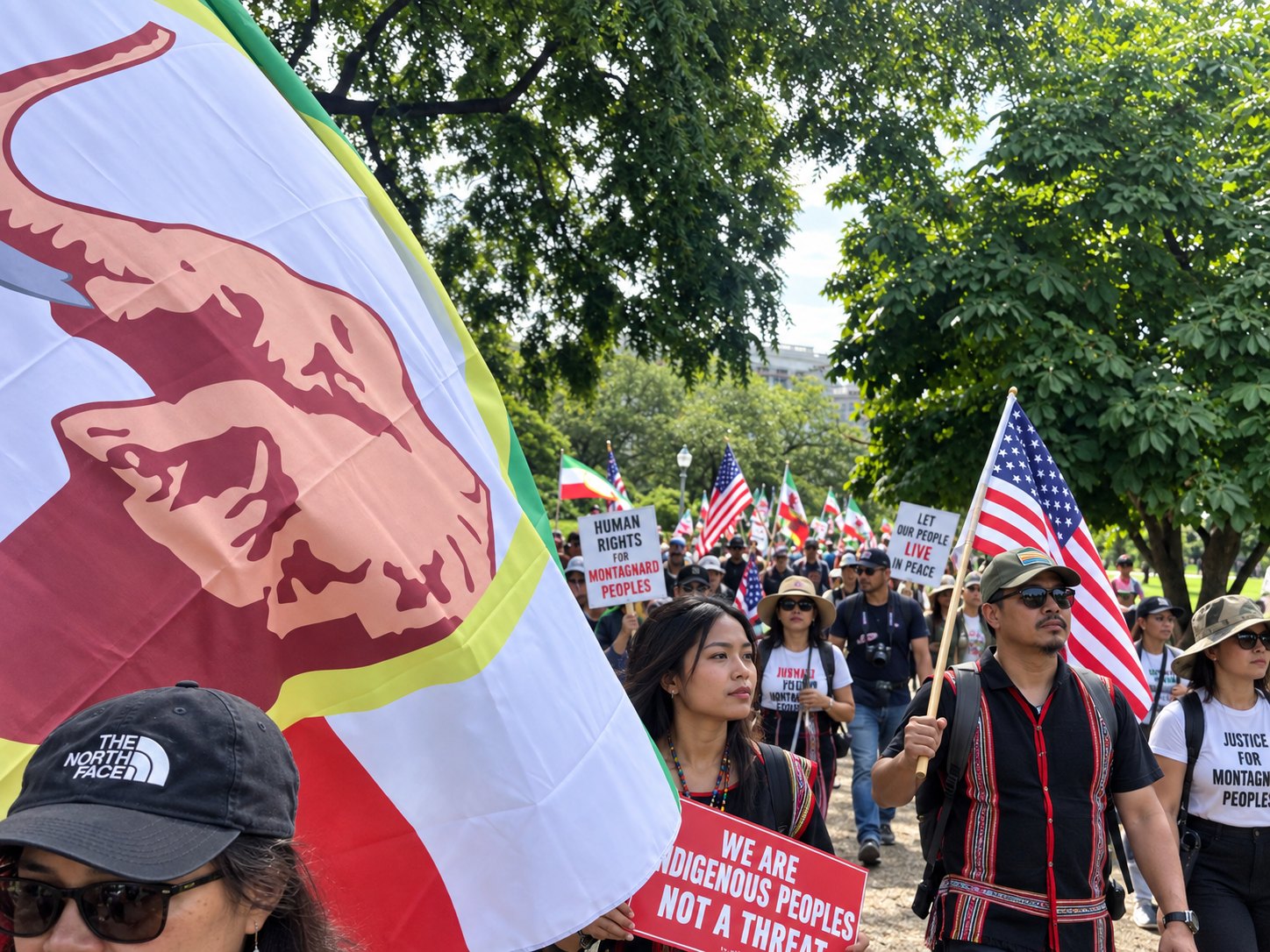
At a glance
| Instrument | What it says | What is documented in the highlands |
|---|---|---|
| UN Charter, Article 73 | For peoples who “have not yet attained a full measure of self-government,” members accept “as a sacred trust” the obligation to ensure “their political, economic, social, and educational advancement, their just treatment, and their protection against abuses” and “to develop self-government” | No act of self-government since 1954; the highland government of 1946 dissolved by force in 1955; see The Dega government |
| ICCPR, Article 1 (September 24, 1982) | “All peoples have the right of self-determination. By virtue of that right they freely determine their political status” | Advocating self-determination is prosecuted as undermining unity; organizations that do so are designated terrorist |
| ICCPR, Articles 9 and 14 | No arbitrary arrest; a fair trial by an independent court, with time and facilities to prepare a defense | 100 people tried at one sitting of a mobile court, January 2024, found by fourteen UN experts to lack legal basis and independence |
| ICCPR, Article 18 | “Everyone shall have the right to freedom of thought, conscience and religion … No one shall be subject to coercion which would impair his freedom to have or to adopt a religion or belief of his choice” | Dega Protestantism banned by name in 2005; renunciation ceremonies; congregations dissolved; see The church they closed |
| ICCPR, Article 27 | Persons belonging to minorities “shall not be denied the right, in community with the other members of their group, to enjoy their own culture, to profess and practise their own religion, or to use their own language” | Our languages barred from school; our churches closed; see Schools and language |
| ICESCR, Article 1 (September 24, 1982) | “All peoples may, for their own ends, freely dispose of their natural wealth and resources … In no case may a people be deprived of its own means of subsistence” | Village land certified to settlers; farmland taken; families moved to land that will not feed them; see How we got pushed off our land |
| ICERD (June 9, 1982) | Elimination of all forms of racial discrimination | 63 percent of Kinh children reach upper secondary school against 31 percent of ethnic minority children, as put to Vietnam by the Committee in 2023 |
| Genocide Convention (June 9, 1981) | No acts “committed with intent to destroy, in whole or in part, a national, ethnical, racial or religious group, as such,” including “deliberately inflicting on the group conditions of life calculated to bring about its physical destruction in whole or in part” | The population record and the testimony summarized in How we died |
| Convention against Torture (February 5, 2015) | No torture; no return of a person to a state where they face a real risk of it | At least 25 deaths in custody, 2001 to 2011; Y Pum Buonya, “died in custody on 8 March 2024 after being tortured,” per UN experts; a refugee extradited from Thailand in November 2025 |
| UNDRIP (voted for, 2007) | Indigenous peoples’ rights to their lands, territories and resources, to their own institutions, and to free, prior and informed consent | Vietnam’s position is that it has ethnic minorities and no indigenous peoples, which removes the instrument by definition |
The move that does the work
Notice the last row, because it is the hinge of the whole argument. Most of the instruments above bind Vietnam whatever we are called: a minority is tortured as unlawfully as an indigenous people. The Declaration on the Rights of Indigenous Peoples is different. It does not apply to a minority. It applies to an indigenous people, one with a prior and continuing relationship to a territory, its own institutions, and a claim to free, prior and informed consent over what is done with its land. By maintaining that it has fifty-three ethnic minorities and no indigenous peoples, the state removes that entire body of law from the table without breaching a word of anything. When the Committee on the Elimination of Racial Discrimination asked in November 2023 whether Vietnam would “accept the existence of indigenous peoples and their rights in Viet Nam,” the delegation answered that “the State party did not use the term ‘indigenous peoples’ but rather ‘minority people’ for historical reasons.” The Human Rights Committee had already recorded in 2019 that “the State party does not recognize the indigenous peoples in Viet Nam.” It is the cheapest and most effective move available to a state, and it is made in every forum. That is why our article on names is not cultural sentiment. It is the load-bearing argument.
The machinery has been used
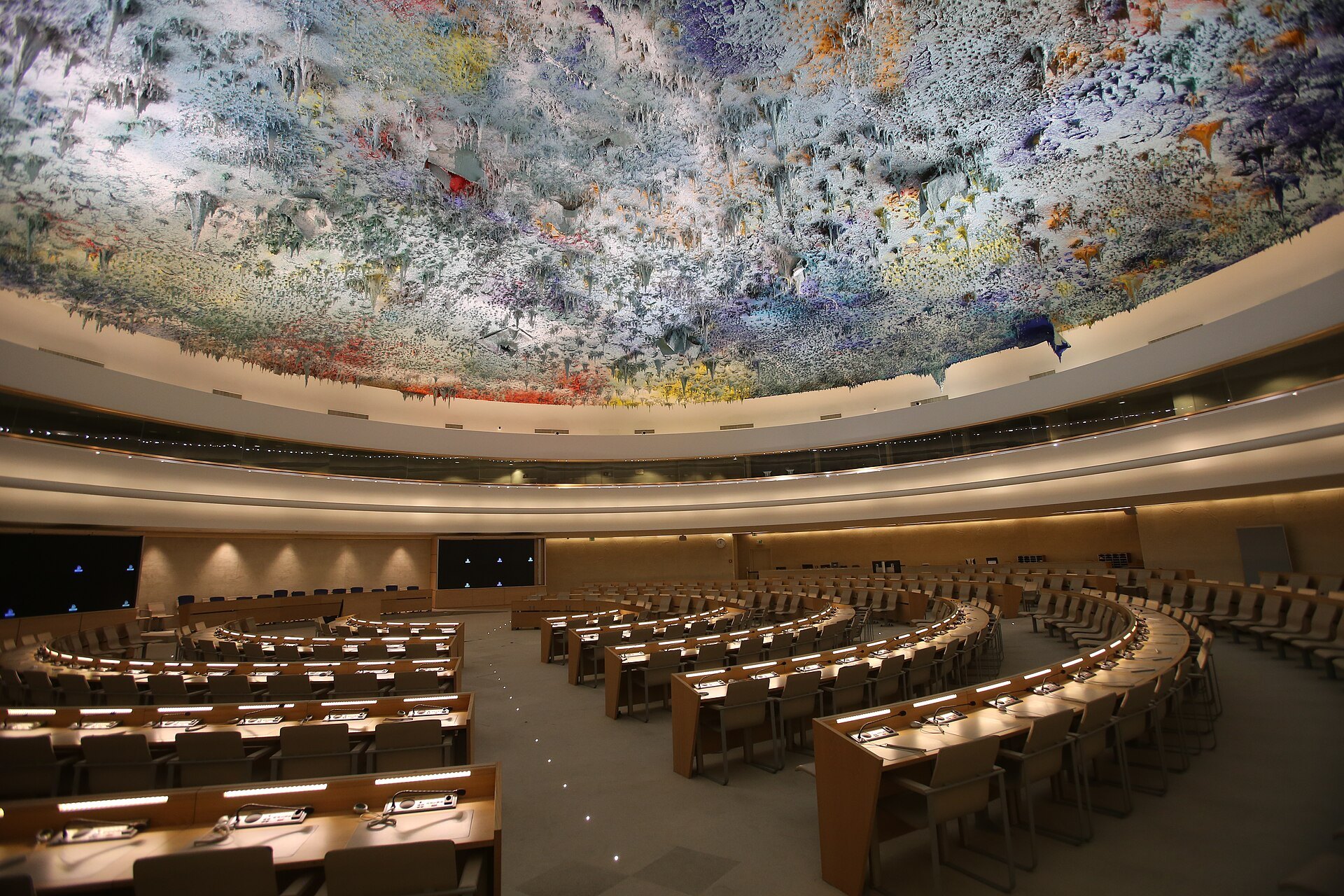

It is sometimes said that these treaties are unenforceable and that citing them is a gesture. The record says otherwise. The questions have been put, formally, by the bodies entitled to put them, and Vietnam has answered on the record.
The Human Rights Committee, 2019. Reviewing Vietnam under the Covenant on Civil and Political Rights, the Committee found that the Law on Belief and Religion “unduly restricts the freedom of religion and belief”; that members of unregistered communities, “ethnic minorities or indigenous peoples,” “face various forms of surveillance, harassment, intimidation, property seizure or destruction,” “are forced to renounce their faith, pressured to join a competing sect” and are “subject to physical assaults, which sometimes leads to death”; and that our communities “suffer from discrimination, including with regard to education, employment,” are “not sufficiently consulted in decision-making processes with respect to issues affecting their rights,” and face “the seizure and allocation of land, including traditional and ancestral lands, for development projects.” It told Vietnam to “carry out consultations with indigenous peoples with a view to obtaining their free, prior and informed consent.” The document is in our library.
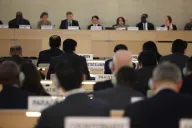
The Committee on the Elimination of Racial Discrimination, November 2023. Before a delegation led by the deputy minister for ethnic minority affairs, Committee member Chinsung Chung said: “Following the Dak Lak attack in June 2023, 100 Montagnards were arrested and prosecuted under a range of Criminal Code provisions,” and “the State party confiscated lands of indigenous people who had lived there for many generations. Those people were evicted with only minimal resettlement assistance and financial compensation.” Committee member Sheikha Abdulla Ali Al-Misnad said the Committee “had received a large volume of credible reports on actions by the State to prohibit and criminalise the enjoyment of religious and cultural activities by ethno-religious minority groups,” and gave the schooling figures in the table above. Another member noted that “there were reportedly some 20,000 stateless households in the Central Highlands.”
Vietnam’s delegation replied that “over 1,000 religious organizations had been registered since a new law on religious organizations came into effect”; that “Viet Nam did not prosecute any persons for religious reasons; only persons who violated the law were prosecuted”; that “actions to reclaim land were conducted in close consultation with local communities” and “resettlement conditions needed to be better than the land being claimed”; and that after the events of June 2023 “a list of offenders had been drawn up, which included ethnic minorities.” The Committee’s conclusions, published in December 2023, recorded its concern at the “disproportionate number of individuals belonging to ethnic minority groups charged and convicted” of terrorism, at the eighty-one Montagnards convicted under Article 113, and at Vietnam’s reluctance “to engage in open and inclusive discussions on the recognition of Indigenous Peoples, including the Khmers-Krom and Montagnards.”
The special procedures, August 2024. Fourteen independent experts of the Human Rights Council, among them the rapporteurs on counter-terrorism, on freedom of religion, on the rights of indigenous peoples and on human rights defenders, condemned “the discriminatory misuse of counter-terrorism law … against Montagnard Indigenous Peoples and Christian religious minorities,” found that the mobile court of January 2024 “lacked a clear legal basis and was not independent of political influence,” and said the mass trial “is part of a larger and intensifying pattern” of “historical discrimination and repression against Montagnards in Viet Nam.” See The UN record.
Why the replies matter more than the questions
A state that denies the facts can be shown to be wrong by evidence. A state that concedes the facts and disputes their character, that registration is merely administrative, that land reclamation is consultative, that nobody is prosecuted for religion as such, has moved the argument onto ground where documents decide it. Every renunciation pledge, every refused registration, every compensation notice and land certificate in a family’s possession is now directly responsive to something the Vietnamese state has said in Geneva. That is what documenting an incident is for.
What follows from membership
Vietnam was admitted to the United Nations on September 20, 1977 and is bound by the Charter. Article 6 provides that “a Member of the United Nations which has persistently violated the Principles contained in the present Charter may be expelled from the Organization by the General Assembly upon the recommendation of the Security Council.” We do not expect that and we do not campaign for it; we note it only to make the point that the Charter treats persistent violation as a real category and not a rhetorical one. The treaties carry their own machinery: periodic reporting, examination by the treaty bodies, the Universal Periodic Review, and the special procedures. The machinery exists. It has been used. The findings are on the record, and they are citable.
What we are not saying
We are not saying that ratifying a treaty is meaningless or that international law is a fiction. We are saying the opposite. These instruments are precise, Vietnam accepted every one of them freely, and the distance between the text and the highlands is measurable rather than rhetorical. That is a stronger position to argue from than outrage, and it is the one we intend to keep.
See also: The laws used against us, Land law and customary land, Vietnam and the Declaration, The Law on Belief and Religion, What Washington has said.
Sources
- Treaty texts: International Covenant on Civil and Political Rights; International Covenant on Economic, Social and Cultural Rights; Convention on the Prevention and Punishment of the Crime of Genocide; Charter of the United Nations
- Ratification dates: United Nations Treaty Series, vol. 1228 (Genocide Convention, with Viet Nam’s reservation) and vol. 3026 (Convention against Torture); University of Minnesota Human Rights Library; UN member states; UN DESA on the Declaration
- UN Human Rights Committee, concluding observations on Viet Nam, CCPR/C/VNM/CO/3 (2019), DCHO library
- OHCHR, “In Dialogue with Viet Nam, Experts of the Committee on the Elimination of Racial Discrimination…” (November 2023); Committee on the Elimination of Racial Discrimination, concluding observations CERD/C/VNM/CO/15-17 (December 2023), as quoted in the UK Home Office country policy note on Vietnam (2024)
- OHCHR, “Experts condemn misuse of counter-terrorism law against Montagnards in Viet Nam” (August 28, 2024)
- Human Rights Watch, Montagnard Christians in Vietnam (2011), DCHO library, and on the extradition of November 2025
Ratification dates checked against the UN treaty records, September 2026. If you find an error in a date here, tell us; this is the article we least want to be wrong.