




















A report that a human rights body can act on looks different from a report that something terrible happened. This page sets out what makes the difference, what each UN mechanism asks for, how to keep photographs and files so that they prove something, and what writing it down can cost a person in Vietnam today. Read Reporting safely first.
Before you start
- Somewhere to write that will not be found, and a separate place for names. Keep who people are apart from what they said, and use a code in the account itself. On a phone or computer, encryption helps, but using it can itself be treated as a crime in some countries.
- The date. If you are not certain, the day of the week and what else happened that day.
- Consent from the people you are about to name, and for two different things: whether their name may be given to the government concerned, and whether it may appear in a public report. The UN asks both questions separately, and so should you.
The six things every account needs
- Who
Full name, sex, age or date of birth, ethnicity as the person gives it, village, commune, district, province. If the person is an official or a police officer, their rank and unit if you know it. For a single case sent to the UN, the name is needed: the Working Group on Enforced Disappearances will not open a case without it, and the arbitrary detention questionnaire begins with family name and first name. The UN keeps a name out of its letters and reports when asked. For reporting a pattern, a described person is still evidence: “a man of about 40 from X commune.”
- When
Date and, if you can, time. If you are unsure of the date, anchor it: the day after the market, the Sunday before Easter, the week of the rice harvest. The UN’s own manual tells its officers to do the same. An anchored uncertainty is far more useful than a confident guess.
- Where
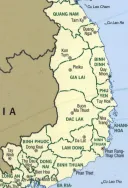
Village, commune, district, province, and then the road, the building, the field. Places can be checked; that is what makes them valuable. Provinces and districts have been merged and renamed; write the names in use at the time, and the new ones as well if you know them.
- What was done, in order
Only what you saw, or what the person told you directly. Separate the two: “I saw” and “he told me” are different kinds of evidence and both are worth having, provided nobody has to guess which is which. For an arrest, record who made it, in what uniform, whether a warrant or decision was shown and by what authority, what law was named, where the person was taken and every transfer after. Write down what officials said in the words and the language they used.
- Who else was there
Other witnesses, even if they will not speak now. An account is confirmed by other people who saw the same thing, questioned separately, at different times and in different places. That is how Human Rights Watch built its reports on us, and a second account years later still counts.
- What happened next
Was there a hospital visit, a detention, a summons, a fine, a village meeting? The aftermath is often more documentable than the event, because it leaves paper. When officials refuse to give you the paper, write down its number, its date and the office that issued it.
What the paper can look like
In May 2022 three Montagnard Christians in Cu M’gar district, Dak Lak, wrote to their communes asking how their house churches could register. They were arrested and questioned without a lawyer. On June 10 each was fined four million dong under Decree 144/2021, by decisions numbered 55, 56 and 57/QĐ-XPHC. The evidence named in the decision was a note one of them had written on a calendar, in Vietnamese, English and Ede, marking the UN’s day for victims of religious violence. When the men asked for copies of the violation reports, officials refused, saying the documents “contained national security secrets.”
Every one of those details reached the UN experts, who wrote to Vietnam in September 2022, because someone recorded them: the names, the dates, the numbers of the decisions, the words on the calendar, the words of the refusal. One of the three, Y Thinh Niê, was sentenced to nine years in May 2025.
What each UN mechanism needs
| Where it goes | What it asks for |
|---|---|
| The special procedures: the UN’s independent experts on religion, detention, defenders, minorities and the rest, through one online form | A factual description of what happened, from credible and detailed information, not only from press reports, and not in abusive language. Anyone may send it. The country need not have ratified any treaty and the victim need not have gone to the courts first. The experts write to the government and give it sixty days to answer. |
| The Working Group on Arbitrary Detention | A questionnaire: identity; date and place of arrest, the forces that made it, any warrant and the authority behind it, the law applied; the date of detention, its length (or the probable length, if unknown), each place of detention and each transfer, and the reasons the authorities gave; why the detention is arbitrary; and what has been tried at home. One questionnaire for each person. |
| The Working Group on Enforced or Involuntary Disappearances | At least the full name, the day, month and year of the disappearance, the place, the state forces believed responsible, what search has been made, and who is reporting. The source is always kept confidential. The Working Group says plainly that it cannot protect anyone physically. |
| The Committee on the Elimination of Racial Discrimination, early warning and urgent action | Evidence of a pattern: escalating violence or hatred against a group, or discrimination visible in social and economic figures, serious enough to need action before it grows. |
The accounts the UN experts have sent to Vietnam about us show the standard: a named person, a named commune, a date, a police unit, an article of the criminal code, a sentence, a prison. See The UN record.


Photographs, video and files
A picture proves more when it can be shown to be what it claims to be. Four things have to be established: when it was taken, where, what it shows, and who took it. Some practical rules from the organizations that train people to film abuses:
- At the start of a recording, say your name if it is safe, the date, the time and the place, and while filming, say which way you are facing.
- Keep the original file exactly as it came from the camera or phone. Do not rename it, convert it or run it through an editing app. Work only on copies.
- Write down every time the file passes from one person to another, with the date. That record is the chain of custody, and courts ask for it.
- If you can, record the file’s hash value, a fingerprint calculated from its contents that shows it has not been changed since.
- Blur the faces of anyone who could be put at risk before a copy leaves your hands. Keep the unblurred original safe.
There is a hard choice here. The data a phone stores inside a photograph, its location and the device it came from, is what proves where and when it was taken. The same data can identify the person who took it. Apps built for evidence, such as eyeWitness to Atrocities and ProofMode, record it deliberately and send the original to a safe server; security guides tell people at risk to turn location off. Which is right depends on who will hold the file and who might take the phone. Nobody can make that choice for you, but make it on purpose.
What makes an account stronger
- A photograph of a document: a summons, a fine, a pledge, a land certificate. It often proves more than a photograph of a person, and puts no face at risk
- Medical records, even a note of a visit
- The exact wording used by officials, in the language they used it in
- Decision numbers, dates and the office that issued them, even when no copy was given
- Saying plainly what you do not know
- Writing it down soon, before the order of events settles into a story
What weakens an account
Round numbers nobody counted. Words like always and never. Adding a motive you have inferred. Merging two incidents that happened to the same person. Repeating something you were told by someone who was told it. Each gives a government a reason to dismiss the account, including the parts that were solid.
Gaps and small contradictions are different. People who have been beaten, blindfolded or badly frightened often cannot give every detail, and the UN’s torture manual says so: an investigator should ask again gently, and where that is impossible look for other evidence. Do not smooth a gap over. Say it is there.
What recording can cost
We say this plainly because the people who document for us carry the risk. Vietnam has punished our people for telling the outside world what happens to them.
- In November 2019 a Montagnard Christian, Nay Y Ni, came home from a conference on religious freedom in Bangkok. He was interrogated for two days, his room was searched, and within ten days he had lost his job at a hospital in Binh Duong.
- In 2022 officials in Dak Lak told the three men above that their request was unlawful because Montagnard Christians had been reporting violations to the international community.
- Nay Y Blang, an Ede man from Phu Yen, met American diplomats from the consulate in Ho Chi Minh City in August 2022 to talk about the persecution of independent churches. He was arrested in May 2023 and sentenced in January 2024 to four and a half years under article 331 of the criminal code, for giving foreign organizations what the court called false information about religious freedom.
- Since December 25, 2024, social media accounts in Vietnam must be tied to a Vietnamese phone number or identity number, and platforms must hand users’ data to the authorities on request. A new cybersecurity law took effect on July 1, 2026. Revisions to the criminal code put before the National Assembly in August 2026 would extend article 117 to acts that oppose the Communist Party and raise the minimum sentence under article 331(2) from two years to three.
- Thailand is no longer safe by default. Vietnamese police visited Montagnard neighborhoods near Bangkok on March 14, 2024. Thai authorities detained about 65 Montagnards on February 23, 2025, and about 70 more in October 2025, 42 of them recognized as refugees by the UN. Y Quynh Bdap, who founded Montagnards Stand for Justice, was extradited to Vietnam on November 28, 2025. In July 2026 eighteen human rights organizations reported open surveillance of Vietnamese exiles in Bangkok.
The UN mechanisms cannot protect anyone physically; they say so. The standards written for investigators assume the state will protect witnesses, and here the state is the one accused. None of them was written for a person inside Vietnam for whom sending an account abroad is itself the offense. Decide with the person whose story it is what goes out, under what name, and when.
Result
A page or two that states who, when, where, what, who else and what followed, separating what was seen from what was heard, naming its own gaps, with the names kept apart and the consent recorded. That is the unit human rights organizations, UN special procedures and asylum decision-makers work from, and with provenance and a chain of custody, courts as well. Our own prisoner-of-conscience records are built from exactly this.
The guides we work from
- Istanbul Protocol: Manual on the Effective Investigation and Documentation of Torture (United Nations, 2004), in our library; the revised edition of 2022 at OHCHR — how to take and record a survivor’s account
- Berkeley Protocol on Digital Open Source Investigations (OHCHR and UC Berkeley, 2022), in our library — photographs, video and online material as evidence; hash values; chain of custody
- OHCHR, Manual on Human Rights Monitoring (revised edition, 2011) — chapters 2 (principles), 10 (gathering and verifying), 11 (interviewing), 13 (reporting) and 14 (protecting witnesses)
- Working Group on Arbitrary Detention, model questionnaire; Working Group on Enforced or Involuntary Disappearances, reporting a disappearance; special procedures online submission form
- Minnesota Protocol on the Investigation of Potentially Unlawful Death (2016) — for a death in custody
- HURIDOCS, Events Standard Formats (2001) — how to record an event, its acts, victims, perpetrators and sources in a consistent form
- WITNESS, “Video as Evidence”; eyeWitness to Atrocities, “Using metadata”; ProofMode, whose makers note that its chain of custody has not yet been tested in court
- Security in-a-Box and Front Line Defenders, Workbook on Security (2016) — storing files, phones, and weighing risk
- The Murad Code (2022) — written for survivors of sexual violence; its rule of asking first whether the account has already been given to someone else applies to every survivor
What we do not know. Whether the revisions to the criminal code tabled in August 2026 have been adopted, and in what form. How far the merger of provinces in 2025 has changed the names people should write; we have seen it confirmed only in sources we do not use. Whether Vietnam has accepted any UN treaty procedure that would let an individual complain directly to a committee. And whether any photograph or video from the highlands has yet been accepted by a court.
Sources
- OHCHR, Manual on Human Rights Monitoring, HR/P/PT/7/Rev.1 (2011), chapter 2, principles A, I and J; chapter 10, pp. 4, 14–15, 19 and 30; chapter 11, pp. 11, 18 and 21; chapter 13, pp. 8–9 and 13–14; chapter 14, pp. 7 and 25–27
- Istanbul Protocol (2004), paragraphs 89, 129, 138 and 141–143; Istanbul Protocol, HR/P/PT/8/Rev.2 (2022); Berkeley Protocol (2022), on humility, security, hash values and chain of custody
- OHCHR, special procedures, submission criteria and consent questions; Working Group on Arbitrary Detention, model questionnaire; Working Group on Enforced or Involuntary Disappearances, reporting page; CERD, early warning and urgent action procedure
- AL VNM 2/2020 (April 30, 2020) — Nay Y Ni; AL VNM 4/2022 (September 6, 2022) — the fines at Cu M’gar; AL THA 6/2024 (June 14, 2024) — the visit of March 14, 2024; AL VNM 3/2025 (July 24, 2025) — the arrests of February 2025
- Human Rights Watch, our research methodology; No Sanctuary (2006), in our library — corroboration; “We’ll All Be Arrested Soon” (April 21, 2025) — Nay Y Blang; “Thailand: Vietnamese Refugees at Risk from Hanoi” (November 13, 2025); “Thailand: Montagnard Activist Extradited to Vietnam” (December 1, 2025); “Vietnam: Reject Repressive Penal Code Revisions” (August 2026); World Report 2026, Vietnam; joint statement on transnational repression in Thailand (July 1, 2026)
- US Commission on International Religious Freedom, Vietnam Country Update (December 2025), in our library — Y Thinh Niê’s sentence
- Tilleke & Gibbins, on Decree 147/2024 (February 20, 2025); Freedom House, Freedom on the Net 2025: Vietnam; Allen & Gledhill, on the Cybersecurity Law No. 116/2025/QH15
- WITNESS, “Video as Evidence” (2014) and Video as Evidence: Basic Practices; eyeWitness to Atrocities, “Using metadata”; Guardian Project, ProofMode; Security in-a-Box, secure file storage and Android guides; HURIDOCS, Events Standard Formats (2001)
Compiled September 2026. The laws described here are changing; check the date on this page before relying on it.