








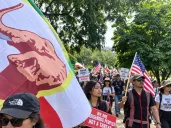
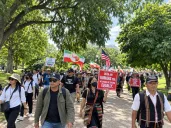
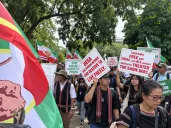


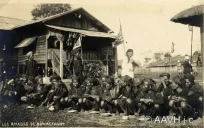


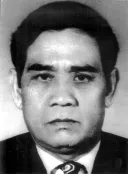
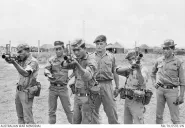

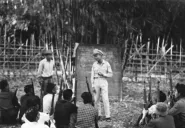
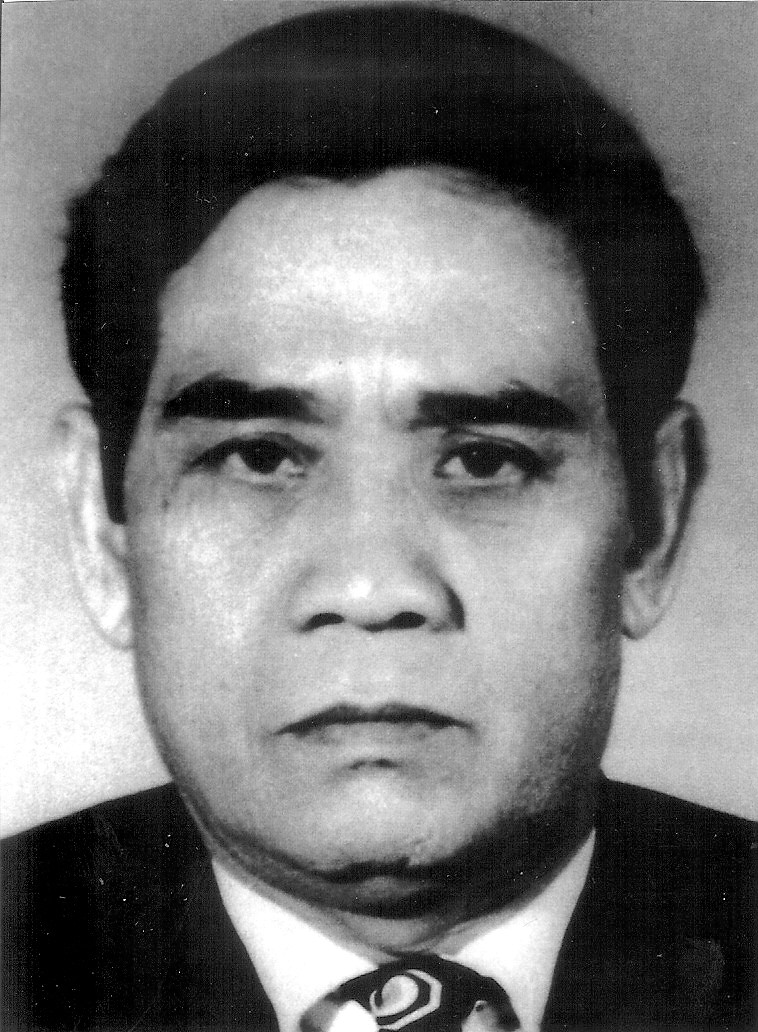
BAJARAKA is four peoples in one word: BAhnar, JArai, RAde, KAho. It was the movement in which our educated men, most of them teachers, clerks, soldiers and policemen of the new Republic of Vietnam, asked for our country back with letters, a petition and a march. They wrote to President Diem, to the American, French and British ambassadors and to the Secretary-General of the United Nations. In the autumn of 1958 they were arrested for it, and most of them spent the next five years in prison. When they came out in 1964, the same men founded something that carried weapons. This page tells what they asked for, who they were, what was done to them, and who was watching.
What went wrong after 1954
In 1955 Ngô Đình Diệm abolished the Crown Domain and merged our country into the Republic of Vietnam. The special statute went with it: the customary courts were wound up, our languages were barred from the schools, and from 1956 the land development centers began moving Vietnamese settlers onto highland land. The story of those years is on Pushed off, 1954–57.
The CIA’s own history of the highlands, written in 1966 by its Vietnamese Affairs Staff, describes what it looked like in Darlac. The Mnong near Dak Mil broke off contact with the 2,500 Vietnamese Catholic refugees settled beside them within two months, because they believed the refugees had brought soldiers who would torture them. At Buon Ho, north of Buon Ma Thuot, the Vietnamese army was hated for looting food from the villages. The report’s own summary: the conditions created by the Vietnamese administration had become “untenable to the Highlanders.”
How it was founded
The CIA’s account, which is the most detailed we have, begins in early 1957, with highland students at the lycée in Da Lat forming a committee to look into organizing an autonomy movement. In May 1957 Y Bham Enuol, a Rhade agricultural official from Buon Ale-A, is reported to have called a meeting of the peoples at Buon Trap in Darlac. By 1958, the report says, “intellectual Highlanders, mainly from the missionary-trained Rhade,” were going from village to village asking for support.
By July 1958 there was an organization. Its members, the CIA records, were school teachers, local militiamen, soldiers of the regular army, police and local employees of government offices, each representing their villages, and it claimed the backing of some 200,000 highlanders. It had four provincial committees of nine members each, at Kon Tum, Pleiku, Da Lat and Buon Ma Thuot, and a central committee of seven. It called itself the Bajaraka Autonomy Movement.
Other dates circulate for the founding: May 1955, January 5, 1958 and May 1, 1958. We cannot settle them, and we would rather say so than pick one. What is not in doubt is who did it: the first generation of our people educated in the French and mission schools, most of them now working for the Republic that was taking their land.
The acronym is the argument


Before BAJARAKA there were Bahnar grievances, Jarai grievances and Rhade grievances, taken separately, in different languages, to whoever governed that district. BAJARAKA put four peoples into one word and made one claim in the name of all of them. The French had assembled us for their own convenience. BAJARAKA was the moment we assembled ourselves, for our own. Everything since, from FULRO to this library, rests on it.
The CIA saw three currents inside it. The first, which it placed around Y Bham, wanted to work with the government for equality. The second leaned toward French planters and some French missionaries who wanted a neutral Vietnam with an autonomous highlands. The third looked to Hanoi’s promise of autonomy. That is the CIA’s reading, written eight years later by an agency that was then trying to use the movement; the people who were in it could tell us whether they saw it that way.
What we asked for
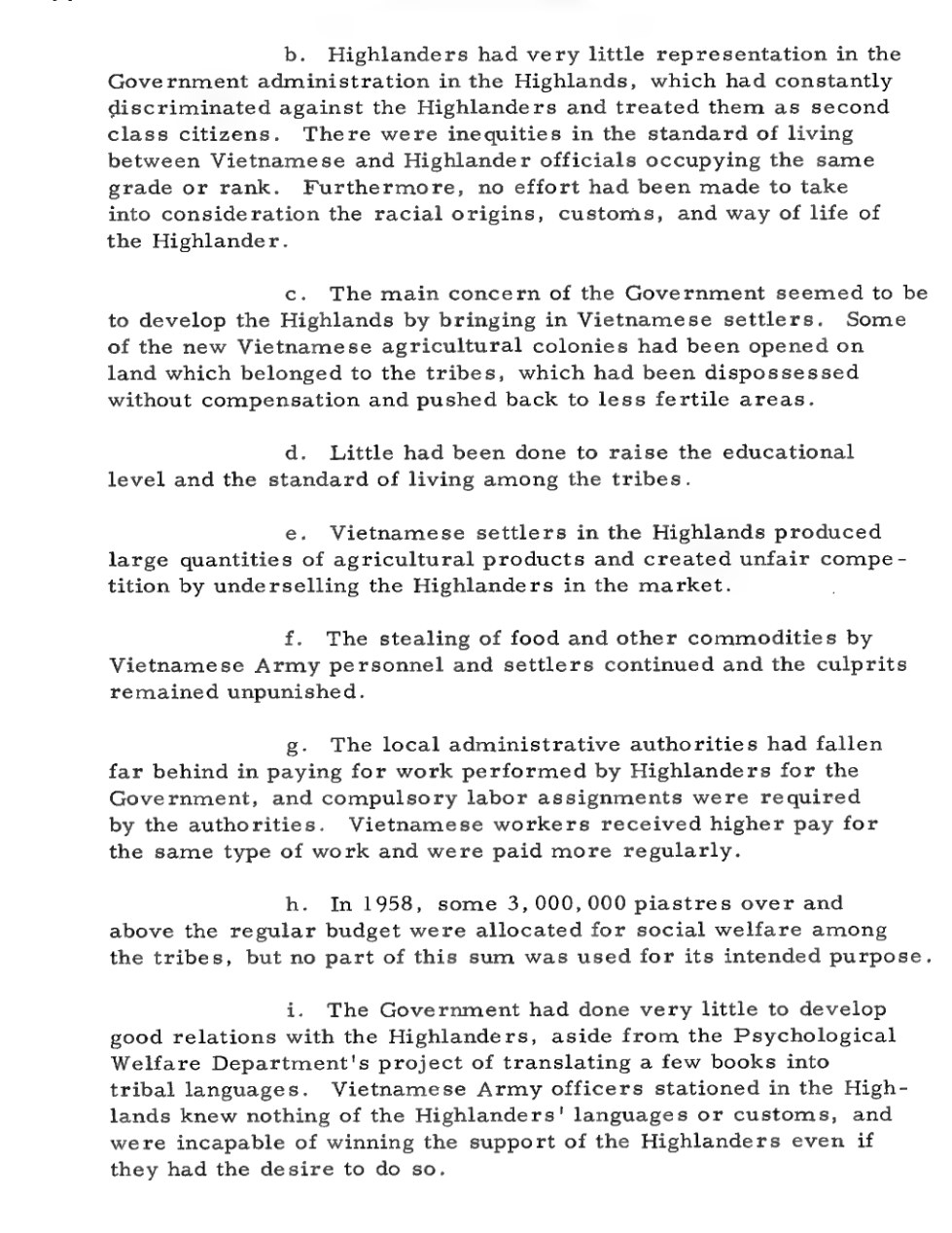
The CIA set out the movement’s grievances as a list, and it is the nearest thing we have to the text of the letters themselves. In summary:
- Self-determination. The semi-autonomous status we had under the French was taken away when the Vietnamese replaced them, without anyone asking us.
- Representation. Highlanders had very little place in the administration of the highlands, which discriminated against us and treated us as second-class citizens; highland officials were paid less than Vietnamese officials of the same grade.
- Land. New Vietnamese colonies had been opened on land that belonged to our villages, and the villages had been “dispossessed without compensation and pushed back to less fertile areas.”
- Schools and living standards, about which little had been done.
- Markets. Settlers undersold our crops.
- Theft. Soldiers and settlers stole food and goods from our villages, and nobody was punished.
- Labor. Work done for the government went unpaid for months; forced labor was required; Vietnamese workers were paid more, and more regularly.
- Money. In 1958 some three million piastres were allocated for welfare among the highland peoples, and none of it was used for that.
- Respect. Vietnamese officers in the highlands knew nothing of our languages or customs.
None of this is separatism. BAJARAKA asked for a place inside the Republic of Vietnam on terms that recognized who we were. It was answered with prison.
Letters to the world, July 1958
On July 7, 1958, BAJARAKA wrote to the American ambassador in Saigon, Elbridge Durbrow. On July 31 two of its men went to see him in person: Y Ju and Y Nam. They were introduced by Henry G. Lefever of the Mennonite Central Committee, who had carried their earlier letters to the embassy and who stayed out of the conversation. They brought a letter asking the Secretary-General of the United Nations to send a fact-finding commission to the highlands. They told the ambassador this was the third letter they had tried to send to the United Nations, and showed him copies signed by 45 leading highlanders, addressed to the British and French ambassadors to forward to their own delegations.
The CIA records Durbrow’s answer: he “declined to accept the letters but promised unofficially to bring the minority problem to the attention of Vietnamese officials in Saigon.”
A French priest in Buon Ma Thuot, Father Roger Bianchetti, was shown a draft petition to Diem that year. He told the men who brought it not to ask for independence:
“By sending such a demand to the President you would be casting yourselves into a wasp’s nest, and the only result might be further hardship for your people and imprisonment for yourselves. What you must do is continue to strive for autonomy.”
He offered to send copies to the Secretary-General and to the ambassadors of France, Britain, the United States and India. The CIA’s comment, eight years later, was that he had been right about the wasp’s nest and wrong about the reason: to the government, asking for autonomy was as bad as asking for independence.
We still do not have the text of any of the 1958 letters. The American copies should be in the State Department’s embassy files for 1958; the British and French copies, if they were sent on, in London, Paris and the United Nations archives.
September and October 1958
The government was already moving. In March 1958 highland soldiers in Pleiku were reported to be deserting to Laos; one report said six hundred. In August 1958 the highland officers and NCOs of the Vietnamese army, fewer than two hundred men, were put under “preventive arrest” on suspicion of planning to desert to Cambodia. They were released, but the CIA records the anger it caused.
September 8. A “Committee of Liberation” set out the demand for autonomy in a letter to President Diem, signed by Y Bham Enuol as its president.
October 12. The leaders sent Diem a petition with about a thousand signatures, asking him to release the highlanders then held in prison in Pleiku. There was no answer.
October 15. Our people marched in Buon Ma Thuot, Kon Tum, Pleiku and Di Linh. In Buon Ma Thuot the organizers had planned on about eight hundred Rhade from around Buon Ale. Almost two thousand came. A spokesman read out the grievances against the resettlement program and the arrests in Pleiku and called for autonomy, and the demonstration went on for five hours. Then, in the CIA’s words, “Vietnamese Army troops in armored vehicles were finally dispatched to break up the demonstration.”
October 27. The province chief of Darlac, Nguyen Van Tich, called Vietnamese and highland officials to a meeting at the Lido Cinema in Buon Ma Thuot to persuade them that there was no such thing as an autonomy movement. A Rhade employee of the provincial administration, Y Wing, who was not a member of BAJARAKA, stood up:
“The French used to tell us that ‘the French and the Montagnards are brothers!’ then along came the Viet Cong who said, ‘the Viet Cong and the Montagnards are brothers!’ Today, the Vietnamese are telling us, ‘the Vietnamese and the Montagnards are brothers!’ and this is very good! But what we want to know is, are these fine words true, or are they like those of the French and the Communists? We ask that these be not empty words but words proved by deeds!”
The government’s answer, the CIA writes, was immediate.
The arrests
A military security unit was sent to Buon Ma Thuot, and in the end the whole central committee was taken:
- Y Bham Enuol, Rhade, president of BAJARAKA;
- Touneh Yoh, chairman of the Da Lat (Koho) committee;
- Nay Luett, chairman of the Pleiku (Jarai) committee;
- Paul Nưr, chairman of the Kon Tum (Bahnar) committee;
- Y Ju Eban and Y Thih Eban, Rhade, of the central committee.
Y Bih Aleo, chairman of the Buon Ma Thuot (Rhade) committee, had been arrested earlier and held for about a week. Our own submission to the United Nations in 1993 gives September 15, 1958 as the day Y Bham Enuol and six other leaders were arrested. Human Rights Watch, following Gerald Hickey, records that Y Bham, Y Thih Eban, Paul Nưr and Nay Luett “were imprisoned in underground solitary cells in Dalat for three months.”
The sentences are told differently. The CIA says the six were sentenced to four years, and that some were not released until 1964. Our own history says six years, and names Y Bham Enuol, Paul Nưr, Siu Sip, Y Thih Eban, Y Ju Eban, Nay Luett and Touneh Yoh. What nobody disputes is that most of them were inside for more than five years, for letters and a march.
The punishment reached everyone else too. Highland officers and NCOs were transferred and given meaningless duties. Thirty-five Rhade officials were moved out of the Darlac administration to posts in the lowlands. The police resumed keeping files on every highland official. Gatherings of more than three people were forbidden, and so were our feast days.
What Saigon said
In November 1958 Diem’s brother and chief adviser, Ngô Đình Nhu, explained the movement to Ambassador Durbrow. It was, he said, “merely part of the Communist propaganda technique.” He did not believe the Communists could make a single people “out of these often antagonistic, aboriginal, ignorant peoples.” He expected that as the elders died and were buried in the new villages, and the sorcerers found good omens in their new homes, we would settle down.
Diem himself came to Buon Ma Thuot on January 12, 1959. The new province chief, Bui Thuc Duyen, is said to have proposed handing the administration of the highlands to highlanders, but with no money, no police, no militia and no powers of any kind, while a Vietnamese administration beside it kept the real ones. Diem did not act even on that.
Y Bih Aleo’s road
One BAJARAKA leader was never jailed with the others. The CIA gives three accounts of Y Bih Aleo, and does not choose between them. In one, he was visiting the Viet Cong near his village of Buon Dryling when the arrests came in 1958, and stayed with them. In another, he joined them in 1960. In the third, which the CIA says it could not confirm, Y Bham was let out of jail in June 1960, went home and began meeting Y Bih and the local committee; the police arrested Y Bham again, and Y Bih escaped to the Viet Cong. From 1961, the CIA records, Y Bih Aleo was chairman of the “Movement of Highland Autonomous Nationalities” and vice-chairman of the central committee of the National Liberation Front. His story is on Highlanders on the other side.
The prison years, 1958–1964
While its leaders were inside, BAJARAKA did not die. Y Thih Eban came out about May 1962 and went to work as a translator at Buon Enao, the village where the CIA had begun arming our people. He was then general secretary of the BAJARAKA central committee, which by 1962 claimed to speak for 586,000 highlanders and said it was now willing to accept equal status with the Vietnamese rather than autonomy.
Others came out into something worse. In September 1962 twenty-six Rhade political prisoners who had served their sentences were released from the Buon Ma Thuot jail and sent straight to a forced-labor camp in the Krong Kno valley, under the Vietnamese army’s 43rd Regiment.
By 1962 the CIA’s Combined Studies Division, which ran the Buon Enao program, was talking to the BAJARAKA committees, and pressing Saigon to use them against the Viet Cong. It wanted Y Bih Aleo brought back, and it worked through the man in the cell. Y Bham Enuol, still in the Buon Ma Thuot jail, wrote Y Bih several letters urging him to come in. On February 1, 1963, word came back that Y Bih would meet Vietnamese officials if Y Bham was released.
On February 14, 1963, at Pleiku, General Nguyễn Khánh, commanding II Corps, met the Pleiku BAJARAKA representatives, and had Y Bham flown in from the Buon Ma Thuot jail for the meeting on a Combined Studies Division aircraft. His presence, the CIA wrote, had “an excellent psychological effect” on the men in the room, and a rising the Viet Cong had been urging on the Pleiku and Kon Tum committees did not happen. The Pleiku leaders were promised that no action would be taken against them. At the end of February Y Bham was taken back to jail. On March 15 the army’s 23rd Division tried to capture Y Bih, who sent word that faith had been broken. In April Saigon withdrew its offer of amnesty to him.
In November 1963 Siu Sip, the acting chairman of the Pleiku committee and one of the men who had met Khánh, was murdered in the village of Plei Brang by an unidentified killer. Rmah Liu, the committee’s secretary, took his place.
That spring, the ambassador’s special assistant had written to Nhu: “I believe that the autonomy movement is declining or dying among the tribes.” Nhu’s officials believed the opposite, and that the Americans were the reason.
1964: out of prison, and into office
Diem was overthrown and killed on November 1, 1963. On January 30, 1964, General Khánh took power in Saigon, and on February 10, according to the CIA, the Minister of the Interior released Y Bham Enuol. Other accounts give February 12. Within weeks the men of 1958 were in posts:
- Y Bham Enuol, deputy chief of Darlac province for highland affairs;
- Paul Nưr, the same post in Kon Tum;
- Y Ju Eban, interpreter for the American aid mission in Darlac;
- Y Thih Eban, interpreter at the Buon Sarpa Special Forces camp, then an administrative assistant for the Ministry of the Interior in Lam Dong and Quang Duc;
- Nay Luett, interpreter for the American aid mission in Phu Bon, then liaison officer for the Directorate of Highland Affairs in Saigon;
- Touneh Yoh, interpreter for the US Special Forces, then an administrative assistant for the Ministry of the Interior in Lam Dong.
The CIA’s summary was that “all the leaders jailed in 1958 were now in positions from which they could influence Highlander action if not the Vietnamese Government attitude.” Seven months later, in September 1964, five Special Forces camps rose, and Y Bham Enuol was in Cambodia at the head of FULRO. Paul Nưr stayed, and in 1969 signed the settlement with FULRO for the government. Both men thought they were doing the same thing by different means; see Paul Nưr and Nay Luett: the ministry years and FULRO, 1964–1992.
The armed movement did not come out of nowhere. It came out of the closing of every other road, and the men who founded it were the men who had written the letters, released from the same cells.
What we do not know
The letters themselves. We have the CIA’s summary of the grievances and the dates of the letters of July 7 and September 8, 1958, but not their text. If a copy survives in a family, in Paris, in London, in the State Department’s files or in the United Nations’ records, we want it.
The names of the 45 who signed the letters to the ambassadors, and of the thousand who signed the petition of October 12.
The founding date, the length of the sentences, and where each man was held.
Who killed Siu Sip at Plei Brang in November 1963.
The women. No woman’s name appears in any account of BAJARAKA we have read. The wives and daughters of the men in prison kept their families alive for five years; their story has not been written.
See also: Y Bham Enuol, The Dega flags, Pushed off, 1954–57, FULRO, 1964–1992, Customary law and the village court.
Sources
- Central Intelligence Agency, Vietnamese Affairs Staff, The Highlanders of South Vietnam: A Review of Political Developments and Forces (June 1966; declassified 1999, CIA-RDP80T01719R000300010003-8), pp. 19–26 and 53–60, DCHO library. The CIA ran the Buon Enao program and tried to use BAJARAKA; it is writing partly about itself.
- Human Rights Watch, Repression of Montagnards: Conflicts over Land and Religion in Vietnam’s Central Highlands (April 2002), chapter III — the Dalat cells, the petition and the demonstration, following Hickey
- Gerald C. Hickey, Free in the Forest: Ethnohistory of the Vietnamese Central Highlands, 1954–1976 (Yale University Press, 1982) — the fullest outside account of BAJARAKA. Hickey worked for many years under RAND contracts funded by the US government.
- Stan B-H. Tan, “‘Swiddens, Resettlements, Sedentarizations, and Villages’: State Formation among the Central Highlanders of Vietnam under the First Republic, 1955–1961,” Journal of Vietnamese Studies 1 (2006) — the land program the letters were about
Compiled September 2026. Quotations from the CIA report were checked against the declassified text in our library.