
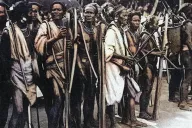

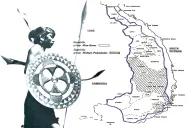
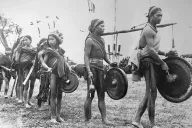
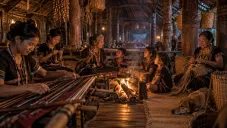
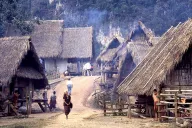

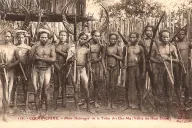
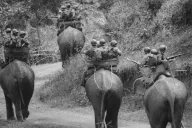
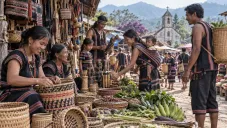
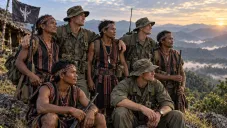

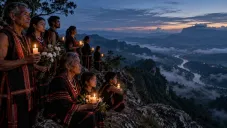

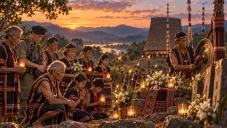




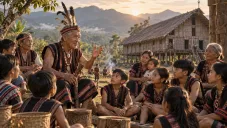
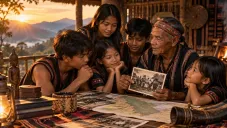
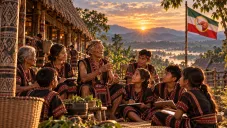
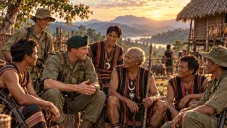




For centuries the Jarai had two ritual masters whose names were known at the courts of Cambodia and Huê: the Pơtao Apui, Master of Fire, and the Pơtao Ia, Master of Water. Kings sent them elephants and silk. They were not rulers in the European sense, and they were not treated as rulers by the states that finally absorbed them. The last Master of Fire died in 1987, and the Vietnamese state has not allowed a successor to be installed.
What they were
The Pơtao were masters of ritual. The Master of Water prayed for rain; the Master of Fire for dry weather at the right season. The Master of Fire kept a sacred sword, said to have come down from heaven. Neither commanded an army or collected taxes. Their authority came from the belief, shared across a wide area of the highlands and beyond, that the weather and the harvest depended on them. The French ethnologist Jacques Dournes, who lived among the Jarai for years, wrote a whole book on this idea of power without rule.
The kings who sent gifts
For centuries the kings of Cambodia exchanged gifts with the Pơtao — the Cambodian side sending young elephants, metal and silk; the Jarai side sending wax sealed with the Master’s thumbprint, rice, sesame, ivory and rhinoceros horn. French missionaries were writing about the Pơtao by 1850. The exchange ended in the nineteenth century, under King Norodom. Missions from the Pơtao also went to the Vietnamese court at Huê in the nineteenth century.
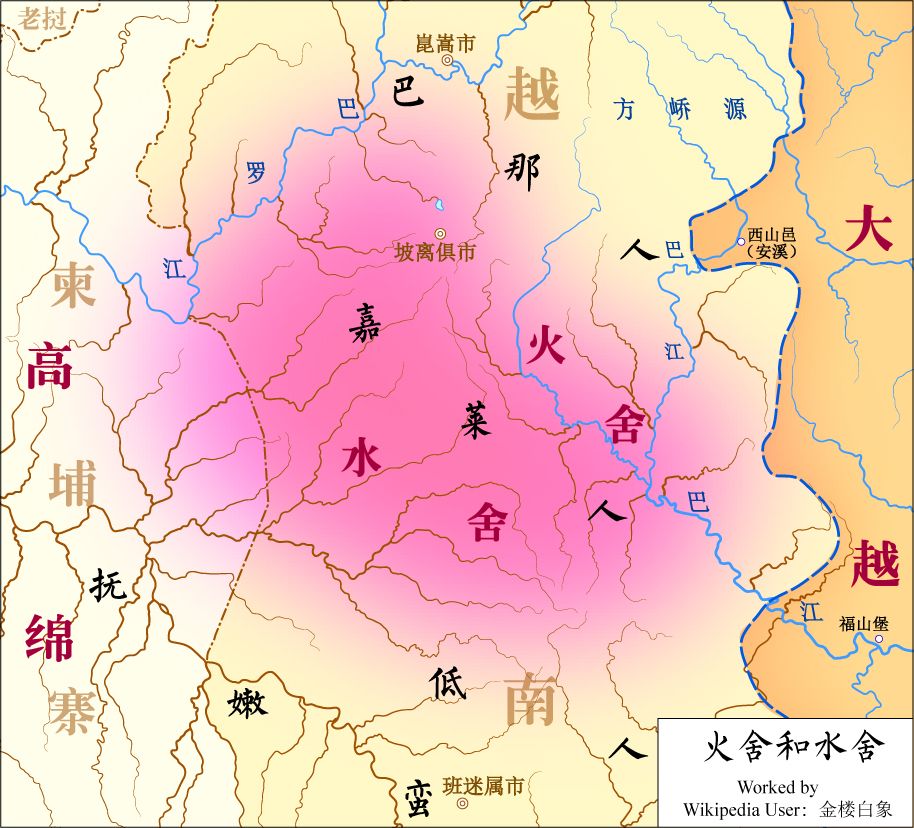

Seen from the capitals, these were acts of tribute. Seen from the highlands, they were exchanges between equals, and the Pơtao never took orders from any of those courts. Both readings were available, and the one that won in the end was the capitals’.
The French, and after
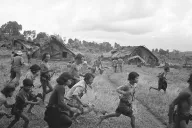
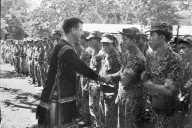
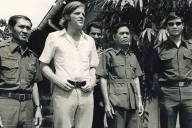
The Jarai resisted the French columns that came into their country in the 1890s and were subdued in January 1897. In 1904 the French explorer Prosper Odend’hal, who had come to see the Master of Fire, was killed; accounts differ on who ordered it. The institution survived colonial rule. In 1966 the American anthropologist Gerald Hickey attended the rituals of the Master of Fire of that time, and photographs of a Jarai Master of Fire from those years are now held by the Smithsonian.
The last Master of Fire died in 1987. His chosen successor, Siu Aluân, was never installed: the Vietnamese authorities objected, treating the institution as superstition and its ceremonies as something to be prevented. He died in 1999. Oscar Salemink, who has written the fullest study, reads the refusal as part of a wider policy of dismantling highland institutions that could compete with the state for loyalty.
What the Pơtao show
People who say the highlanders had no institutions before the French, the Americans or the Party arrived are wrong in a specific, documented way. For at least three centuries the courts of the region knew the names of two Jarai offices and sent gifts to them. The offices did not end because the Jarai stopped believing in them. They ended because a state decided they would.
See also: Before history.
Further reading
- Jacques Dournes, Pötao: une théorie du pouvoir chez les Indochinois Jörai (Flammarion, 1977) — publisher; also on Gallica
- Oscar Salemink, “The King of Fire and Vietnamese Ethnic Policy in the Central Highlands,” in Don McCaskill and Ken Kampe (eds), Development or Domestication? Indigenous Peoples of Southeast Asia (Silkworm, 1997)
- Oscar Salemink, The Ethnography of Vietnam’s Central Highlanders: A Historical Contextualization, 1850–1990 (University of Hawai‘i Press, 2003)
- Smithsonian National Anthropological Archives, Gerald Cannon Hickey photographs of Montagnard peoples (Photo Lot 73-34) — includes a Jarai Master of Fire
- Thủy Xá and Hỏa Xá — summary with references
- “The King of Fire story” — the Cambodian side of the gift exchange, drawing on Jean Moura, Le royaume du Cambodge (1883)
Compiled September 2026. Sources disagree on whether the Cambodian gifts were annual or three-yearly, and on who ordered Odend’hal’s death. If your family is from the Ayun valley and remembers the Pơtao, please tell us.