











Knowledgebase
Viewing articles tagged 'condominas'
Viewing articles tagged 'condominas'
7 articles
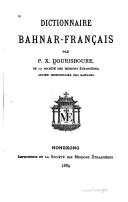
Books about the Dega
A reading list for anyone who wants to understand the Dega properly, our own young people above all: the books and articles we trust, what each is good for, and where it can be read. Many are free online, and the older ones are in our own library.
Before history: the stone and bronze ages of the plateau
Seven thousand years ago people were living in the lava caves at Krong No, burying their dead in a flexed position, cooking at hearths and wearing ornaments made from sea-snail shells carried a hundred kilometers from the coast. That is the best-dated thing we have. Out at the edges the claims get bigger and the ground gets softer: stone tools a...
Films and recordings
Where to see and hear the Dega: the American wartime films now in the public domain, later documentaries, videos made in our own languages, the published records of our music, and the field recordings held in Paris, many of them free to listen to online. We list what we have been able to find and check, and say where we could not.
The rice year
For most of our history the year was measured by rice. A village chose a piece of forest, cleared it, burned it, planted it when the rains came, harvested it, and after a few years let it grow back while it moved on to the next. Outsiders called this “slash and burn” or “nomadic farming” and set out to end it. This page describes the rice year a...
Yang: the spirits and the old religion
Everything written down about the old religion of our country was written by somebody else. French missionaries, French administrators, an American army analyst working from their books, and lately a team of researchers who state in print that they are not indigenous. We have looked for one published account by a Dega person describing a yang, o...
The Mnong (Bunong)
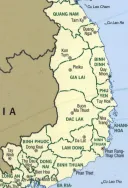
The Mnong hold the southern half of the plateau — Dak Nong, the Lak basin below Buon Ma Thuot, and Mondulkiri across the Cambodian line, where they call themselves Bunong and are the largest of Cambodia’s recognized indigenous peoples. They are the people of N’Trang Lơng, who kept the French out of his country for twenty-three years; of the elep...
Instruments beyond the gongs
The gongs are the voice of the highlands, but they are not the only one. Our peoples made music from bamboo, gourds, stone and a single string: xylophones, mouth organs, tube zithers, one-string fiddles, jaw harps, flutes and panpipes, and, once, from stones cut before any of our languages were spoken. Most of it was recorded by outsiders in the...
Powered by WBAMS