










Knowledgebase
Viewing articles tagged 'peoples'
Viewing articles tagged 'peoples'
8 articles
The Stieng (Xtiêng)
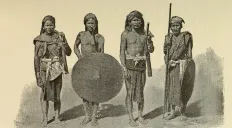
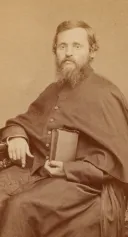
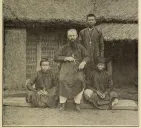
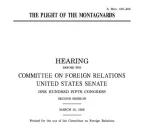
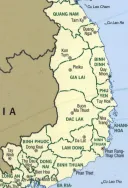
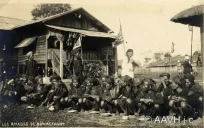
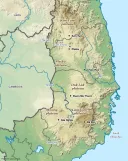
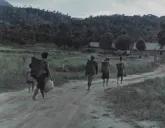
The Stieng live at the southwestern edge of the highlands, where the plateau falls toward the plains north of Saigon: in what was Phuoc Long and Binh Long, then Song Be, then Binh Phuoc, and across the border in Kratie and Mondulkiri. They were the first of our peoples a European lived among and wrote about, in 1859, and among the last the Frenc...
The Koho, Maa, Churu and Raglai
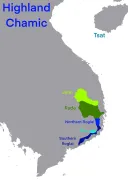
Four peoples hold the southern end of our country, from the Lang Biang plateau around Da Lat down to the hills behind the old Cham coast. Two of them, the Koho and the Ma, speak Mon-Khmer languages and are close kin. Two of them, the Churu and the Raglai, speak languages almost identical with Cham. The Koho and the Ma are easy to run together, a...
Jars, rice wine and the buffalo feast
A jar has a soul. The Êđê call it mngắt cheh, and if a jar stands empty for a while someone will put a handful of rice and an egg inside to feed it. A jar is also money: among the Êđê Bih a tang pôk jar was worth a buffalo and a tuk navi jar was worth an elephant. And a jar is law — when a man was killed, the killer set one jar at the feet of th...
Customary law and the village court
Our law was not a book. It was verse, held in the memory of men who could stand up in a village and recite the clause that settled the case. It priced a human life in gongs measured against a man’s own forearm, made failing to help the unfortunate an offense, and devoted more of itself to the wrongs a chief can commit than to theft. The French w...
The smaller peoples of the highlands
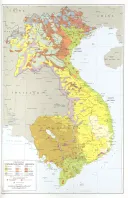
Beyond the large peoples, the Rhade, Jarai, Bahnar, Sedang, Mnong, Koho and Stieng, the highlands are home to a dozen smaller ones, some of only a few tens of thousands, whose names rarely appear in the record and whom the Vietnamese state files under larger names of its own choosing. This page gathers what the sources say about each of them, so...
Instruments beyond the gongs
The gongs are the voice of the highlands, but they are not the only one. Our peoples made music from bamboo, gourds, stone and a single string: xylophones, mouth organs, tube zithers, one-string fiddles, jaw harps, flutes and panpipes, and, once, from stones cut before any of our languages were spoken. Most of it was recorded by outsiders in the...
Hunting, the crossbow and the forest
Every highland household farmed, and hunting was part of most men’s lives, with the crossbow as its mark; among the Bru, boys began to learn it at five or six. The forest gave meat, fish, fruit, medicine and poison, and our peoples knew it the way farmers know a field. This page sets down what the record says about how we hunted, fished and trap...
Lower Sesan 2: the dam downstream
The Se San and the Srepok carry the water of our highlands into Cambodia, where the same peoples live on both banks. In 2017 the gates closed on Lower Sesan 2, a dam just below the rivers’ meeting in Stung Treng. It flooded some 30,000 hectares and displaced nearly 5,000 people, most of them Bunong, Brao, Lao, Jarai and their neighbors; more tha...
Powered by WBAMS