
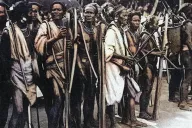
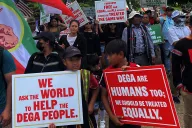
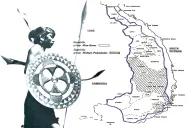
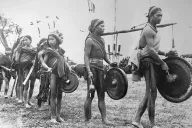
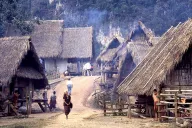

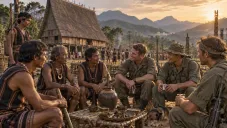
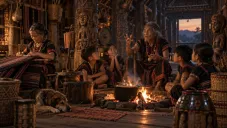
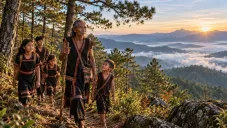
Every photograph in this library has a source and a license, and we credit each one. This page lists where freely licensed pictures of the highlands and our peoples can be found, what the common licenses allow, and how we credit them — so that families, teachers and writers can do the same.
Where to look
| Collection | What it has | Terms |
|---|---|---|
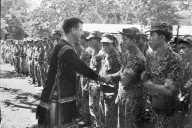
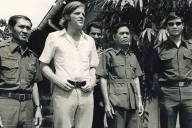
| Wikimedia Commons: Degar people, with Central Highlands (Vietnam), Bahnar, Ê Đê, Mnong, FULRO and Đắk Sơn | Photographs, scans and maps from many contributors, old and new | Every file states its license on its own page. Most are public domain or Creative Commons |
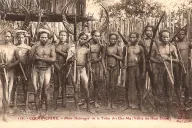
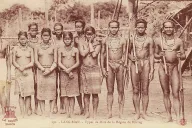
| Commons: Bảo Đại’s tour of the highlands, 1933 | Studio photographs from Darlac in 1933, including highland chiefs | Public domain |
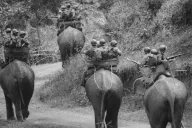
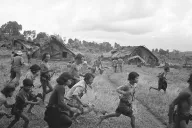
| US National Archives catalog | US Army, Marine Corps and aid-agency photographs and films of the war years; Army Map Service maps | Works of the US federal government are generally in the public domain |
| USMC Archives on Flickr | Marine Corps photographs, including the Bru country of Quảng Trị | Check the license shown on each photograph |
| Virtual Vietnam Archive, Texas Tech University | Millions of pages of documents, photographs and oral histories, including veterans’ collections from the highlands | Items are the archive’s unless stated. Educational and non-commercial use is allowed with credit to the Vietnam Center and Sam Johnson Vietnam Archive; items owned by others cannot be downloaded |
| Internet Archive | Digitized books, US government reports and CIA documents, some with photographs | Varies; US government works are public domain |
More archives, including French and American collections of documents, are on Archives and collections.
What the licenses mean
- Public domain
- No copyright. You may use it freely. We still say where it came from.
- CC0
- The owner has waived their rights as far as the law allows. Use freely; credit is courteous.
- CC BY
- Use freely, but you must give appropriate credit, link to the license, and say if you changed the picture.
- CC BY-SA
- As CC BY, and if you change the picture and publish the result, you must share it under the same license.
- GFDL
- An older free license; credit the author and include or link the license, following the instructions on the file’s page.
- All rights reserved
- Do not use without the owner’s written permission. Most news photographs are in this class, even when they are easy to find online.
How we credit
Under every photograph we give what it shows, when and where if known, the photographer, where we found it, and the license, with a link to the file’s page. For example:
A highland man shows a US Marine how to shoot a crossbow at a Bru souvenir shop at Đông Hà, 1969. Official USMC photograph by Lance Corporal Frank De Long, USMC Archives, via Wikimedia Commons, CC BY 2.0.
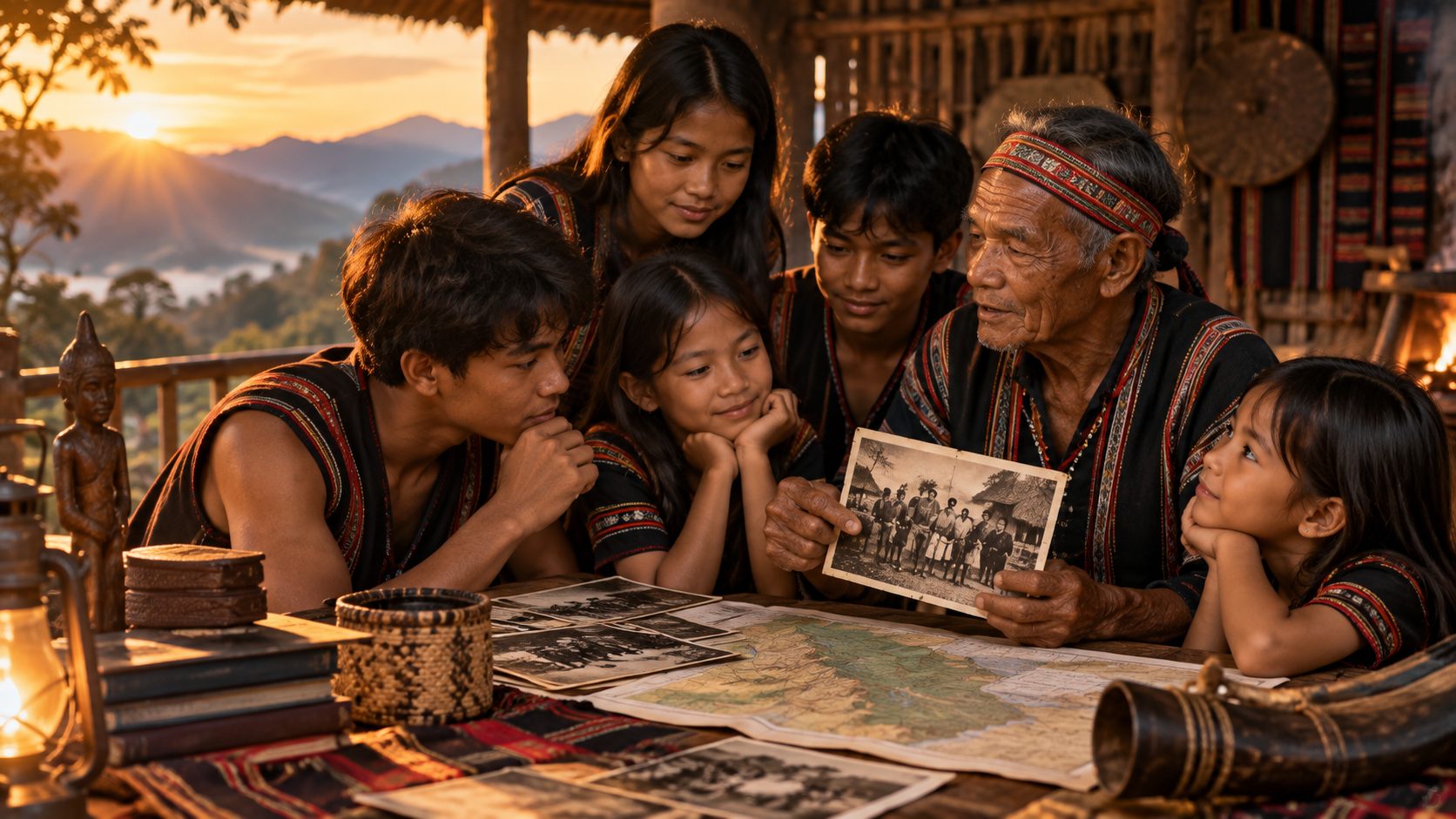
Where we have used an illustration rather than a photograph, the caption ends with the word “Illustration,” so that no one mistakes it for a record of a real event.
Before you share a photograph
- A picture found on social media is usually under full copyright, with no license to reuse it, and often no known author. Do not publish it as evidence unless you know who took it, when and where.
- Faces put people at risk. Do not publish a recognizable face of anyone in the highlands, or of their family, without their consent. See Reporting safely.
- Keep the original file. Copies lose the information about when and where a photograph was taken.
Your own photographs
Old family photographs — weddings, villages, the camps, the first years in America — are often the only record of what they show. If you have some and would like them kept, see How to record an elder for how to describe them, and contact us.
Compiled September 2026.