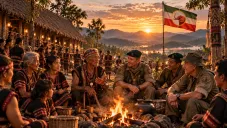


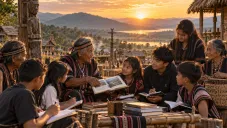
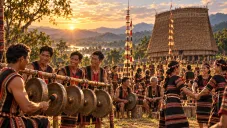
There is no single Dega flag. There have been several, each belonging to a movement or an organization, and each carrying the history of the people who made it. This page shows the ones we can document, says where each comes from, and marks what we do not know.
BAJARAKA, 1958
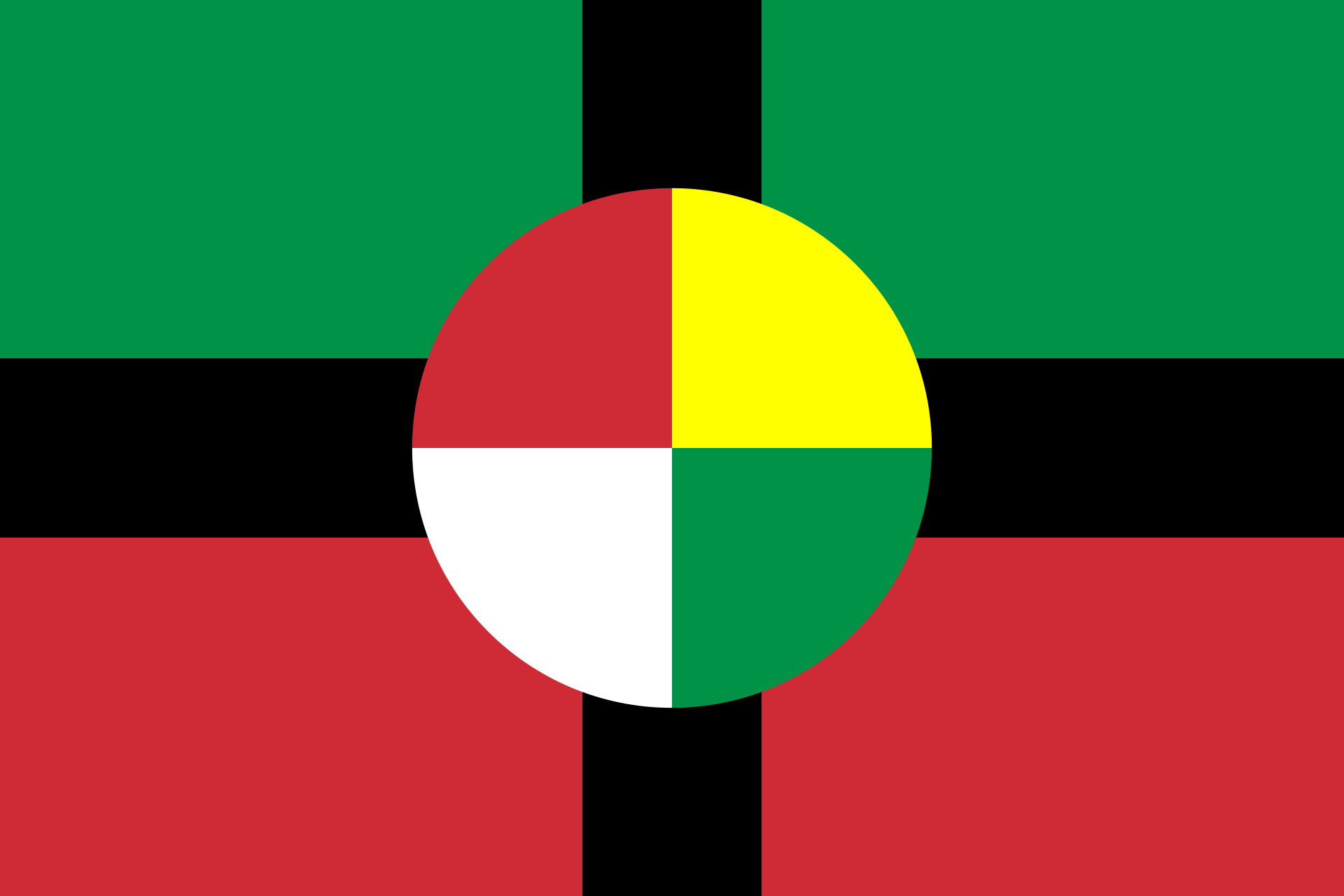

BAJARAKA took its name from four peoples — Bahnar, Jarai, Rade and Kaho — and its flag, used from 1958 to 1964, carries a disc divided into four, one quarter for each. The Flags of the World project records that some older sources wrongly attributed this flag to the Cham; it is a highland flag. Descriptions of the field differ between sources, and we have not seen an original.
The Front for the Liberation of the Highlands, 1964
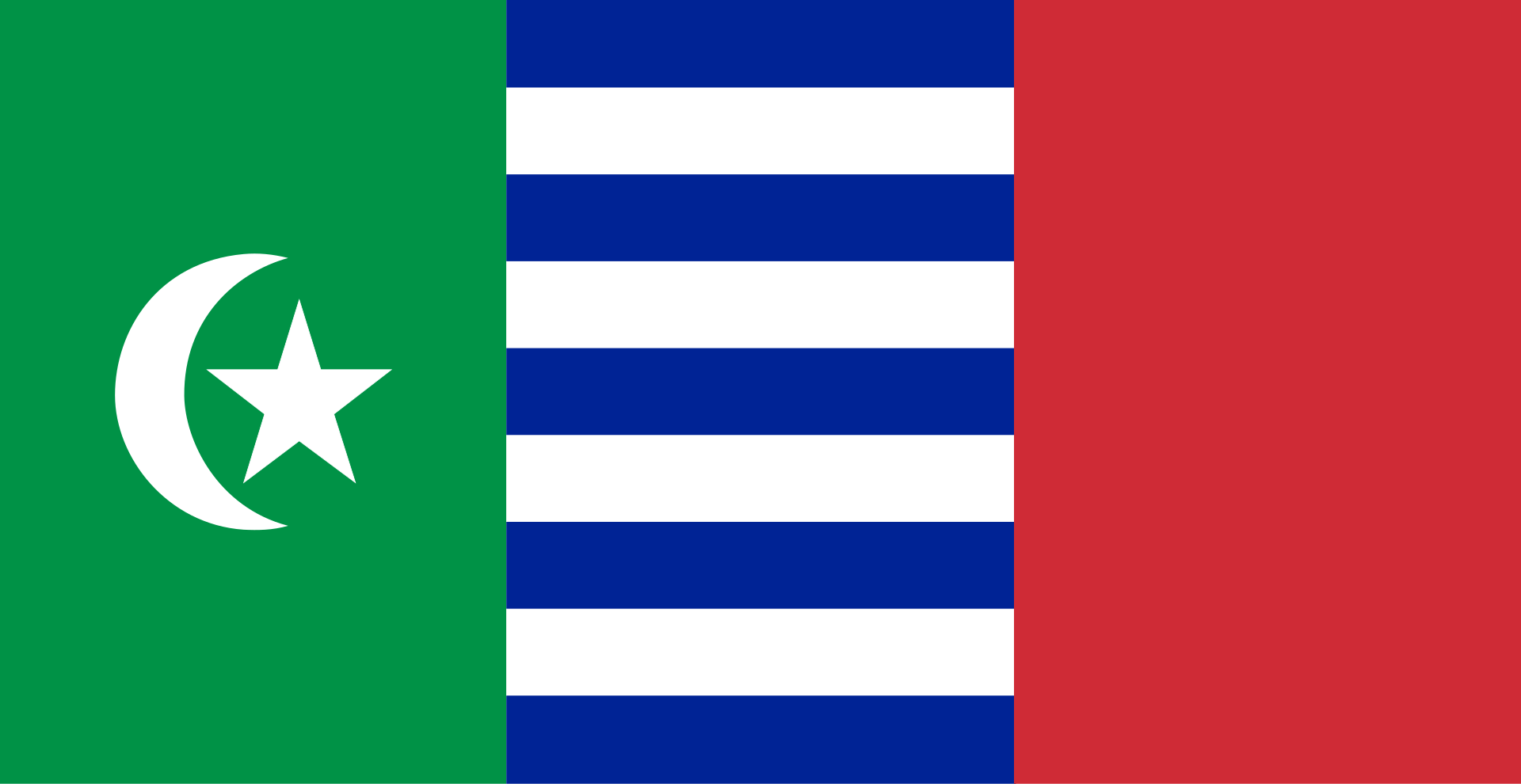

In 1964 BAJARAKA’s successors organized as the Front for the Liberation of the Highlands, and in September that year they joined Cham and Khmer Krom fronts to form FULRO. This flag belongs to that moment. The United Montagnard People flag described below repeats its arrangement of an emblem at the hoist, stripes, and a plain red fly.
FULRO
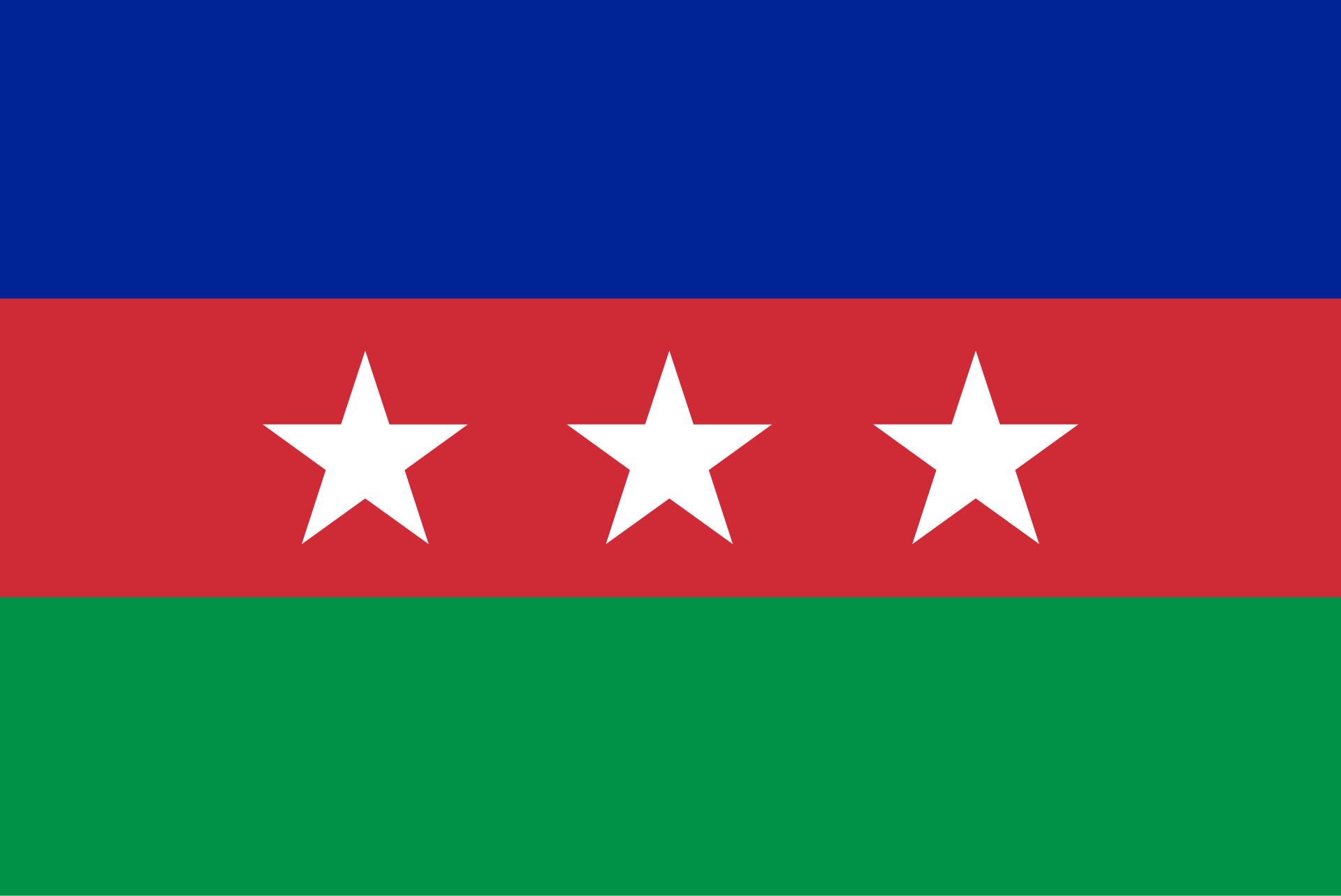

The usual reading is that the blue stands for the sea, the red for the struggle and the green for the mountains, and that the three stars are the three peoples, or the three fronts, that made up FULRO: highlanders, Cham and Khmer Krom. Flags of the World records that the blue was later changed to black. This is the flag carried in the forest after 1975 and handed over, with the last weapons, in 1992 (see Mondulkiri, 1992).
The diaspora flags, 1986–87
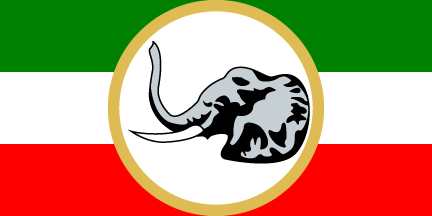

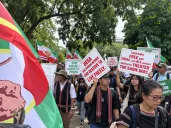
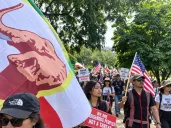
The best-known flag in the diaspora was made in North Carolina in 1987 for the Dega people in North Carolina. As recorded by Flags of the World and the Montagnard Support Group:
- green for the mountains and forests;
- white for peace and honesty;
- red for blood and struggle;
- the elephant for gentleness and strength;
- the ring for the brass friendship bracelet that highlanders gave to American soldiers they trusted.
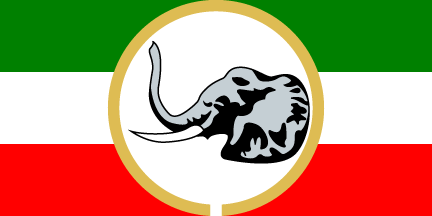

According to Flags of the World, the 1987 design was modeled on an earlier flag of the South Vietnamese era, that of the Movement for the Unity of Ethnic Groups of South Viet-Nam, which also used an elephant’s head and a ring, on green, yellow and red stripes.
Other flags
- United Montagnard People: a blue hoist with a large white star, green and white stripes, and a red fly. Flags of the World notes that it is increasingly used as a general Dega symbol.
- United Montagnard Republic: seven stripes, green, white, red, white, red, white, green, with a blue canton bearing a thin yellow cross, reflecting the conversion of many highlanders to Protestant Christianity.

What we have not claimed
People in the highlands have been prosecuted for owning or displaying these flags. We do not assert any report here. If you have such a record, please send it to us safely.
See also: The bracelet.
Sources
- Flags of the World, “Montagnards (Viet Nam)”
- Montagnard Support Group, “Dega flags”
- Wikipedia, “United Front for the Liberation of Oppressed Races” and “1964 FLHP rebellion”
- The Wikimedia Commons file pages linked under each image
Compiled September 2026. Flags drawn on Wikimedia Commons are reconstructions. If you have an original flag, or a photograph of one in use, we would be glad to record it.