


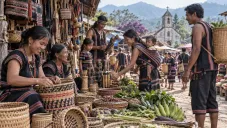
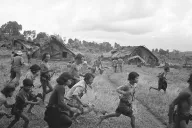
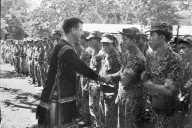
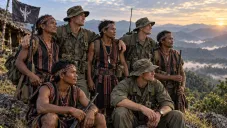



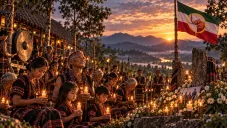
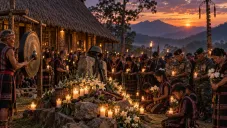
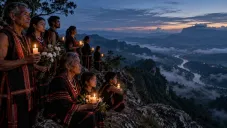

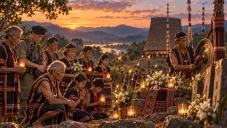











A brass or copper ring on the wrist is one of the oldest bonds among our peoples. It sealed engagements and marriages, made friends of strangers, bound villages in sworn alliance and paid the midwife. In the 1960s our villages gave it to the American soldiers they trusted, and many of those veterans kept it.
A sign of alliance
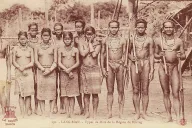
“Both men and women wear bracelets,” the US Army’s handbook of 1966 says of the Rhade. “These bracelets are signs either of special friendship or of a vow to the spirits and are used to represent an alliance.” Close friendships, it adds, “are usually represented by an exchange of Rhade bracelets — these bracelets should be considered a very significant sign of friendship and alliance and should not be undervalued by outsiders.” That was the Army telling its own soldiers to take the bracelet seriously.
A stranger could receive one too. “Often a metal bracelet is given to a stranger,” the handbook says. “The bracelet is evidence of a number of minor privileges — such as the right to touch certain sacred drums — which may vary in detail from village to village. It also assures the visitor of the protection of the tribe.”
In marriage
Among the Jarai, the word the handbook gives for the bracelet is kong. The girl’s mother gave it to a go-between, who held it out and asked whether the girl consented; if she did not touch it, she agreed. The go-between then carried it to the boy’s family, and his mother “places it on her son’s wrist to show that the two young people are engaged.” Returning the bracelet broke the engagement. Among the Rhade, a boy and girl who exchanged bracelets were tacitly engaged, and a couple who separated had to return “the dowry and the bracelets they have exchanged.” The Bahnar and Hroi also returned their wedding bracelets at a divorce. See Growing up Dega.
Oaths, payment and the spirits
- The blood oath. To make peace between warring villages, Gerald Hickey wrote in 1964, the parties mixed an oath drink in which “finally a copper bracelet is added that has first been burnished in hot coals. Both parties then drink.”
- The King of Fire. In one account Hickey recorded, the Jarai King of Fire threw his copper bracelet into a pool before his death, and the man who came up with it on his arm was his successor. See The Kings of Fire and Water.
- Coming of age. A former Rhade initiation ended with the young person receiving “a bracelet engraved with a secret mark.”
- Payment. Among the Koho, a midwife was paid with “a bead necklace, a brass bracelet, and a blanket,” and a middleman in a trade deal received a brass bracelet and a bead necklace besides his share of the buffaloes. Among the Ma, marriage go-betweens were paid the same.
- A new village. When the Mnong founded a new village, a tin bracelet was fastened to a split branch as part of the rite.
The Americans’ bracelets
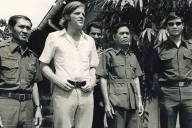
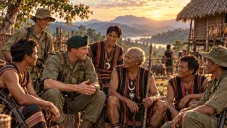
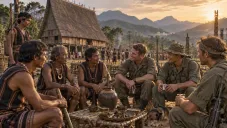
When American Special Forces lived in our villages in the 1960s, the old custom met the new alliance. The Army’s official history of the Special Forces records that “the Montagnard bracelet worn by many Green Berets was a token of Montagnard respect and involved a ceremony for its presentation.” George Dooley, who served with the Special Forces in the highlands, described it: “It was a custom among the montagnards to give proven friends a brass bracelet, the presentation being accompanied by the sacrifice of a chicken, pig, cow, or water buffalo (the animal sacrificed was based on the status of the recipient) and the plentiful consumption of rice wine, all administered by the village shaman.” He added that none of the Vietnamese LLDB, the South Vietnamese Special Forces, ever received one.
Hickey, who received the bracelet himself, recalled the host “holding a live chicken over my head” as he invoked the spirits. “He then placed a brass bracelet on my right wrist. Seven elders and the eldest woman did the same.”
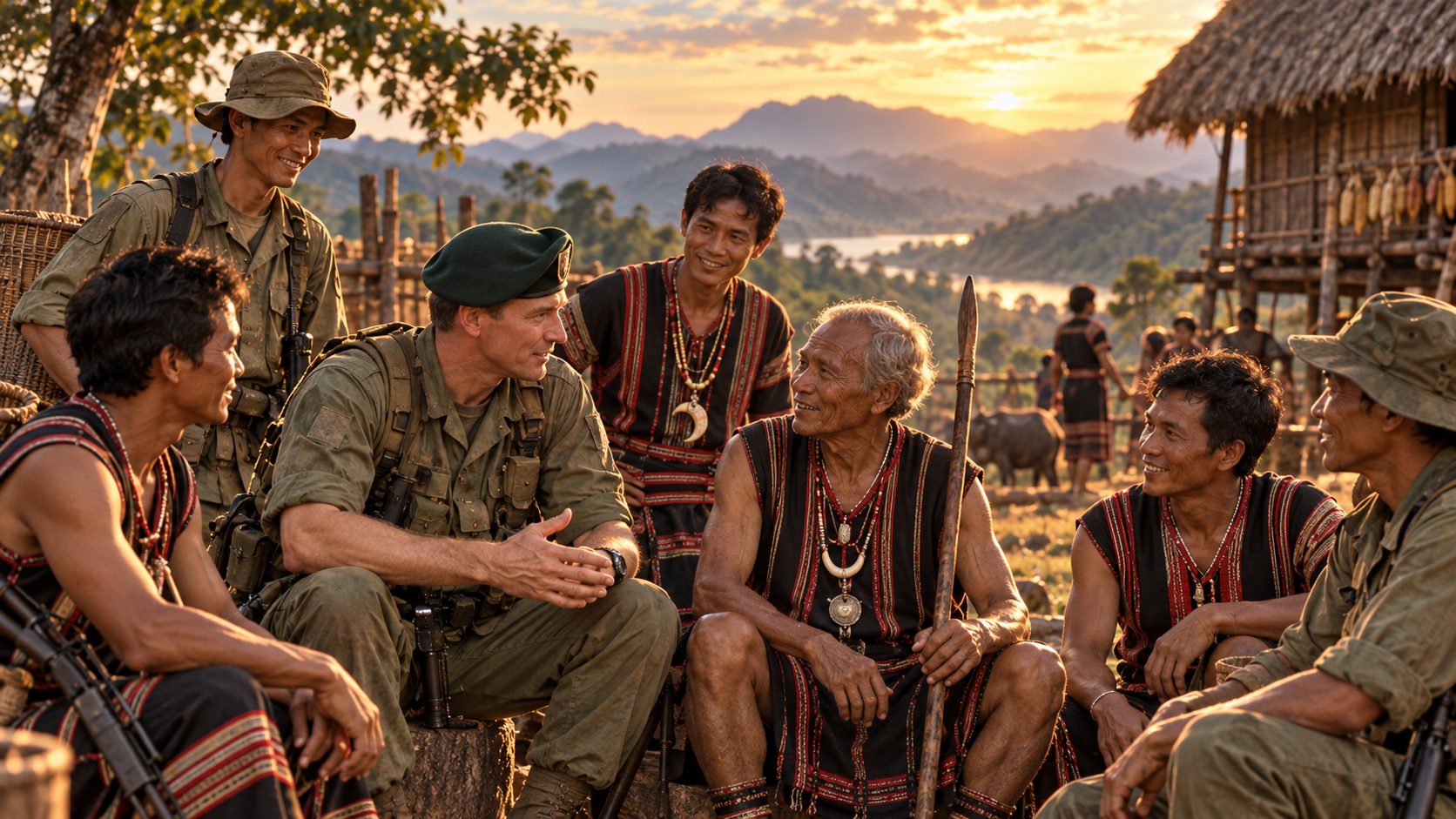
The bracelet became so prized that, Dooley wrote, soldiers who had never been given one made their own from brass welding rods. A bracelet made that way was never the real thing. The real one was given, not taken, and it carried the promise of the village behind it. See The American years, Mike Force and SOG and Jars and the buffalo feast.
In exile
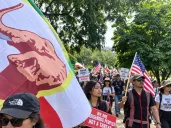
The bracelet crossed the ocean with our veterans and their American comrades. The flag of the Montagnard Dega Association of Greensboro, which dates from 1987, has a yellow ring that, as Neil Olsen wrote on Flags of the World in 2012, “represents a Montagnard bracelet (often referred to as ‘kong’ or ‘kong te’) which has a gap in it,” worn by most veterans who served in the highlands “as signs of friendship with the Montagnard people.” See The Dega flag and Our veterans in America.
What is missing
The outside record of the bracelet is thin and mostly American. We have found nothing written on how bracelets were made, what their marks meant, or whether our own movements used them. If your family keeps a bracelet with a story, or remembers the words spoken when one was given, we would like to record it. See How to record an elder.
Sources
- Department of the Army, Minority Groups in the Republic of Vietnam, Pamphlet 550-105 (1966) — the Rhade, Jarai, Bahnar, Hroi, Koho and Mnong chapters
- Gerald C. Hickey, The Major Ethnic Groups of the South Vietnamese Highlands, RAND RM-4041 (1964) — text copy
- Francis J. Kelly, U.S. Army Special Forces 1961–1971 (US Army Center of Military History, 1973), p. 91
- George E. Dooley, Battle for the Central Highlands: A Special Forces Story (Ballantine, 2000)
- Gerald C. Hickey, Window on a War: An Anthropologist in the Vietnam Conflict (Texas Tech University Press, 2002)
- Flags of the World, Montagnard Dega Association
Compiled September 2026.