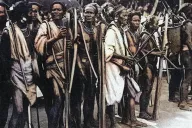


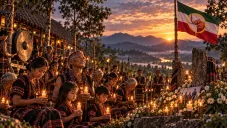
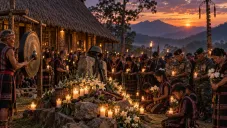
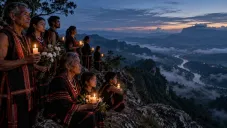
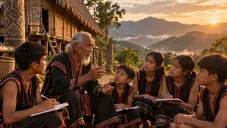

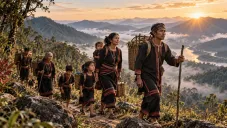
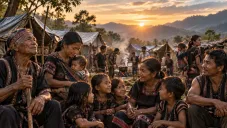



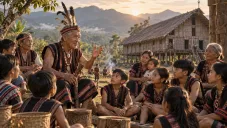
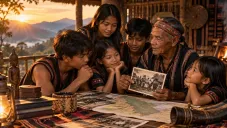

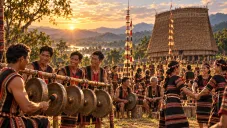
Before there was a flag, there was cloth. A Rhade skirt, a Jarai blanket or a Bahnar loincloth told anyone who knew how to read it which people the wearer belonged to. The cloth was woven by women on a loom tied to their own bodies, from cotton they grew and dyed themselves. In North Carolina it still is.

The loom
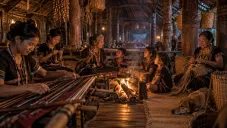
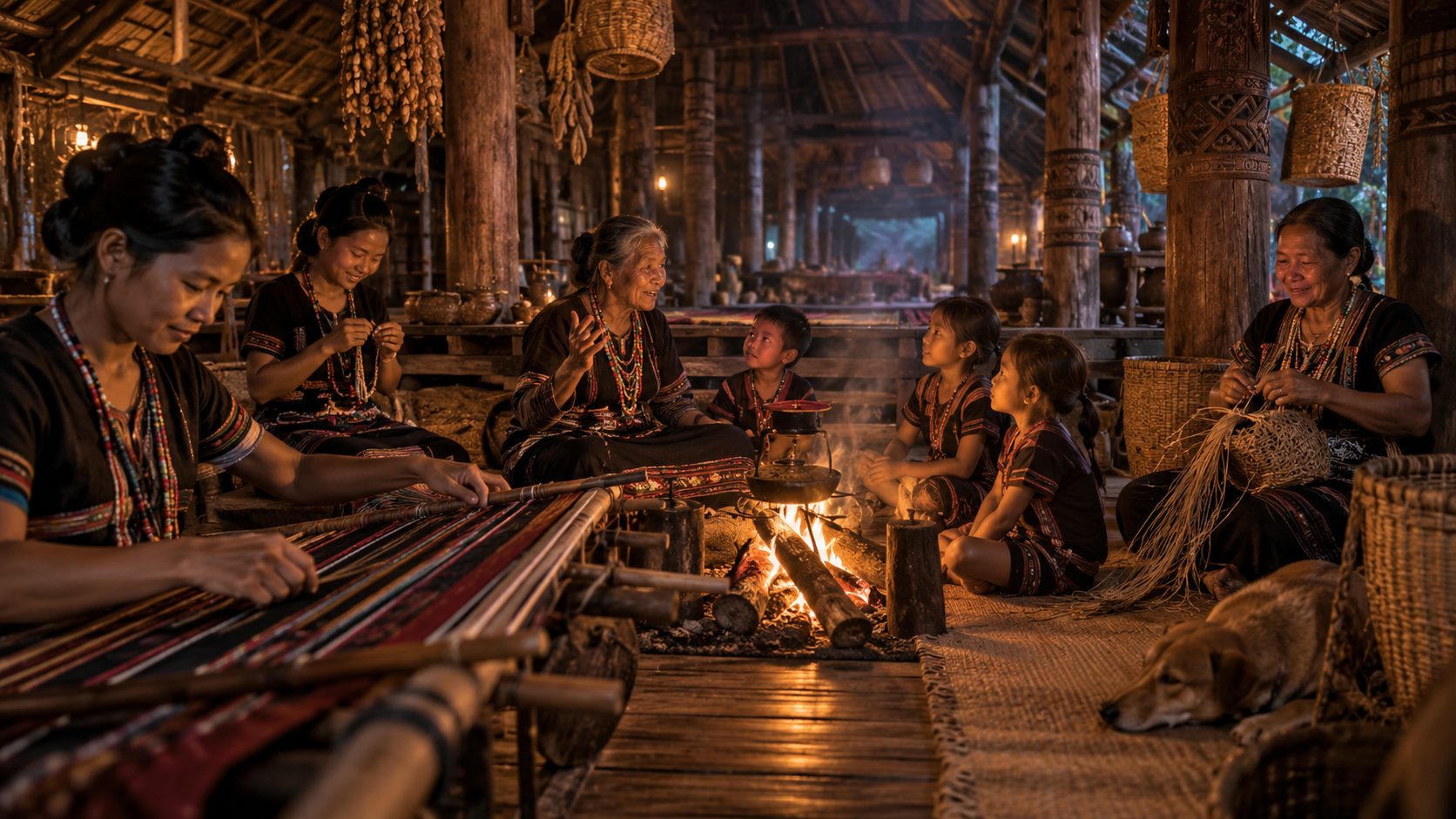
Highland weavers use the backstrap loom, one of the oldest weaving tools in Southeast Asia. One end of the warp is tied to a post or a house beam; the other is fixed to a bar held against the weaver’s lap by a strap around her back. She controls the tension by leaning back, or by pressing her feet against the far beam. Rods and a shed stick open the warp; a flat wooden sword beats each row of weft tight.
Patterns are made with supplementary weft: colored threads floated over the base weave so that the design stands out on the face of the cloth. Because a backstrap loom is only as wide as a woman can reach, larger pieces — blankets, wide skirts — are woven in panels and sewn together.
Cotton and indigo
In the villages the whole process was done at home: cotton grown in the swidden fields (see The rice year), cleaned, spun on a hand spindle, dyed and woven. Indigo gave the deep blue-black that is the ground of most highland cloth; other plants gave red and yellow. Today many weavers, especially in the diaspora, use manufactured color-fast yarn, but the techniques are the same.
Reading the cloth
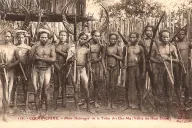
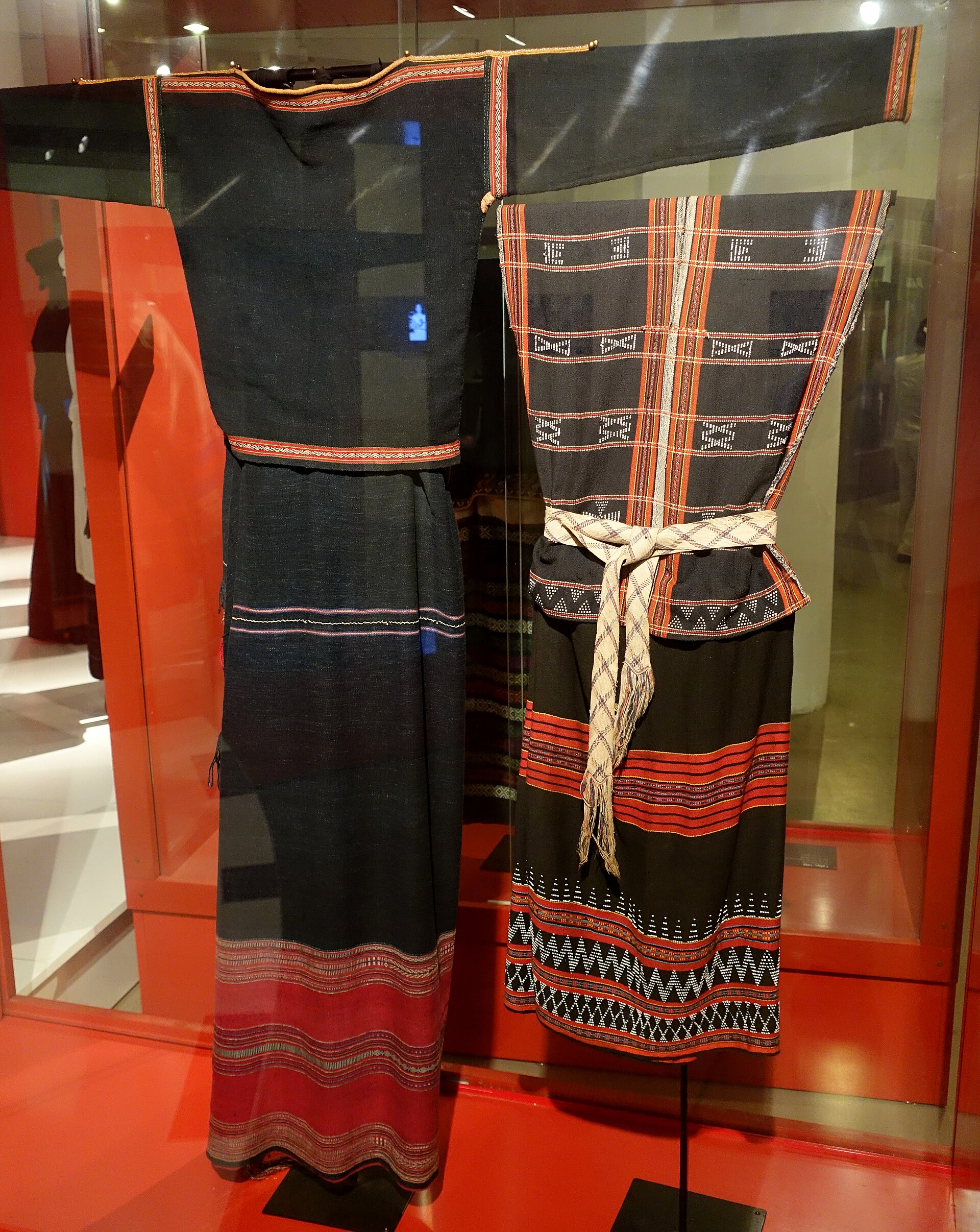
Each people had its own dress and its own vocabulary of patterns, and an experienced eye can tell them apart.
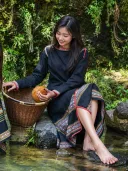
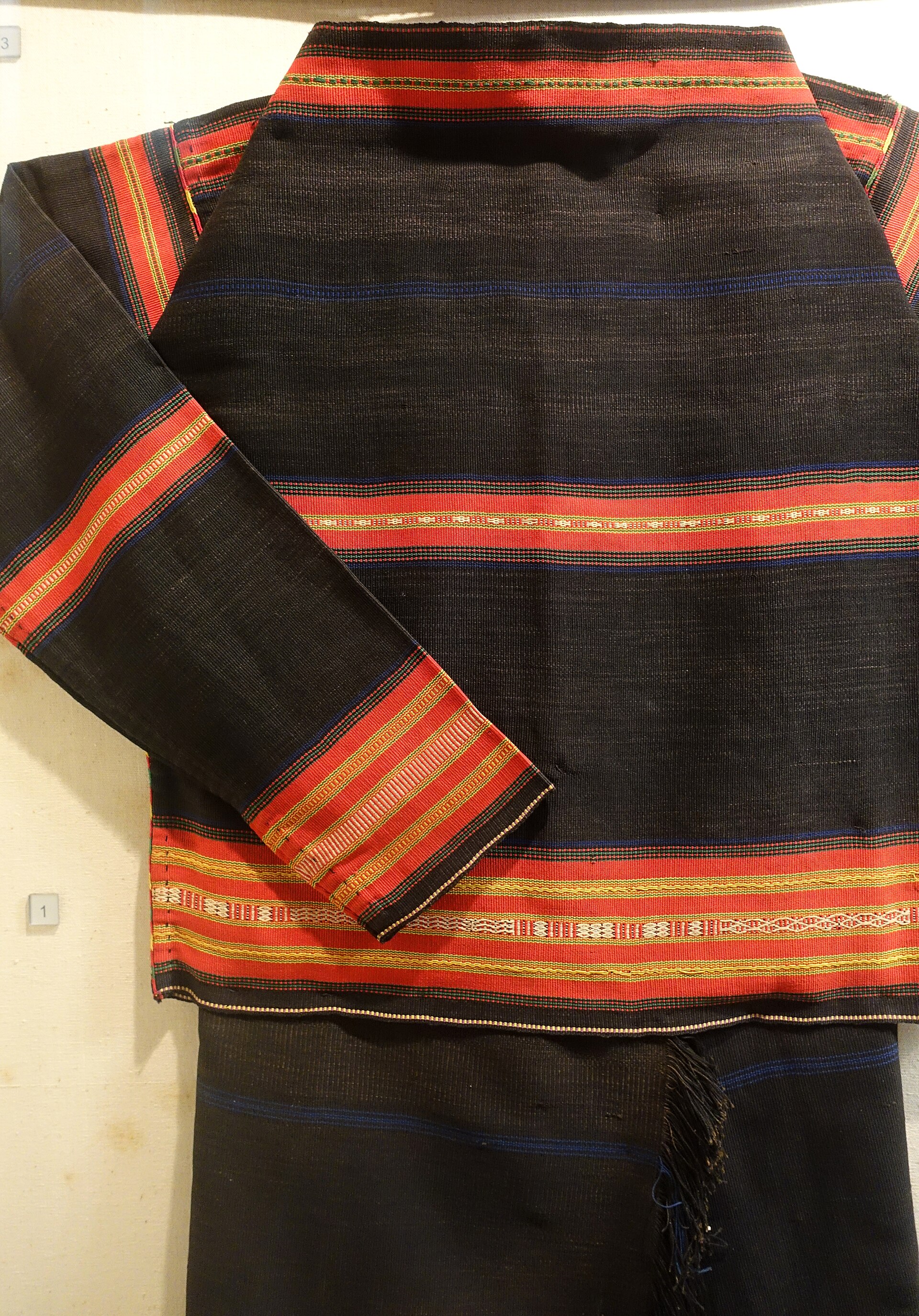
- Rhade women wear a dark wrapped skirt and a fitted blouse, banded with red, white and yellow at the hem, neck and sleeves. Men wear a loincloth and a sleeveless or long-sleeved tunic.
- Jarai weaving, from around Pleiku, is known for geometric motifs — stripes and diamonds — in a restrained palette of indigo and white.
- Bahnar, Sedang, Koho, Mnong and other peoples each have their own forms. We would like to add descriptions written by weavers from those peoples.
Among the Rhade, as Dega women explains, property passes through women. Cloth was part of that property: woven for marriages, given at funerals, kept with the gongs and jars.

Weaving in North Carolina
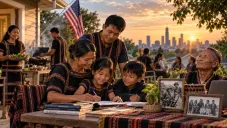
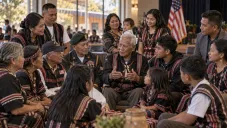
The Montagnard community in North Carolina, which began with the first arrivals in 1986 and now numbers more than 12,000, has kept weaving alive (see North Carolina).
- The Montagnard Association of North Carolina in Greensboro, formerly the Montagnard Dega Association, and its youth organization, the Montagnard American Organization, founded in 2015, run classes in weaving, music and dance.
- The exhibition The Past is Present: New Montagnard Artists put traditional weavers and basket-makers beside younger artists.
- Weavers in the community sell their work, some through small businesses such as Ju Nie: Montagnard Designs.
- The North Carolina Museum of History holds a Montagnard collection — textiles, tools, weapons and instruments — first given by an American veteran.
Jarai, Bunong (Mnong), Koho, Bahnar and Rhade women all continue to weave on backstrap looms in the United States.
Sources
- MDA Exchange, “Montagnard weaving,” February 2009
- NBC News, “Young Montagnard generation in the US using art, social media to keep culture alive,” 2022
- North Carolina Museum of History, “Collecting Carolina: Montagnards, Vietnam’s Central Highlanders”
- Montagnard Association of North Carolina, classes and workshops
- Opportunity for Women, on traditional Jarai motifs
Compiled September 2026. If you weave, or your mother or grandmother did, and you can tell us the names of the patterns in your language, please get in touch.