












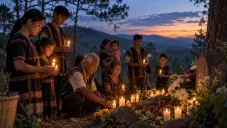
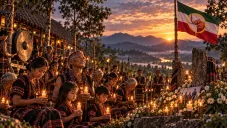
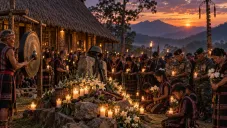
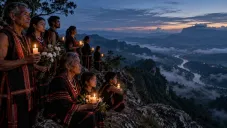









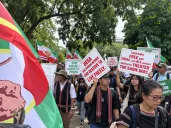
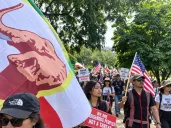












Hà Mòn is a Catholic movement among Dega in Kon Tum and Gia Lai that grew from reports of the Virgin Mary appearing at a village that was to be flooded for a dam. The state treats it as an “evil way” religion, and since 2010 its followers have been pressed to renounce it, arrested and given long prison sentences.
What it is
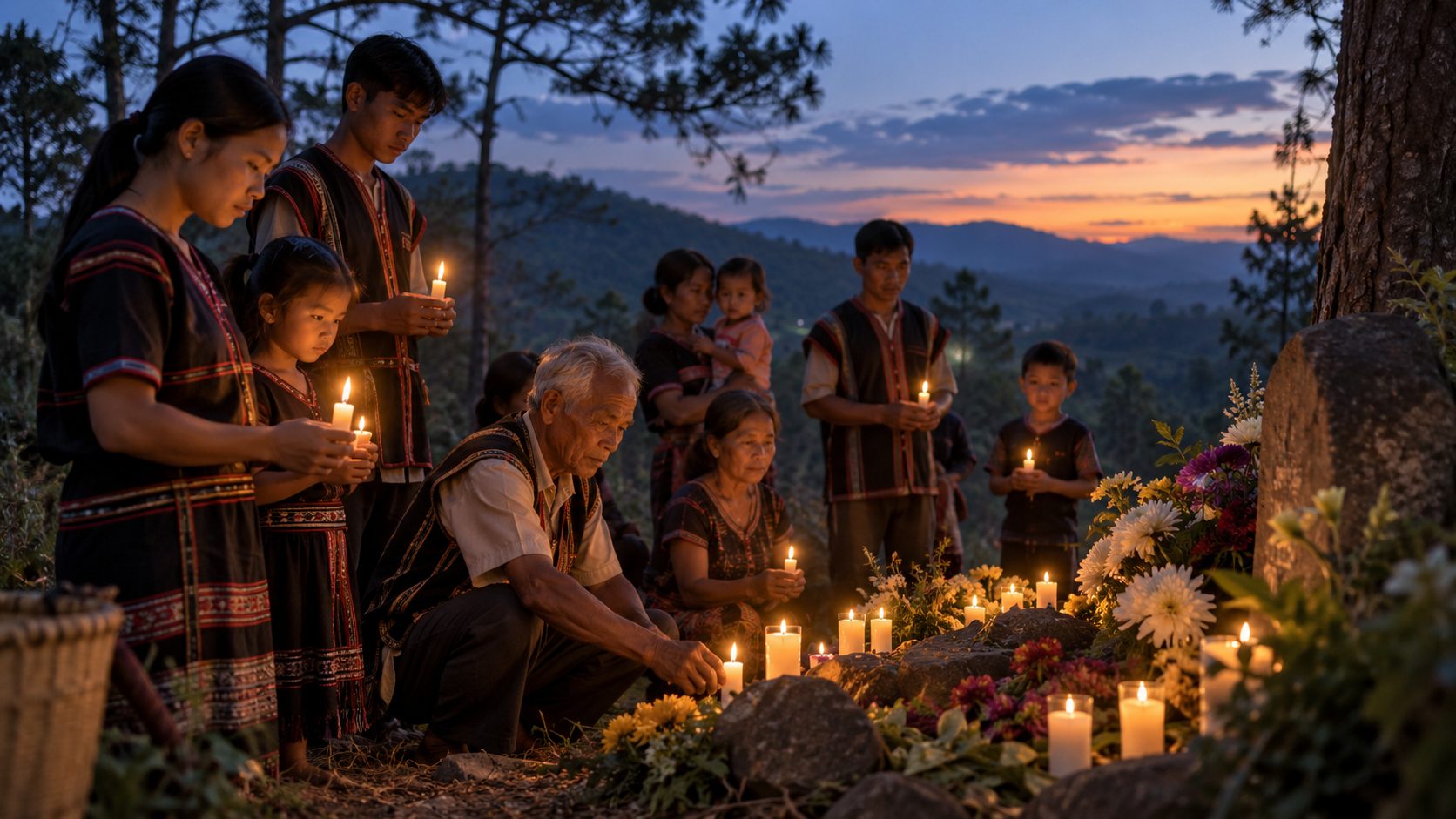
Human Rights Watch describes Hà Mòn as a Catholic group named after the commune where its founder was born, founded in Kon Tum in 1999 and later spread to Gia Lai and Đắk Lắk. Radio Free Asia names the founder as Y Gyin. The authorities accused him of spreading rumors that the Virgin Mary had appeared at Hà Mòn — at a place where they planned to build a hydroelectric plant. Followers gathered to pray there, and held vigils against the relocation of the villagers and the clearing of the village.
The Catholic Church in Kon Tum has its own long history among our peoples (see The Kon Tum mission). We have not found a statement by the diocese on Hà Mòn itself, and we do not suggest one. What is documented is that, in Human Rights Watch’s words, Dega Catholics in Kon Tum, Gia Lai and Đắk Lắk “face harassment, forced renunciation of faith, and arrest, especially those allegedly associated with the ‘Ha Mon’ Catholic sect.”
“Evil way”
From June 2010, Human Rights Watch reports, officials in the highlands ran a propaganda campaign against the movement, and charged that exiled FULRO members were using it to undermine national unity. In 2015 HRW reported that the crackdown was part of a high-level policy to eliminate “evil way” (tà đạo) religions, naming Dega Protestantism and Hà Mòn Catholicism. The label does the same work for Hà Mòn that the “Dega Protestant” label does for our house churches (see The church they closed): it turns a congregation into a security case.
Arrests and trials
- 2010 — Propaganda campaign begins. In November, in Đắk Lắk, followers are made to sign pledges abandoning their faith.
- 2012 — According to a submission to the UN Committee against Torture, 62 followers are arrested by the E20 Highland Mobile Police. Some followers flee to the forest.
- May 2013 — Eight people from Gia Lai and Kon Tum, among them Y Gyin, are tried in Gia Lai and sentenced to between three and eleven years under Article 87 of the Penal Code, “undermining national unity.” The charges accused them of turning followers out to protest the relocation of villagers for the Plei Krông hydropower plant.
- 2013 — Two more followers are arrested after a prayer gathering at the holy site while the dam is being built; they receive nine and a half and seven and a half years.
- October 2015 — Five Hà Mòn Catholics are arrested “for propagating the Ha Mon religion.”
The United States Commission on International Religious Freedom described the 2013 case this way: “eight ethnic minority Montagnard members of an independent Catholic movement were sentenced to between 3 and 11 years in prison for ‘undermining unity’ and ‘sowing ethnic and religious hatred’ for protesting against the relocation of their village in Gia Lai province.” In 2024 it described government efforts, led by the Fatherland Front, to dismantle the Hà Mòn group.
Land, water and faith
The Hà Mòn case is a dam case as much as a religious one. The holy site was on land taken for a hydropower project, and the people prosecuted were prosecuted for gathering there. See The dams and Land law.
See also: The highland Catholic Church.
Sources
- Human Rights Watch, Montagnard Christians in Vietnam: A Case Study in Religious Repression (2011)
- Human Rights Watch, Persecuting “Evil Way” Religion (2015)
- Radio Free Asia, “Vietnam jails eight Montagnards for ‘undermining national unity,’” May 29, 2013
- Campaign to Abolish Torture in Vietnam, submission to the UN Committee against Torture (2021) — the 2012 arrests, individual sentences and the 2013 and 2015 cases
- USCIRF, Annual Report 2014, Vietnam; USCIRF, State-Controlled Religion and Religious Freedom in Vietnam (September 2024)
Compiled September 2026. Radio Free Asia and the Campaign to Abolish Torture in Vietnam date the reported apparitions and the first vigils to 2002; the exact location of the holy site is usually given only by Vietnamese state sources, which we do not use. If you know it, please tell us.